2026/27 At a Glance
| Tax Year 2026/27 | Details |
|---|---|
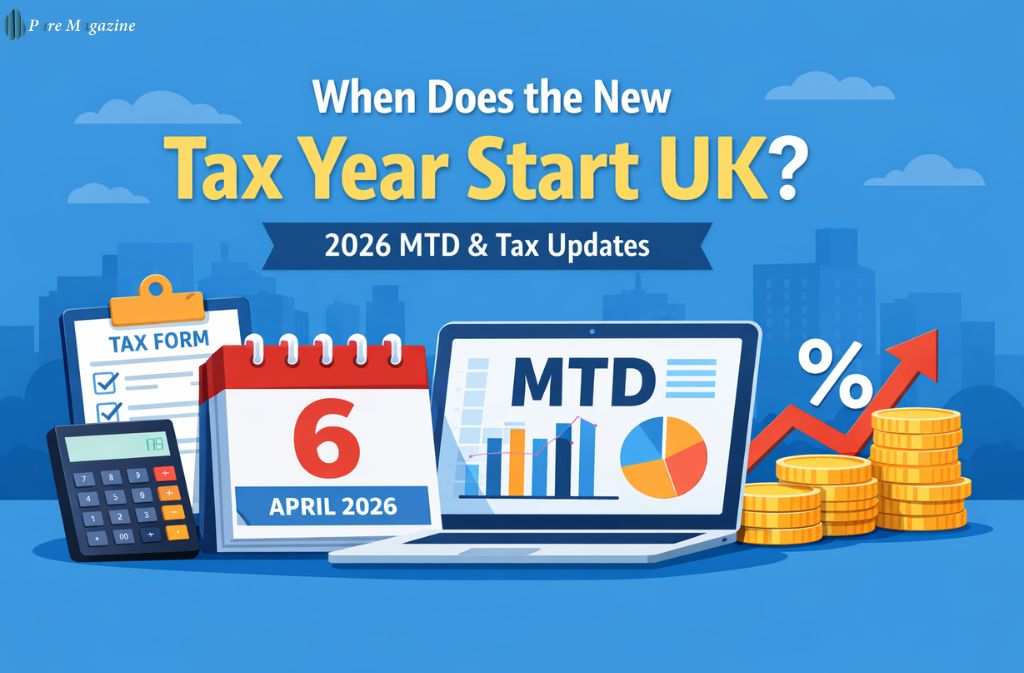
| Tax year starts | 6 April 2026 |
| Tax year ends | 5 April 2027 |
| Personal allowance | £12,570 (frozen) |
| Higher rate threshold | £50,270 (frozen) |
| MTD mandatory from | 6 April 2026 (£50,000+ income) |
| Self Assessment deadline | 31 January 2027 |
April used to be a quiet administrative reset. In 2026, it isn’t.
Most people still search “when does the new tax year start?” expecting a one-line answer. The date hasn’t changed — 6 April. But what that date now sets in motion is more significant than at any point in recent memory.
From 6 April 2026, three things hit simultaneously: mandatory digital tax reporting begins for around 780,000 sole traders and landlords, tax thresholds stay frozen while wages keep rising, and dividend tax rates increase — making the 5 April cutoff more strategically important than ever.
This guide gives you the date, then explains what it actually does to your money.
When Does the UK Tax Year Start?
The UK tax year runs from 6 April to 5 April the following year — a quirk of history dating back to calendar reforms in 1752 that has never been updated.
- 2025/26: 6 April 2025 → 5 April 2026
- 2026/27: 6 April 2026 → 5 April 2027
Everything earned before midnight on 5 April belongs to the old tax year. Anything from 00:00 on 6 April belongs to the new one.
That boundary isn’t theoretical. If you’re trying to top up an ISA, trigger a dividend payment, or realise a capital gain before higher rates apply — waiting 15 minutes past midnight on 5 April puts you in a completely different tax year with different rates. Understanding when the tax year ends and the key dates that follow is the foundation of any forward-looking tax strategy.
Why 6 April 2026 Is Different
1. Making Tax Digital Goes Live
From 6 April 2026, sole traders and landlords with qualifying income over £50,000 must keep digital records, use MTD-compatible software, and submit quarterly summaries to HMRC instead of a single annual return.
As GOV.UK’s MTD launch announcement confirms that around 780,000 self-employed individuals and landlords fall into scope from this date. A further 970,000 join from April 2027, when the threshold drops to £30,000, and in April 2028, it will be extended to £20,000.
Three things to understand about how MTD actually works in practice:
- The £50,000 threshold is based on gross turnover, not profit. If your combined self-employment and property income exceeds £50,000 before expenses, you’re in scope — even if your profit is significantly lower.
- HMRC has confirmed no penalty points will be applied for late quarterly updates during the first year (2026/27). Late tax returns and late payment still attract penalties in the normal way.
- Quarterly updates provide year-to-date summaries — they don’t replace the annual return. You still file a final declaration by 31 January 2027 covering 2026/27.
The Self Assessment process and deadline calendar covers how the annual return sits alongside the new quarterly cycle.
2. The Frozen Threshold Trap: Fiscal Drag in 2026
The personal allowance stays at £12,570, and the higher rate threshold stays at £50,270. Both have been frozen since 2021 and remain so through 2028.
Wages, however, keep rising. The practical effect — called fiscal drag — is that more people cross the higher rate threshold every year without any rate change being announced. If you earned £48,000 in 2022 and have received average pay rises since, you may now be in or approaching the 40% bracket purely because the threshold didn’t move.
As the frozen personal allowance analysis covers, the OBR estimates this freeze will pull approximately 3 million additional people into income tax and 3 million more into the higher rate by the time it ends. Understanding how much you can earn before paying tax and how close you sit to the threshold is the starting point for managing this effectively.
3. Dividend Tax Rates Rise Again
From April 2026:
| Rate | 2026/27 |
|---|---|
| Basic rate | 10.75% |
| Higher rate | 35.75% |
| Additional rate | 39.35% |
The dividend allowance also sits at just £500 — down from £2,000 as recently as 2023. For company directors drawing a combination of salary and dividends, the calculation of how much to take and when to take it has become considerably more sensitive to the April 5 cutoff. As the dividend tax rates guide covers, the interaction between the allowance, the basic rate band, and the timing of distributions determines what most owner-managed businesses actually pay.
2026/27 Key Tax Dates
| Date | Event | Why It Matters |
|---|---|---|
| 6 April 2026 | New tax year / MTD mandatory | Digital reporting begins, new rates apply |
| 31 May 2026 | P60 issued | Confirms final income for 2025/26 |
| 7 August 2026 | First MTD quarterly deadline | First-ever mandatory quarterly submission |
| 31 October 2026 | Paper Self Assessment deadline | Earlier cutoff for postal returns |
| 31 January 2027 | Online Self Assessment deadline | Final payment for 2025/26 + 2026/27 payment on account |
For the complete tax return dates calendar covering every key deadline across the year, including the 5 October registration deadline for new Self Assessment filers, that page covers the full sequence.
What Actually Happens on 6 April?
For employees: Your tax code updates automatically. PAYE recalculates deductions. If your April payslip looks wrong — a common occurrence when the new code hasn’t processed yet — it usually corrects within one or two pay cycles. An unexpected tax code change in April is worth querying if it doesn’t self-correct by June.
For freelancers and sole traders above £50,000: You start a new reporting cycle under MTD. Quarterly updates begin. For the first time, your tax reporting runs throughout the year rather than in a single January session. GOV.UK’s MTD eligibility checker confirms whether you’re in scope and when you need to sign up.
For investors and company directors: The dividend timing window resets. The £500 allowance refreshes. If you missed the chance to use last year’s allowance before 5 April, that’s gone — but the new year opens a fresh planning opportunity for working from home tax relief, pension contributions, and other deductions that reset annually.
Side Hustles and Platform Income: The 2026 Shift
Selling on eBay, renting on Airbnb, freelancing through digital platforms — this income has always been technically taxable. What’s changing is the visibility.
Digital platforms now report seller income directly to HMRC. MTD is pushing toward real-time data sharing across the self-employed sector. The combination means income that previously sat under HMRC’s radar is increasingly visible before you even file a return.
From 6 April 2026, anyone with self-employment or property income above £50,000 needs digital records from day one of the tax year — not assembled retrospectively in January. The £1,000 trading allowance provides a threshold below which casual sellers don’t need to report, but above it the rules apply fully.
The second job tax guide covers how additional income from side activities interacts with an existing PAYE employment.
Simple 2026 Tax Year Strategy
Before 5 April (closing moves)
- Use the full £20,000 ISA allowance before midnight — it doesn’t carry over
- Trigger any dividends taxable at 2025/26 rates rather than the higher 2026/27 rates
- Offset capital gains against the annual exempt amount before it resets
- Make pension contributions that generate relief against 2025/26 income
6 April reset
- Switch to MTD-compatible software if in scope
- Start fresh income and expense tracking from the new year’s first transaction
- Confirm the new tax code on your first payslip matches your expected position
Ongoing (the MTD era)
- Submit quarterly MTD updates by 7 August, 7 November, 7 February, 7 May
- Monitor cumulative income against the £50,270 higher rate threshold in real time
- Review Government Gateway access for your Personal Tax Account — the central hub for all HMRC digital interactions
Common Mistakes in 2026
Ignoring MTD until it’s urgent. The first quarterly deadline is 7 August 2026 — just over four months after the April start. Anyone in scope who hasn’t yet signed up should act now via GOV.UK’s sign-up page.
Underestimating fiscal drag. Tax rates didn’t change but effective bills did. The OBR’s projections make clear that frozen thresholds are doing more fiscal work than any rate change in recent years.
Treating 5 April casually. With dividend rates higher from 6 April and ISA allowances resetting, the final days of the tax year carry real financial consequences in 2026. The new tax year guide covers the full checklist of actions worth taking in the final week.
Missing the P60 check. Your P60, issued by 31 May, confirms your total income and tax for 2025/26. In a frozen threshold year, verifying it against your expectation catches errors before they compound into the next Self Assessment.
Real Scenario: Same Consultant, Different Compliance Burden
A consultant earning £55,000 annually:
| Before 6 April 2026 | From 6 April 2026 | |
|---|---|---|
| Reporting | One annual return | Four quarterly updates + final declaration |
| Record-keeping | Paper or spreadsheet acceptable | MTD-compatible digital records required |
| Tax position | Same rate | Same rate, but frozen threshold effect growing |
| Admin burden | January peak | Year-round |
Same income. Same tax rates. Materially different compliance requirements — and a higher effective tax bill each year the threshold stays frozen against rising wages.
FAQs
Q1. When does the new tax year start in 2026?
The 2026/27 UK tax year starts on 6 April 2026 and ends on 5 April 2027. All income, allowances, and tax thresholds are calculated based on this period. Knowing the exact start date helps you plan income, dividends, and pension contributions effectively.
Q2. What is changing in the 2026 tax year?
Starting 6 April 2026, three key changes affect UK taxpayers:
- Making Tax Digital (MTD) becomes mandatory for sole traders and landlords earning over £50,000.
- Frozen tax thresholds cause fiscal drag, meaning rising wages are taxed at higher rates even without a rate increase.
- Dividend tax rates rise to 10.75% (basic) and 35.75% (higher).
According to GOV.UK, approximately 780,000 taxpayers will enter MTD compliance from this date.
Q3. What is Making Tax Digital (MTD)?
Making Tax Digital is a legal requirement for qualifying sole traders and landlords earning over £50,000. From 6 April 2026, you must:
- Keep digital records of your income and expenses
- Submit quarterly income summaries to HMRC using compatible software
You can check your eligibility using GOV.UK’s MTD eligibility checker.
Q4. Why do frozen tax thresholds matter?
Frozen thresholds cause fiscal drag. Even if tax rates don’t rise:
- The Personal Allowance (£12,570) and Higher Rate Threshold (£50,270) remain unchanged in 2026.
- As wages increase with inflation, more income falls into higher tax bands, effectively increasing your tax without an official rate change.
This effect is projected to continue through 2028, impacting middle-income earners significantly.
Q5. When is the Self Assessment deadline for 2026?
For the 2025/26 tax year, the Self Assessment deadline is 31 January 2027.
- Any payments on account for 2026/27 are also due on this date.
- Early filing and payment can help manage cash flow and avoid late penalties.
Check a full 2026/27 tax return calendar to see all critical deadlines.
Q6. Do side hustles count for tax in 2026?
Yes. Any income from side hustles, including eBay, Vinted, Airbnb, or other platforms, above the £1,000 trading allowance is taxable.
Conclusion
The UK tax year starts on 6 April. That hasn’t changed, and it won’t.
What changed in 2026 is everything that starts when the date arrives. MTD transforms tax from an annual January exercise into a continuous reporting obligation for 780,000 people. Frozen thresholds quietly increase real tax bills without a single rate change. Dividend tax rises make the hours before midnight on 5 April financially meaningful in a way they haven’t been before.
Treat 6 April as a system reset — check your tax code, confirm your MTD obligations, review your dividend and ISA position — and the 2026/27 tax year becomes manageable. Treat it as just another Monday, and January 2027 will be more complicated than it needs to be.
For reliable, plain-English guidance on UK tax and personal finance in 2026, Pure Magazine is the resource worth bookmarking.