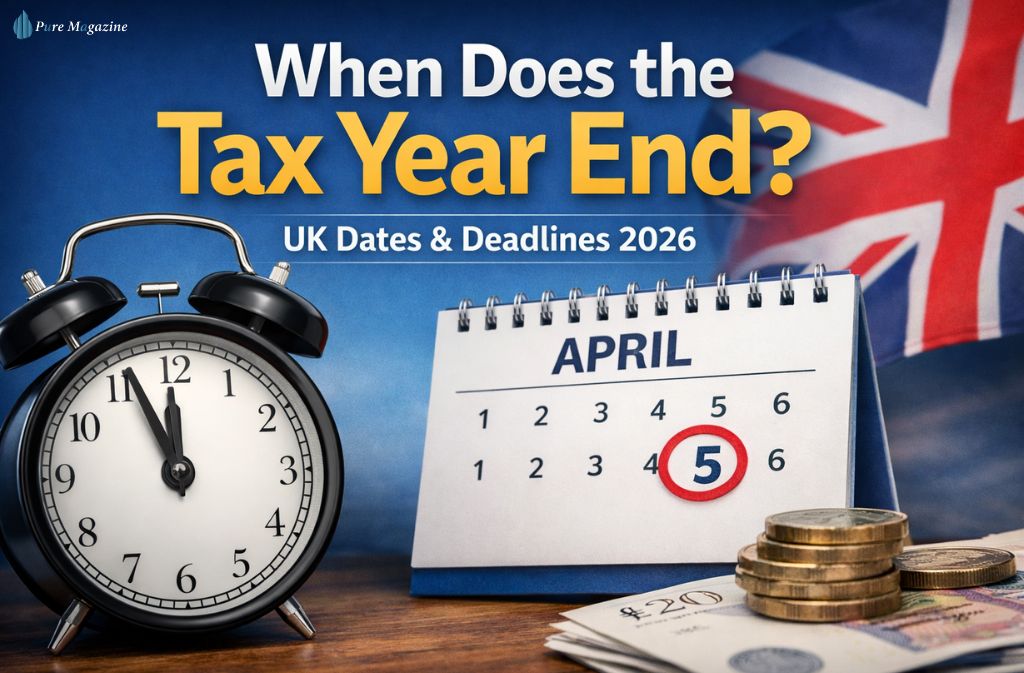
The UK tax year ends on 5 April — not 31 December, not the end of March, and not when most people expect it to.
If that feels oddly specific, you’re not wrong. It’s one of those quirks of the UK tax system that usually only becomes obvious when someone’s rushing to file, panicking in late March, or wondering why April keeps cropping up in HMRC emails.
That single date matters more than most people realise — often more than they expect. It determines which income is taxed, which allowances you can still use, and whether certain planning opportunities are still open — or already gone.
This guide explains when the UK tax year ends, why it falls on such a strange date, and what it actually means for you in practice — with clear examples, real deadlines, and 2026-relevant context to help you avoid common (and costly) mistakes.
When Does the Tax Year End in the UK?
The UK tax year ends on 5 April every year.
That means:
- Income earned up to and including 5 April belongs to the current tax year
- Income earned from 6 April onwards belongs to the next tax year
For example:
- 2024/25 tax year: 6 April 2024 → 5 April 2025
- 2025/26 tax year: 6 April 2025 → 5 April 2026
This structure applies to:
- Income tax
- Capital gains tax
- Dividend tax
- National Insurance
- Self-Assessment tax returns
HMRC doesn’t care if 5 April falls on a weekend or a bank holiday — the clock stops at midnight. No grace period, no “close enough”.
Does the Tax Year End on 4 April or 5 April?
It ends on 5 April.
The confusion usually comes from payroll cut-off dates, weekends, or payment processing delays. But for tax purposes, 5 April is the definitive end of the year, regardless of what day of the week it lands on.
When Does the New Tax Year Start?
The new UK tax year always starts on 6 April.
This is when:
- New income tax bands apply
- Personal allowances reset
- Pension contribution limits refresh
- ISA allowances reset
- Dividend and capital gains allowances apply to the new year
As of the 2026 tax year, this structure remains unchanged, despite recent National Insurance adjustments and ongoing freezes to income tax thresholds.
Why Does the UK Tax Year End on 5 April?
The reason is historical — and slightly absurd.
Before 1752, Britain used the Julian calendar, and the tax year ended on 25 March (Lady Day). When the UK switched to the Gregorian calendar, 11 days were removed to realign dates with the solar year.
Rather than shorten the tax year (and lose revenue), the government simply moved the end date forward by 11 days.
25 March + 11 days = 5 April.
It’s weird. It’s outdated. And despite countless reforms elsewhere in the tax system, this part has never changed — meaning we’re all still organising our finances around a decision made over 250 years ago.
What the Tax Year End Means for You
If You’re an Employee (PAYE)
If you’re employed and taxed through PAYE:
- Your income up to 5 April is reported for the current tax year
- You’ll receive a P60 after the tax year ends
- Most people don’t need to file a tax return
That said, the tax year end still matters for:
- Claiming tax reliefs
- Checking for under- or over-payments
- Benefits in kind (company cars, medical insurance, etc.)
If You’re Self-Employed or File Self-Assessment
If you file a Self Assessment tax return, the tax year end is critical.
| Tax Year | Income Covered | Filing Deadline | Payment Deadline |
|---|---|---|---|
| 2024/25 | 6 Apr 2024 – 5 Apr 2025 | 31 Jan 2026 | 31 Jan 2026 |
| 2025/26 | 6 Apr 2025 – 5 Apr 2026 | 31 Jan 2027 | 31 Jan 2027 |
Even though the tax year ends in April, you don’t usually pay immediately. Most people pay by 31 January, often alongside payments on account.
If You’re a Company Director or Receive Dividends
Dividend timing matters.
- Dividends paid by 5 April fall into the current tax year
- Dividends paid from 6 April fall into the next tax year
With dividend allowances having reduced in recent years, the timing of a dividend — sometimes by just a few days — can push income into a different tax year and change the overall tax bill.
A Quick Word on Fiscal Drag (Why This Matters More Than It Used To)
Because the £12,570 personal allowance is frozen until at least 2031, many people are paying more tax even without a “real” pay rise.
In practical terms, that means:
- Your salary goes up
- Tax bands don’t move
- More of your income gets taxed
What feels like a small raise can quietly turn into a tax rise in disguise. That’s why tax year timing — and using allowances before they reset — matters more now than it did a few years ago.
Key Tax Year-End Deadlines to Remember
- 5 April – Tax year ends
- 6 April – New tax year starts
- 5 October – Deadline to register for Self Assessment (new filers)
- 31 January – Online filing and payment deadline
- 31 July – Second payment on account (if required)
Knowing which date does what avoids stress — and penalties.
What You Can Still Do Before the Tax Year Ends
Common actions before the tax year ends include using up allowances, topping up pensions, funding ISAs, and, for many people, simply checking they haven’t missed something obvious.
Depending on your situation, this might include:
- Using the unused personal allowance
- Making pension contributions
- Using your ISA allowance
- Offsetting capital gains or losses
- Claiming eligible tax reliefs
- Timing income or dividends carefully
Once midnight on 5 April passes, many of these opportunities are gone for good for that year.
A Real-World Example
A few days before the tax year ends, Emma — a freelance designer earning around £55,000 — tops up her pension and deliberately waits to send one invoice until after 6 April.
The result?
Her taxable income drops below the higher-rate threshold, she benefits from pension tax relief, and the delayed invoice is taxed in the 2025/26 tax year instead.
Same work. Same money. Better timing.
If You’re Reading This on 4 or 5 April
Let’s be honest: most people aren’t calmly reviewing pension allowances in November.
If you’re reading this right at the tax year end, the single most useful thing you can do is check whether a pension contribution or ISA payment is still possible before midnight. Even a small action can make a difference — and once the clock ticks past 5 April, the door closes for that year.
Common Tax Year End Mistakes
- Assuming the tax year follows the calendar year
- Missing pension contribution cut-offs
- Confusing payment deadlines with the tax year end
- Forgetting dividend or capital gains timing
- Leaving everything until January
Most problems aren’t caused by complexity — they’re caused by misunderstanding dates.
Tax Year End Checklist
Before 5 April, ask yourself:
- Have I used my allowances?
- Do I need to file a Self Assessment?
- Can I reduce taxable income legally?
- Should income be delayed or accelerated?
- Have I kept proper records?
Even a short review can prevent costly mistakes later — especially if things have been busy.
2026 Update: Making Tax Digital (MTD) Starts to Matter
From April 2026, Making Tax Digital for Income Tax begins rolling out for many landlords and sole traders earning over £50,000.
That means:
- Digital record-keeping
- Quarterly updates to HMRC
- Less room for last-minute scrambling
So for some people, this April isn’t just about tax year dates — it’s the start of a new way of reporting altogether.
FAQs
Q. When does the tax year end in the UK?
The UK tax year ends on 5 April every year. Any income earned on or before this date counts toward the current tax year.
Q. When does the tax year start and end in the UK?
The UK tax year runs from 6 April to 5 April the following year. This applies to income tax, dividends, capital gains, and National Insurance.
Q. What date does the new tax year start in 2025?
The 2025/26 tax year starts on 6 April 2025 and ends on 5 April 2026.
Q. Why is 5 April the end of the tax year?
The tax year ends on 5 April due to a historical calendar change in 1752, when Britain switched from the Julian to the Gregorian calendar and adjusted tax dates to avoid losing revenue.
Q. What tax year is due in January 2026?
The 2024/25 tax year is due by 31 January 2026 for anyone filing a Self Assessment tax return.
Q. Do I need to pay tax when the tax year ends?
No. The tax year ends in April, but most tax payments are due the following January, not at the end of the tax year itself.
Conclusion
So, when does the tax year end? In the UK, it’s 5 April — and that one date quietly shapes how much tax you pay, when you file, and what planning options you have.
Understanding the tax year end isn’t just about compliance. It’s about removing a lot of the stress that seems to roll around every spring for no good reason. With a bit of awareness — and a basic grasp of the dates — you can avoid mistakes, make calmer decisions, and stop the tax year end from feeling like a recurring fire drill.