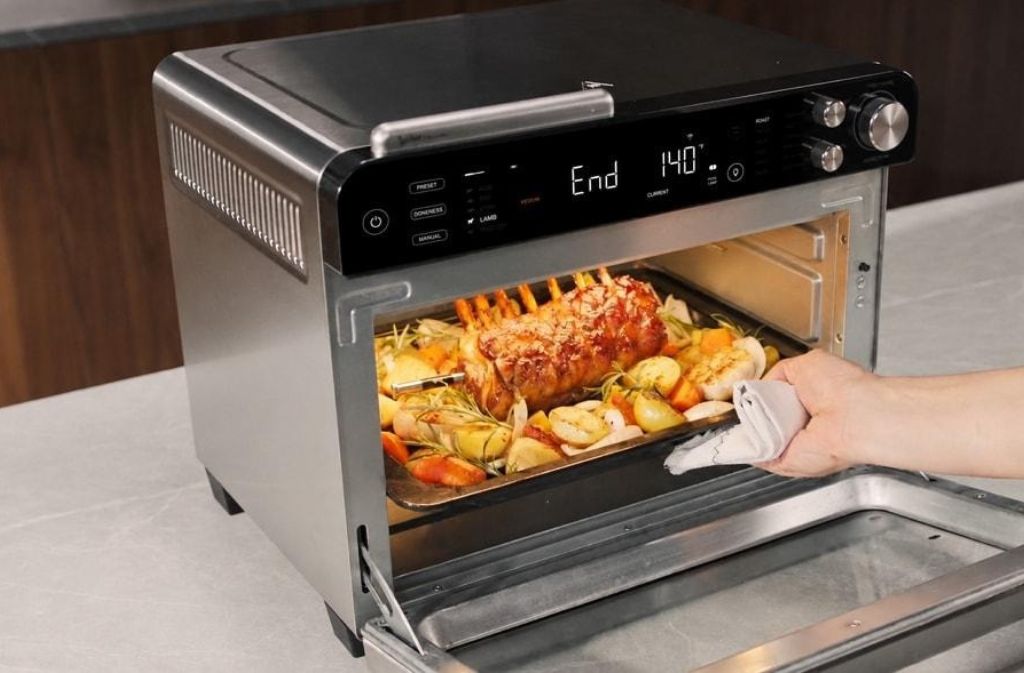
For years, the idea of a “smart oven” has mostly meant a prettier interface, more cooking presets, or an app that lets you check on dinner from another room.
Useful? Sometimes.
Transformative? Not always.
What is changing now is something more meaningful. The latest wave of AI-powered ovens is moving beyond convenience features to more intelligent cooking support. Instead of simply heating food for a set amount of time, these ovens are starting to make decisions based on what is actually happening during the cook.
That shift matters because home cooking has always had one persistent problem: timing is only a rough estimate, but doneness is what really counts.
As kitchen technology becomes more responsive, more connected, and more aware of food temperature in real time, AI-powered ovens are beginning to change the relationship people have with cooking at home.
From timer-based cooking to data-aware cooking
Traditional ovens do one thing well: they generate heat. Everything else is left to the cook.
You choose the temperature, estimate the timing, check the food visually, and decide whether it needs more time. For experienced home cooks, that can work perfectly well. But it also means the process depends heavily on habit, instinct, and repeated checking.
AI-powered ovens are changing that model.
Instead of relying only on time and temperature settings, the newer generation of smart ovens is starting to use live cooking data to support better decisions. That can include tracking internal food temperature, adjusting cooking logic more intelligently, and reducing the amount of guesswork required from the user.
In simple terms, the oven is no longer just heating. It is becoming more aware of the cooking process itself.
Why this matters in everyday kitchens
The value of AI in the kitchen is not that it makes cooking feel futuristic. It is that it can make cooking feel easier, more accurate, and more repeatable.
That matters most in the areas where many people still struggle:
- getting proteins cooked to the right doneness
- avoiding overcooking while trying to stay on the safe side
- juggling multiple parts of a meal at once
- reducing the need to keep opening the oven to check progress
- fitting cooking into busy weekday routines
This is where AI-powered ovens start to feel genuinely useful.
The more an oven can help interpret timing, heat, and food progress together, the less the cook has to rely on pure estimation. For households trying to make dinner more consistent without turning every meal into a technical exercise, that is a real upgrade.
The rise of intelligent temperature tracking
One of the clearest signs of progress in this category is the move toward better internal temperature awareness.
That is important because oven temperature and food temperature are not the same thing. A chicken can look beautifully browned and still need more time in the center. A salmon fillet can go from just right to dry in a very short window. A roast may need precision that visual cues alone cannot provide.
This is where technologies such as built-in probes, connected thermometers, and automated doneness tracking begin to matter more than another touchscreen menu.
A good example is how some brands are moving toward integrated probe-led cooking instead of treating temperature tracking as a separate accessory step. In that context,Typhur Sync Oven is notable because it brings the idea of a built-in wireless probe directly into the oven workflow rather than asking the user to manage separate wires or extra setup each time.
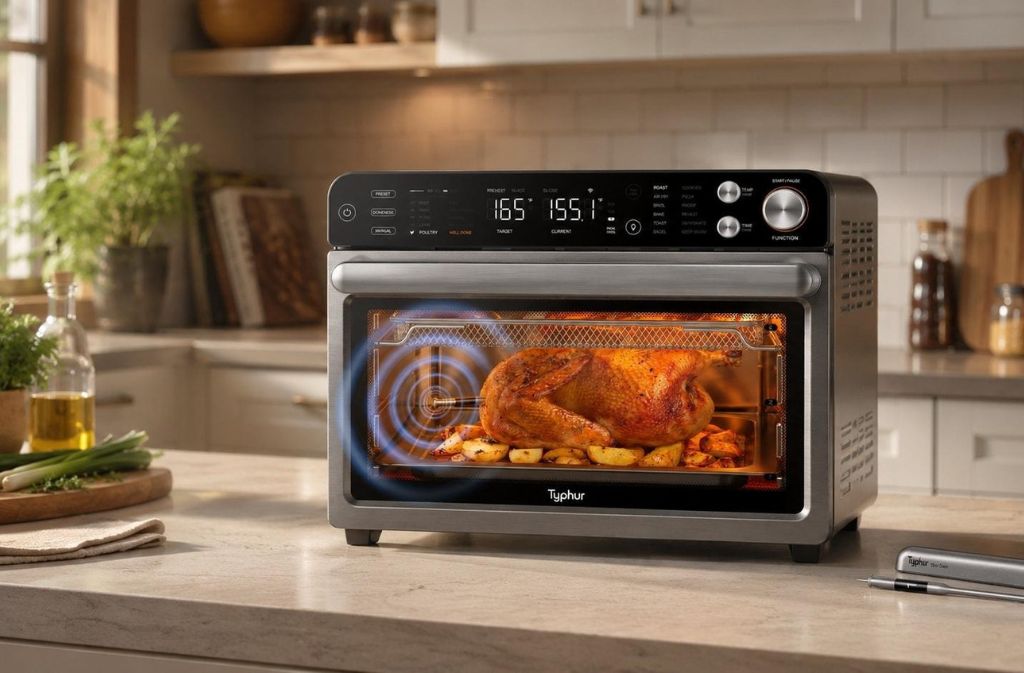
That kind of integration is a better example of meaningful kitchen innovation than simply adding more digital controls.
Why is less friction becoming a bigger technology story
The best consumer technology usually succeeds for the same reason: it removes friction without demanding more attention.
That principle applies just as much in the kitchen.
A genuinely smart oven should reduce the number of things a cook has to monitor manually. It should simplify decision-making rather than add more menus, more steps, or more setup. It should help dinner come together more smoothly, not make the process feel more technical than it needs to be.
That is why features like automatic precision cooking, real-time food tracking, and reduced manual checking are becoming more important than flashy “smart home” language.
The home appliance market is gradually moving from connected novelty to functional intelligence. In other words, it is not enough for an oven to be digital. It has to be helpful.
AI-powered appliances are changing cooking behaviour too
Technology does not just change products. It changes habits.
When ovens become better at guiding doneness and timing, they can influence how confidently people cook more ambitious foods at home. That could mean cooking more fish on a weeknight, roasting chicken more often, or relying less on overly cautious, overlong cook times.
For many households, that matters as much as speed.
The real promise of AI-powered kitchen appliances is not that they replace skill. It is that they lower the barrier to better outcomes. They make good results easier to repeat, especially for people who want practical help rather than culinary complexity.
The bigger picture for smart kitchen technology
AI-powered ovens sit inside a broader shift happening across the home.
Consumers are becoming more comfortable with products that combine hardware, sensors, and software into one seamless experience. That has already happened in areas like cleaning, security, lighting, and climate control. The kitchen is simply catching up.
But kitchen technology is harder to get right because food is variable. Ingredients differ. Cuts of meat vary in size and thickness. Cooking preferences are personal. That is why the most useful innovation is not generic automation. It is adaptive support built around real cooking variables.
This is why the most interesting oven technology today is not about doing more. It is about responding better.
What comes next
As this category develops, the most successful AI-powered ovens will probably be the ones that balance intelligence with simplicity.
People do not want to feel as though they need to learn a new operating system just to cook dinner. They want tools that reduce uncertainty, improve consistency, and fit naturally into real life.
That means the next phase of kitchen innovation is likely to focus on:
- smarter temperature awareness
- better doneness guidance
- fewer manual interventions
- more seamless integration between hardware and cooking logic
- a user experience that feels intuitive rather than overloaded
The brands that get this right will be the ones that make cooking feel calmer, not more complicated.
Final thoughts
AI-powered ovens are changing home cooking not because they look more advanced, but because they are starting to behave in more useful ways.
The real shift is away from timer-based cooking and toward systems that understand more about what is happening to the food itself. That is where this technology starts to justify its place in the modern kitchen.
For readers watching the smart home space, the kitchen may become one of the most interesting categories to follow over the next few years. And the most compelling products will not be the ones with the loudest “AI” branding. They will be the ones that quietly make everyday cooking more precise, more reliable, and less stressful.
That is the real promise of AI-powered ovens.
For more, visit Pure Magazine