TL;DR
- The UK personal tax allowance is £12,570
- It is frozen until April 2031 (legislated)
- There is no confirmed increase scheduled
- Frozen thresholds are creating “fiscal drag” — a stealth tax effect
- Millions more people are expected to move into higher-rate tax bands by 2031
Short answer: Under current law, the personal tax allowance will not increase before April 2031 unless a future Budget changes it.
You Haven’t Seen a Tax Rise Headline — But You’ve Probably Felt It
There was no dramatic announcement saying, “Your tax just went up.”
No new 25% band.
No emergency surcharge.
Instead, something quieter happened.
Your salary increased slightly. Maybe 4%. Maybe 5% to keep up with rent or food bills. But the personal allowance — the amount you can earn tax-free — stayed stuck at £12,570.
That’s why so many people are searching:
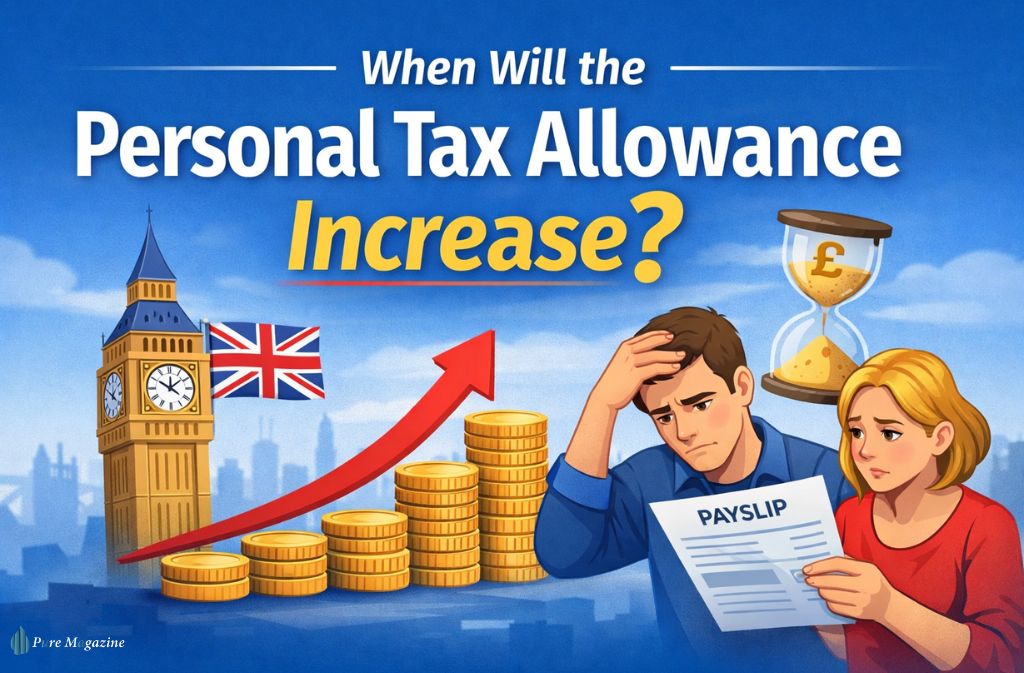
When will the personal tax allowance increase?
Because it doesn’t feel like your raise is stretching the way it used to.
And in 2026, the answer is clearer than ever — and longer-term than most expected.
When Will the Personal Tax Allowance Increase?
Official Position (UK Government 2026)
According to HM Treasury, income tax thresholds — including the personal allowance — are frozen until April 2031.
This freeze was legislated through Finance legislation and confirmed in fiscal updates following the 2022 Autumn Statement.
The Office for Budget Responsibility projects that frozen thresholds will raise tens of billions in additional revenue by the end of the freeze period and pull millions more taxpayers into higher-rate bands.
There is:
- No scheduled increase before April 2031
- No automatic inflation link
- No confirmed 2031 uplift
If you’re searching “when will the personal tax allowance increase gov uk”, the official answer today is:
Not before April 2031 — unless a future Budget changes course.
What Does “UK Tax Thresholds 2031 Legislated” Actually Mean?
This matters.
“Legislated” means the freeze is written into law. It’s not just guidance or a temporary placeholder.
Only a future Budget announced by HM Treasury can reverse or amend it.
Until then, £12,570 remains fixed.
How Long Has the Personal Allowance Been Frozen?
The allowance has been £12,570 since 2021.
That means:
- 2021: £12,570
- 2026: £12,570
- 2030 (projected): £12,570
Nearly a decade without movement.
If it had risen with inflation since 2021, estimates suggest it could be closer to £15,000–£16,000 today.
That gap is the hidden story.
Fiscal Drag Explained (Why It Feels Like a Stealth Tax)
Financial advisers in 2026 aren’t even calling this a temporary freeze anymore.
Privately, many refer to it as the “Permanent Freeze.”
Why?
Because fiscal drag works quietly.
Here’s how:
- Your wages increase
- Tax thresholds stay frozen
- More of your income becomes taxable
- You edge closer to higher-rate bands
It’s sometimes described as the “boiling frog” effect.
You don’t notice a 1% shift in your tax bill each year.
But by 2031, your payslip feels tighter — even though tax rates never officially changed.
According to the Office for Budget Responsibility, frozen thresholds are projected to generate over £50 billion in additional revenue by 2031.
That’s not accidental. It’s structural fiscal policy.
Also Read: Aktivrente 2026: German Tax Break for Working Pensioners
Income Tax Bands 2026 (England, Wales & Northern Ireland)
| Band | Income | Rate |
|---|---|---|
| Personal Allowance | Up to £12,570 | 0% |
| Basic Rate | £12,571–£50,270 | 20% |
| Higher Rate | £50,271–£125,140 | 40% |
| Additional Rate | Over £125,140 | 45% |
Rates are set by HM Treasury and administered by HM Revenue & Customs.
Scotland Is Different
While the personal allowance remains UK-wide, Scotland sets its own income tax bands and rates.
That means:
- Different basic and intermediate bands
- A separate higher-rate threshold
If you live in Scotland, fiscal drag may affect you slightly differently.
The Cost-of-Living vs. Tax Trap
Here’s the real frustration.
You receive a 5% pay rise because your rent increased.
But because the allowance hasn’t moved:
- A bigger slice of that raise becomes taxable
- You creep closer to the higher-rate band
- Your real purchasing power shrinks from both ends
You’re fighting inflation — and fiscal drag — at the same time.
It doesn’t look like a tax rise.
But it feels like one.
The National Living Wage Shift (2026 Reality)
The National Living Wage has increased significantly since 2021.
As a result, many full-time minimum wage workers now earn well above £20,000 per year.
Years ago, some low earners sat near or below the personal allowance.
Now, most full-time workers pay basic rate tax on a substantial portion of their income.
The allowance was once designed to shield low earners from tax.
In 2026, it no longer fully does that.
That’s a structural shift in who pays income tax.
The £100k Taper Trap
If you earn over £100,000:
- You lose £1 of personal allowance for every £2 earned above that
- Between £100k and £125,140, the effective marginal rate is 60%
Frozen thresholds mean more professionals drift into this zone each year — often unintentionally.
The Pensioner Tax Trap (State Pension Collision)
The Full New State Pension continues rising under the triple lock.
If it approaches or exceeds £12,570 in the coming years, some pensioners may face income tax bills for the first time.
However:
HM Revenue & Customs uses “Simple Assessment” for some pensioners — meaning HMRC can calculate and issue a tax bill directly without requiring a complex self-assessment return.
That simplifies paperwork.
It doesn’t remove the tax.
Related: Over-55s Inheritance Tax Risk: What Families Miss in 2026
2021 vs 2031: Erosion of Value
| Year | Personal Allowance | Inflation-Adjusted Value* |
|---|---|---|
| 2021 | £12,570 | £12,570 |
| 2026 | £12,570 | ~£15,000+ |
| 2030 | £12,570 | Potentially £16,000+ |
*Illustrative comparison based on cumulative inflation.
The number hasn’t changed.
Its purchasing power has.
Are You Being Affected? Quick Check
You’re likely experiencing fiscal drag if:
- Your salary increased since 2021
- You’re near £50,270
- You earn above £100,000
- You haven’t adjusted pension contributions
Even modest pay growth can trigger bracket creep.
What Can You Do?
Advisers in 2026 are focusing on:
- Increasing pension contributions to reduce taxable income
- Using salary sacrifice where available
- Managing income near the £50k and £100k thresholds
- Reviewing tax codes annually
- Running forward projections, not just year-by-year planning
This isn’t about avoiding tax.
It’s about avoiding unintended bracket drift.
Could the Freeze End Before 2031?
Three possible triggers:
- Stronger GDP growth
- Reduced borrowing
- Election-cycle political pressure
But under the current law, the freeze remains until April 2031.
FAQs
Q1. Is the personal allowance going up in 2026?
No, the UK personal allowance remains £12,570 for 2026/27. The allowance has been frozen since 2021 and will not increase under current legislation until at least April 2031, as confirmed by HM Treasury.
Q2. When will the personal tax allowance increase gov uk?
Under current law, the personal tax allowance will not increase before April 2031. Any change would require a new Budget announcement by HM Treasury. This freeze is part of the UK tax thresholds 2031 legislated framework.
Q3. Why are UK tax thresholds frozen until 2031?
To increase government revenue through fiscal drag without raising headline tax rates. Frozen thresholds push more income into higher-rate bands over time, quietly increasing taxes while keeping basic and higher-rate percentages unchanged. Source: Office for Budget Responsibility.
Q4. What are UK tax thresholds 2031 legislated?
These thresholds are fixed at current levels until April 2031 unless a future Budget changes them. This includes the personal allowance, higher-rate limit, and additional-rate thresholds. It ensures predictable revenue but reduces inflation protection for taxpayers.
Q5. Will pensioners pay tax because of the freeze?
Possibly, if their State Pension income exceeds £12,570. HM Revenue & Customs applies Simple Assessment to calculate small tax bills automatically, so some pensioners will pay tax without filing a complex return.
Q6. Is the £100k taper trap still active?
Yes, the taper trap is still in effect and is intensified by frozen thresholds. Personal allowance reduces by £1 for every £2 earned above £100,000, creating an effective marginal tax rate of 60% in the £100,000–£125,140 range. More professionals are affected as wages rise, but thresholds stay frozen.
Key Takeaways
- The personal allowance is frozen at £12,570 until April 2031
- The freeze is legislated, not temporary guidance
- Fiscal drag is increasing the effective tax burdens
- Millions more taxpayers are expected to enter higher bands
- Planning matters more than waiting for policy change
If you’re wondering when the personal tax allowance increase, the realistic answer in 2026 is: not soon.
And that makes proactive tax planning more important than ever.
Related: Is Redundancy Pay Tax Free? UK Rules Explained (2026