Working from home is no longer unusual. What is unusual is how many people still don’t know where they stand on the tax rules.
Some employees assume there’s still an automatic tax break for working from home. Others think it disappeared years ago. Both views miss the mark — and with a major policy change taking effect in April 2026, misunderstanding this now can mean losing money permanently.
Here’s the reality in plain terms: working from home tax relief is closing, but it hasn’t closed yet. There is still time to claim for earlier tax years. Once that window shuts, the rules change completely.
This guide explains what the relief really is, who qualifies, why HMRC is withdrawing direct claims, and what action actually makes sense before key deadlines pass.
No hype. No outdated assumptions. Just the rules, clearly explained.
What Working From Home Tax Relief Actually Is
Despite the name, working from home tax relief was never a payment from HMRC.
It is a tax deduction, not a grant, and not an allowance paid into your bank account. If you qualify, HMRC reduces the amount of income tax you pay to reflect certain additional household costs you incur because your job requires you to work from home.
That last part matters. The relief is based on requirement, not convenience.
Which Costs Can Be Claimed — and Which Cannot
HMRC only allows relief for costs that arise because you are working from home. Normal household bills don’t qualify just because you are at home more often.
In practice, allowable costs are limited.
Extra heating or electricity linked to working at home can qualify. So can metered water and business phone calls.
What usually doesn’t qualify catches many people out. Rent, mortgage payments, council tax, and most internet bills are treated as fixed household costs.
Broadband, in particular, is often misunderstood. While it is theoretically allowable, in reality, it is only accepted where a clear work-only portion can be shown. For most home broadband contracts, that threshold isn’t met, and claims are frequently rejected.
Who Can Claim — and Why Most People Cannot
Eligibility is the most common reason claims fail.
You can only claim working from home tax relief if your employer requires you to work from home, you incur extra costs as a result, and those costs are not reimbursed.
If you work from home because it suits you, saves time, or fits your lifestyle, that does not qualify on its own.
HMRC looks at employment contracts, formal working arrangements, and whether an office was available to you. Preference does not come into it.
Hybrid Working: Where Most Claims Break Down
Hybrid working sits at the centre of HMRC’s clampdown.
If your employer has an office available and you choose to work from home some or most of the time, you are generally not eligible, even if your employer is relaxed about where you work.
You may still qualify if your role is formally home-based, if the office is closed, or if no suitable workspace exists. But optional hybrid working is now the single most common reason for rejected claims.
This tightening is deliberate, and it explains why the relief is being withdrawn for employee-initiated claims.
How Much the Relief Was Worth
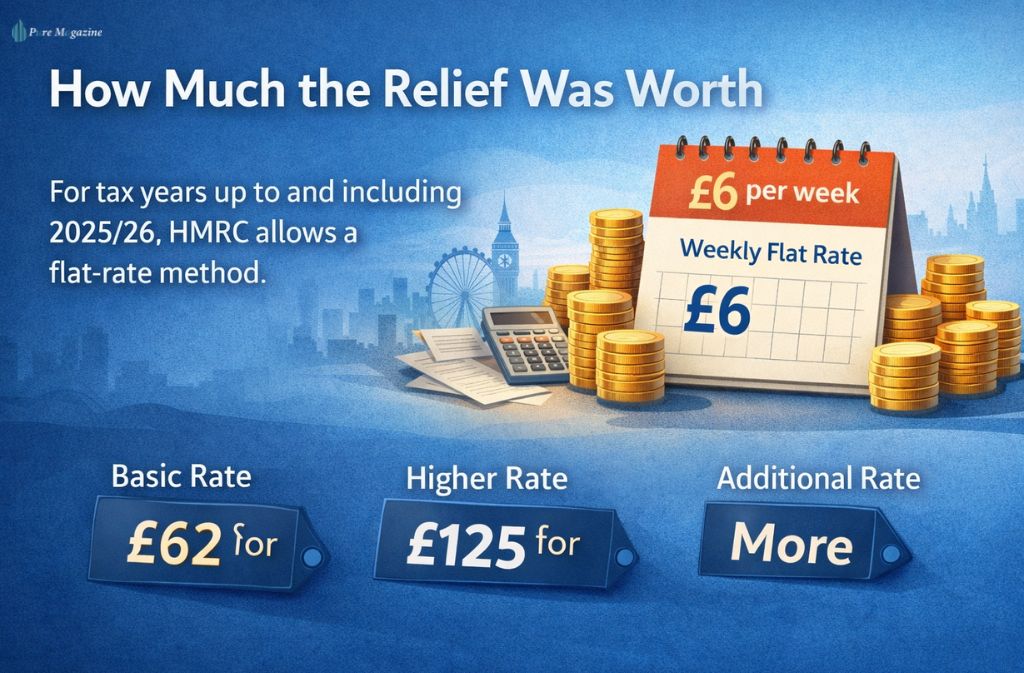
For tax years up to and including 2025/26, HMRC allows a flat-rate method.
The flat rate is £6 per week, equal to £312 per year in expenses.
The tax saving depends on your tax band:
- Basic-rate taxpayers save around £62
- Higher-rate taxpayers save around £125
- Additional-rate taxpayers are slightly more
It was never a large sum, but it was legitimate for those who qualified.
Some people claimed actual costs instead. That route remains valid for earlier years, but it requires records and careful calculation. For most employees, the flat rate was the safer option.
How to Claim (While the Window Is Still Open)
You can still submit claims now, provided the expenses relate to eligible tax years.
Most PAYE employees claim through their Government Gateway account by selecting “Claim tax relief for expenses” and choosing working from home. HMRC usually adjusts your tax code rather than issuing a direct payment.
If you complete a Self Assessment return, the claim is made there instead.
What matters is when the costs were incurred, not when the claim is submitted.
Backdating: The Part Most People Miss
HMRC allows working from home tax relief to be backdated for up to four tax years. Once a tax year drops out of that window, the entitlement is gone for good.
This is where timing matters.
Older tax years don’t roll on forever. They expire permanently.
Also Check: Tax on Savings Interest: The Hidden Bite in Your Bank Balance
The Pandemic Deadline Most People Don’t Realise Is Coming
There is one date that matters more than all others.
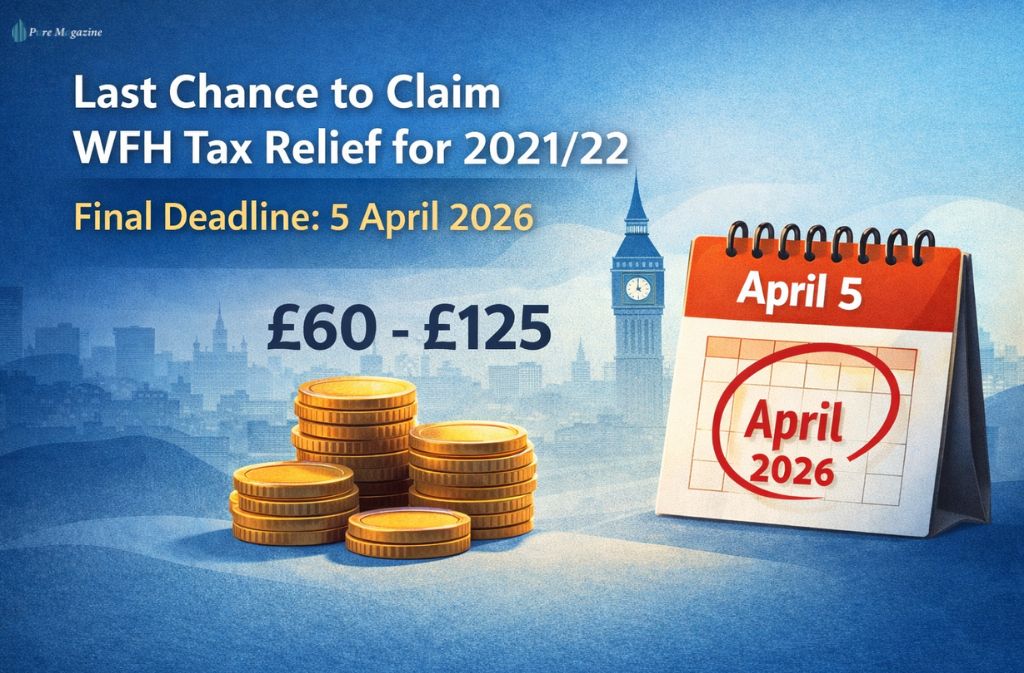
5 April 2026 is the final deadline to claim working from home tax relief for the 2021/22 tax year — the last full tax year heavily affected by pandemic home-working rules.
After that date, the opportunity is gone permanently.
For many employees who were required to work from home during that period, this represents a lost tax saving of around £60 to £125, depending on their tax rate. It isn’t a life-changing sum, but once the deadline passes, it cannot be recovered later — even if you were clearly eligible at the time.
Anyone who worked from home in 2021/22 and never claimed should treat April 2026 as a hard stop, not a reminder.
What Changes From April 2026
From 6 April 2026, employees will no longer be able to claim working from home tax relief directly from HMRC for unreimbursed expenses.
This includes:
- the £6 per week flat-rate method
- claims based on actual costs
- standalone PAYE expense claims
This change follows HMRC’s wider move away from employee-claimed expenses and towards employer-managed reimbursements, after internal checks found a high proportion of claims were technically ineligible — particularly from hybrid workers.
What does not disappear
Employers can still support home workers.
An employer may pay a homeworking allowance, commonly up to £6 per week, which can be paid tax-free if HMRC conditions are met. Employers can also reimburse genuine additional costs where appropriate.
The difference after April 2026 is simple: you will not be able to claim it yourself.
What Employees Should Do After 2026
If you continue working from home after April 2026 and incur extra costs, the discussion shifts to your employer.
That may mean asking whether a homeworking allowance exists, whether expenses can be reimbursed, or whether policies need updating to reflect remote working.
Some employers already do this. Others will only act when employees raise the issue.
Common Mistakes That Still Cause Problems
Claims still fail for predictable reasons: home working being optional, broadband being claimed without evidence, or expenses being claimed despite full reimbursement.
Another common mistake is assuming pandemic-era rules still apply automatically. They do not.
Also Check: Unclaimed Tax Refund HMRC: How to Check & Claim Money Owed (2026 Guide)
Two Real-World Outcomes
An employee whose office was closed and whose contract was updated to home-based can still claim for earlier tax years, provided the claim is accurate.
An employee who works from home by choice while an office remains available generally cannot — and HMRC now enforces that line firmly.
HMRC Claims vs Employer Allowances
| HMRC claim | Employer allowance | |
|---|---|---|
| Available after April 2026 | No | Yes |
| Paid directly to the employee | No | Yes |
| Tax-free | Yes | Yes (if structured correctly) |
FAQs
Q1. Can I still claim working from home tax relief?
Yes. You can claim for tax years up to and including 2025/26, as long as you meet HMRC’s eligibility rules. This includes being required to work from home and incurring extra costs that are not reimbursed by your employer.
Q2. Is working from home tax relief ending or abolished?
Direct claims to HMRC end from 6 April 2026. After this date, you cannot claim for unreimbursed costs yourself. However, employer-paid allowances (up to £6 per week) can still be paid tax-free if HMRC conditions are met.
Q3. Does hybrid working qualify for tax relief?
Usually not. If your employer has an office available and home working is optional, hybrid workers are generally ineligible. Only roles formally required to work from home or where no office exists can claim.
Q4. How far back can I claim working from home tax relief?
You can backdate claims for up to four tax years, using HMRC’s rolling window. For example, in 2025/26, claims could still be made for 2021/22 through 2024/25, depending on eligibility.
Q5. Can I claim broadband or internet costs?
Broadband is usually treated as a fixed household cost. It can only be claimed if you can clearly show a work-only portion, and most general home broadband contracts do not qualify.
Q6. What should I do if I haven’t claimed yet?
If you were eligible in past years and haven’t claimed, act before the relevant deadlines. Once the four-year window passes or April 6, 2026, the opportunity to claim through HMRC ends. For ongoing home working, check if your employer offers a tax-free homeworking allowance.
Final Thoughts
Working from home tax relief isn’t disappearing overnight, but it is closing.
If you were genuinely required to work from home in recent years and haven’t claimed yet, there is still time — but not indefinitely. After April 2026, direct HMRC claims end, and employer reimbursement becomes the only route.
Check your eligibility carefully, don’t overclaim, and act before older tax years expire. Once they’re gone, they’re gone.
Related: How to File an HMRC Tax Return Online (Step by Step)