
Collagen powders are everywhere — and most of them promise the same things. Smoother skin. Stronger nails. That elusive “glow” that’s somehow always just a few weeks away.
So when nutrition geeks collagen glow up reviews started showing up in numbers across UK platforms, it caught attention for the right reasons. Some users were reporting real, visible changes. Others said they noticed nothing after a full month. That kind of split reaction is usually a sign that something more nuanced is going on — and it usually is.
This guide pulls together real user data, updated 2026 research, and a closer look at what’s actually inside the formula. No padding, no affiliate cheerleading. Just a straight answer on whether this is worth your time and money.
What Is Nutrition Geeks Collagen Glow Up?
At its core, Collagen Glow Up is a hydrolysed bovine collagen peptide powder. It’s designed for daily use and positioned primarily around skin, hair, nail, and joint support — the classic beauty-from-within angle that’s dominated the supplement space for the past few years.
The formula is deliberately simple:
- ✔ Hydrolysed collagen peptides (the main event)
- ❌ No Vitamin C included in the powder itself
- ❌ No hyaluronic acid
That second point trips people up more than you’d think. A lot of buyers assume this is an all-in-one beauty blend — the kind where you tip one scoop in and tick every box. It isn’t. The collagen does the structural legwork, but the “glow” effect most users describe tends to come from pairing it with complementary nutrients, particularly Vitamin C and sometimes biotin.
If you’re already taking biotin for hair growth, it’s worth understanding what that supplement actually does before stacking it on top of collagen — because the overlap isn’t always what people assume.
Why Is There No Vitamin C in the Powder?
This question comes up constantly in reviews, so it’s worth addressing properly.
Vitamin C is excluded from the powder itself for formulation reasons, not cost-cutting. When it’s mixed directly into collagen peptides, it oxidises faster, which degrades both the nutrient and the taste over time. Shelf life takes a hit, too. Most reputable collagen brands handle this the same way — they keep Vitamin C separate and recommend taking it alongside the powder rather than blending it in.
What that means practically: this is a stack-based supplement. It works best when it’s part of a broader routine, not treated as a standalone solution. If you’re expecting one scoop to do everything, you’ll likely be disappointed.
Quick Ratings Snapshot (2026)
| Category | Rating |
|---|---|
| Overall Effectiveness | 8.3/10 |
| Skin Hydration | 8.6/10 |
| Hair & Nails | 8.0/10 |
| Mixability | 8.5/10 |
| Value for Money | 7.6/10 |
| Side Effects Risk | Low |
What Real Users Are Actually Saying
Across Trustpilot, Reddit, and UK health forums, the feedback follows a surprisingly consistent pattern once you strip out the five-star noise.
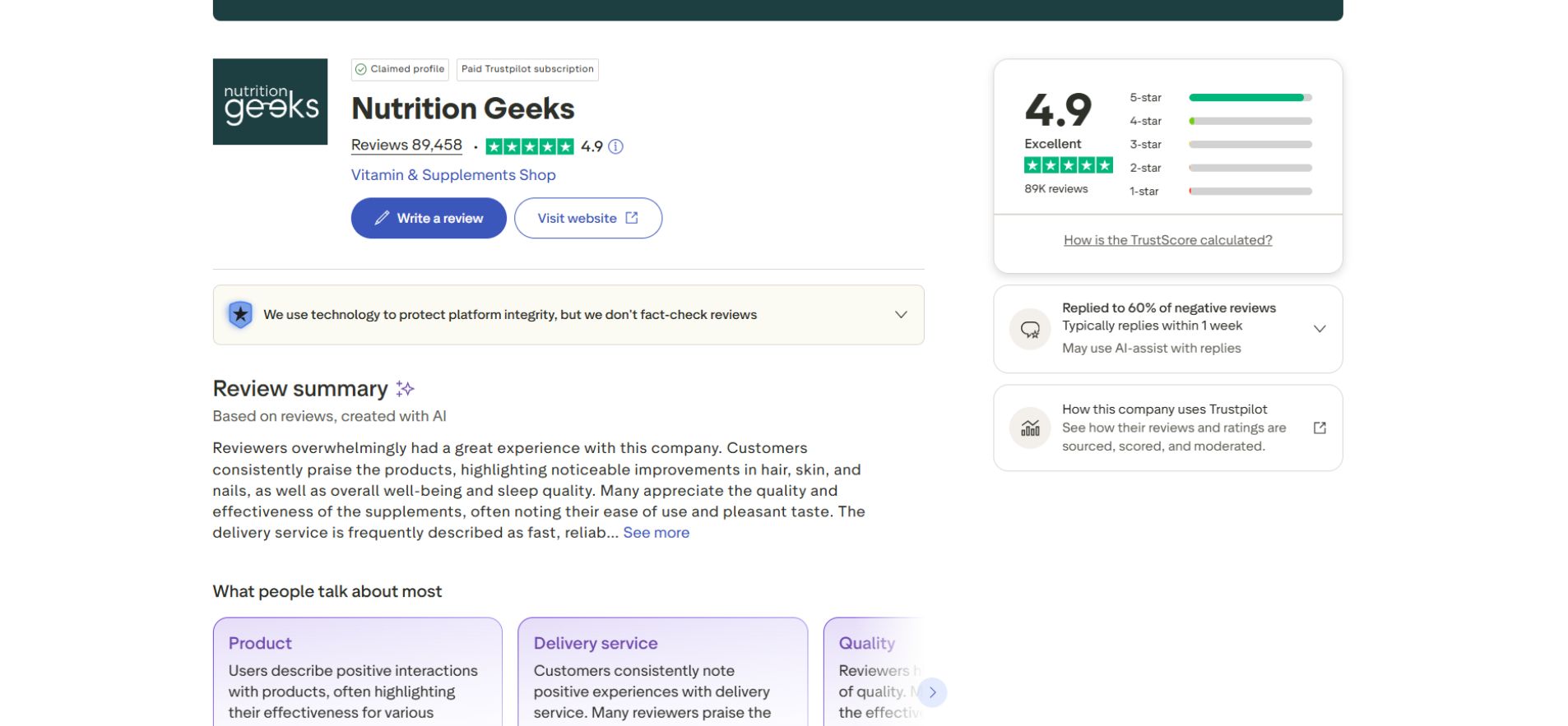

The positives that keep coming up:
- Skin feels noticeably more hydrated after a few weeks of consistent use
- Nails grow faster — this one gets mentioned a lot, often with surprise
- Mixes cleanly into hot drinks without clumping or leaving a film
The complaints that keep coming up:
- Results take longer than the marketing implies
- Mild bloating in the first week or so
- The taste on its own is bland — not unpleasant, just not enjoyable
The typical user journey looks something like this: nothing obvious in week one, skin starts feeling softer around week three, and by week six or seven there’s a more visible difference in texture and nail strength. That’s not a dramatic arc — but it’s a real one, and it lines up with what the research actually suggests is possible.
60-Day Solubility Log: What “Mixes Well” Actually Means
Every collagen review says the powder mixes well. Here’s what that translates to in practice across different liquids.
In Black Coffee
Dissolves in roughly ten seconds. Leaves a faint golden tint but no oily layer or floating residue. Doesn’t alter the taste noticeably if you’re used to black coffee.
In Oat Milk
Can clump lightly if you add it before the milk is warm enough. A quick stir sorts it immediately. Not a dealbreaker, just something to be aware of.
In Cold Water
Dissolves within fifteen seconds. No gritty texture. Taste is very mild — almost imperceptible.
One Practical Annoyance
The powder is very fine, which means it puffs slightly when you’re resealing the pouch. The zip-lock tends to collect residue after a few weeks of daily use. Most people just switch to a clip after the first month, which solves it completely.
Does It Actually Work? What the 2026 Research Says
The science on collagen supplementation has matured a lot over the past three years. Early studies had methodological issues — small sample sizes, short durations, and no placebo controls. The more recent dermatology literature is cleaner, and the conclusions are more useful.
Here’s what the updated research (2023–2026) broadly shows:
- Weeks 4–8: Measurable improvements in skin hydration
- Weeks 8–12: Better elasticity in controlled trials
- 12+ weeks: Visible skin texture improvements in the strongest studies
The honest framing here is that collagen supplements provide amino acids — mainly glycine, proline, and hydroxyproline — that your body uses as raw material for its own collagen synthesis. They don’t deposit collagen directly into your skin. That distinction matters because it explains both why the effects are real and why they take time.
It’s also worth noting that collagen levels aren’t something you can measure from a standard GP blood test. If you’re curious about what blood test results can and can’t tell you about your nutritional status, that’s a separate question worth understanding — particularly if you’re tracking the effects of multiple supplements at once.
Key Benefits — What the Evidence Supports
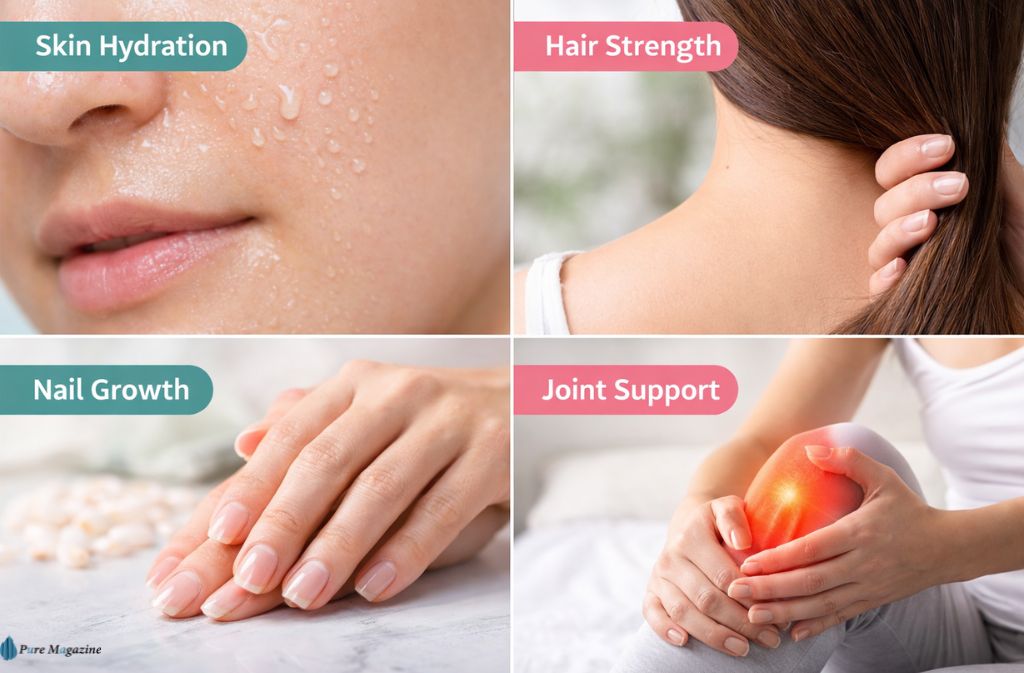
Skin Hydration
This is the strongest area. Multiple peer-reviewed trials show consistent improvements in moisture retention and transepidermal water loss with daily collagen peptide supplementation over eight or more weeks.
Hair Strength
Less direct evidence here. Collagen supports keratin production indirectly by supplying relevant amino acids, but hair-specific results vary considerably between users. If hair is your primary concern, it’s worth reading more on whether biotin is actually effective for hair growth — the research there tells a different story than most supplement brands suggest.
Nail Growth
Anecdotally, very consistent across reviews. Some clinical evidence supports it, and it tends to be one of the earlier changes users notice — probably because nails have a faster turnover cycle than skin.
Joint Support
Possible over longer periods, but the evidence is less robust than for skin. If joint health is your main goal, you’d want to look at specific Type II collagen products rather than beauty-focused peptide powders like this one.
Realistic Results Timeline
| Timeframe | What to Expect |
|---|---|
| Week 1–2 | No visible change |
| Week 3–4 | Slight improvement in hydration |
| Week 5–8 | Noticeable skin softness |
| Week 8–12 | Stronger nails, clearer glow |
| 12+ weeks | Best cumulative results |
Powder vs Liquid Collagen: Which Makes More Sense?
Liquid collagen products have been growing in popularity, so it’s a fair comparison to make.
| Feature | Powder | Liquid |
|---|---|---|
| Cost | Lower | Higher |
| Convenience | Medium | High |
| Flexibility | High | Low |
| Taste | Neutral | Usually flavoured |
Powder wins on value and versatility. Liquid wins if you genuinely hate mixing things and are willing to pay more for the convenience. Neither is dramatically more effective than the other when dose and ingredients are equivalent.
Collagen During Weight Loss: A Growing Use Case
One trend that’s picked up noticeably in 2025 and into 2026 is people using collagen supplements alongside calorie-restricted diets or GLP-1 medication protocols. The reasoning makes sense: significant weight loss — particularly when it happens quickly — can reduce skin elasticity and lead to a looser appearance that catches people off guard.
Collagen supplementation in this context is used as a support measure. It won’t prevent loose skin entirely, and it shouldn’t be sold as if it will. But the evidence for maintaining hydration and elasticity during periods of body composition change is reasonable enough to make it worth considering as part of a broader approach.
Why Type I Collagen Specifically?
Type I is the most abundant form of collagen in the human body and plays the central structural role in skin, tendons, and bone. It’s the form most directly linked to skin texture and firmness, which is why it’s the standard choice in beauty-focused supplements. Type II is more relevant to cartilage; Type III is found alongside Type I in skin but in smaller quantities.
When a collagen powder is marketed for skin and hair, Type I hydrolysed peptides are the correct ingredient. This product uses them, which is at least one thing it gets right on the formulation side.
Side Effects and Safety
Hydrolysed bovine collagen is generally considered safe for healthy adults. The side effects that come up in reviews are mild and temporary:
- Bloating or a heavy feeling in the first week
- Minor breakouts during the adjustment phase (not universal)
- Feeling full after use, which some people actually find useful
If you’re sensitive to digestive changes, starting at half a scoop for the first week tends to smooth the transition.
Who should avoid it:
- Vegans (it’s bovine-derived)
- Anyone with a beef or meat allergy
- Pregnant individuals — not because there’s evidence of harm, but because supplementation during pregnancy warrants a conversation with a doctor first
The Habit Problem (And Why Most People Don’t Get to 60 Days)
Here’s something that doesn’t get enough attention in supplement reviews: the results don’t come from the product — they come from using the product consistently for long enough. And most people don’t.
Two months of daily supplementation sounds easy in theory. In practice, it requires building a genuine habit. The users who report the best outcomes almost always describe the same setup: keeping the powder next to the kettle, adding it to their morning coffee or tea without thinking about it, and treating it as a fixed part of the routine rather than something optional.
If you’re someone who regularly starts supplements and forgets about them by week three, that’s the actual barrier here — not the formula.
Common Mistakes Worth Avoiding
- Expecting results in the first two weeks. It’s not going to happen. The biology doesn’t work that fast.
- Skipping days and doubling up. Collagen synthesis is a cumulative process. Consistency matters more than occasional high doses.
- Not pairing it with Vitamin C. This is the most impactful thing you can do to support the supplement’s effectiveness, and it costs almost nothing extra.
- Treating it as a substitute for diet quality. If your protein intake is poor and your diet is nutritionally thin, no collagen supplement is going to compensate for that.
FAQs
Q. Does Collagen Glow Up actually work?
For most people who use it consistently over 8–12 weeks, yes, particularly for skin hydration and nail strength. Results before that window are unlikely to be visible.
Q. Why doesn’t it contain Vitamin C?
Vitamin C is kept separate to prevent oxidation and maintain taste stability. Adding it to the powder would reduce shelf life and alter the flavour. Take it alongside the collagen rather than instead of it.
Q. How long until I see results?
Realistically, four weeks for early hydration changes and eight to twelve weeks for more visible improvements. Twelve weeks is the benchmark most dermatology research now uses.
Q. Are there any side effects?
Mild bloating or a temporary adjustment period is possible in the first week. Starting at half a scoop reduces this for most people. Serious side effects are rare and typically linked to bovine allergies.
Q. Is it safe to take every day?
Yes, for most healthy adults. If you’re pregnant, on medication, or managing a health condition, it’s worth checking with your GP first — not because of specific known risks, but as a general precaution.
Final Verdict
Nutrition Geeks Collagen Glow Up is a competent, no-frills collagen peptide powder. It’s not trying to be an all-in-one beauty formula, which is actually more honest than a lot of what’s on the market. The trade-off is that you need to understand what you’re getting and supplement accordingly.
For skin hydration specifically, the evidence is solid and the user feedback backs it up. Nail strength is a consistent secondary benefit that tends to show up earlier than skin changes. Hair results are more variable — and if hair is your primary concern, understanding the difference between collagen and biotin’s specific role in hair growth will help you set more realistic expectations before you spend anything.
If you stay consistent for 8–12 weeks and pair it with Vitamin C, there’s a reasonable case for seeing genuine results. If you’re looking for dramatic change in under a month, this — or any collagen product — will disappoint you.