TMG doesn’t have a marketing budget. It doesn’t trend on social media. It doesn’t come in a flashy tub with an athlete on the front. However, it just keeps appearing in clinical discussions around heart health, methylation dysfunction, and metabolic efficiency — quietly, consistently, without much fanfare.
That obscurity is partly what makes it worth examining honestly. Supplements that aren’t being aggressively marketed tend to get evaluated more accurately, both in research and real-world use. The tradeoff is that guides covering them usually fail in one of two directions: too simplistic (“good for your heart, take 2g daily”) or so dense with biochemistry that the practical value disappears entirely.
This guide occupies the space between those two failure modes — and incorporates the clinical detail that separates a useful resource from generic supplement content.
What Is a Trimethylglycine TMG Supplement and How Does It Work?
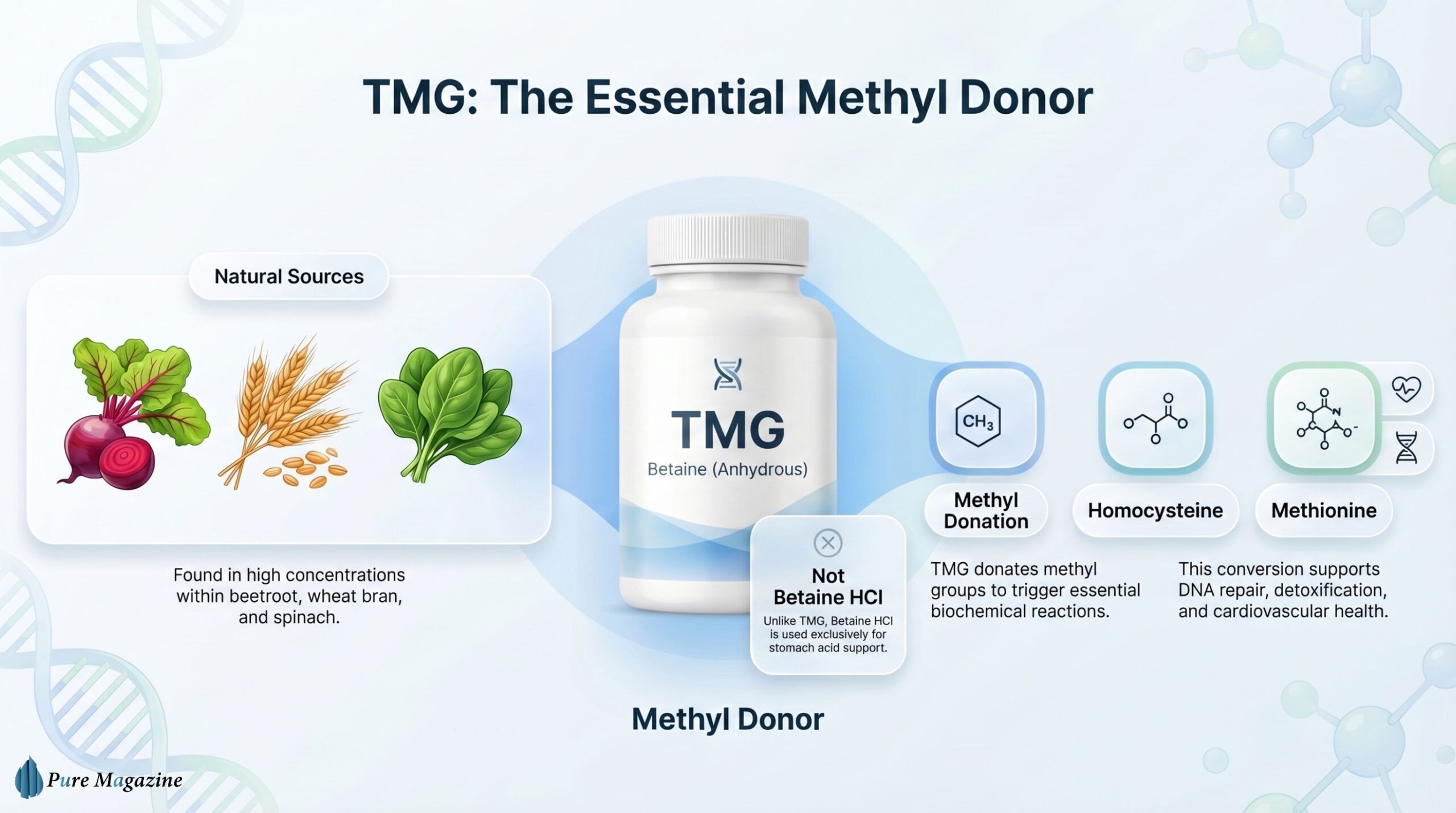

Trimethylglycine — TMG, also called betaine anhydrous — is a naturally occurring compound found in wheat bran, beets, and spinach. Its primary function is donating methyl groups, making it an active participant in reactions that underpin DNA repair, cardiovascular health, detoxification, and neurotransmitter production.
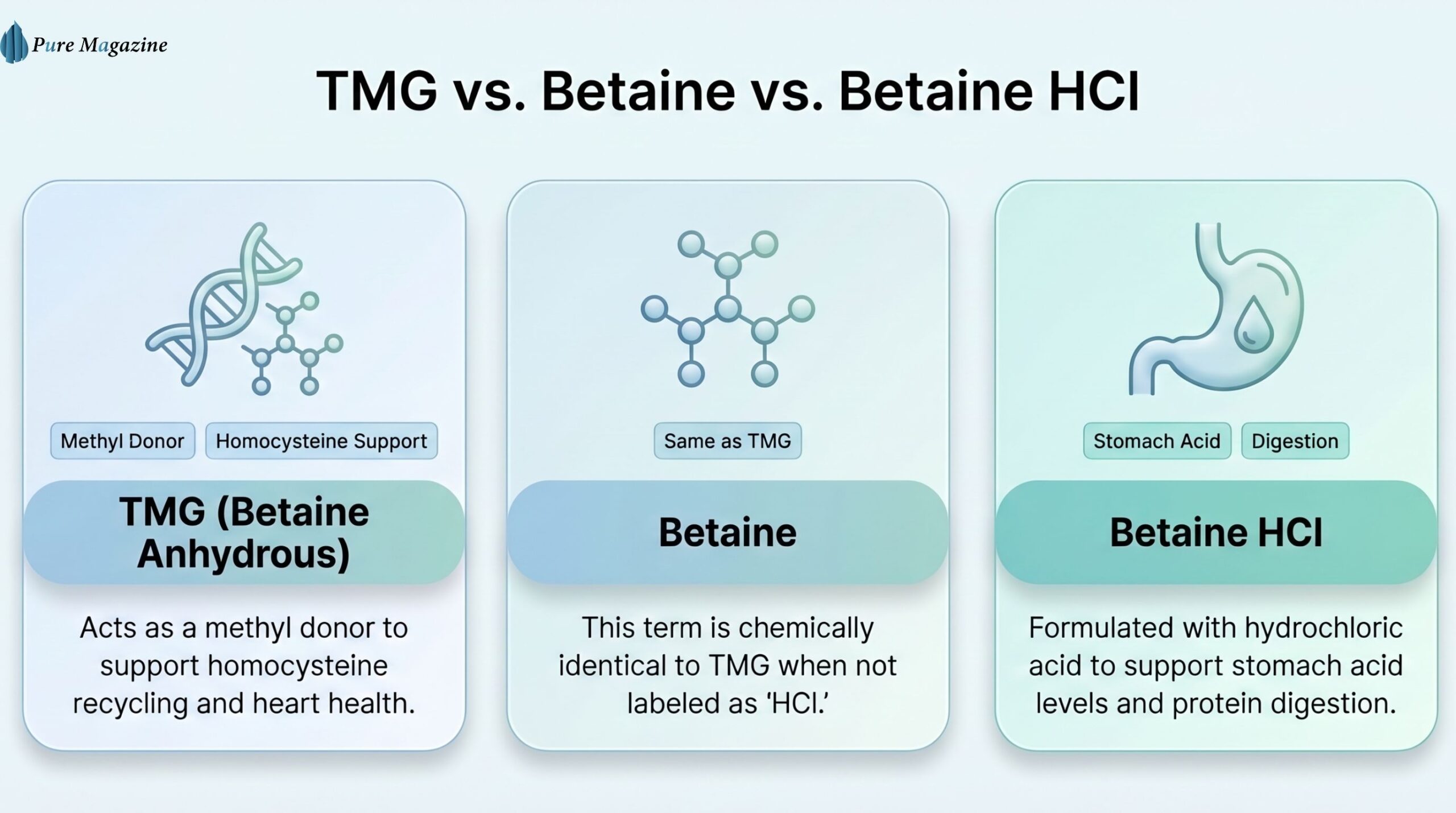
One clarification worth making immediately: TMG and betaine anhydrous are the same compound. Betaine HCl is something entirely different — a form combined with hydrochloric acid, used to support stomach acid production. These two get confused regularly, and that confusion leads people to buy the wrong product and conclude that “betaine doesn’t work” when they were using it for the wrong purpose entirely. If your label doesn’t specify “anhydrous” or “HCl,” dig deeper before buying.
As a food source, beets contain among the highest concentrations of naturally occurring TMG, which is one reason beetroot extract appears in discussions of both methylation support and exercise performance compounds, though the mechanisms differ.
How Does a Trimethylglycine TMG Supplement Support the SAMe Cycle?
The body runs a methylation system — the SAMe cycle — that continuously transfers methyl groups across essential cellular processes. SAMe (S-adenosylmethionine) acts as the primary methyl donor. After donating a methyl group, it becomes homocysteine — a byproduct that must be recycled to stay metabolically useful.
This recycling happens through two pathways. The primary route depends on folate and vitamin B12. The secondary, or backup route, uses the enzyme BHMT — and this is where TMG plays a direct role. TMG donates a methyl group to homocysteine, converting it back into methionine without relying on the folate pathway.
When the folate-dependent pathway is impaired — due to deficiency, genetic variation, or increased demand — the body leans more heavily on this TMG-driven backup. Supplementing TMG supports this process and reduces strain on the primary cycle, a mechanism often referred to as the “SAMe sparing effect.”
Another key factor is the SAMe/SAH ratio. SAH (S-adenosylhomocysteine), formed after methyl donation, can inhibit methylation if it accumulates. A higher SAMe/SAH ratio reflects efficient methylation, while a lower ratio signals metabolic pressure. By promoting efficient homocysteine recycling, TMG helps maintain this balance and keeps the cycle functioning smoothly.
There’s also a secondary benefit: choline sparing. Since choline can act as a methyl donor via the same BHMT pathway, TMG reduces the need to use choline for this role. This allows more choline to be directed toward acetylcholine production — a neurotransmitter essential for memory, attention, and muscle function.
What Are the Benefits of a Trimethylglycine TMG Supplement?
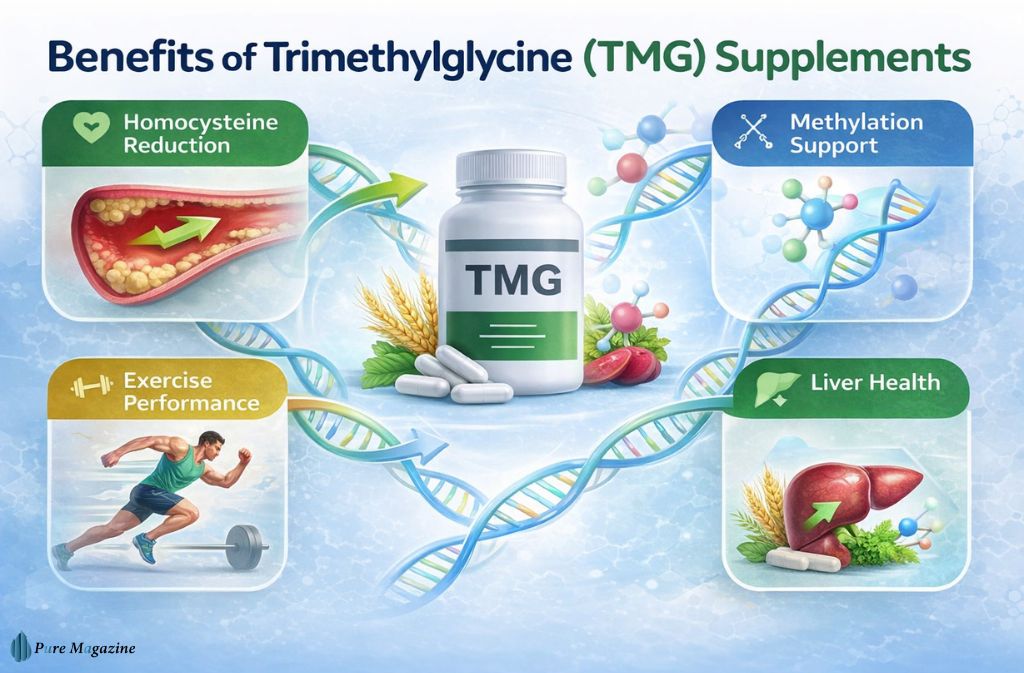
Homocysteine Reduction
This is TMG’s strongest and most consistently demonstrated benefit. Elevated homocysteine damages arterial walls, promotes inflammation, and independently raises cardiovascular risk. A 2024 meta-analysis in The Journal of Nutrition found that TMG supplementation significantly reduced homocysteine levels across varied populations and study designs. The effect is robust and doesn’t depend on particular subgroups — if elevated homocysteine is the concern, TMG has a genuine clinical case behind it.
Methylation Support and the SAMe/SAH Ratio
For people with compromised methylation, TMG provides an additional methyl group supply that helps maintain SAMe/SAH balance. The practical consequences of poor methylation include impaired detoxification, unstable gene expression, elevated homocysteine, and reduced neurotransmitter synthesis. These aren’t symptoms you feel acutely — they’re background system failures that compound over time. TMG addresses one of the main upstream causes rather than managing downstream symptoms.
Exercise Performance
The evidence here is real but specific. TMG improves short-duration power output — sprint performance and strength metrics — rather than endurance. A 2013 study in the Journal of the International Society of Sports Nutrition found improvements in power and force production with TMG supplementation in trained athletes. For endurance athletes, the evidence is considerably weaker. This is a strength and power supplement through its metabolic effects — not a broad performance enhancer.
Liver Health
TMG has been studied in non-alcoholic fatty liver disease, where it appears to support fat metabolism and reduce lipid accumulation in liver tissue. Research in Alimentary Pharmacology & Therapeutics found improvements in liver enzyme markers with betaine supplementation in fatty liver patients. The evidence isn’t definitive enough to position TMG as a liver treatment, but the supporting data are credible, and the mechanism makes sense given its role in lipid metabolism pathways.
Can a Trimethylglycine TMG Supplement Raise Cholesterol Levels?
In some individuals, TMG supplementation raises LDL cholesterol modestly. The mechanism isn’t fully resolved, but it appears related to how TMG influences lipid metabolism in the liver. The homocysteine-lowering benefit remains intact alongside this effect — the two coexist rather than cancel each other out. But the LDL change is real in a meaningful subset of users, and monitoring it during long-term use is appropriate rather than optional.
Biomarker Tracking Protocol
If you’re using TMG therapeutically — particularly for cardiovascular or methylation reasons — tracking these markers gives you actual data rather than assumptions:
| Marker | Baseline Target | Post-TMG Target (6–8 Weeks) |
|---|---|---|
| Homocysteine | Below 15 μmol/L | Below 9 μmol/L |
| ApoB / LDL | Individualised | Less than 10% increase from baseline |
| SAMe/SAH ratio | Ask clinician | Improvement from baseline |
Getting baseline blood work done before starting and repeating it at six to eight weeks gives you a clear picture of whether TMG is producing the expected benefit and whether the LDL effect is occurring in your specific case.
What Is Over-Methylation and Can TMG Supplements Cause It?
A subset of users — particularly those who are already reasonable methylators or who are sensitive to methyl group availability — can experience over-methylation from TMG supplementation. Symptoms include anxiety, insomnia, irritability, and a general “wired” feeling that doesn’t resolve with rest. If you start TMG and notice these effects within the first week or two, over-methylation is the likely explanation.
The practical response: niacin (vitamin B3 in its nicotinic acid form) acts as a methyl group acceptor — it effectively “mops up” excess methyl groups and can relieve over-methylation symptoms relatively quickly. Starting with a low TMG dose (500mg) and increasing gradually gives you a much cleaner signal about your individual response before committing to higher doses. People with known fast methylation genetics or those already taking SAMe should approach TMG with particular caution for this reason.
Does a Trimethylglycine TMG Supplement Help With MTHFR Mutation?
MTHFR gene variants — particularly C677T and A1298C — reduce folate processing efficiency, slowing the primary methylation pathway. The practical consequences commonly include elevated homocysteine, reduced SAMe availability, and impaired detoxification — even in people eating ostensibly healthy diets.
TMG bypasses the MTHFR-dependent step entirely, using the BHMT enzyme to recycle homocysteine through a completely independent route. For people with confirmed MTHFR variants who haven’t achieved target homocysteine levels through B vitamin supplementation alone, TMG often closes a gap that folate and B12 can’t.
How vitamins and methylation nutrients interact across the hormonal and metabolic system is worth understanding as a connected picture rather than isolated interventions — MTHFR rarely affects just one pathway.
What’s the Difference Between TMG, Betaine, and Betaine HCl?
People with kidney disease should approach TMG carefully. The BHMT enzyme that TMG activates is expressed primarily in the liver and kidney, and impaired kidney function affects how TMG metabolites are processed and cleared. Anyone with chronic kidney disease should discuss TMG with their nephrologist before starting.
People with high baseline SAMe levels — whether from SAMe supplementation or specific genetic profiles — face elevated over-methylation risk, as described above. TMG adds to an already high methyl group supply in these cases.
Theoretical interactions exist with medications that affect homocysteine metabolism, including methotrexate and some antiepileptics. These aren’t documented contraindications in the same sense as warfarin-omega3 interactions, but they’re mechanistically relevant and worth flagging to a prescriber.
TMG vs Betaine vs Betaine HCl
| Compound | Function | Use Case |
|---|---|---|
| TMG (Betaine Anhydrous) | Methyl donor, homocysteine recycling | Heart health, methylation, performance |
| Betaine | Same as TMG | Same applications |
| Betaine HCl | Stomach acid support | Digestive enzyme replacement |
This table exists because product labelling in this category is genuinely inconsistent. “Betaine” on a label could mean either compound. Always confirm whether the product specifies “anhydrous” or “HCl” — those words change the entire application.
Powder vs Capsule: Does Form Matter?
Modestly. Powder forms allow more precise dose adjustment — useful when titrating up from 500mg or managing over-methylation risk by starting very low. Capsules offer convenience and better palatability. TMG powder has a mildly sweet taste, which some people find acceptable in water or a smoothie and others find unpleasant.
Absorption is broadly similar between forms when taken with meals. The practical choice comes down to whether dose flexibility matters to you — if you’re starting cautiously or adjusting based on response, powder gives you more control. For stable maintenance dosing, capsules are more convenient.
Why TMG Works Better in a Stack
Taking TMG in isolation often produces underwhelming results because methylation is a system with multiple interdependent steps, not a single reaction one compound can support alone.
The functional stack: TMG as the direct methyl donor via BHMT; methylcobalamin (B12) supporting methionine synthase activity in the folate pathway; methylfolate (B9) maintaining the primary methylation route; and pyridoxal-5-phosphate (B6) supporting homocysteine processing through the transsulfuration pathway. Each addresses a different part of the same cycle.
How amino acid metabolism interacts with B vitamin status reinforces this point — these systems are genuinely interdependent. If your B vitamin status is poor, fixing that first will likely produce more noticeable results than adding TMG on top of a deficient foundation.
For people managing broader nutritional gaps — particularly older adults where methylation efficiency typically declines — understanding where TMG fits relative to other foundational nutrients helps prioritise what to address first.
Who Should Take the TMG Supplement?
Clearest candidates: people with confirmed elevated homocysteine, anyone with a known MTHFR variant who hasn’t reached target homocysteine levels through B vitamins alone, people following low-choline diets where the backup methylation pathway faces higher demand, and strength or power athletes seeking performance support through metabolic rather than stimulant mechanisms.
Less compelling cases: people with good dietary methylation support from varied whole foods, those already taking a well-formulated methylated B-complex with homocysteine in the normal range, and anyone prone to anxiety or insomnia who may be sensitive to increased methyl group availability.
Dosage and Timing
The clinically studied range runs from 500mg to 3,000mg daily. A practical framework:
- 500–1,000mg: New users, general methylation support, cautious start for those with anxiety sensitivity
- 1,000–2,000mg: Confirmed elevated homocysteine, MTHFR support
- 2,000–3,000mg: Athletic performance applications, in line with studied doses
Take with meals to reduce the mild digestive discomfort some people experience at higher doses. Pre-workout timing works if performance is the primary goal. Start at the lower end regardless of your target dose — individual response to methyl donors varies enough that beginning at 3,000mg without gauging tolerance first is a poor strategy.
TMG and Longevity: Honest Framing
Early research has examined TMG’s potential role in sirtuin (SIRT1) activity, epigenetic regulation, and cellular stress response. The mechanistic rationale is coherent — methylation balance influences gene expression, and gene expression shapes ageing trajectories. But coherent mechanism and demonstrated longevity benefit are different things.
The human trial data simply isn’t there yet to support positioning TMG as a longevity supplement. What’s reasonable: consistent methylation support over years may contribute to better cellular maintenance. Living meaningfully longer because of it remains speculative. The same honest framing applies to other nutrients appearing in longevity discussions — beef liver supplements and other nutrient-dense compounds have interesting mechanistic rationales for long-term benefit, but the proof isn’t yet where the marketing often claims it is.
What Does Clinical Research Say About Trimethylglycine TMG Supplements?
| Outcome | Evidence Strength | Notes |
|---|---|---|
| Homocysteine reduction | Strong | Most consistent benefit across trials |
| Cardiovascular support | Moderate | Indirect, via the homocysteine pathway |
| Exercise performance | Moderate | Specific to strength and power |
| Liver health | Emerging | Promising in fatty liver research |
| LDL cholesterol effect | Mixed | Monitor individually — can increase |
| SAMe/SAH ratio improvement | Moderate | Mechanistically sound, clinical data building |
| Longevity pathways | Early stage | Interesting mechanism, proof not yet there |
What Should You Check Before Buying a Trimethylglycine TMG Supplement?
Look for “betaine anhydrous” on the label — not betaine HCl. Confirm third-party testing for purity and potency. Pair with methylated B vitamins rather than treating it as a standalone solution. Start at 500mg and assess response before increasing. Get baseline blood work covering homocysteine, LDL, and ApoB before starting and repeat at six to eight weeks. If anxiety or insomnia develops in the first two weeks, reduce the dose and consider whether over-methylation is the cause.
FAQs
Q. What is trimethylglycine (TMG) used for?
Trimethylglycine (TMG) is primarily used to reduce elevated homocysteine levels and support methylation efficiency. These functions are directly linked to cardiovascular health and overall metabolic function. Secondary uses include supporting strength performance and liver health.
Q. Is TMG the same as betaine?
Yes, TMG and betaine anhydrous are the same compound. However, they are different from betaine HCl, which is used to support stomach acid and digestion, not methylation.
Q. Does TMG help with MTHFR mutation?
TMG supports methylation in individuals with MTHFR mutations by using an alternative pathway. It donates methyl groups through the BHMT enzyme, bypassing the folate-dependent pathway that may be impaired.
Q. Can TMG raise cholesterol levels?
TMG may increase LDL cholesterol slightly in some individuals. Despite this, it still lowers homocysteine levels. Monitoring LDL and ApoB during long-term use is recommended.
Q. What happens if you take too much TMG?
Excess TMG may cause over-methylation symptoms such as anxiety, irritability, or insomnia. Reducing the dosage usually resolves symptoms. In some cases, niacin may help balance excess methyl groups.
Q. When is the best time to take TMG?
TMG is best taken with meals to improve tolerability or before workouts for performance support. Consistent daily intake is more important than exact timing.
Q. How long does TMG take to work?
TMG typically takes 4 to 8 weeks to affect homocysteine levels and metabolic markers. Performance-related benefits may appear sooner, but results are not immediate.
Q. Should TMG be taken with other supplements?
TMG works best when combined with methylated B vitamins such as methylcobalamin (B12) and methylfolate (B9). These nutrients support the same methylation pathways, improving overall effectiveness.
Q. What does TMG do?
TMG (trimethylglycine) lowers homocysteine and supports methylation, helping improve cardiovascular and metabolic health. It may also support liver function and strength performance.
Conclusion
TMG isn’t a flashy supplement and doesn’t pretend to be. For the right person, used with appropriate context, it’s a genuinely useful metabolic support tool with solid evidence behind its primary applications.
The homocysteine reduction benefit is real and clinically meaningful. The MTHFR connection is mechanistically sound. The choline-sparing effect adds a secondary benefit that most guides overlook. The exercise performance data is specific but credible. The cholesterol consideration and over-methylation risk are worth monitoring rather than ignoring, and worth knowing about before the first dose rather than after.
Use it with methylated B vitamins. Start conservatively. Track something measurable. And approach the longevity claims with the scepticism they currently deserve — the mechanism is interesting, the proof is not yet there.
This article is for informational purposes only and does not constitute medical advice. Always consult a qualified healthcare professional before starting any new supplement, particularly if you are managing a diagnosed condition, taking prescription medications, or have kidney disease.
Explore our full library of expert-reviewed health and nutrition guides at Pure Magazine.