Beef liver used to be something people forced down at their grandmother’s insistence. Now it comes in capsules, and the market for it has quietly exploded.
The reasons aren’t hard to find. A lot of people have grown disillusioned with standard synthetic multivitamins — they take them dutifully, feel nothing, and eventually stop. Organ meat supplements feel different to them: less manufactured, more recognisable to the body. Whether that intuition is entirely accurate is worth examining, but it’s not without basis.
What most guides don’t tell you, though, is that the same properties making beef liver supplements appealing are the ones that make them worth approaching carefully. High bioavailability is a genuine advantage — until you’re getting too much of something your body has nowhere to put. In 2026, that tension is the real story.
What Are Beef Liver Supplements and How Do They Work?
Beef liver supplements are capsules made from freeze-dried or desiccated organ meat. The processing is relatively minimal — grass-fed cattle liver is typically cold-processed to preserve nutrient integrity, then encapsulated. No heroic chemistry involved.
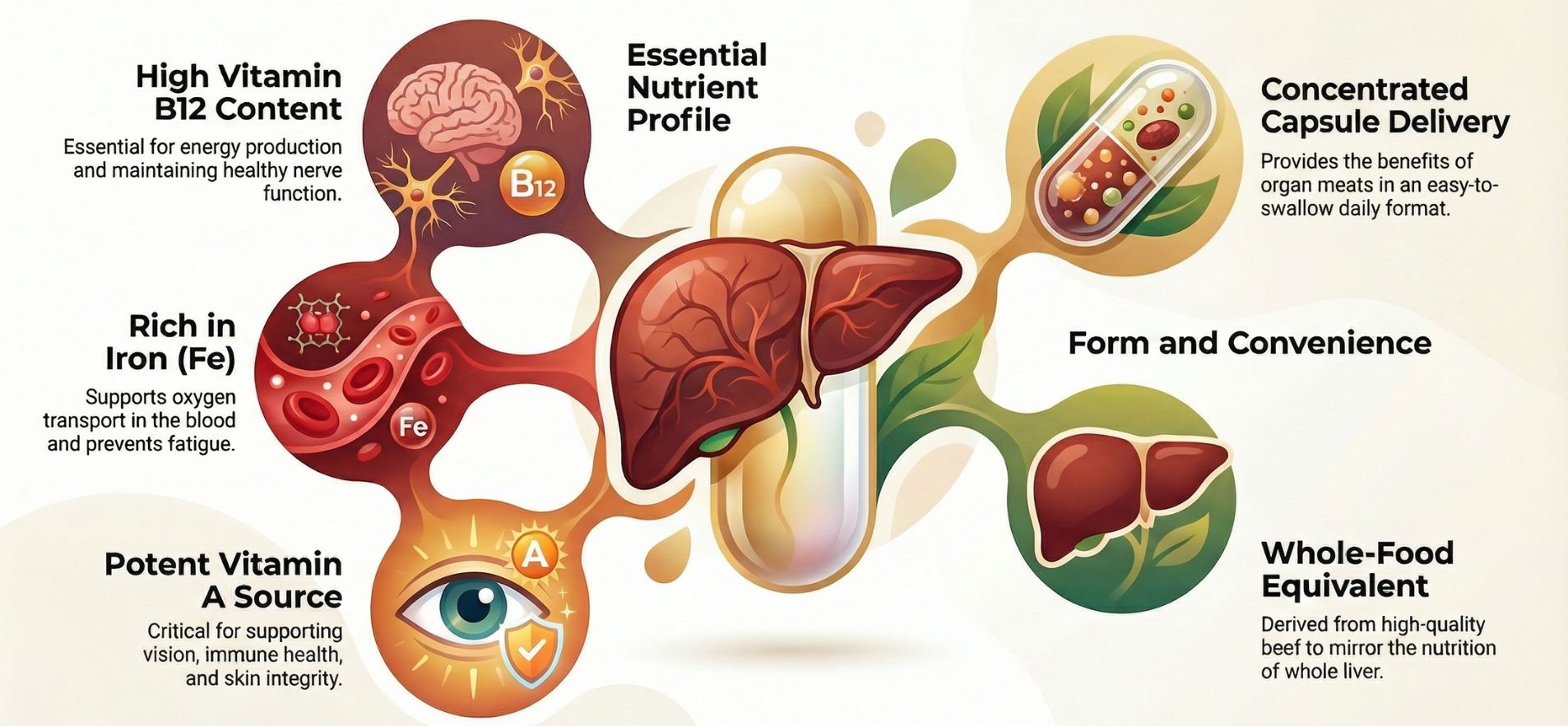
What sets them apart from standard supplements is the nutrient profile. You’re getting methylcobalamin (the naturally occurring, active form of B12), heme iron — which absorbs at a fundamentally different rate than the non-heme iron in plant foods or cheaper supplements — retinol rather than beta-carotene, and a natural pairing of copper and zinc that you’d struggle to replicate by stacking individual supplements. These aren’t analogues or precursors. They’re the real thing, in forms the body uses directly.
That distinction matters more than it sounds, and it’s worth understanding before you buy anything.
What Benefits Will You Notice from Beef Liver Supplements?
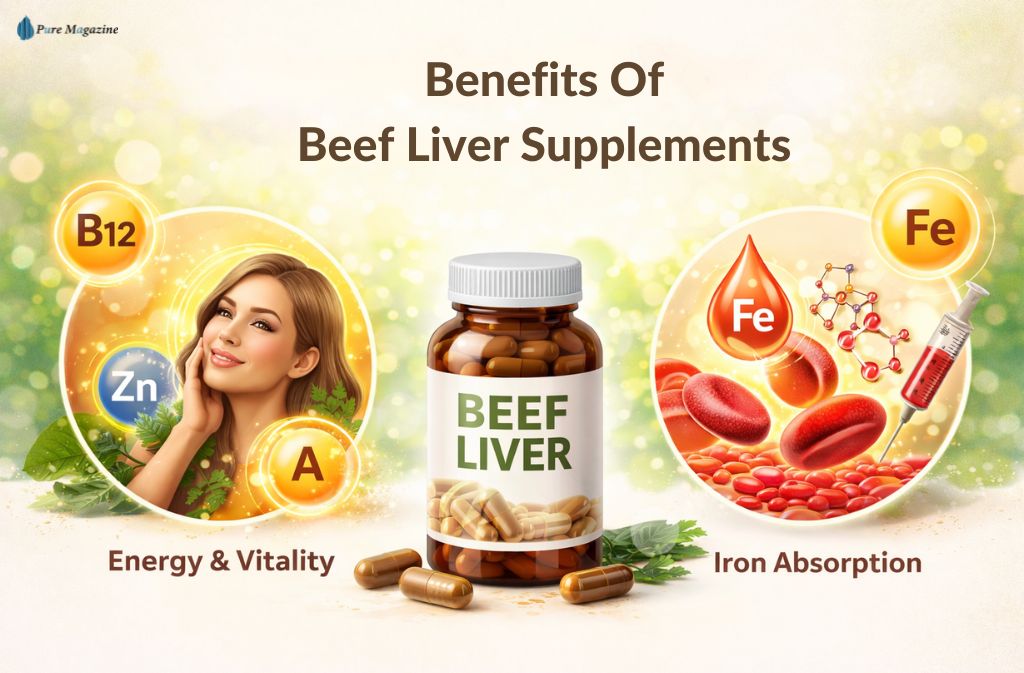
Energy tends to be the first thing people report. It’s not a stimulant effect — there’s no caffeine-like surge — but for people who were genuinely low in B12 or iron, the improvement is real and often noticeable within a few weeks. The mechanisms are different from those behind fat burners or pre-workout compounds, which is worth understanding if you’re comparing across supplement categories. Liver capsules work through nutritional repletion, not stimulation. That means a slower onset, but no corresponding crash.
Skin and hair are commonly mentioned after a few months. Vitamin A, zinc, and amino acids all play roles in skin cell turnover and hair structure, and the liver provides all three in reasonably high concentrations. Whether biotin alone justifies the hype for hair growth is a separate question, but in the context of liver supplementation, the multi-nutrient profile offers more pathways to hair-related benefit than any single-nutrient supplement.
Iron status is arguably where these supplements have the strongest practical case. Heme iron, the form found in animal tissue, is absorbed at roughly 15–35% efficiency. Non-heme iron from plants or most standalone iron supplements sits closer to 2–20%, and that upper end requires ideal conditions. For anyone dealing with fatigue tied to low ferritin or diagnosed iron deficiency, the difference is meaningful — and research on iron absorption has been consistent on this point for decades.
Methylation support is a less-discussed but legitimate benefit. The B vitamins in liver — methylfolate and methylcobalamin specifically — are already in their active forms, which means the body doesn’t need to convert them first. Synthetic folic acid requires conversion steps that a portion of the population handles poorly due to MTHFR gene variants. Liver bypasses this entirely.
Fresh Liver vs Capsules: An Honest Comparison
Fresh liver wins in nutrition. There’s more of everything, absorption may be slightly better, and you’re not paying a significant markup for processing. If you eat it regularly, the supplement version becomes largely redundant.
The problem is consistency. Most people won’t eat liver weekly. It has a strong flavour, it’s not a convenient food to prepare on a Tuesday evening, and the cultural familiarity with organ meat has largely faded in Western diets. Capsules solve for that — not because they’re superior, but because they’re actually taken.
From a practical standpoint, if the choice is liver capsules three times a week versus fresh liver zero times a week, the capsules win by default.
The Safety Picture of Beef Liver Supplements in 2026

This is where things get more nuanced, and where a lot of supplement marketing glosses over important details.
Vitamin A accumulation is the primary concern. Retinol — the form in the liver — is fat-soluble and stored in the body rather than excreted. Unlike beta-carotene from plants, which the body regulates its own conversion of, preformed retinol accumulates. A typical serving of beef liver supplements contains somewhere between 3,000 and 5,000 IU — roughly 100 to 150 percent of daily needs. That’s fine on its own. The issue arises when you’re also eating eggs, dairy, or red meat regularly, or taking a multivitamin that already includes vitamin A. The sources stack.
Research on vitamin A toxicity from the NIH makes clear that chronic intake above tolerable upper limits — 10,000 IU per day for adults — carries real risks, including liver damage, bone density loss, and teratogenic effects in pregnancy. Most people taking standard doses won’t approach this threshold, but it’s worth actually calculating your total intake rather than assuming you’re fine.
MASLD (Metabolically Dysregulated Steatotic Liver Disease) has become an increasingly prominent concern given how prevalent metabolic dysfunction is in the general population. If your liver is already under strain processing dietary fat and managing lipid metabolism, the additional load from fat-soluble vitamin processing is worth factoring in. This isn’t a reason to avoid these supplements entirely, but it’s a reason to be honest about your starting health picture.
The “liver stores toxins” argument is one of the more durable myths in this space. The liver processes toxins — it doesn’t warehouse them. What it stores are nutrients. That said, sourcing quality still matters: cattle raised on contaminated land or with heavy antibiotic and hormone exposure will produce livers with a different profile than those of grass-fed, regeneratively farmed animals. Third-party heavy metal testing has become standard practice among better suppliers, and it’s worth checking for before buying.
How to Take Beef Liver Supplements Safely Without Overdoing It
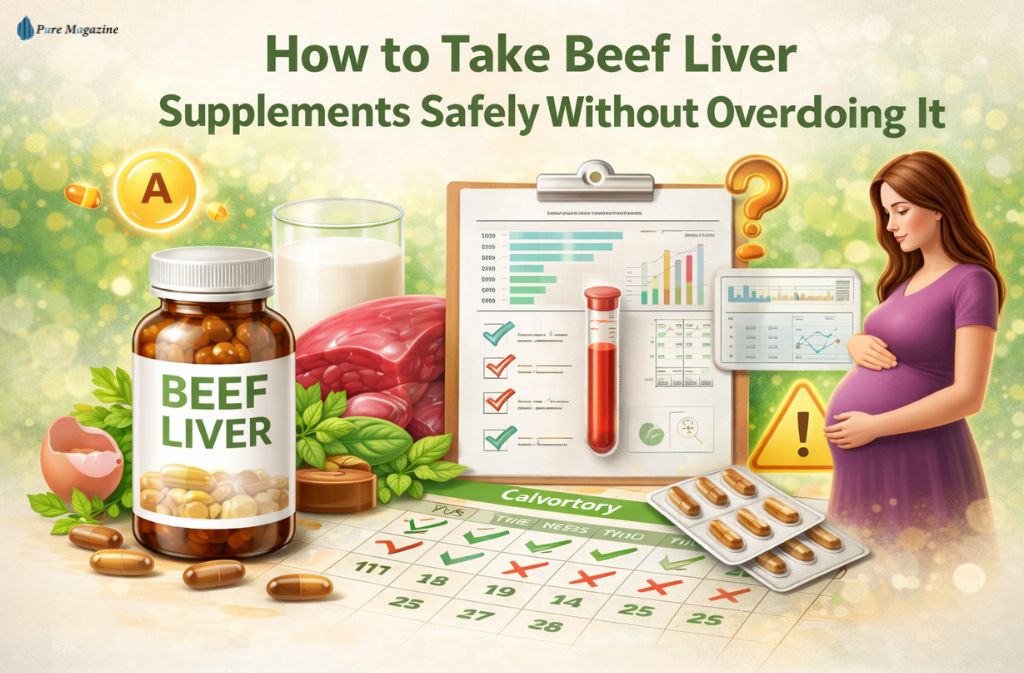
The shift in thinking around dosing has been meaningful. A few years ago, the default recommendation was maximum daily doses — six capsules, every day, no interruption. The 2026 approach is more conservative.
Pulsed dosing — three to four days per week rather than daily — better matches how fat-soluble vitamins are stored and used. It reduces accumulation risk without meaningfully sacrificing the benefits of consistent use. For people who eat a reasonably varied diet with some animal protein, this is probably the right default.
Adjusting for your baseline diet is the step most people skip. If you regularly eat eggs, dairy, and red meat, your vitamin A intake is already meaningful before you open a supplement bottle. In that context, two to three capsules on non-consecutive days is likely sufficient. If your diet is predominantly plant-based, you have more headroom.
If you’re monitoring nutrient levels through blood work — which is worth doing if you’re supplementing seriously — understanding your lab results helps you adjust dosing with actual data rather than guesswork.
Pregnancy is a special case. High vitamin A intake during pregnancy carries documented risks to foetal development. This isn’t a theoretical concern — it’s one of the better-established nutrient-teratogen relationships in the literature. Anyone pregnant or trying to conceive should speak to a clinician before taking these supplements.
The “Nose-to-Tail” Stacking Trend
A growing subset of supplement users is moving beyond liver alone and stacking multiple organ supplements in combination. Beef heart for CoQ10, kidney for DAO enzyme activity, liver for the B vitamins, and iron. The logic is that this more closely approximates the nutritional pattern of traditional diets that included regular organ meat consumption.
It’s an interesting approach, and there’s a coherent rationale behind it. It also multiplies the vitamin A accumulation concern proportionally, so anyone going this route needs to be more attentive to total intake, not less.
What to Look for When Buying
“Grass-fed” is no longer a premium marker — it’s the baseline. Beyond that:
Non-defatted processing matters because fat removal takes the fat-soluble vitamins with it. A defatted liver capsule has lost much of its vitamin A and a portion of the other fat-soluble compounds. Freeze-drying preserves nutrient integrity better than heat-based desiccation. Regenerative farming certifications are becoming more common and indicate a higher standard of sourcing than grass-fed alone. Third-party lab testing for heavy metals should be transparent and available on request.
Common Mistakes When Taking Beef Liver Supplements
Starting at full dose immediately is the most common one. Beginning with one or two capsules and adjusting upward gives your digestive system time to adapt and helps you gauge your individual response before committing to a higher dose. Digestive discomfort — loose stools, nausea — at high starting doses is not unusual, and it’s almost always resolved by reducing intake.
Ignoring total vitamin A across all dietary sources is the other significant one. The supplement alone may be well within safe limits; the supplement plus your normal diet may tell a different story.
FAQs
Q. Are beef liver supplements good for you?
Beef liver supplements are good for you if you have low vitamin B12, iron deficiency, or limited animal protein intake. They provide highly bioavailable nutrients that support energy, red blood cell production, and overall health. However, if you already eat a nutrient-dense diet with organ meats, the added benefit may be minimal.
Q. Can beef liver supplements cause digestive issues?
Yes, beef liver supplements can cause digestive issues such as nausea or diarrhea, especially when taken in high doses initially. Starting with a lower dose and gradually increasing intake usually prevents these side effects and improves tolerance.
Q. How much vitamin A is in beef liver supplements?
Most beef liver supplements contain approximately 3,000 to 5,000 IU of vitamin A per serving, which equals about 100–150% of the recommended daily intake. Because vitamin A is fat-soluble and accumulates in the body, it’s important to monitor total intake from food and supplements.
Q. Should you take beef liver supplements every day?
You don’t need to take beef liver supplements every day. Many experts in 2026 recommend pulsed dosing (3–4 times per week) to maintain nutrient levels while reducing the risk of vitamin A buildup and long-term toxicity.
Q. Can beef liver supplements cause weight gain?
No, beef liver supplements do not directly cause weight gain. They are low in calories and mainly provide micronutrients like vitamins and minerals rather than fats or carbohydrates that contribute to weight gain.
Q. Are beef liver supplements safe during pregnancy?
Beef liver supplements should be used with caution during pregnancy due to their high content of preformed vitamin A (retinol), which can pose risks in excessive amounts. It is important to consult a healthcare professional before taking them while pregnant or trying to conceive.
Q. Are beef liver supplements better than multivitamins?
Beef liver supplements can be more effective than synthetic multivitamins because they contain naturally occurring, bioavailable nutrients like methylcobalamin (B12) and heme iron. However, they are not a complete replacement for a balanced diet or all essential nutrients.
Q. Do beef liver supplements really work for energy?
Yes, beef liver supplements can improve energy levels, especially in people with low iron or vitamin B12. Unlike stimulants, they support energy production by correcting nutrient deficiencies, which leads to more stable and long-lasting improvements.
The Bottom Line
Beef liver supplements occupy a legitimate space in the supplement market, particularly for people who are genuinely low in B12, iron, or who eat a diet that doesn’t include much animal protein. The nutrient profile is real, the bioavailability advantage over synthetic alternatives is real, and the evidence supporting organ meat as a nutrient-dense food source is solid.
The caveat is that “highly bioavailable” cuts both ways. These supplements deliver nutrients efficiently — which is valuable if you’re deficient, and worth managing carefully if you’re not. Used thoughtfully, with attention to dose, frequency, and your overall dietary context, they’re a worthwhile addition for the right person. Used carelessly, with the assumption that more is better, they’re the kind of thing that creates the problems it was supposed to solve.
Related: Why Does Ozdikenosis Kill You? The Deadly Truth About This Rare Disease