Moringa has become one of the most talked-about wellness supplements for a reason. It’s nutrient-dense, plant-based, and used across a range of daily health routines — from energy and recovery to general nutrition support. But one question keeps coming up in 2026: what supplements with moringa actually make sense — and which combinations should you avoid?
That’s where most advice falls apart. Many articles repeat the same surface-level claims but skip the practical questions people really ask:
- Can I take moringa with iron supplements?
- Does moringa interact with thyroid medication?
- Is moringa safe with magnesium or omega-3?
- Should I use powder or capsules?
- What’s the best time to take moringa?
Below you’ll find the best supplements to pair with moringa, important safety considerations, how to build a simple routine, and what to actually look for in a quality product.
Medical note: Supplements can affect medications and existing conditions. If you take prescription drugs or have a thyroid, blood pressure, blood sugar, kidney, or liver condition, speak with a licensed healthcare professional before adding moringa.
Why Moringa Is So Popular in 2026
Moringa refers to Moringa oleifera, a plant whose leaves are used in powders, capsules, teas, and extracts — sometimes called the drumstick tree or horseradish tree. Its appeal comes down to nutrient density. Rather than reaching for five separate supplements, many people find moringa delivers a broad range of plant-based nutrition from a single source.
Its leaves naturally contain:
- Iron and calcium
- Potassium and plant protein
- Vitamin A precursors
- Antioxidants, including quercetin and kaempferol
- Polyphenols and essential amino acids
Research published in Frontiers in Pharmacology has documented moringa’s phytochemical profile extensively, noting its antioxidant and anti-inflammatory properties across in vitro and animal studies. Human clinical evidence remains more limited, which is why framing matters — moringa supports health as part of a broader routine, not as a standalone solution.
Best Supplements With Moringa
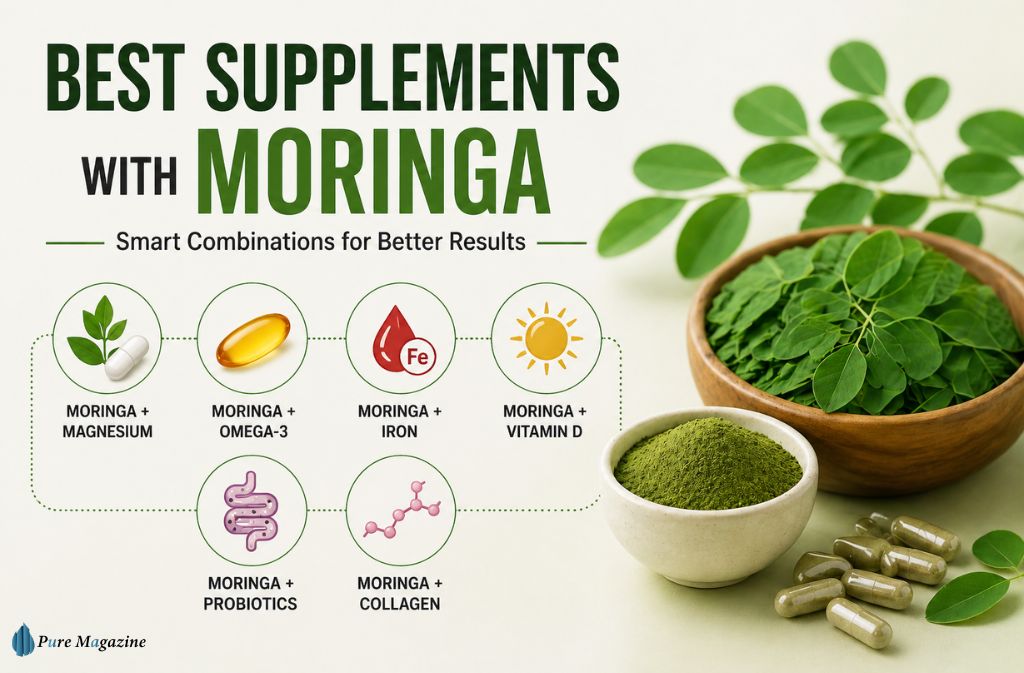
Not every combination is useful. The smartest approach is pairing moringa with supplements that complement a specific goal — not stacking for the sake of it.
1. Moringa + Magnesium
One of the most practical pairings. Moringa is taken during the day for nutritional support, and magnesium in the evening for relaxation and recovery. This split timing means the two don’t compete, and each is working when your body benefits most from it.
Best for: Stress management, sleep quality, muscle recovery, busy daily routines
Timing: Moringa with breakfast; magnesium glycinate or citrate in the evening
For adults navigating hormonal shifts or recovery-focused routines, magnesium also plays a role in hormone regulation that complements moringa’s broader nutritional contribution.
2. Moringa + Omega-3
A common and well-tolerated combination. Moringa provides antioxidant plant compounds, while omega-3s are widely used for cardiovascular, cognitive, and joint wellness. There’s also a practical absorption reason to pair them: moringa contains fat-soluble compounds including vitamin A precursors and quercetin. Taking moringa alongside a fat source — such as fish oil — may improve how those compounds are absorbed. Take omega-3 with meals for better tolerance.
Best for: Daily wellness routines, joint-conscious lifestyles, adults wanting a simple stack
3. Moringa + Iron Supplements
This is one of the most searched combinations, and it deserves a careful answer.
Moringa naturally contains non-heme iron along with polyphenols that may support iron metabolism. Emerging research has focused specifically on moringa’s effect on hepcidin — a hormone the liver produces that regulates iron absorption. When hepcidin levels are elevated, the body absorbs less dietary iron. Some early research suggests moringa’s bioactive compounds may help modulate this pathway, though the clinical picture is still developing.
A 2024 study registered under NCT06875947 is actively investigating moringa supplementation in pregnant women with iron deficiency — a sign that formal clinical evaluation is underway. At this point, moringa should not replace prescribed iron therapy for diagnosed deficiency, but pairing it with clinician-guided supplementation may have supporting value.
Best for: People with medically confirmed low iron, low-iron diets, menstruating adults under clinician guidance
Best practice: Follow your clinician’s iron dose; if stomach upset occurs, separate moringa and iron by 1–2 hours; recheck labs at appropriate intervals
Fatigue has many causes. Don’t assume iron deficiency without testing. If you’re looking into multivitamins that include iron, the same principle applies — context and testing matter more than stacking.
4. Moringa + Vitamin D
A practical stack for modern lifestyles, particularly desk workers or those in low-sunlight environments. Vitamin D is widely used for bone health, immune function, and mood support, while moringa fills nutritional gaps across other categories. They don’t compete and work well taken together in the morning.
Best for: Indoor workers, low-sunlight routines, general wellness maintenance
5. Moringa + Probiotics
Useful for people focused on digestive health. Moringa contains plant compounds and fiber-like components, while probiotics target gut microbiome balance. Standard guidance is to take probiotics first thing in the morning (check your brand’s instructions) and moringa with breakfast or lunch. People managing menopause-related bloating often find this combination helpful as part of a broader gut-focused routine.
6. Moringa + Collagen
A growing pairing in 2026. Collagen supplements are widely used for skin, joints, and connective tissue. Moringa adds antioxidant coverage and plant-sourced micronutrients. The combination doesn’t create known interactions and suits adults running a simplified daily stack. The broader evidence on collagen supplements is nuanced — but the pairing with moringa is generally considered low-risk.
Can You Take Moringa With Other Supplements Daily?
In many cases, yes. But “can” and “should” are different questions.
The real issue isn’t moringa alone — it’s stacking multiple supplements without a clear reason. More products don’t mean more results, and more combinations mean more variables if something doesn’t agree with you.
Generally reasonable for most adults: Magnesium, omega-3, vitamin D, probiotic, collagen, multivitamin (depending on total nutrient load)
Use more caution with: Iron, calcium-heavy supplements, blood sugar support formulas, blood pressure products, thyroid support blends, multi-herb stimulant stacks
If you’re already running a complex supplement routine, simplifying first is usually the smarter move than adding more. For context on how long it typically takes to notice changes from new supplements, the timeline varies significantly depending on what you’re taking and why.
Moringa and Thyroid Health: 2026 Update
This is one of the fastest-growing moringa search topics, and it deserves a straight answer.
Animal model studies have suggested moringa may influence the conversion of T4 to T3 — the active thyroid hormone — under certain conditions. This doesn’t mean moringa causes thyroid problems in healthy people, but it does mean caution is warranted for anyone already managing thyroid function. Human-specific evidence remains limited and mixed.
Separately, some plant-based foods contain compounds that may interact with iodine uptake at high doses, particularly in people with low iodine status. The role of iodine in thyroid function is established, and maintaining adequate iodine intake matters if you’re using plant supplements regularly.
If you have hypothyroidism or take thyroid medication:
- Speak with your doctor before daily moringa use
- Avoid high-dose moringa extracts
- Separate supplements from thyroid medication unless instructed otherwise
- Monitor symptoms and recheck labs as appropriate
Moringa + Blood Pressure Medication: High-Caution Zone
Some research suggests moringa may support healthy blood pressure levels in certain contexts. That sounds positive — but if you already take antihypertensive medication, the combination could lower pressure further than intended in some individuals.
The National Institutes of Health Office of Dietary Supplements maintains guidance on supplement-drug interactions that’s worth reviewing if this applies to you.
Watch for: Dizziness, lightheadedness, weakness, headaches, feeling faint when standing
If you take blood pressure medication, Medical supervision before adding moringa regularly is strongly advised.
People focused on circulation and cardiovascular support should be particularly aware of this interaction risk.
The 2026 Bioavailability Update: Micronized vs. Standard Moringa Powder
This is a section most articles skip — and it’s genuinely worth understanding before you buy.
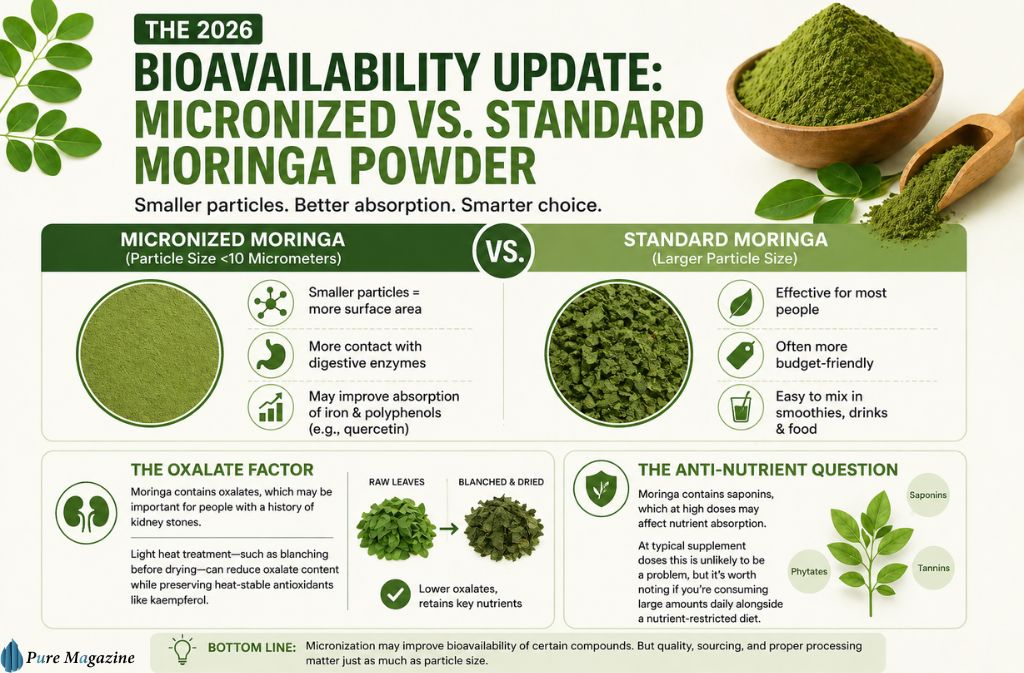
Micronized Moringa Leaf Powder (MOLMP) is processed to reduce particle size to under 10 micrometers. The smaller surface area means more contact with digestive enzymes, which may improve absorption of non-heme iron and polyphenols such as quercetin. Some processing analyses have estimated improvements in bioaccessibility of certain compounds, though peer-reviewed clinical trials specifically quantifying this in human subjects are still limited.
Not every product needs to be micronized — standard moringa powder is effective for most people. But if absorption is a concern, it’s a factor worth checking on a label.
The oxalate factor: Moringa contains oxalates, which are relevant for anyone with a history of kidney stones. Light heat treatment — such as blanching before drying — can reduce oxalate content while preserving heat-stable antioxidants like kaempferol. If oxalates are a concern, look for “blanched and dried” on the product label.
The anti-nutrient question: Moringa also contains saponins, which at high doses may affect nutrient absorption. At typical supplement doses, this is unlikely to be a problem, but it’s worth noting if you’re consuming moringa daily in large amounts alongside a nutrient-restricted diet.
Raw vs. Boiled Moringa: Does It Matter?
Yes — preparation affects the nutritional profile.
Some heat-sensitive compounds, including certain enzymes and vitamin C content, may be reduced through cooking. At the same time, heat processing can reduce certain anti-nutrients and may improve digestibility. There’s no single “best” form — it depends on what you’re optimising for.
Practical takeaway:
- Powder: convenient, concentrated, consistent dose
- Cooked leaves: traditional food use, less concentrated
- If digestion is sensitive, start with a lower dose regardless of form
Moringa Synergy Reference (2026)
| Combination | Why People Use It | Watch Out For |
|---|---|---|
| Moringa + Vitamin C | Antioxidant pairing | High doses may cause stomach upset |
| Moringa + Magnesium | Stress and recovery | Loose stools with some magnesium forms |
| Moringa + Omega-3 | Daily wellness, absorption support | Blood-thinning concerns in some users |
| Moringa + Iron | Iron status support | Only under clinician guidance |
| Moringa + Probiotic | Gut health | Introduce slowly |
| Moringa + Vitamin D | General wellness | Check total daily intake |
| Moringa + Collagen | Skin and joint support | Check for unnecessary fillers in combined products |
How to Choose a Quality Moringa Supplement
This matters more than the marketing on the label.
Moringa is an imported superfood crop, and plants reflect their growing environment. Soil quality, growing conditions, and manufacturing standards all affect what ends up in the capsule or powder you buy. In 2026, consumer awareness around heavy metal contamination in botanical supplements — particularly lead, cadmium, and arsenic — has risen significantly.
The FDA maintains regulations on dietary supplement manufacturing under GMP (Good Manufacturing Practice) standards, but third-party testing is not federally mandated. That makes independent verification critical.
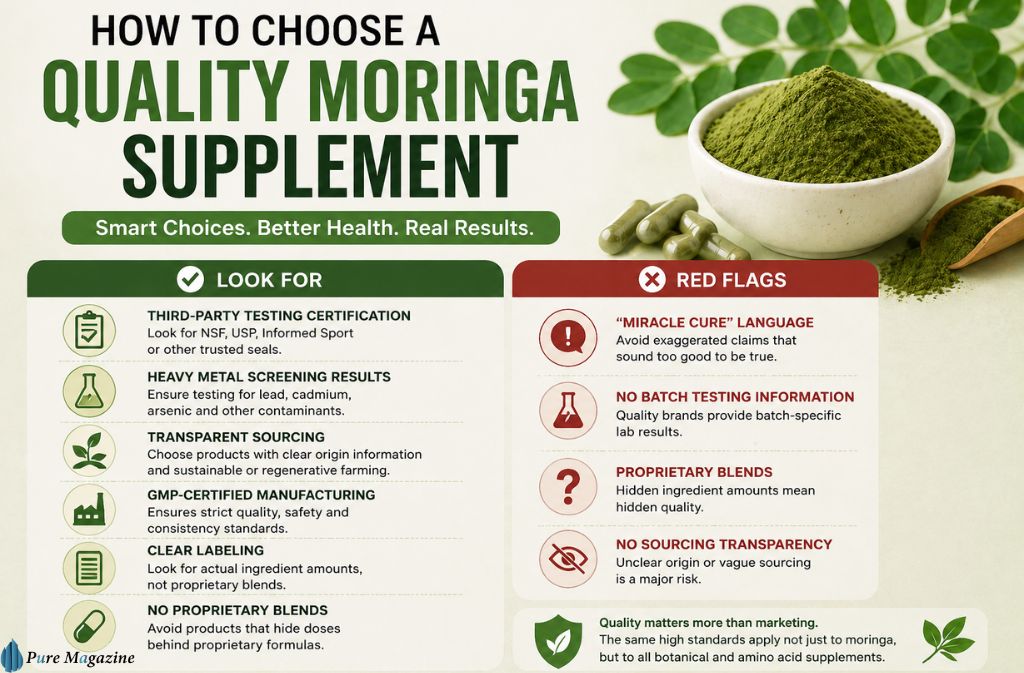
Look for:
- Third-party testing certification (NSF, USP, Informed Sport)
- Heavy metal screening results (lead, cadmium, arsenic)
- Transparent sourcing — ideally regenerative or sustainably farmed
- GMP-certified manufacturing
- Clear labelling with actual ingredient amounts
- No proprietary blends hiding dose information
Red flags:
- “Miracle cure” language
- No batch testing information
- Proprietary blends without disclosed doses
- No sourcing transparency
This quality checklist applies broadly to botanical supplements. The same standards matter when evaluating amino acid supplements or any plant-derived product where sourcing directly affects safety.
Powder vs. Capsules: Which Moringa Supplement Works Better?
Moringa Powder
- Best for: Smoothies, flexible dosing, budget-conscious buyers
- Downsides: Earthy taste, less portable, inconsistent serving sizes without measuring
Moringa Capsules
- Best for: Convenience, travel, precise and consistent servings
- Downsides: Often more expensive per serving
Micronized Powder (2026 Trend) Finer particle size may improve mixing and potentially support absorption of certain plant compounds. Worth considering if absorption is a priority, but not essential for most users.
Best Time to Take Moringa
Most people take moringa in the morning or at lunch. Some users describe a mild “clean energy” quality to it — similar to green tea without the jitters — which is why taking it late in the day doesn’t suit everyone.
Suggested timing:
- Morning: Moringa with breakfast (pairs naturally with a fat source for fat-soluble compound absorption)
- Midday: With lunch works well if mornings are rushed
- Evening: Better reserved for magnesium, not moringa
Common Mistakes to Avoid
Taking too much too soon. Start with a low dose and observe your response over a week before increasing.
Treating it as a cure-all. Moringa can support health as part of a broader routine. It doesn’t replace sleep, balanced nutrition, movement, or medical care.
Mixing five new supplements at once. If something helps or causes a reaction, you won’t know what to credit or blame.
Ignoring medication interactions. This applies to thyroid drugs, antihypertensives, blood thinners, and blood sugar medications in particular.
Buying the cheapest option available. Heavy metal screening and third-party testing cost manufacturers money — and that cost reflects in price for a reason.
Simple 14-Day Moringa Routine
Goal: Daily Wellness
Morning:
- 1 serving moringa capsule or powder
- Breakfast with protein and a small fat source
Evening (optional):
- Magnesium glycinate or citrate
Track for 14 days:
- Energy levels
- Digestive response
- Sleep quality
- Mood
- Any side effects
Keep notes. Adjust based on your response. This kind of tracking is especially useful when you’re building a blood test baseline to confirm whether supplementation is actually moving your markers.
FAQs
Q. Can I take moringa with iron supplements?
Yes, many people can take moringa with iron supplements, especially when guided by a healthcare professional. Moringa naturally contains iron and antioxidant compounds that may support iron status. If iron causes stomach upset, try separating moringa and iron by 1–2 hours. If using iron for deficiency, recheck labs such as ferritin or CBC as advised.
For more supplement and wellness content, visit Pure Magazine.