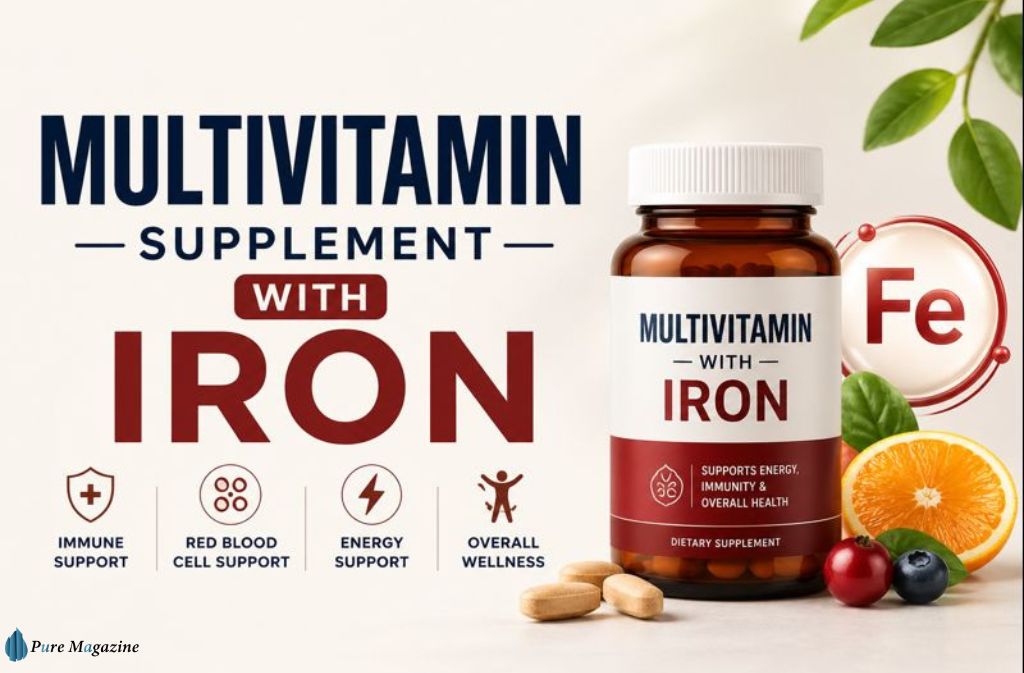
Feeling tired, foggy, and running on empty — even after a full night’s sleep? Most people chalk it up to stress or a packed schedule. But one underdiagnosed reason is iron status that’s technically “normal” on a basic blood panel, yet functionally inadequate for how your body actually operates day to day.
A well-chosen multivitamin supplement with iron can support red blood cell production, oxygen transport, and broader nutritional balance. The problem is that most people don’t know what “well-chosen” actually means in practice — and the supplement market is full of formulas that look impressive on the label and underdeliver in the body.
This guide covers what works in 2026: who genuinely benefits from adding iron to their daily supplement routine, how to read a label without being misled, what the science says about absorption, and the mistakes that cause people to either waste money or experience side effects they didn’t need to have.
What Is a Multivitamin Supplement With Iron?
A multivitamin supplement with iron combines essential vitamins and minerals with added iron to fill nutritional gaps and support healthy blood function. Most formulas include:
Iron, Vitamin C, Vitamin D, Vitamin B12, Folate, Zinc, Magnesium, Vitamin A, Vitamin E, and Selenium — though the specific forms of each nutrient matter as much as the list itself.
Iron earns its place in these formulas because your body uses it to make haemoglobin, the protein in red blood cells that picks up oxygen in the lungs and delivers it everywhere else. When that system underperforms, everything else suffers.
Why Iron Matters More Than Most People Realise
Iron doesn’t just sit in your blood — it drives energy production, supports cognitive function, powers exercise endurance, and keeps oxygen moving through every organ. When iron levels drop, even before clinical anaemia develops, the symptoms show up clearly:
That “3 PM wall” where caffeine stops helping, and your brain feels like it’s buffering through a slow connection. Persistent weakness. Breath that runs short on stairs that never used to be a problem. Hair that sheds more than it used to. Headaches with no obvious trigger. Pale skin, cold hands, and workouts that feel harder than the numbers justify.
The World Health Organization identifies anaemia as one of the most widespread nutritional health issues globally, and iron deficiency remains the leading contributor. Yet plenty of people with iron-driven symptoms never connect the two, partly because standard blood panels don’t always catch the full picture.
The Ferritin Factor: Why “Normal Iron” Can Be Misleading
Many people hear “your iron is fine” and keep searching for another reason they feel exhausted. Here’s why that conversation often goes wrong: standard testing sometimes focuses on haemoglobin levels, while ferritin — which reflects your body’s stored iron — stays unmeasured or gets interpreted with a very wide “normal” range.
Someone can have completely normal haemoglobin, low-normal ferritin, and genuine fatigue symptoms that improve meaningfully when iron stores rise. This doesn’t mean everyone with tiredness needs iron — but it does mean symptoms and lab context belong together. If you’ve had recent bloodwork and want to understand what the results actually mean, our piece on how long blood test results take covers how to interpret and follow up on panels.
When to See a Doctor: If you suspect iron deficiency, ask specifically for a ferritin test alongside haemoglobin. Ferritin below 30 µg/L can cause symptoms even when haemoglobin sits in the normal range. Don’t supplement iron based on symptoms alone — get the numbers first.
Who Should Consider a Multivitamin With Iron?
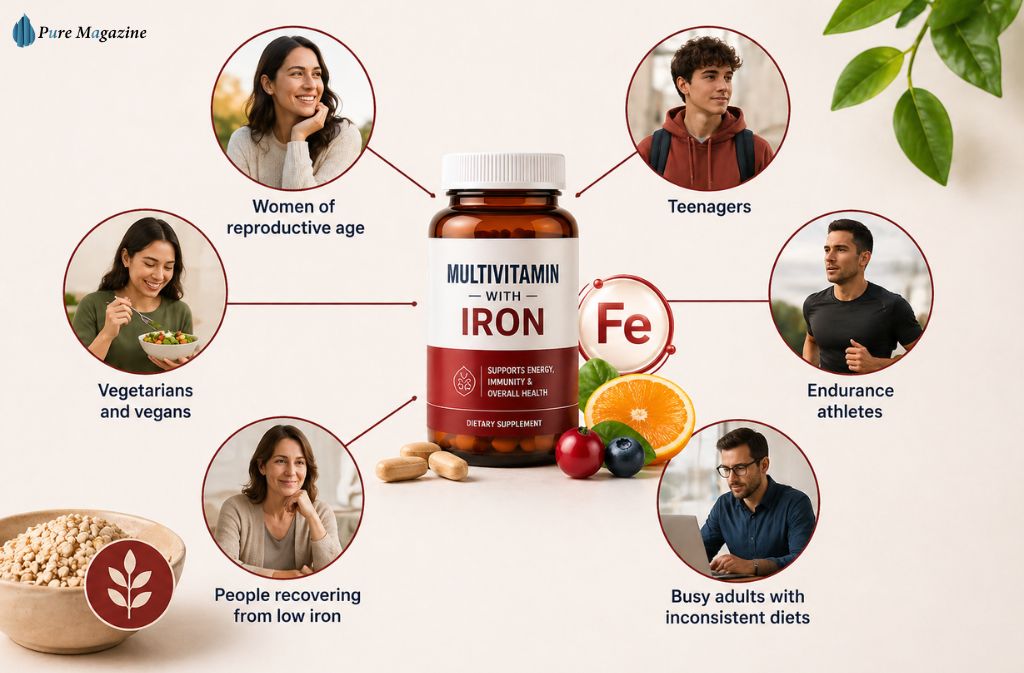
Iron needs vary significantly by life stage, diet, and health status. A multivitamin with iron makes practical sense for:
Women of reproductive age — monthly blood loss raises iron requirements substantially, and dietary intake often doesn’t keep pace.
Vegetarians and vegans — plant-based iron (non-heme) is significantly less absorbable than heme iron from animal foods. Eating iron-rich plants helps, but absorption rates are considerably lower without dietary strategies to compensate. Our amino acid supplements guide touches on how overall nutrient density in plant-based diets requires more active management.
Teenagers — growth spurts drive up demand across almost every micronutrient, iron included.
Endurance athletes — heavy training raises iron turnover through sweat, foot-strike haemolysis (a real mechanism in runners), and gut microbleeding at high intensities. If you train seriously, iron status is worth monitoring.
People recovering from low iron — some use a maintenance formula after completing a higher-dose correction course under professional guidance.
Busy adults with inconsistent diets — restrictive eating patterns, poor appetite, or simply not cooking much can leave persistent gaps that a quality multivitamin addresses.
Who Should Avoid Extra Iron?
This is the side of iron supplementation that doesn’t get enough emphasis: for a significant portion of the population, adding iron provides no benefit and carries real risk of harm.
Use caution — and get tested before supplementing — if you are:
- An adult man with confirmed normal iron levels
- A postmenopausal woman without a diagnosed deficiency
- Already taking separate iron tablets or prescription iron
- Someone with consistently high ferritin readings
- Living with a known iron overload condition, such as hereditary haemochromatosis
- Someone with existing digestive sensitivity (iron can aggravate this significantly)
Too much iron causes nausea, constipation, abdominal cramping, and in more serious cases, organ-level iron overload. The Tolerable Upper Intake Level for adults sits at 45mg per day. If your multivitamin already contains 18mg and you add a standard iron tablet (often 65mg), you’re well past that threshold — which is why checking labels before combining products matters.
Why Many Multivitamins With Iron Underperform
The label often tells a very different story from the formula’s actual performance. Here’s what causes most of the disappointment:
Calcium-iron competition. Calcium and iron compete for the same absorption transporter in the gut. High calcium in the same tablet — above about 200mg — can meaningfully reduce how much iron you actually absorb. Many broad-spectrum multivitamins contain substantial calcium, which quietly undermines the iron in the same capsule.
Low-quality iron forms. Ferrous sulfate is the most common iron form in budget multivitamins. It works at raising iron levels but causes significantly more gastrointestinal side effects than newer forms. Constipation, nausea, and stomach cramps are common reasons people stop taking iron — and those complaints usually trace back to the form, not iron itself.
No vitamin C inclusion. Vitamin C substantially increases non-heme iron absorption. Formulas that include iron but omit vitamin C, or include barely any, miss a simple and important synergy.
Tiny, label-dressing doses. Some products include iron at 2–5mg — enough to print “with iron” on the front pack, not enough to do anything useful for anyone with even mild insufficiency.
The hepcidin problem. Hepcidin is the hormone your body uses to regulate iron absorption. When you take iron daily, hepcidin rises in response, which blocks further absorption — a negative feedback loop. This is why alternate-day iron dosing has become one of the more significant 2026 trends in iron supplementation: research now shows that skipping a day between doses can allow hepcidin levels to drop, improving overall absorption compared to daily dosing. It’s counterintuitive but increasingly supported.
Iron Forms Compared: 2026 Buyer’s Guide
Not all iron forms behave the same in the gut. Here’s how the main ones compare:
| Iron Form | Absorption | Stomach Tolerance | Notes |
|---|---|---|---|
| Ferrous Bisglycinate | High | Excellent | Best option for most sensitive stomachs |
| Liposomal Iron | Very High | Excellent | 2026 gold standard; bypasses gut irritation entirely |
| Iron Protein Succinylate (IPS) | High | Very Good | Premium form; increasingly in specialist formulas |
| Ferrous Fumarate | Moderate-High | Good | Reliable balanced option |
| Ferrous Gluconate | Moderate | Good | Gentle for daily low-dose support |
| Ferrous Sulfate | Moderate | Lower | Common in budget formulas; most side effects |
The 2026 standout: Liposomal iron wraps iron in a lipid (fat) layer that allows it to pass through the gut lining without triggering the inflammation that causes most iron-related digestive side effects. Absorption improves, tolerance improves, and hepcidin response may be lower. Premium pricing reflects this, but for anyone who has repeatedly stopped iron due to constipation or nausea, the cost difference often justifies itself.
Practical tip: If you’ve abandoned iron before because of gut problems, try a bisglycinate-based formula first — it’s significantly gentler than sulfate. If you want the highest possible absorption with the least side-effect risk, liposomal is the current benchmark.
The Bioavailability Science Most Brands Skip
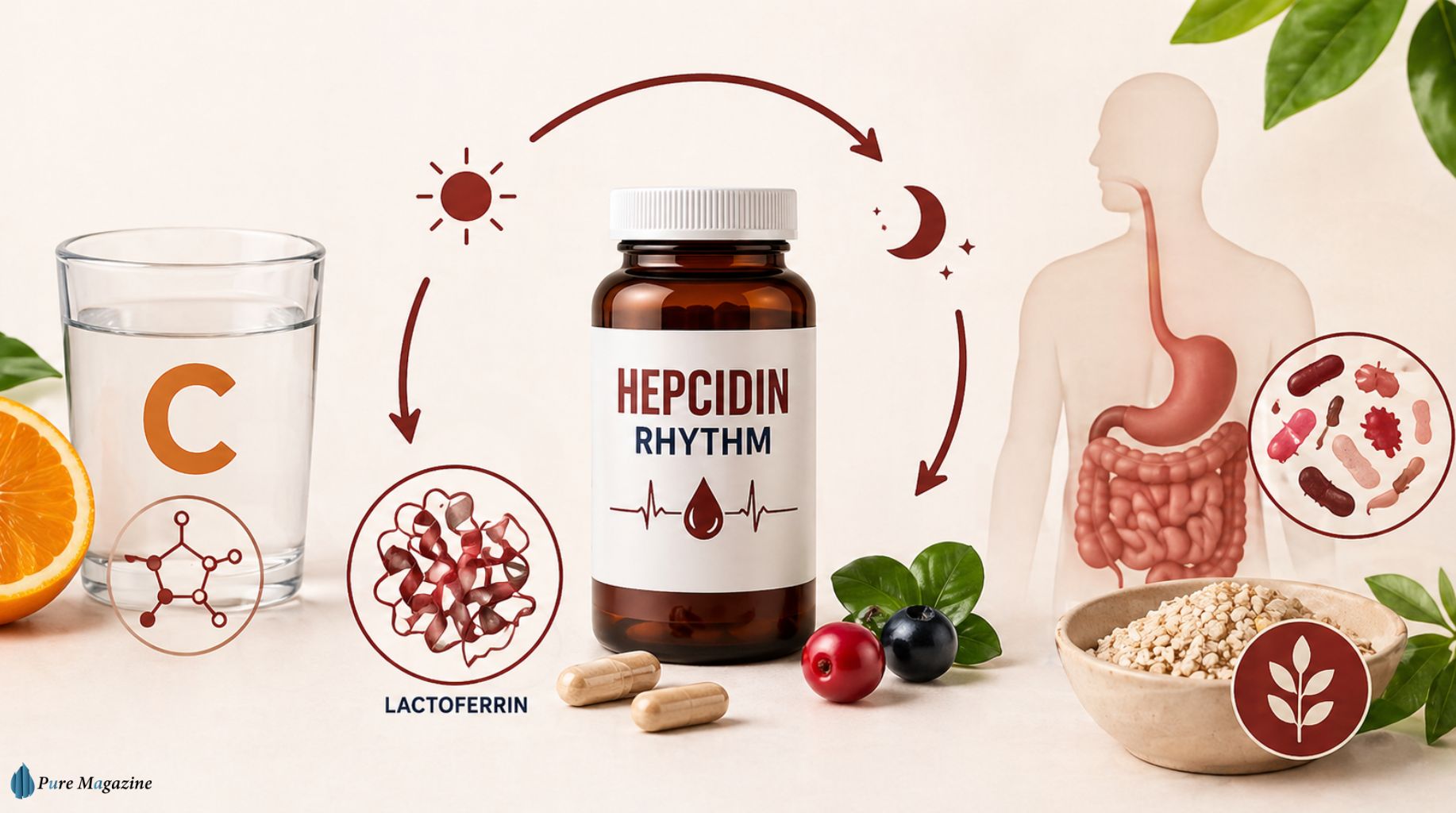

The Hepcidin Rhythm
As mentioned above, hepcidin — your body’s iron-regulating hormone — rises after an iron dose, temporarily blocking further absorption. Taking iron every other day, rather than every day, allows hepcidin to fall back between doses. Several studies now show that alternate-day dosing delivers comparable or better iron repletion than daily dosing with fewer side effects. This applies more to the correction of low iron than to general maintenance — but it’s worth knowing.
The Vitamin C Multiplier
Vitamin C reduces iron from its ferric form (less absorbable) to its ferrous form (more absorbable), significantly increasing how much gets through. Pairing iron with 60–100mg of vitamin C — either in the formula or from a glass of orange juice — is one of the most practical, evidence-backed steps you can take.
The Lactoferrin Synergy
Lactoferrin is a protein that binds to iron and actively transports it into cells. Taking iron alongside lactoferrin — increasingly available as a combined supplement — improves cellular iron delivery beyond what absorption alone achieves. This is a niche area but one that’s gaining traction in premium formulations in 2026 for buyers focused on actual cellular uptake rather than just blood-level improvement.
The Microbiome Dimension
Unabsorbed iron — particularly from poorly absorbed forms — doesn’t just leave the body. It reaches the colon, where it feeds certain bacterial populations at the expense of beneficial ones. This is a genuine mechanism behind iron-related gut discomfort, and it’s one reason gentler, higher-absorption forms cause fewer digestive problems: less unabsorbed iron reaches the gut microbiome in the first place. Adding a prebiotic or fibre source alongside iron supplementation is a practical way to support microbiome balance during a course of iron.
The 2-Minute Label Audit
Before buying any multivitamin with iron, flip the bottle and run this check:
- Is calcium above 200mg? If yes, that high calcium will compete with iron for absorption. Move on or time them separately.
- Is the iron form “ferrous sulfate” with no other forms listed? Budget flag. Not disqualifying, but expect more gut side effects.
- Is there at least 60mg of vitamin C in the formula? If not, plan to take it alongside a vitamin C source — or with a glass of orange juice.
- What’s the total iron dose? Match it to your actual need. More is not better, and 18mg daily is the recommended intake for premenopausal women — not a baseline to exceed without reason.
- Does the label name the specific iron form? If it just says “iron” with no form listed, that’s a transparency problem. Quality brands name the form.
Multivitamin With Iron vs Iron-Only Supplement
| Feature | Multivitamin With Iron | Iron-Only Supplement |
|---|---|---|
| Purpose | Daily nutrition + moderate iron support | Correct diagnosed deficiency |
| Iron dose | Usually 14–18mg | Often 65mg+ |
| Includes B12/Folate | Usually yes | Sometimes no |
| Best for | General nutritional coverage + low-level top-up | Addressing confirmed low iron under guidance |
| Professional supervision | Lower | Often recommended |
Simple rule: Need broad daily support with modest iron? A multivitamin with iron. Need to actively correct a diagnosed deficiency? Iron-only is more appropriate — ideally with professional input on dose and duration.
Can You Take an Iron Supplement With a Multivitamin?
Yes — but not without checking your combined dose first.
If your multivitamin contains 18mg of iron and you add a standard iron tablet at 65mg, your daily total reaches 83mg — nearly double the Tolerable Upper Intake Level of 45mg for adults. That’s not a theoretical concern; it’s a real path to nausea, constipation, and in prolonged cases, more serious issues.
Before combining, check both labels. Add the iron doses. If you’re approaching or exceeding 45mg daily without clinical guidance, reconsider. If you’re correcting a confirmed deficiency under professional supervision, higher doses may be appropriate — but that’s a medical conversation, not a supplement stack decision.
Related: our guide to British Supplements covers how UK specialist brands approach dosing transparency — a useful comparison point when assessing any formula’s iron content.
Best Time to Take a Multivitamin With Iron
Timing affects how much iron your body actually absorbs.
Good timing choices:
- With a light breakfast or lunch if your stomach is sensitive
- Alongside a vitamin C source (orange juice, citrus, bell pepper)
- Away from tea, coffee, and calcium supplements by at least 1–2 hours
What to avoid at the same time:
- Tea and coffee — tannins and polyphenols bind iron and reduce absorption
- Large dairy meals — calcium competes with iron
- Antacids — these raise gut pH, reducing iron absorption
- Other iron-containing supplements — check combined dosing
Consistency matters more than perfect timing. The best time is the one you’ll actually stick to every day (or every other day, depending on your approach).
How to Choose the Right Multivitamin With Iron
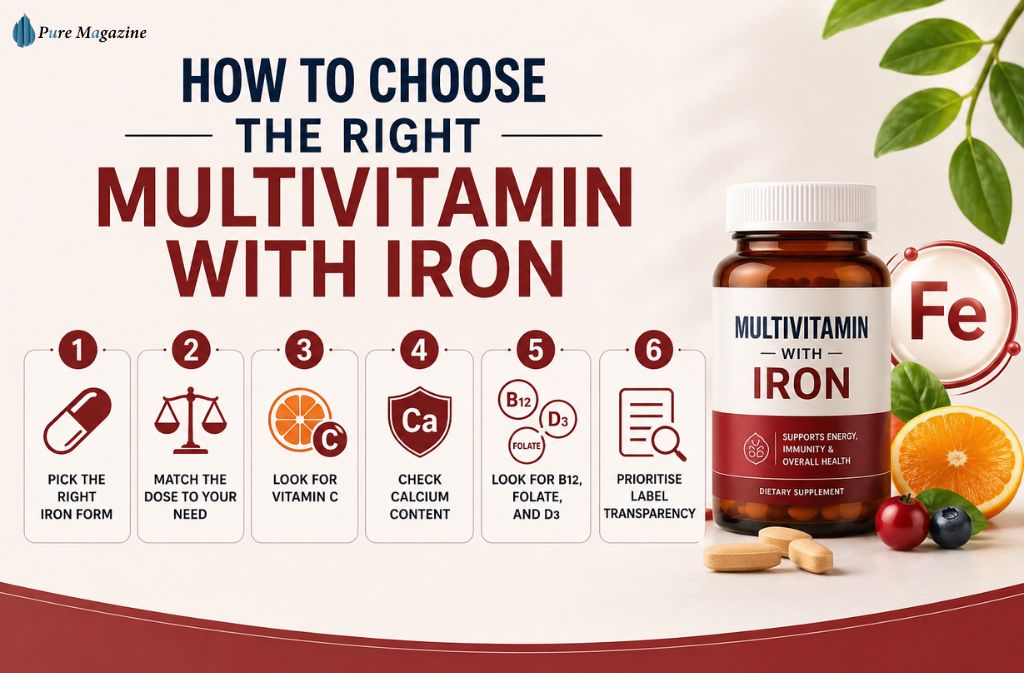
Use this six-step framework before buying:
Step 1: Pick the right iron form. Bisglycinate, liposomal, or IPS for sensitive stomachs and high absorption. Fumarate or gluconate are solid mainstream options. Avoid sulfate if you have any history of gut issues.
Step 2: Match the dose to your actual need. 14–18mg suits most premenopausal women as daily maintenance. Above that, without a confirmed deficiency is unnecessary. Men should question whether any added iron is warranted.
Step 3: Look for vitamin C in the formula. At least 60mg in the supplement or planned alongside it.
Step 4: Check calcium content. High calcium in the same tablet competes with iron. Either choose a formula designed around this (separate mineral timing) or one with lower calcium.
Step 5: Look for B12, folate, and D3. These work alongside iron in red blood cell production and overall energy metabolism. Active forms — methylcobalamin for B12, methylfolate for folate, D3 rather than D2 — are worth seeking out. Our methylfolate supplement guide and P5P supplement guide cover the active B vitamin question in more detail.
Step 6: Prioritise label transparency. Does the brand name the exact iron form? List full doses? State manufacturing standards? Brands that hide these details usually have a reason for doing so.
Iron, Energy, and the Broader Picture
Iron is one piece of the energy equation — but a surprisingly common gap. If you’re looking at energy support more broadly, B vitamins run a parallel pathway worth understanding. Our guide to vitamins to regulate hormones covers how the endocrine system interacts with nutritional status in ways that often go unaddressed. For women managing perimenopause or menopause alongside iron considerations, our best supplements for menopause bloating guide addresses how iron needs shift across life stages.
What to Eat Alongside a Multivitamin With Iron
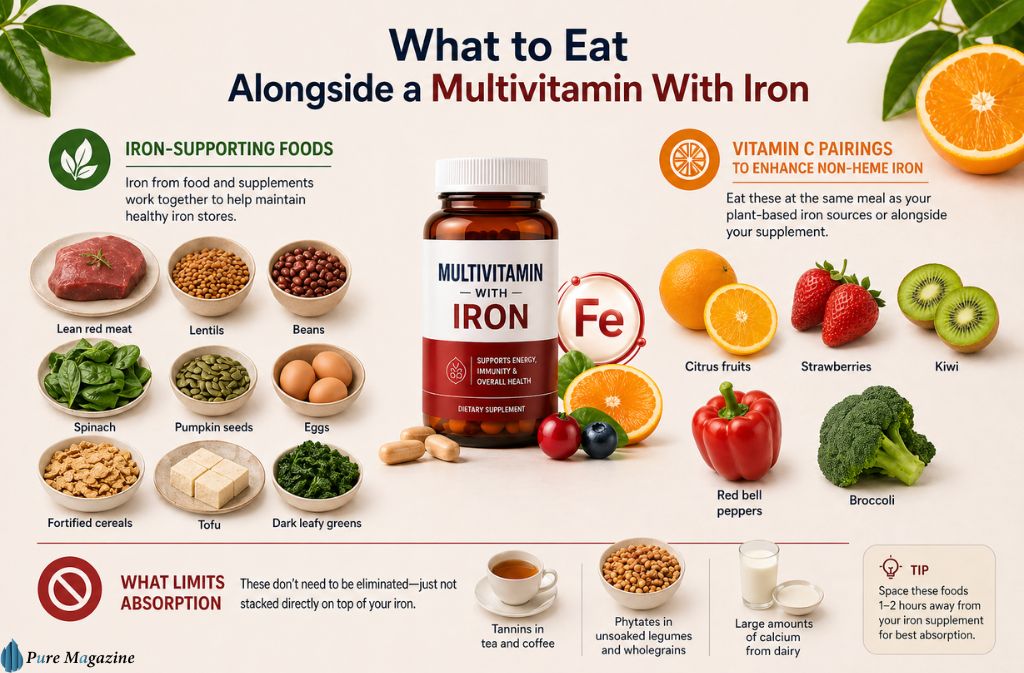
Supplements perform better alongside a diet that supports them. Iron from food and iron from supplements work together — dietary sources help your body maintain iron stores more sustainably over time.
Iron-supporting foods: Lean red meat, lentils, beans, spinach, pumpkin seeds, eggs, fortified cereals, tofu, and dark leafy greens.
Vitamin C pairings to enhance non-heme iron: Citrus fruits, strawberries, kiwi, red bell peppers, and broccoli. Eat these at the same meal as your plant-based iron sources or alongside your supplement.
What limits absorption: Tannins in tea and coffee, phytates in unsoaked legumes and wholegrains, and large amounts of calcium from dairy. These don’t need to be eliminated — just not stacked directly on top of your iron.
The 2026 Synergy Stack
For buyers who want to push beyond basic supplementation, the 2026 approach to iron combines:
- Iron (bisglycinate or liposomal) for absorption and tolerability
- Vitamin C (60–100mg) is taken at the same time for conversion to an absorbable form
- Lactoferrin to support cellular iron transport
- A prebiotic fibre source to protect the gut microbiome from unabsorbed iron reaching the colon
- Alternate-day dosing to allow hepcidin to fall between doses
This isn’t necessary for everyone — a basic, well-formulated multivitamin covers most people’s needs. But for anyone who has struggled to raise iron despite supplementing, or who experiences consistent gut side effects, the stack approach addresses most of the mechanisms that commonly cause those problems.
Common Mistakes That Undermine Iron Supplementation
Taking iron “just in case.” This is the most common mistake. Iron is not a benign daily extra for everyone — it accumulates, and unnecessary supplementation causes real problems over time.
Ignoring what’s already in your other supplements. Many multivitamins, protein powders, and fortified foods contain iron. Before adding more, add up what you’re already taking.
Taking it with coffee. The tannins and polyphenols in coffee significantly reduce iron absorption. Even 30 minutes of separation helps.
Expecting overnight results. Iron stores build slowly. If low ferritin is contributing to fatigue, most people need six to twelve weeks of consistent supplementation before stores meaningfully recover.
Choosing based on price alone. Budget iron formulas almost always use ferrous sulfate. If you’ve previously stopped taking iron because of constipation or stomach cramps, that’s the form responsible — not iron itself. Paying slightly more for bisglycinate or liposomal solves this problem reliably.
Frequently Asked Questions
Q. Can I take an iron supplement with a multivitamin?
Yes, you can take an iron supplement with a multivitamin, but first check the combined iron dose from both products. Regularly exceeding 45 mg daily without clinical guidance may increase the risk of nausea, constipation, stomach discomfort, and long-term iron overload in some individuals. If your multivitamin already contains iron, additional supplementation may be unnecessary.
Q. What’s the best multivitamin with iron for women?
The best multivitamin with iron for women typically includes:
- Ferrous bisglycinate or liposomal iron for better absorption
- Vitamin C to support iron uptake
- Methylfolate (active folate)
- Methylcobalamin (Vitamin B12)
- Vitamin D3
For many premenopausal women, daily iron intake in the 14–18 mg range is common, depending on diet, menstrual losses, and personal needs.
Q. Do men need multivitamins with iron?
Most healthy adult men do not routinely need added iron. Men generally lose less iron than menstruating women, so many are better suited to an iron-free multivitamin unless blood tests confirm low iron or a healthcare professional recommends supplementation.
Q. Can multivitamins with iron cause constipation?
Yes, multivitamins with iron can cause constipation, especially formulas using ferrous sulfate. Some people also experience nausea or bloating. Switching to ferrous bisglycinate or liposomal iron often improves tolerance and may reduce digestive side effects.
Q. How long before I notice a difference from taking iron?
If low iron is contributing to fatigue or weakness, some people notice improvement within 4 to 8 weeks of consistent use. However, rebuilding ferritin (iron stores) often takes longer than improving hemoglobin levels. Results depend on starting iron status, dose, absorption, and consistency.
Q. Should I take a multivitamin with iron with food?
Yes, if your stomach is sensitive, taking it with food can improve comfort. Some iron forms absorb slightly better on an empty stomach, but consistency and tolerance usually matter more than small absorption differences. Avoid taking iron with tea, coffee, or high-calcium meals.
Q. Is alternate-day dosing effective for iron supplements?
Yes, alternate-day dosing can be effective and is increasingly recommended for some people. Taking iron every other day may allow hepcidin levels to fall between doses, which can improve absorption and reduce side effects compared with daily high-dose iron.
Q. Are gummy multivitamins with iron effective?
Gummy multivitamins with iron can help support daily intake, but they often contain lower iron doses than tablets or capsules. Some also contain added sugars. They may be useful for people who struggle with swallowing pills, but potency varies by brand.
Q. What is liposomal iron?
Liposomal iron is a form of iron enclosed in a lipid (fat-based) layer designed to protect the iron as it moves through digestion. This may improve absorption and reduce stomach irritation compared with traditional iron salts. It is often chosen by people who cannot tolerate standard iron supplements.
Q. What is the best form of iron for sensitive stomachs?
For people with digestive sensitivity, ferrous bisglycinate and liposomal iron are commonly preferred because they are often better tolerated than ferrous sulfate. Individual responses vary, so finding the right form may take trial and adjustment.
Q. Can I take iron and calcium together?
It is generally better to separate iron and calcium supplements by 1–2 hours, as calcium can temporarily reduce iron absorption when taken at the same time. Many people take iron earlier in the day and calcium later.
Final Verdict
A multivitamin supplement with iron earns its place in your routine when your body actually needs it — and that’s a point worth repeating, because iron is one of the few nutrients where unnecessary supplementation causes measurable harm rather than just expensive urine.
When the fit is right — premenopausal women, vegetarians managing non-heme iron, athletes with high turnover, or anyone with confirmed low ferritin — a well-formulated product makes a real difference. The key is getting the form right (bisglycinate or liposomal over sulfate), timing it away from calcium and caffeine, pairing it with vitamin C, and giving it enough time to work.
Key takeaways:
- Iron drives energy, cognition, and oxygen delivery — deficiency affects all three
- Ferritin is a better test than haemoglobin alone for catching functional iron gaps
- The iron form determines tolerability more than the dose does
- Liposomal and bisglycinate are the 2026 benchmarks for absorption and gut comfort
- Alternate-day dosing beats daily dosing for absorption in iron-sensitive individuals
- Check the combined iron intake before stacking supplements
- If you’re unsure whether you need iron, test before you supplement
Disclaimer: This article is for informational purposes only and does not replace medical advice, diagnosis, or treatment. Iron supplements are not suitable for everyone, and too much iron can be harmful. Always consult a doctor or qualified healthcare professional before starting a multivitamin supplement with iron, especially if you are pregnant, have a medical condition, take medications, or suspect iron deficiency.
Explore our full library of expert-reviewed health and nutrition guides at Pure Magazine.