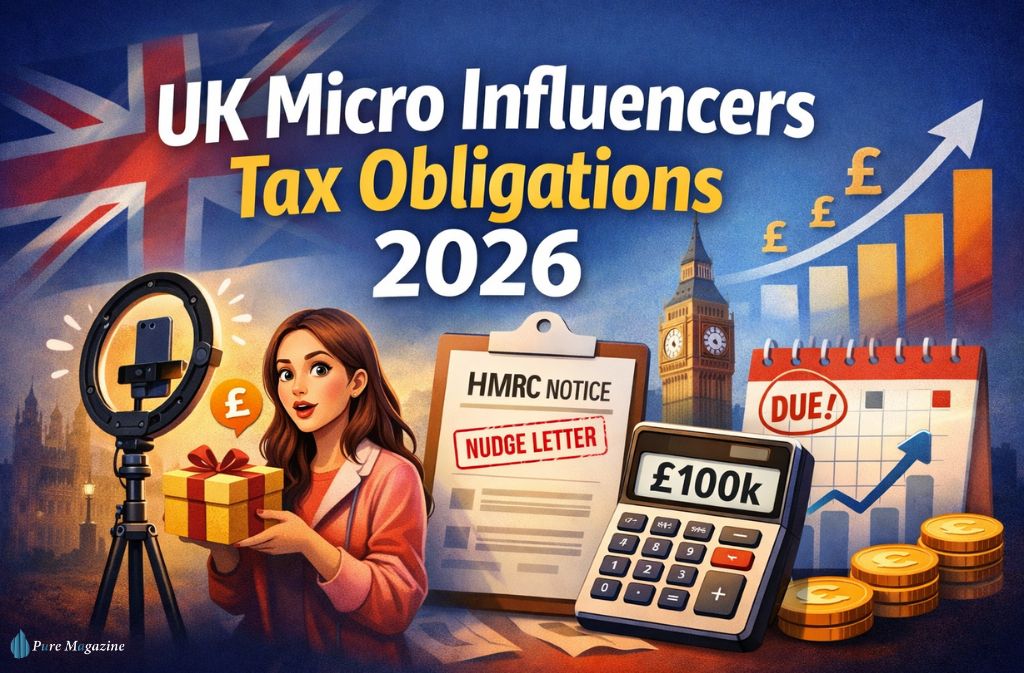
Last year, a UK lifestyle creator received a £600 espresso machine for a “gifted” Instagram Reel. She posted about it, tagged the brand, and thought nothing more of it.
Months later, she realised that £600 wasn’t just a free coffee upgrade.
Under HMRC rules, that espresso machine was taxable income.
And in 2026, HMRC doesn’t rely on guesswork anymore. Platforms now report creator earnings automatically. Digital reporting is expanding. Quarterly submissions are becoming mandatory for higher earners.
Understanding UK micro influencers’ tax obligations is no longer about staying organised. It’s about staying ahead of automated compliance systems.
This guide explains what’s changed in 2026 — and what you must do.
TL;DR – 2026 Influencer Tax Snapshot
- Over £1,000 income? Register for Self Assessment.
- Gifted products tied to promotion are taxable at market value.
- From January 2026, platforms issue Seller Information Statements to HMRC.
- If your Self Assessment doesn’t match platform totals, → automated Nudge Letter.
- From April 6, 2026, Making Tax Digital applies to influencers earning £50k+.
- Class 4 NI is 6% on profits between £12,570 and £50,270.
- VAT registration is required at a £90,000 turnover.
- Earn over £100k? Watch the 60% tax trap.
What Are UK Micro Influencers Tax Obligations in 2026?
If you monetise content regularly, HMRC treats you as self-employed.
That means you must:
- Register for Self Assessment
- Declare all trading income
- Pay Income Tax
- Pay National Insurance
- Maintain digital records
- Comply with VAT rules if applicable
- Prepare for digital reporting (MTD)
Influencing isn’t a hobby once you earn consistently.
Digital Platform Reporting (DPR) 2026: HMRC Data Matching Explained
From January 2026, under OECD Model Rules for Digital Platform Reporting:
Platforms must send HMRC a Seller Information Statement each year.
You will receive a copy every January.
This statement includes:
- Your name
- Address
- National Insurance number (where collected)
- Total consideration (total earnings processed)
- Transaction volumes
What Triggers an HMRC Nudge Letter?
HMRC now data-matches:
Your Seller Information Statement
vs
Your Self Assessment return
If the “Total Consideration” reported by the platform is higher than what you declared, this can automatically trigger a compliance check or Nudge Letter.
This is one of the biggest shifts affecting UK micro influencers tax obligations in 2026.
What To Do If You Receive a Nudge Letter
Do not ignore it. Compare your return with your Seller Information Statement.
Check for:
- Undeclared affiliate income
- Gifted items are not valued
- Platform fees were incorrectly deducted
Amend your return if necessary, and seek professional advice if you’re unsure. Correcting errors early can help reduce penalties.
How Much Can You Earn Before Registering?
The £1,000 Trading Allowance
You can earn up to £1,000 gross per tax year without registering.
Important:
This is revenue, not profit.
Earn £1,001? You must register.
2026/27 Key Influencer Tax Thresholds
| Category | 2026 Threshold |
|---|---|
| Trading Allowance | £1,000 |
| Personal Allowance | £12,570 |
| Basic Rate Limit | £50,270 |
| Higher Rate Limit | £125,140 |
| VAT Registration | £90,000 turnover |
| MTD Requirement | £50,000+ income |
| Class 4 NI (Lower Band) | 6% |
| Class 4 NI (Upper Band) | 2% |
Note: Income tax thresholds remain frozen until 2030 (fiscal drag).
Are Gifted Products Taxable in 2026?
Under HMRC rules, any product received in exchange for promotional activity is considered Payment in Kind and must be declared at market value.
The Gift Valuation Headache
Here’s the reality:
If a brand sends you a £600 espresso machine for a “gifted” Reel, HMRC expects you to pay tax on £600 as if it were cash.
You can’t pay your tax bill in coffee beans.
If you post about it, it’s income.
If you don’t, it may remain a genuine gift.
Gift Tax Table
| Scenario | Taxable? | Reason |
|---|---|---|
| PR box with no posting | Usually No | No service |
| Product posted as an ad | Yes | Payment in kind |
| Affiliate commission | Yes | Trading income |
| Personal gift | No | Not business-related |
Can You Offset Gift Tax?
Yes — sometimes.
If you used the espresso machine in a dedicated home studio:
- A portion of studio costs may be deductible
- Lighting equipment used to film the Reel may be deductible
- Editing software used may be deductible
You’re taxed on net profit, not gross revenue.
Making Tax Digital (MTD) – April 6, 2026 Hard Launch
From April 6, 2026:
Influencers earning £50,000+ must comply with MTD for Income Tax.
This means:
- Digital record keeping
- Quarterly submissions
- Final annual declaration
MTD Quarterly Calendar (2026)
Instead of filing once per year, you will submit:
- Quarter 1 update
- Quarter 2 update
- Quarter 3 update
- Quarter 4 update
- Final declaration
That’s five submissions per year.
Threshold expected to reduce to £30,000 in 2027.
National Insurance (2026 Update)
Class 2 NI is now largely voluntary for many low-profit creators.
Class 4 NI rates:
- 6% on profits between £12,570–£50,270
- 2% above £50,270
This change reduced NI burdens slightly — but many creators still forget to budget for it.
VAT for Influencers: The Scaling Trap
VAT registration becomes mandatory at a £90,000 turnover.
Turnover includes:
- Brand contracts
- Affiliate income
- Digital products
- Sponsored posts
- Platform monetisation
Example:
£70,000 brand income
- £25,000 affiliate income
= £95,000 turnover → VAT registration required.
Even if your profit is far lower.
The 60% Tax Trap (Why Influencers Get Hit Hard)
If your total income exceeds £100,000:
Your Personal Allowance is reduced by £1 for every £2 earned over £100,000.
This creates an effective 60% marginal rate between £100,000 and £125,140.
Influencers are vulnerable because:
- One viral contract can spike income
- Payment on Account magnifies cash flow stress
- Platform earnings may push totals unexpectedly high
Pension contributions can reduce taxable income and restore some allowance.
Payment on Account: The January Shock
After your first tax return, HMRC may require:
- 50% of next year’s estimated tax is due January 31
- 50% due July 31
Many first-time influencers think they’ve made a mistake when the bill doubles.
It’s not a penalty — it’s prepayment.
Plan cash flow accordingly.
Hobby vs Business: HMRC Trade Test
| Factor | Hobby | Trade |
|---|---|---|
| Regular monetisation | No | Yes |
| Brand contracts | No | Yes |
| Affiliate links | No | Yes |
| Profit intent | Low | High |
Posting weekly sponsored content?
HMRC sees that as trade.
AI-Generated Content & Tax
Using AI tools does not change tax treatment.
Revenue is taxable regardless of whether the content is:
- AI-assisted
- Automated
- Template-generated
Income classification depends on monetisation, not production method.
Also Check: When Does the Tax Year End? UK Dates & Deadlines 2026
Influencer Compliance Checklist (2026)
✔ Register if over £1,000
✔ Keep digital records
✔ Match platform Seller Statement totals
✔ Value gifted items at market rate
✔ Budget for NI + tax
✔ Prepare for Payment on Account
✔ Monitor VAT threshold
✔ Prepare for MTD if earning £50k+
FAQs
Q. Do influencers pay tax on gifted products in the UK?
Yes. In 2026, any product or item received in exchange for promoting a brand, post, or Reel is considered payment in kind. HMRC treats the market value of the product as taxable income. Gifts received without promotional activity are generally not taxable.
Q. What is a Seller Information Statement for influencers?
A Seller Information Statement is an annual summary issued by digital platforms (e.g., TikTok, Etsy, Vinted) showing your total earnings reported to HMRC. It includes your name, NI number, total revenue, and transaction volume. This statement allows HMRC to verify your Self Assessment declarations.
Q. What triggers an HMRC Nudge Letter for influencers?
An HMRC Nudge Letter is triggered when there is a mismatch between platform-reported earnings and your Self Assessment tax return. This can happen if you underreport income from brand deals, affiliate links, or gifted items. Receiving a nudge doesn’t automatically mean a penalty, but it signals that HMRC is reviewing your accounts.
Q. When does Making Tax Digital (MTD) start for UK influencers?
April 6, 2026, marks the start of Making Tax Digital (MTD) for influencers earning over £50,000 from self-employment. From this date, quarterly digital submissions of income and expenses are required, using MTD-compatible software. Annual tax filing continues alongside the quarterly updates.
Q. How much National Insurance do influencers pay in 2026?
Class 4 National Insurance (NI) applies to profits from self-employment:
- 6% on profits between £12,570 – £50,270
- 2% on profits above £50,270
Class 2 NI is largely voluntary for low-profit influencers but can count toward state benefits.
Q. What happens if I don’t declare platform income as an influencer?
HMRC may issue penalties, interest, or compliance checks if platform income is not declared. With Digital Platform Reporting (DPR) 2026, platforms automatically share earnings with HMRC, increasing the likelihood of a Nudge Letter or audit. Always declare income from:
- TikTok Shop or YouTube monetization
- Affiliate marketing
- Sponsored posts and brand deals
- Gifted products used in promotions
Conclusion
In 2026, UK micro influencers’ tax obligations are shaped by automation, digital reporting, and stricter data matching.
Three realities define the new environment:
- HMRC receives your platform earnings automatically.
- Reporting frequency is increasing under Making Tax Digital.
- Income spikes can create unexpected tax and NI exposure.
Creators who treat influencing like a business — with structure, records, and planning — stay ahead.
Those who ignore it risk automated compliance action.
Related: Can You Go to Jail for Not Paying Taxes in the UK? (2026)