Sleep is getting worse. Stress is getting louder. And most people have tried enough supplements to know that a promising label and a disappointing result are not mutually exclusive.
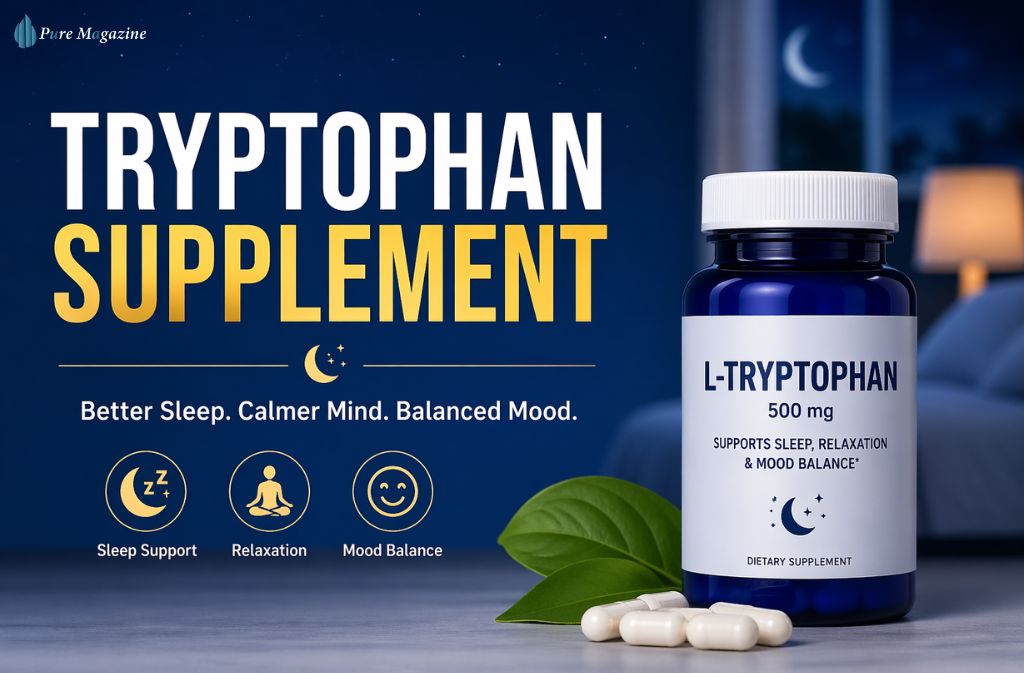
L-tryptophan sits in an interesting position in that landscape. It’s not a sedative or a serotonin pill. It’s an essential amino acid — one your body cannot produce on its own — that feeds into pathways your brain uses to make serotonin and melatonin. Whether that translates into better sleep and a more stable mood for you specifically depends on a set of conditions that most supplement guides don’t bother explaining.
This guide does.
What Is a Tryptophan Supplement?
A tryptophan supplement delivers L-tryptophan — an essential amino acid obtained only through food, protein intake, or supplementation. Your body uses it to produce serotonin (involved in mood, appetite, and emotional regulation), melatonin (which regulates sleep-wake cycles), and niacin (vitamin B3, which supports cellular energy and metabolism).
The simplified conversion pathway:
Tryptophan → 5-HTP → Serotonin → Melatonin
That chain makes tryptophan relevant for sleep support, stress management, and mood balance — but the chain only completes efficiently under the right conditions, which is why results vary so dramatically between individuals.
The Kynurenine Problem: Why Tryptophan Sometimes Fails
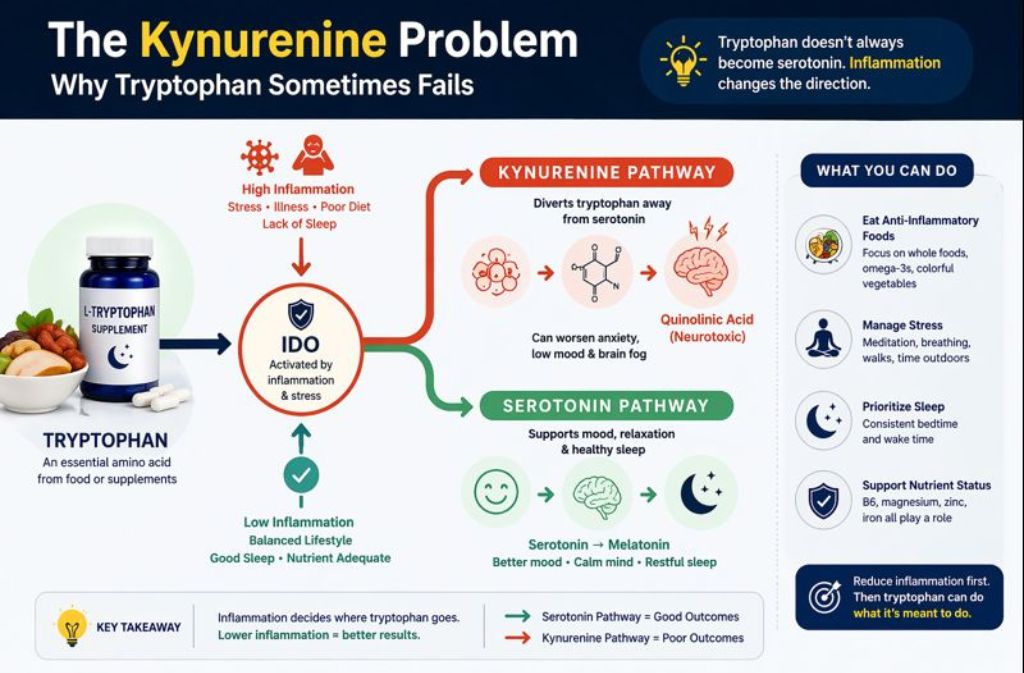
Most tryptophan guides skip this entirely. It’s the single most important thing to understand about why the supplement works for some people and does nothing for others.
When your body is under significant inflammatory stress — infection, illness, chronic psychological stress, high-inflammation diet — an enzyme called IDO (indoleamine 2,3-dioxygenase) activates and diverts tryptophan away from the serotonin pathway into the kynurenine pathway instead.
The kynurenine pathway doesn’t produce serotonin. In excess, it produces quinolinic acid — a neurotoxic metabolite that can worsen anxiety, low mood, and cognitive fog. This is partly why people who are sick, chronically stressed, or inflamed sometimes feel worse rather than better when supplementing tryptophan.
The practical implication: if you’re currently dealing with active illness, high fever, or a period of significant inflammatory stress, tryptophan supplementation is unlikely to produce its intended effect — and may actively redirect amino acid supply toward unhelpful metabolites. Reducing inflammation through diet, stress management, and sleep before starting tryptophan supplementation isn’t just lifestyle advice — it’s the prerequisite for the supplement to actually reach its intended destination.
The Gut-Brain-Liver Connection
Research in 2025 and 2026 has expanded the tryptophan conversation significantly beyond sleep and mood. Gut-derived tryptophan metabolites — produced by intestinal bacteria — interact with the aryl hydrocarbon receptor (AhR) in ways that affect liver health, intestinal barrier function, and systemic inflammation. In practical terms, your gut bacteria help determine how your body processes tryptophan, and that processing affects systems beyond the brain.
If digestion, gut microbiome diversity, and diet quality are poor, supplement results will be weaker — not because the supplement is bad, but because the gut environment shapes what tryptophan becomes after absorption. This is one reason improving diet and gut health often produces better results than simply increasing tryptophan dose.
How amino acid metabolism interacts with gut health and neurotransmitter production provides useful context for understanding why tryptophan doesn’t operate in isolation from digestive function.
How a Tryptophan Supplement Works
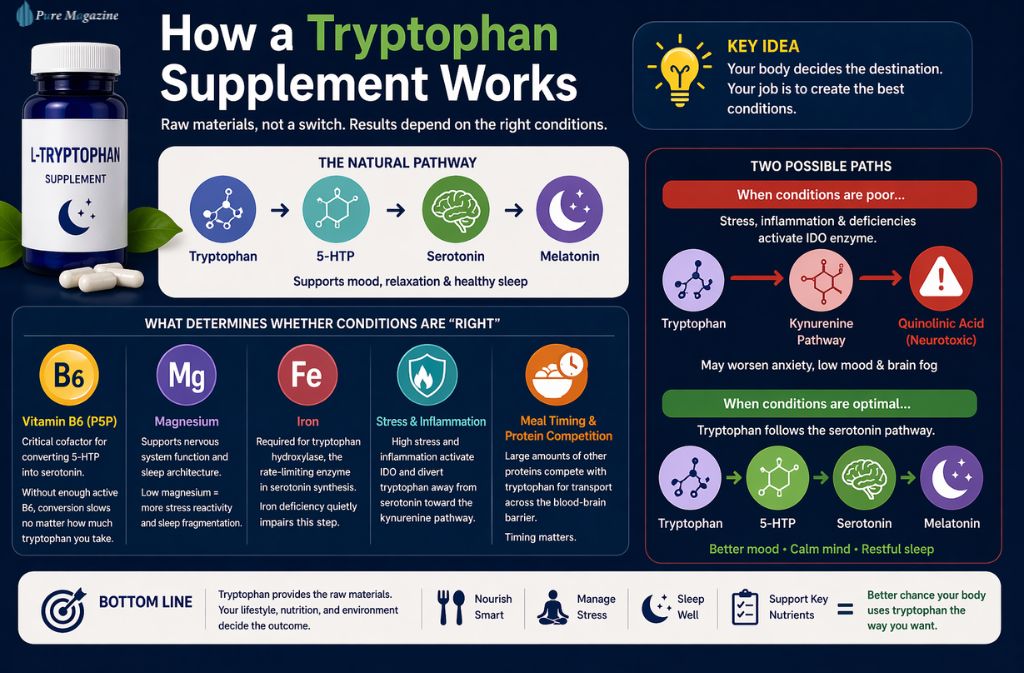
Think of it as providing raw materials your body may use if conditions are right — not a switch that reliably produces a predictable outcome.
What determines whether those conditions are right:
Vitamin B6 (P5P) is the critical cofactor for the enzyme that converts 5-HTP into serotonin. Without adequate active B6, the conversion rate slows regardless of tryptophan intake. How P5P specifically supports neurotransmitter synthesis explains this mechanism in detail — it’s one of the most important and least-discussed reasons tryptophan supplementation underperforms.
Magnesium supports nervous system function and sleep architecture broadly. Low magnesium contributes to sleep fragmentation and stress reactivity that tryptophan alone won’t fully address.
Iron is required for tryptophan hydroxylase, the rate-limiting enzyme in serotonin synthesis. Iron deficiency quietly impairs this step.
Stress load and inflammation determine whether tryptophan routes toward serotonin or kynurenine, as described above.
Meal timing and protein competition affect how much tryptophan actually crosses the blood-brain barrier — covered in the dosage section below.
Tryptophan Supplement Benefits: Realistic Picture
Sleep Support
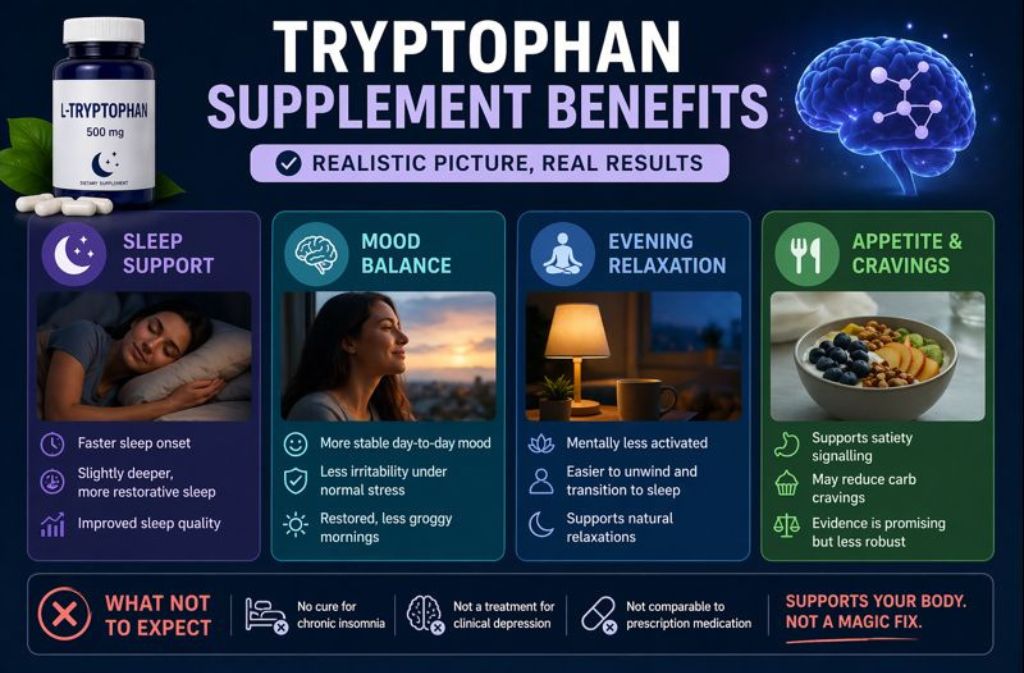
The most evidence-backed application. Tryptophan specifically helps with sleep onset latency — the time it takes to fall asleep — rather than dramatically extending total sleep duration. For people tracking sleep via Oura or Whoop, the effect most likely shows up in faster sleep onset and slightly improved deep sleep architecture rather than a major increase in total hours logged.
A 2022 review in Nutrients found that tryptophan supplementation improved subjective sleep quality and reduced sleep onset time across multiple studies, with effects most pronounced in people with mild sleep difficulty rather than clinical insomnia.
Mood Balance
Through serotonin synthesis support. Effects are subtle to moderate — not equivalent to pharmacological intervention. More stable day-to-day mood, reduced irritability under normal stress loads, and what some users describe as less emotional reactivity are the realistic outcomes. The “Monday morning” effect — waking up feeling more restored and less groggy — is an emerging area of research focus in 2026.
Evening Relaxation
Some users report feeling mentally less activated in the evening — easier to disengage from work mode and transition toward sleep. This fits the neurotransmitter mechanism without requiring dramatic sedation.
Appetite and Cravings
Serotonin pathways influence satiety signalling and carbohydrate cravings in some individuals. The evidence here is less robust than for sleep, but it’s mechanistically plausible.
What you should not expect: one capsule eliminating chronic insomnia, meaningful relief from clinical depression, or any effect comparable to prescription sleep medication.
The Kynurenine Inflammation Warning
This deserves its own callout. If you’re currently sick with a cold, dealing with a flare of a chronic inflammatory condition, or in a period of intense psychological stress — skip tryptophan supplementation temporarily. Under these conditions, the immune response actively upregulates IDO enzyme activity, diverting tryptophan toward the kynurenine pathway. You’re unlikely to get the intended serotonin benefit and may experience increased brain fog instead.
Wait until inflammation has settled, then start at a lower dose than you originally planned.
UK Regulatory Note
The UK readers should be aware of a specific regulatory constraint. UK regulations (Tryptophan in Food Regulations) limit the recommended daily dose in over-the-counter food supplements to 220mg unless the product is sold through a pharmacist. Dosage suggestions throughout this guide reflect international standards — if you’re purchasing in the UK, check current local product labelling and retailer guidance, as the available over-the-counter products may specify lower per-serving amounts than those referenced in international research.
L-Tryptophan vs 5-HTP: Which Is Better?
| Feature | L-Tryptophan | 5-HTP |
|---|---|---|
| Starting point | Essential amino acid | Direct serotonin precursor |
| Speed of effect | Slower, gentler | Faster for some users |
| Sleep support | Strong | Strong |
| Mood effects | Moderate | Often stronger short-term |
| Side effects | Usually milder | More nausea reported |
| Long-term use | Generally preferred | Mixed tolerance reports |
| Best for | Gentle sleep support | Short-term targeted use |
5-HTP bypasses the rate-limiting tryptophan hydroxylase step, which is why it produces faster and sometimes stronger mood effects. It’s also why it carries a higher risk of serotonin spikes and nausea, particularly at higher doses or when combined with other serotonergic compounds.
For people who are supplement-sensitive or want a gentler, more sustainable approach, L-tryptophan is the more appropriate starting point. For people specifically seeking mood-related effects over a shorter timeframe, 5-HTP is sometimes more effective — but the interaction risks are meaningfully higher.
Important warning: do not combine tryptophan or 5-HTP with SSRIs, SNRIs, MAOIs, St. John’s Wort, or other serotonin-enhancing medications without explicit medical guidance. Serotonin syndrome — a potentially serious condition — is a real risk with casual stacking of serotonergic compounds.
How methylfolate and B vitamins interact with neurotransmitter synthesis pathways is worth understanding if you’re building a comprehensive mood and sleep support stack — these nutrients affect the same downstream pathways through different upstream mechanisms.
Tryptophan Supplement Dosage
| Goal | Typical Starting Range |
|---|---|
| Sleep support | 250–500mg before bed (check local regulations) |
| Evening relaxation | 250–500mg |
| General mood support | Lower divided doses |
Smart dosing approach: start at the lower end, use consistently for 7–14 days, track sleep quality, mood, and any side effects, increase only if response is positive and tolerance is confirmed.
The protein competition issue is one of the most practically important aspects of tryptophan dosing that most guides understate. Tryptophan competes with other large neutral amino acids (leucine, phenylalanine, tyrosine) for transport across the blood-brain barrier via the same carrier. Taking tryptophan with a high-protein meal — steak, chicken, eggs — floods that carrier with competing amino acids, reducing how much tryptophan reaches the brain.
Taking tryptophan with a light carbohydrate-based snack instead — oats, banana, toast — triggers an insulin response that clears competing amino acids from blood, effectively giving tryptophan less competition for brain entry. This is a genuine pharmacokinetic consideration, not supplement folklore.
When to Take Tryptophan
For sleep: 30–60 minutes before bed, with a light carbohydrate snack rather than a protein-heavy meal.
For general mood support: some people divide doses earlier in the day — morning and evening — though daytime drowsiness is possible and worth monitoring.
Avoid taking it alongside heavy protein meals. The competition effect meaningfully reduces brain uptake.
Is Tryptophan Safe? The 1989 History and Current Standards
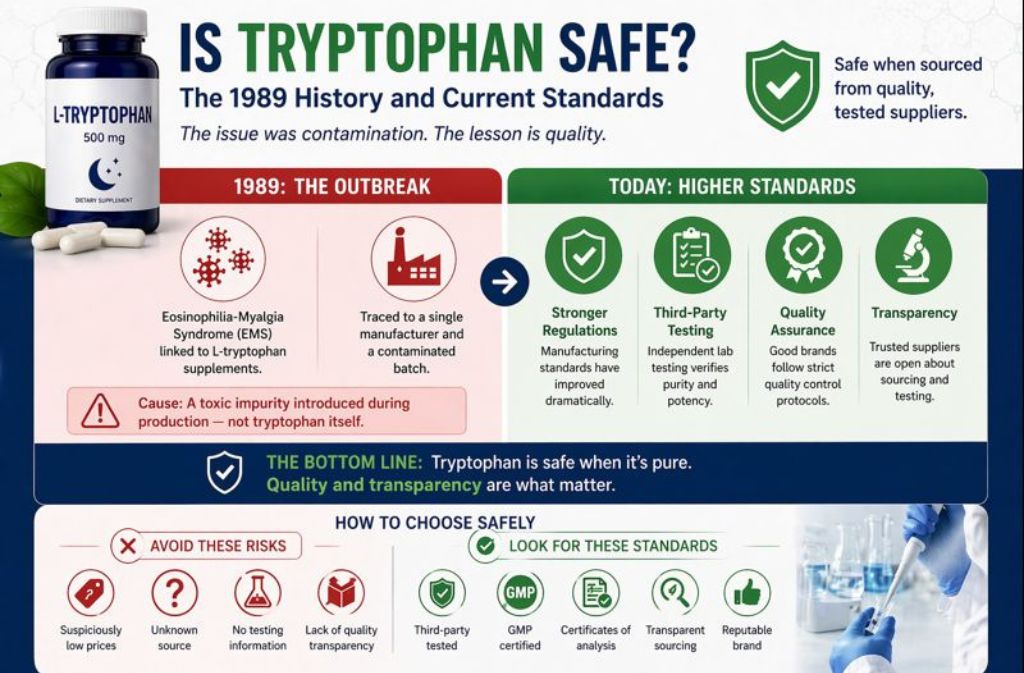
In 1989, an outbreak of Eosinophilia-Myalgia Syndrome (EMS) was linked to L-tryptophan supplements from a single manufacturer. This event significantly affected public perception of tryptophan safety for years afterward.
Current understanding consistently attributes this outbreak to a specific manufacturing contamination — a toxic impurity introduced during production by one supplier — rather than tryptophan as a nutrient. Subsequent investigations confirmed this. Manufacturing standards have strengthened significantly since then, and third-party testing has become a meaningful differentiator between quality suppliers and those cutting corners.
This history is one of the clearest arguments for buying from brands with transparent quality controls and independent testing rather than the cheapest listing available. Low-cost, unknown-source tryptophan is where the risk profile changes — not tryptophan as a compound.
Possible Side Effects
Most healthy adults tolerate L-tryptophan well at reasonable doses. Reported side effects include drowsiness (often the intended effect in sleep contexts), nausea, dry mouth, headache, digestive upset, and vivid dreams — the last of these reflecting tryptophan’s role in REM sleep neurotransmitter activity.
Use extra caution or seek medical guidance if you take SSRIs, SNRIs, MAOIs, sedatives, prescription sleep medications, or serotonergic migraine treatments. Also, discuss with a clinician before use if you have liver conditions (tryptophan metabolism is hepatically processed), bipolar disorder, or are pregnant or breastfeeding.
Medication Interactions
| Medication | Risk |
|---|---|
| SSRIs (fluoxetine, sertraline, etc.) | Serotonin syndrome risk |
| SNRIs (venlafaxine, duloxetine) | Serotonin syndrome risk |
| MAOIs | Serious interaction — avoid |
| Sedatives / benzodiazepines | Additive CNS depression |
| Prescription sleep medications | Additive sedation |
| Triptans (migraine medications) | Serotonergic interaction |
The MAOI interaction is the most serious — combining tryptophan with MAOIs carries significant serotonin syndrome risk and should be treated as an absolute contraindication without specialist supervision.
Tryptophan Foods vs Supplements: Food First
| Food | Tryptophan Content |
|---|---|
| Turkey, chicken | High |
| Eggs, dairy | Moderate–high |
| Pumpkin seeds | High (plant source) |
| Salmon | Moderate |
| Tofu | Moderate |
| Oats | Moderate |
The “turkey coma” myth is worth clearing up specifically. Post-Thanksgiving drowsiness is primarily caused by large meal volume, carbohydrate overload, alcohol, and sitting still for hours, not tryptophan sedation from turkey. Turkey contains tryptophan, but so do chicken and most protein foods at similar concentrations. The myth persists because the association is memorable, not because the mechanism is accurate.
For most people with varied diets, dietary tryptophan is adequate. The supplement case is stronger for people with inconsistent protein intake, those experiencing poor sleep or mood despite an adequate diet, or those who want targeted delivery at specific times (particularly pre-sleep) without eating a meal.
Tryptophan and Hormonal Health
Serotonin’s role in mood regulation makes tryptophan relevant in the context of PMS, perimenopausal mood changes, and stress-related emotional dysregulation. How vitamins and nutrients support hormonal balance provides the broader nutritional framework — tryptophan’s serotonin contribution fits within a system that also involves estrogen, progesterone, and B vitamin status, rather than operating independently.
How to Choose the Best Tryptophan Supplement in 2026
Look for: third-party testing confirmation, GMP-certified manufacturing, transparent label with exact mg per serving clearly stated, minimal fillers, and a reasonable serving size. If capsule size matters to you — some tryptophan capsules are notably large — check this before purchasing.
Avoid: miracle sleep or mood claims, hidden proprietary blends that obscure the actual tryptophan dose, suspiciously cheap bulk listings without quality documentation, and products with no accessible company information.
How to evaluate supplement quality beyond what labels claim applies to tryptophan as much as any other category — the gap between a well-manufactured product and a poorly controlled one is meaningful here given the compound’s safety history.
Who Should Consider Tryptophan
Worth exploring if you experience: mild sleep difficulty — specifically trouble falling asleep rather than frequent waking, stress-related restlessness in the evenings, low mood alongside poor sleep, high sensitivity to stronger sleep aids, or a preference for gentler supplementation over pharmaceutical options.
Address basics first before supplementing if: you suspect sleep apnea (snoring, waking unrefreshed regardless of duration), you’re consuming significant alcohol regularly, you have clinical anxiety or depression requiring professional care, or your sleep schedule is genuinely erratic with no consistent bedtime.
The supplement can help with the conditions it’s suited for. It won’t compensate for structural sleep problems or replace clinical treatment where that’s what’s actually needed.
Real-World Context
A remote software developer dealing with late-evening mental activation — the Slack-notification-at-10pm problem — changed three things simultaneously: 500mg L-tryptophan 45 minutes before bed, phone off an hour earlier, consistent wake time regardless of when he fell asleep. After two weeks: faster sleep onset and fewer racing thoughts at bedtime.
The lesson isn’t that tryptophan produced those results alone. The behavioural changes created the conditions under which the supplement could actually work. Used in isolation against a chaotic sleep routine, the same dose would likely have produced little.
FAQs
Q. What is a tryptophan supplement used for?
A tryptophan supplement is commonly used for sleep support, relaxation, and mood balance. L-tryptophan is an essential amino acid the body uses to produce serotonin and melatonin, which help regulate mood, calmness, and sleep cycles.
Q. Do tryptophan supplements actually work?
Yes, tryptophan supplements can work for mild sleep difficulty, stress-related restlessness, and occasional low mood, especially when paired with healthy sleep habits.
Results may be weaker when:
- Chronic stress is high
- Inflammation alters tryptophan metabolism
- Vitamin B6 or magnesium is low
- Sleep hygiene is poor
- Underlying medical issues are present
Tryptophan works best as supportive nutrition, not a quick fix.
Q. Are tryptophan supplements safe?
Tryptophan supplements are generally well tolerated for many healthy adults when used as directed. However, they may interact with medications that affect serotonin.
Use caution if taking:
- SSRIs
- SNRIs
- MAOIs
- Sleep medication
- Sedatives
- St. John’s Wort
The 1989 EMS safety event was linked to contaminated products from one manufacturer, not tryptophan itself. Choose tested, reputable brands.
Q. How much tryptophan should I take for sleep?
A common starting range for L-tryptophan for sleep is 250 mg to 500 mg taken 30 to 60 minutes before bed.
Helpful tips:
- Start with the lowest effective dose
- Use consistently for 1–2 weeks
- Follow label directions
- Ask a healthcare professional if using medications
UK buyers should check local product guidance and retailer labeling.
Q. Is tryptophan better than melatonin?
Tryptophan and melatonin serve different purposes.
Tryptophan
Supports the body’s natural pathway to make serotonin and melatonin.
Best for:
- Gentle long-term support
- Stress-related sleep issues
- Mood + sleep overlap
Melatonin
Directly supplements the sleep hormone.
Best for:
- Jet lag
- Shift work
- Sleep timing problems
- Short-term use
Tryptophan is usually gentler. Melatonin often works faster.
Q. Can you buy tryptophan supplements in the UK?
Yes, tryptophan supplements are available in the UK, though product strength and labeling may differ from US or international products due to local supplement guidance.
Check:
- Reputable retailers
- Clear dosage labels
- Third-party testing
- UK-compliant packaging
Availability may change over time.
Q. Why does tryptophan sometimes make brain fog worse?
Some people report brain fog after taking tryptophan supplements. Possible reasons include:
- Taking too high a dose
- Daytime drowsiness
- Poor sleep quality overall
- Inflammation affecting metabolism
- Interactions with other supplements
- Taking it at the wrong time of day
Lowering the dose or using it only before bed may help. Persistent symptoms should be discussed with a clinician.
Q. Can I combine tryptophan with 5-HTP?
Combining tryptophan and 5-HTP is generally not recommended without medical guidance.
Both influence serotonin pathways, which may increase the risk of excessive serotonin activity.
Safer approach:
- Choose one supplement first
- Start low
- Track response
- Avoid stacking multiple serotonin products
Q. How long does tryptophan take to work?
Some people notice sleep benefits the first night, while others need 1 to 2 weeks of consistent use.
Timeline depends on:
- Dose
- Stress level
- Sleep habits
- Nutrition status
- Individual sensitivity
Q. What is the best form of tryptophan supplement?
The best tryptophan supplement is usually one that offers:
- Clear L-tryptophan dosage
- Third-party testing
- Minimal fillers
- GMP manufacturing
- Good customer reviews
Capsules are the most common and easiest to dose consistently.
Conclusion
Tryptophan is a genuine tool for sleep support and mood balance — not a miracle compound and not a useless supplement. It works by feeding a real biochemical pathway, under conditions that support that pathway functioning properly.
The kynurenine diversion problem explains why it fails for people in inflammatory states. The B6 dependency explains why it underperforms for people low in active B6. The protein competition issue explains why taking it with dinner instead of a light snack reduces its effect. And the serotonin syndrome risk explains why casual stacking with SSRIs or St. John’s Wort is genuinely dangerous rather than merely inadvisable.
Use it at the right time, under the right conditions, at a sensible starting dose, and as part of a sleep routine rather than a replacement for one. That’s when it actually delivers what it’s capable of.
This article is for informational purposes only and does not constitute medical advice. Always consult a qualified healthcare professional before starting any supplement, particularly if you take SSRIs, SNRIs, MAOIs, or other serotonergic medications, or if you are managing a diagnosed mood or sleep disorder.
Explore our full library of expert-reviewed health and nutrition guides at Pure Magazine.