Searching for InHealth Supplements usually means one of two things: you want to buy from the brand, or you’re trying to work out whether it’s actually worth your money in a market flooded with clever-looking labels and weak formulas.
That’s a smart instinct — and this guide is built to answer it properly.
In 2026, supplement buyers are more switched-on than ever. They read labels. They Google ingredient forms and then check Companies House. So this isn’t a padded brand overview — it’s a detailed audit of what InHealth Supplements offers, where it stands against common UK alternatives, and how to decide whether it belongs in your routine.
We also clear up a persistent and confusing mix-up between InHealth Supplements and the completely unrelated InHealth Group healthcare company. Plenty of people waste time in the wrong place because of that one.
What Are InHealth Supplements?
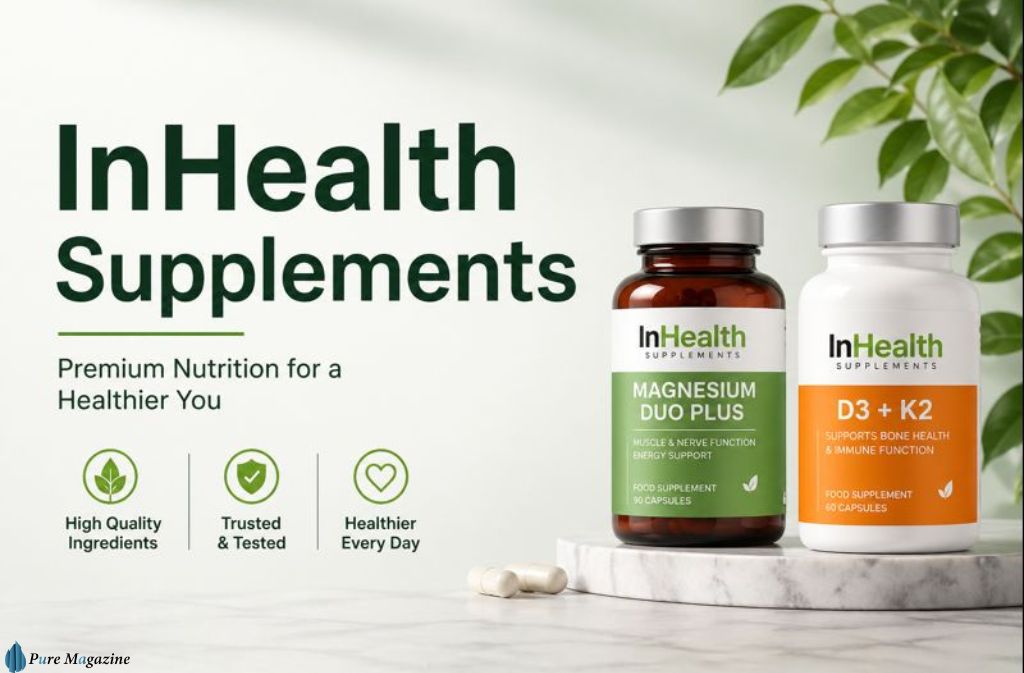
InHealth Supplements is a UK direct-to-consumer supplement brand. The company — registered at Companies House as IN HEALTH SUPPLEMENTS LIMITED (Company #13119111) — sells vitamins, minerals, wellness formulas, and targeted nutrition products aimed at goals like energy, sleep quality, immunity, joint support, and general wellbeing.
Their catalogue focuses on:
- Magnesium formulas
- Vitamin D3 + K2
- Active Vitamin B12
- Multivitamins
- Turmeric blends
- Metabolism support products
- Wellness bundles
This makes the brand more appealing than a basic supermarket vitamin wall for people who want something targeted. Whether that positioning holds up in the formulas themselves is what matters — and we’ll get into that.
InHealth Supplements vs InHealth Group — Not the Same Company
A lot of people searching for “InHealth” end up confused between two entirely separate businesses. Let’s settle it:
InHealth Supplements sells nutrition and wellness products — vitamins, minerals, consumer health supplements — directly to buyers online.
InHealth Group is a clinical diagnostics and healthcare services provider. They run MRI and imaging services, carry out patient testing, and work as an NHS partner. If you’ve ever had a private scan or been referred for diagnostics, that’s their lane — not supplements.
The two companies share a name fragment and nothing else. If you’re reading up on supplement ingredients and land on a page about MRI referrals, you’ve gone the wrong way.
Is InHealth Supplements Legitimate?
Yes. InHealth Supplements is a verified UK-registered business, active, with updated filings as of 2026. Companies House confirms the entity as legitimate and trading.
That said, being registered doesn’t automatically make every product worth buying. What follows is the kind of check that actually tells you something.
Trust Signals Worth Checking Before You Buy
Before buying from any supplement brand — InHealth or otherwise — run through this:
- Clear ingredient labels with full dosage transparency
- Named forms of nutrients (not just “magnesium” but which magnesium)
- UK-based contact details and support
- Secure checkout
- Verifiable customer reviews with patterns (not just cherry-picked five-stars)
- Manufacturing standards are clearly stated
- Realistic health claims without miracle language
If a brand dodges any of these, that’s the answer you needed.
Why the Form of an Ingredient Matters More Than the Dose
Here’s where most buyers go wrong: they look at the milligram number on the label and assume higher means better. It doesn’t.
The form of the nutrient — how it’s structured chemically — determines how well your body can actually absorb and use it. A 200mg dose of a well-absorbed form can outperform a 500mg dose of a cheap, poorly absorbed alternative. This is one of the bigger reasons people move away from supermarket vitamins toward more specialist brands.
Magnesium: The Form Determines the Outcome
| Form | Common Use | What Buyers Report |
|---|---|---|
| Magnesium Oxide | Mass-market, low-cost | Lower absorption for many people |
| Magnesium Citrate | General use | Widely considered better absorbed |
| Magnesium Glycinate | Sleep and stress support | Popular for tolerance and calm |
Glycinate is the form serious buyers tend to seek out when looking at sleep or stress support specifically. If a brand uses oxide and markets it with premium imagery, that’s a red flag worth noting. We’ve covered this in more depth in our amino acid supplements guide, where bioavailability of different compound forms comes up repeatedly.
Vitamin B12: Two Very Different Forms
| Form | Notes |
|---|---|
| Cyanocobalamin | Common, inexpensive form |
| Methylcobalamin | The active form is often preferred by buyers wanting direct usability |
Methylcobalamin doesn’t need conversion by the liver before use, which is why it tends to appear in premium formulas targeting energy and fatigue. If you’re looking at P5P supplements or methylfolate, the same logic around “active” versus “synthetic” forms applies directly.
Curcumin and Turmeric: Absorption Is the Whole Story
Raw turmeric powder has notoriously poor bioavailability on its own. Standard supplements using plain turmeric often deliver very little active curcumin into the bloodstream. Enhanced delivery systems — liposomal formats, black pepper extract (piperine), or phospholipid complexes — make a significant practical difference. Worth checking what format InHealth’s turmeric uses before buying.
InHealth Supplements Product Breakdown
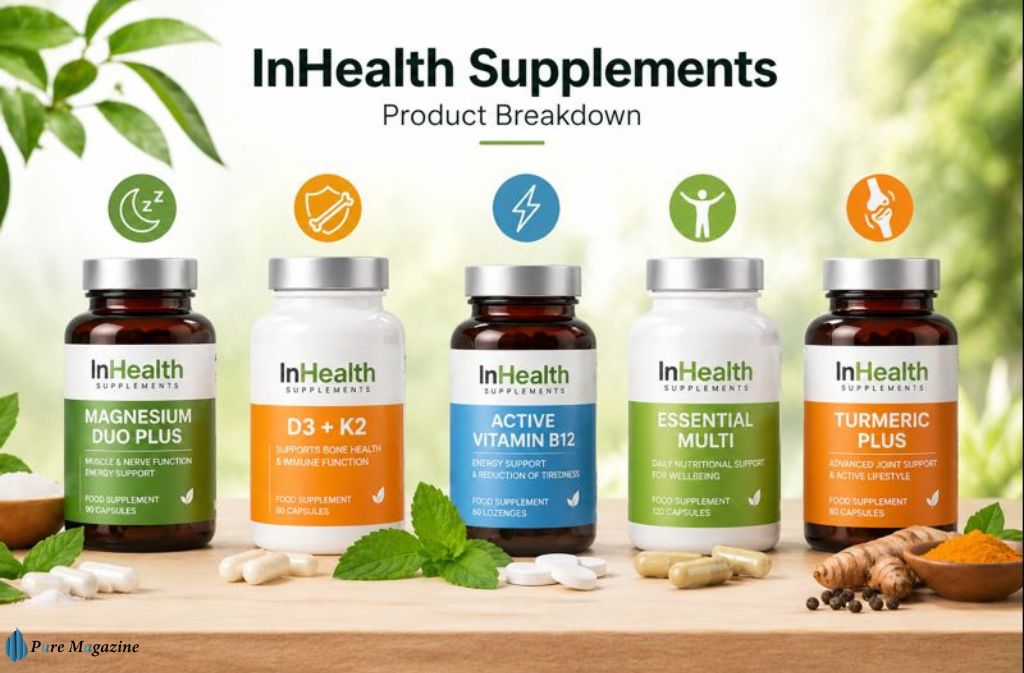
1. Magnesium Duo Plus
The most searched product in the InHealth range. Buyers typically look for it when chasing better sleep, reduced muscle cramps, stress support, or evening relaxation. The key question: which magnesium forms does it use? A blend of citrate and glycinate signals real formulation effort; oxide alone would undercut the premium positioning.
Related read: our full breakdown of tryptophan supplements for sleep covers how magnesium and tryptophan interact in the sleep pathway — worth understanding if sleep is your primary goal.
2. D3 K2 Formula
One of the more thoughtfully constructed combinations on the market when done right. D3 alone raises calcium absorption — K2 directs that calcium toward bones rather than arteries. Standalone D3 without K2 doesn’t offer this protection. If InHealth’s formula uses menaquinone-7 (MK-7) as the K2 form, that’s the preferred long-acting variant. This product appeals strongly to people with indoor lifestyles, those over 40, and anyone supporting bone health through winter months.
3. Active Vitamin B12
The “active” label implies methylcobalamin rather than cyanocobalamin — worth confirming on the label directly. A sublingual or fast-dissolve format adds further absorption advantage. This product attracts buyers looking for tiredness support, vegans and vegetarians watching B12 intake, and anyone who’s seen their B12 flagged on a blood test.
If you’ve had recent bloodwork and are wondering about timing and what various results mean, our piece on how long blood test results take may help contextualise things.
4. Essential Multi
A broad-spectrum daily option for people who want nutritional coverage without buying five separate bottles. The value question here is about the forms used across all nutrients — not just one or two. A well-formulated multi uses activated B vitamins, chelated minerals, and D3 (not D2). Budget multis often cut costs on exactly these details.
Our guide on how long multivitamins take to work sets realistic expectations — a common point of frustration for new buyers.
5. Turmeric Plus
Popular among active adults and older buyers, managing joint comfort. The “plus” format suggests added ingredients — likely piperine or a lipid-based delivery system to improve curcumin uptake. Combines naturally with glucosamine and chondroitin supplements for joint-focused routines. Worth reading the label to confirm what “plus” actually means in this formula.
What Real Buyers Usually Mean When They Search “InHealth Supplements Reviews”
When someone searches for reviews of this brand, they’re rarely asking about the company’s history. They want to know: did this actually work for someone like me, and will it arrive without issues?
The review signals that carry the most weight:
| Review Topic | Why It Matters |
|---|---|
| Results over 4–8 weeks | Sleep, energy, and recovery changes take time |
| Capsule size and tolerability | Digestive sensitivity affects consistency |
| Delivery reliability | UK fulfilment matters for repeat buyers |
| Repeat purchase rate | Strong proxy for actual satisfaction |
| Pattern of comments, not outliers | Isolated reviews mislead; patterns don’t |
One thing to watch: most supplement review sections skew toward people who either loved it or had a problem. The middle ground — people who found it fine and kept buying quietly — tends to be underrepresented. Repeat purchase rate is often a better signal than star ratings.
InHealth Supplements vs Holland & Barrett vs Generic UK Brands
Most UK buyers at some point compare specialist brands with Holland & Barrett or supermarket vitamins.
| Feature | InHealth Supplements | Generic / High Street Brands |
|---|---|---|
| Formula specificity | Targeted blends | Basic, one-size formulas |
| Ingredient forms | Often more specialised | Frequently oxide, cyanocobalamin, D2 |
| Price point | Mid-range | Low to mid |
| Label transparency | Usually stronger | Variable |
| Nutrient synergy | Considered in formulation | Rarely |
The honest take: If you want the cheapest option and aren’t fussed about ingredient form, budget brands do the job for basic coverage. If you’re specifically choosing a supplement to address a goal — sleep, energy, joint support — the form of ingredients starts to matter a great deal, and that’s where specialist brands earn their premium.
We compared a similar UK-based specialist brand in our British Supplements review — worth reading alongside this one for comparison.
Manufacturing Standards and Clean Label Practices
In 2026, serious buyers ask specific questions about how and where a supplement is made. Before committing to any brand, look for these signals:
- GMP (Good Manufacturing Practice) certification — ideally UK or EU standard
- Third-party testing with Certificates of Analysis (CoA) available on request
- Heavy metal testing — lead and arsenic limits are now industry benchmarks
- Allergen statements are clearly displayed
- Vegan suitability confirmed where relevant
The Clean Label Checklist
Beyond manufacturing, buyers in 2026 increasingly check formulas for what they don’t contain:
- Titanium dioxide (a whitening agent now avoided by cleaner brands)
- Excess magnesium stearate as a flow agent
- Artificial colours or flavourings
- High sugar gummy formats
- Gelatine capsules (relevant for vegans and vegetarians)
- Excessive filler binders
If InHealth’s labelling doesn’t address these clearly, their customer support should. A brand that answers these questions confidently usually has nothing to hide.
How to Choose the Right InHealth Supplement for Your Goal
The best product in any supplement range depends entirely on what you’re trying to address — not what’s currently trending.
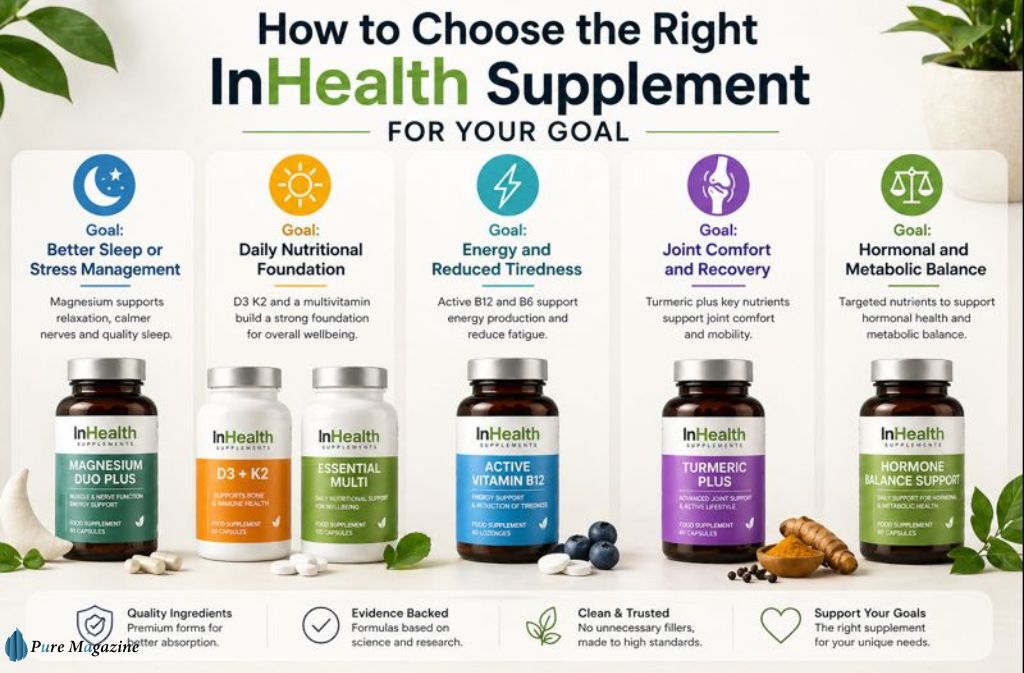
Goal: Better Sleep or Stress Management
Start with magnesium — specifically glycinate or a glycinate/citrate blend. Pair with consistent sleep timing and reduced evening screen exposure. Supplementing alongside poor sleep hygiene delivers poor results. Our piece on GABA supplements in the UK covers the wider nervous-system-calm category, worth reading alongside magnesium research.
Goal: Daily Nutritional Foundation
A quality D3 K2 formula plus a well-formulated multivitamin covers most bases for healthy adults. This matters more in autumn and winter when UK sunlight provides almost no meaningful vitamin D synthesis.
Goal: Energy and Reduced Tiredness
Active B12 (methylcobalamin) and P5P (active B6) both support energy metabolism through distinct pathways. Before reaching for stimulant-based energy products — which you can read about in our C4 workout supplement guide — address B vitamin status first. Many people find tiredness resolves when underlying nutritional gaps close.
Goal: Joint Comfort and Recovery
Turmeric Plus is InHealth’s relevant product here. For a more comprehensive approach, pairing with omega support or glucosamine makes sense for active adults and those over 50. Our protein supplements for seniors guide is relevant here, too, since muscle-joint interplay matters more with age.
Goal: Hormonal and Metabolic Balance
This is a broader category. Depending on the underlying concern, vitamins to regulate hormones and DHEA supplements may come up as part of the wider picture — though both are specialist areas worth researching carefully before supplementing.
Price-Per-Serving: A More Useful Comparison Than RRP
Most supplement brand comparisons stop at the sticker price. That tells you almost nothing useful.
The comparison that matters: cost per serving, accounting for dose.
Here’s why: a bottle of 60 capsules at £20 costs £0.33 per day. A “cheaper” bottle of 60 at £12 that requires two capsules to match the effective dose actually costs £0.40 per day — and delivers worse value per nutrient.
Before assuming a budget option is cheaper, work out the daily cost per effective dose. Factor in form quality too — a better-absorbed form at £0.40/day outperforms a cheaper but poorly absorbed alternative at £0.25/day if the cheaper one doesn’t actually work.
Common Mistakes Buyers Make With Supplements
Even good products underperform when buyers use them poorly. Watch for these patterns:
Expecting fast results from slow-acting nutrients. Magnesium glycinate for sleep typically shows its effect after consistent daily use over two to four weeks, not overnight.
Buying multiple overlapping products. Taking a multivitamin, a separate B complex, and an active B12 simultaneously often means tripling up on B12 — with no added benefit and possible excess.
Using supplements to compensate for poor basics. No magnesium formula fixes chronic sleep deprivation caused by two hours of scrolling before bed. Supplements support a foundation; they don’t replace one.
Ignoring interactions with medication. Vitamin K2 affects blood clotting — relevant if you take warfarin or similar anticoagulants. Magnesium affects several drug classes. Always check with a GP or pharmacist if you’re on prescription medication.
Choosing based on marketing, not ingredients. Premium branding means nothing without premium formulation. Read the label.
Who Should and Shouldn’t Take These Products
InHealth Supplements may suit:
- People want more targeted formulas than basic supermarket vitamins
- Those specifically seeking quality ingredient forms (methylcobalamin, magnesium glycinate, D3+K2)
- UK buyers wanting convenient direct-to-consumer ordering
- Adults managing specific goals: sleep, energy, joint support, or daily nutritional coverage
Who should pause and get professional advice first:
- Anyone on regular prescription medication (check interactions)
- Pregnant or breastfeeding women (some nutrients require adjusted dosing)
- People managing diagnosed conditions (supplements are not substitutes for treatment)
- Children and teenagers (most adult-dose products aren’t formulated for younger users)
A GP or registered nutritionist is the right first call when supplements are part of managing a health condition rather than supporting general wellbeing.
FAQs
InHealth Supplements sits in a sensible position in the UK market: more focused than supermarket vitamins, more accessible than clinical-grade prescription formulas, and targeted toward people who’ve moved past the “cheapest option” mentality.
The brand checks the basic legitimacy boxes. The products focus on the right areas — magnesium, D3+K2, active B12, curcumin — that reflect genuine buyer interest in 2026. The value hinges entirely on the forms used in each formula, which is why reading labels (not just marketing) matters so much.
Worth it if: you care about ingredient form, want UK-focused direct ordering, and need targeted support rather than a generic daily pill.
Not the right fit if: you want in-store browsing, the absolute lowest price regardless of form quality, or you’re expecting dramatic changes in days rather than weeks.
Before spending, check the specific forms on the label, confirm manufacturing standards if that matters to you, and match the product to an actual goal rather than a general wellness ambition.
That’s how you buy smarter in 2026.
Disclaimer: This article is for informational purposes only and does not replace medical advice, diagnosis, or treatment. Always consult a qualified healthcare professional before starting any supplement, hormone-related product, or wellness plan. Product formulas, pricing, and availability may change, so verify details directly with the official brand before purchasing. This review was written independently for editorial purposes. We were not paid by InHealth Supplements or any competitor brand to produce this content.
Explore our full library of expert-reviewed health and nutrition guides at Pure Magazine.