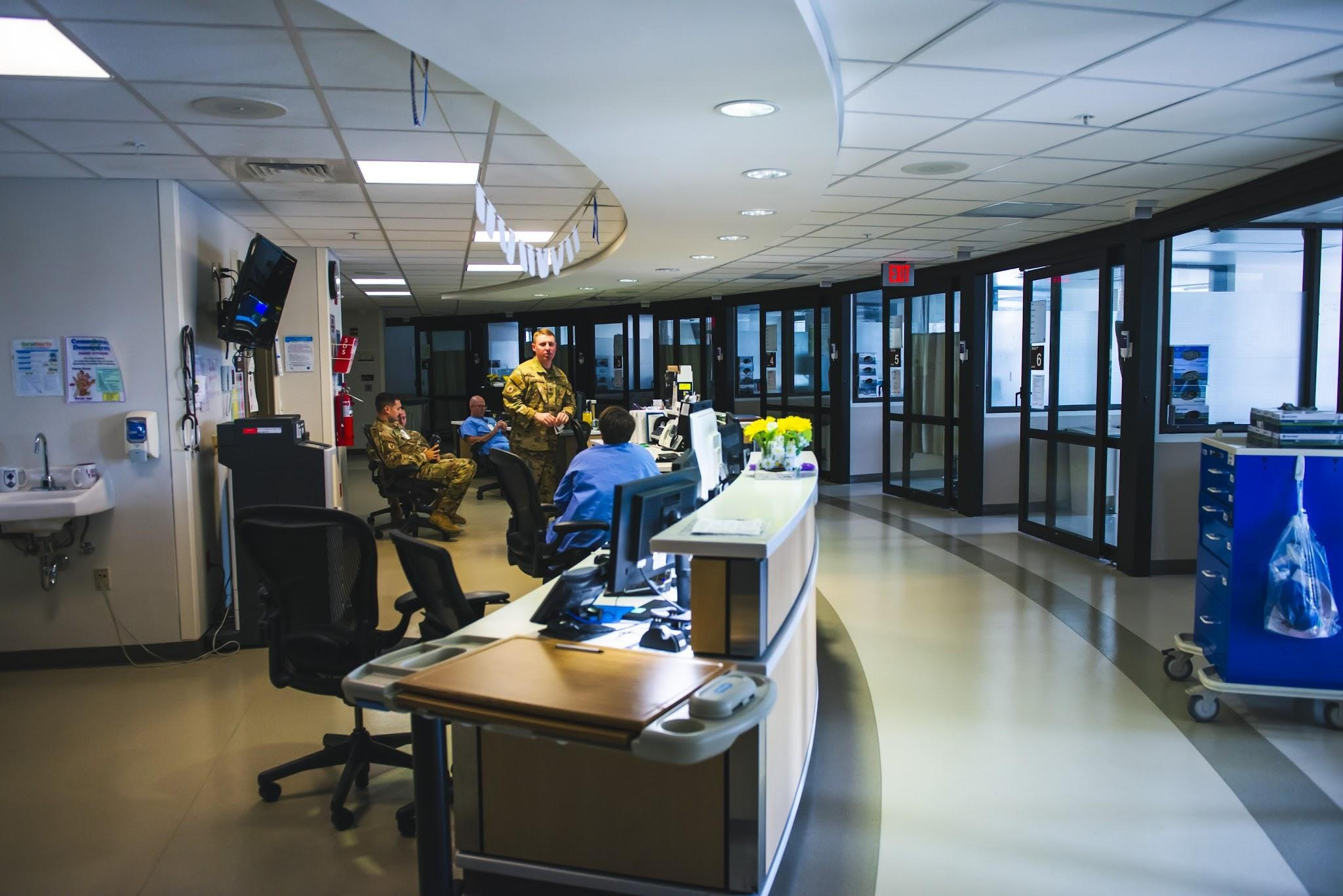
Hospitals today are realizing that health doesn’t start or end within their walls. Factors like housing, food access, transportation, and income, known as Social Determinants of Health (SDoH), play a huge role in patient outcomes.
That’s where SDoH software solutions come in. These tools help hospitals identify patient needs beyond medical care, connect them to community resources, and track the impact over time.
Instead of treating symptoms alone, providers can address the root causes affecting health. This shift leads to better care, fewer readmissions, and stronger patient trust. As healthcare moves toward value-based care, understanding and acting on SDoH is no longer optional; it’s essential.
Understanding the Modern Regulatory Pressure Around SDoH
Hospitals aren’t navigating SDoH in a vacuum; they’re doing it while managing overlapping regulatory expectations, evolving payer demands, and quality benchmarks that seem to shift every quarter. Manual workflows buckle under that kind of weight. Frankly, they already have.
Why Social Determinants Have Moved to the Center of Clinical Strategy
Income, housing, transportation, education, these aren’t soft concerns. They account for an estimated 80–90% of modifiable health outcomes, according to the Gravity Project. That number should stop you cold. Social needs aren’t peripheral to clinical strategy anymore. They are a clinical strategy.
For hospitals, the consequences of ignoring this are measurable and expensive. Avoidable readmissions. Prolonged stays. Patients are discharged into circumstances that guarantee they’ll be back. A patient without stable housing or consistent meals doesn’t stay healthy. That’s not pessimism, it’s just how it works.
Here’s a revealing data point: in 2022, most hospitals (83%) collected social needs data, but only about half (54%) did so routinely. That gap, between capability and consistency, is precisely where SDoH software solutions for hospitals deliver their sharpest value, converting scattered, one-off screening efforts into system-wide workflows that actually hold.
The Payment and Compliance Drivers That Are Forcing Hospitals to Move
Knowing the clinical case for SDoH is one thing. Understanding what’s compelling hospitals to prioritize it right now is another.
CMS introduced HCPCS code G0136 in 2024, a direct reimbursement pathway for standardized, evidence-based SDoH risk assessments. That’s not a subtle hint. That’s a funded priority.
ICD-10-CM Z codes (Z55–Z65) let hospitals document specific social problems on claims, yet the numbers on actual use are sobering: Z code claims appear in as little as 0.6% to 2.1% of cancer patient records. A compliance and revenue gap is hiding in plain sight.
Add this: Medicaid managed care contracts in 39 states now require some form of SDoH screening. Medicare Advantage plans must screen enrollees within 90 days of enrollment. Paper forms and spreadsheets were never built for this. They won’t survive it.
Understanding why hospitals must act is only half the equation. The other half is knowing what effective technology actually looks like when it’s doing its job.
Core Capabilities of Effective SDoH Software Solutions for Hospitals
These aren’t glorified digital questionnaires. The best platforms function as integrated operational systems, pulling together screening, documentation, billing logic, referrals, and analytics into a coordinated flow rather than a collection of disconnected steps.
Screening and Risk Assessment That Actually Works Across Channels
Strong platforms support validated tools like PRAPARE and AHC HRSN, delivered across tablets, patient portals, text messages, and in-room kiosks.
Screening can happen before or during a visit, in multiple languages, with role-based workflows that show nurses, social workers, and community health workers exactly what’s relevant to them, nothing more, nothing less.
One distinction that genuinely matters for G0136 billing: the best platforms differentiate between a true risk assessment tied to a documented need versus routine population-level screening. If your vendor can’t clearly explain that difference in their workflow, that’s a red flag.
EHR Integration That Doesn’t Create More Work
Capturing SDoH data is only useful if it flows naturally into the systems your teams already live in. When evaluating SDoH software solutions for hospitals, look specifically for platforms built on SMART on FHIR standards that embed directly into Epic, Oracle Health, Cerner, and Meditech. Bi-directional write-back means SDoH responses automatically populate structured EHR fields, no swivel-chair documentation, no copy-pasting between windows at the end of a long shift.
Alignment with the HL7 Gravity Project SDOH Clinical Care Implementation Guide ensures that data shared with payers and community-based organizations speaks a standardized, mutually intelligible language. That interoperability isn’t a nice-to-have; it’s table stakes.
Z Code and Billing Automation That Catches What Humans Miss
Once SDoH data lives in the EHR, hospitals can address one of healthcare’s most underutilized revenue opportunities. Effective platforms map screening responses to the appropriate Z55–Z65 codes automatically, with guardrails confirming that a problem is documented, not just a circumstance. Built-in prompts remind coders when G0136 criteria are met.
Pre-bill checks catch missed opportunities before claims go out. The result is cleaner revenue capture and far fewer regrets after month-end close.
Closed-Loop Referrals That Actually Resolve Social Needs
Documenting a need and billing for it is essential, but a Z code alone doesn’t feed anyone or find anyone housing. That’s where closed-loop referral capability separates platforms doing meaningful work from those that stop at documentation.
Leading SDoH software solutions for hospitals integrate with community resource networks using models similar to Unite Us, automatically matching patients to food, housing, transportation, and financial support based on geography, eligibility, and language.
A compelling real-world case: New York City Health + Hospitals’ partnership with Findhelp screened more than 100,000 patients for social needs in six months and achieved an 86% closed-loop rate for social care referrals. That’s the difference between naming a problem and solving one.
Advanced Features Separating Forward-Looking Platforms from the Rest
What we’ve covered so far represents what strong hospitals are deploying today. The most ambitious platforms are building well beyond that, layering in AI, predictive analytics, and smarter engagement tools.
NLP That Pulls SDoH Out of Clinical Notes
Natural language processing models can scan clinical notes, social history sections, and consult reports to surface undocumented SDoH factors, suggesting relevant Z codes for clinical confirmation rather than requiring staff to manually identify every social need from scratch. In 2024, 71% of hospitals reported using predictive AI integrated with the EHR, up from 66% the prior year. Comfort with embedded AI decision support is clearly growing.
That said, governance matters enormously. Bias evaluation, transparent model logic, and meaningful clinical oversight aren’t optional extras. They’re what separates responsible deployment from risky automation.
Predictive Social Risk Scoring That Gets Ahead of Readmissions
NLP closes documentation gaps. Predictive analytics takes the next step. Social risk scores incorporating neighborhood-level data, food access, transportation options, and broadband availability allow care teams to identify which patients need outreach before a readmission occurs.
These scores feed directly into care management queues and outreach workflows, giving teams somewhere actionable to direct their limited bandwidth.
How to Evaluate and Select the Right Platform
Seeing where good technology delivers impact makes the investment case. Selecting wisely from the available SDoH software solutions for hospitals requires more than being sold by a polished demo.
A Practical Framework for Comparing Platforms
| Evaluation Criteria | What to Look For |
| EHR Integration | Bi-directional FHIR write-back, native app availability |
| Screening Tools | PRAPARE, AHC HRSN support, multilingual capability |
| Z Code Automation | Structured mapping, guardrails, pre-bill checks |
| Closed-Loop Referrals | CBO network breadth, referral status tracking |
| Analytics | Equity dashboards, risk stratification, payer reporting |
| Gravity Project Alignment | Current IG version support, roadmap clarity |
Questions Worth Asking Before You Sign Anything
Don’t accept vague answers during vendor conversations. Ask specifically how they support G0136 workflows, not conceptually, but step by step. Ask which EHRs they have production-grade integrations with, not pilot relationships. Ask what closed-loop referral outcomes hospitals comparable to yours have actually achieved. And ask what they’re doing about alert fatigue, because a tool that adds clicks gets ignored, no matter how capable it is on paper.
Frequently Asked Questions
Q. How do SDoH software solutions for hospitals differ from basic screening questionnaires?
Basic questionnaires capture responses. SDoH software solutions for hospitals automate Z code mapping, trigger billing prompts, facilitate referrals, and generate population-level analytics, connecting every step from screening through reimbursement in one integrated system.
Q. Which departments should lead implementation?
No single department owns this work. Successful rollouts consistently involve clinical leadership, social work, case management, IT, revenue cycle, quality teams, and community partners, all aligned on shared metrics from day one.
Q. Can SDoH platforms support G0136 compliance without conflating assessments with generic screening?
Yes, but only if the platform includes logic that genuinely differentiates between a risk assessment tied to a documented need and routine population screening. Ask vendors to walk through their G0136 workflow specifically before you commit.
Q. How do smaller or rural hospitals adopt SDoH software without overextending resources?
Cloud-based platforms with modular pricing, FHIR-based EHR integration, and existing CBO network coverage significantly reduce the implementation burden. Starting with one service line and scaling deliberately is almost always the most practical path.
For more, visit Pure Magazine