Scroll through your phone for a minute.
You’ll probably pass birthdays, weekend trips, random snapshots, screenshots, blurry experiments, and maybe a few photos you meant to print but never did. Modern phones make it effortless to capture moments—but strangely difficult to display them.
Most homes today have thousands of digital photos behind the screen, yet the walls remain empty or filled with generic artwork.
That disconnect is exactly what Wallapix tries to solve.
Wallapix is a platform designed to transform personal photos into curated wall displays using design tools, artificial intelligence, and professional printing materials. Instead of simply ordering prints, users can build visual compositions that look intentional—almost like a gallery wall created by a designer.
Interest around the keyword wallapix has been increasing steadily as more people look for ways to turn their digital archives into something physical. But many early articles barely explain how the platform works or why it matters.
This guide takes a closer look at what Wallapix actually does, how its AI design system works, pricing in 2026, and how it compares to other wall-art services.
What Is Wallapix?
At its core, Wallapix is a design-driven photo platform that helps users convert personal images into customized wall art.
Instead of treating photos as individual prints, the platform focuses on visual composition—how multiple images interact when displayed on a wall.
The typical process involves:
- uploading photos from your device
- arranging them using built-in design tools
- previewing the final layout
- ordering the design as a printed display
Outputs can include:
- canvas prints
- acrylic panels
- metal wall art
- multi-panel photo walls
What separates Wallapix from basic photo printing services is the emphasis on design and presentation, not just reproduction.
Why Wallapix Is Getting Attention in 2026
The growing search interest around wallapix reflects several changes in how people interact with photography and home décor.
The “Too Many Photos” Problem
Smartphones have made photography effortless. Most people now carry thousands of images in their camera roll, but only a tiny fraction ever becomes prints.
The result is an archive of memories that rarely leave the screen.
Wallapix tackles this problem by helping users transform scattered photos into curated displays that actually belong on a wall.
A Shift Toward Personal Interior Design
Interior design has quietly changed over the last decade. Instead of generic framed art, many people prefer spaces that reflect their lives—travel experiences, family moments, creative work.
Photo-based wall displays fit naturally into this trend.
Platforms like Wallapix make it easier to create those displays without hiring a designer.
AI-Assisted Creativity
Another reason Wallapix stands out is its use of artificial intelligence in the design process.
Rather than asking users to manually arrange dozens of images, the system analyzes photos and suggests layouts based on color balance, composition, and theme.
For someone without design experience, that guidance can make a noticeable difference.
The AI Features Behind Wallapix
A major part of the platform’s appeal is how it uses AI to simplify design decisions.
Instead of offering a blank canvas, the system helps organize images in ways that look visually balanced.
Automatic Photo Grouping
One of the first things the platform does is analyze uploaded images.
The AI may group them based on:
- similar color palettes
- lighting conditions
- subject type
- emotional tone
This grouping makes it easier to build layouts that feel cohesive rather than random.
AI-Enhanced Printing Textures
Newer versions of the platform also experiment with AI-guided texture printing.
Users can apply effects such as:
- oil-paint style textures
- watercolor diffusion effects
- soft brush-style finishes
Unlike simple digital filters, these adjustments influence the physical texture of the printed material, particularly on canvas surfaces.
The result feels closer to an artwork than a standard photograph.
Legacy Mode for Restoring Old Photos
Another interesting addition is something called Legacy Mode.
Many families still have old printed photos—polaroids, film prints, or album pictures—that exist only in small physical formats.
With this feature, users can scan those photos and let the system enhance them using AI upscaling and color correction. The improved versions can then be printed at much larger sizes without looking pixelated.
For people digitizing family archives, this can be surprisingly useful.
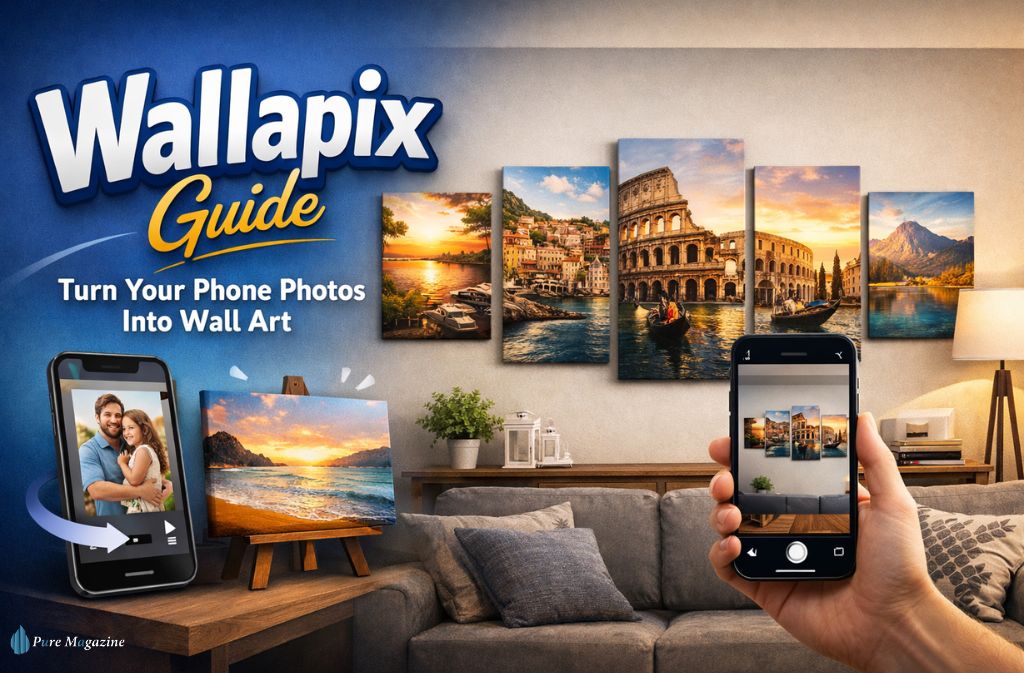
Wallapix AR Preview: Seeing the Artwork on Your Wall
One of the more practical tools offered by the platform is its augmented reality preview feature.
Instead of guessing how a design might look in your home, you can place it virtually on your wall using your phone’s camera.
The feature works by overlaying the artwork in real scale, allowing you to see whether the size, orientation, and spacing feel right.
For larger gallery layouts or multi-panel designs, this preview can prevent costly mistakes.
How the AR Preview Works
Using the feature usually takes less than a minute.
- Upload photos and create your layout.
- Choose the printing format (canvas, acrylic, or metal).
- Open the AR preview option in the mobile app.
- Point your phone at the wall where you want the artwork.
- The design appears digitally in real size.
This step helps users judge whether a piece feels balanced in the space before placing an order.
Wallapix Pricing in 2026
Prices vary depending on material, size, and framing options. The following estimates reflect common starting prices for smaller formats.
| Print Type | Typical Starting Price | Best Use |
|---|---|---|
| Canvas Print (8×10) | $24.99 | classic wall art |
| Acrylic Print | $39.99 | glossy modern displays |
| Metal Print | $44.99 | durable minimalist art |
| Multi-Panel Sets | $89+ | gallery wall layouts |
Large prints and custom frames can increase the price, but these starting points place Wallapix in the mid-range of the personalized wall art market.
Wallapix vs Other Wall Art Platforms
When researching the platform, many users also look at alternative services.
Here’s how Wallapix compares with a few common options.
| Platform | What It’s Known For |
|---|---|
| Mixtiles | removable photo tiles that stick directly to walls |
| CanvasPop | high-end canvas printing and museum-quality materials |
| Wallapix | AI layout design and AR wall previews |
Each platform focuses on something slightly different.
Mixtiles prioritizes convenience. CanvasPop emphasizes premium printing quality. Wallapix sits somewhere between them, combining design tools with customizable printing.
Sustainability and Material Choices
Sustainability has become a larger concern for many buyers, especially when ordering physical products online.
Several printing partners used by Wallapix now highlight environmentally responsible materials, such as:
- FSC-certified wood frames sourced from managed forests
- UV-resistant inks designed to extend print lifespan
- recyclable shipping packaging
While sustainability practices vary by production partner, these signals help reassure buyers that the products are designed to last.
Also Check: How to Create a Stylish City Home on a Budget
Practical Ways People Use Wallapix
The flexibility of the platform means people use it in different ways depending on their needs.
Home Memory Walls
One of the most common uses is creating photo walls built around a theme—travel, family milestones, or a particular year.
Instead of scattering individual frames, users design a layout that feels unified.
Personalized Gifts
Custom photo displays have also become popular gift ideas.
Examples include:
- anniversary collages
- graduation memory boards
- birthday photo timelines
Because the images carry personal meaning, these gifts tend to feel more thoughtful than standard prints.
Creative Portfolios
Photographers and designers sometimes use the platform to present work as curated wall compositions.
A well-designed multi-panel display can function almost like a miniature exhibition.
Limitations and Things to Consider
While Wallapix offers powerful design tools, a few practical factors still matter.
Photo Quality Makes a Difference
Large prints reveal flaws more easily than phone screens.
For best results, images should be high resolution—ideally around 300 DPI for larger formats.
Desktop Tools Offer More Control
The mobile app works well for quick projects or gifts.
However, complex gallery layouts are easier to manage on a desktop, where you can see the full design at scale.
Simpler Designs Often Look Better
A common beginner mistake is adding too many photos.
In many cases, three to six strong images create a more balanced composition than a crowded collage.
FAQs
Q. What is Wallapix used for?
Wallapix is used to turn personal photos into customized wall art, including canvas prints, framed displays, and multi-panel photo layouts designed for home décor.
Q. How much does Wallapix cost?
In 2026, a standard 8×10 canvas print typically starts around $24.99, while larger formats and premium materials like acrylic or metal cost more.
Q. Does Wallapix use artificial intelligence?
Yes. The platform uses AI to suggest layouts, group photos by visual theme, enhance scanned images, and apply texture effects to printed materials.
Q. What is the AR preview feature?
The AR preview allows users to see how their artwork will look on their actual wall using their smartphone camera before ordering the print.
Q. Is Wallapix the same as Wanapix?
No. Wallapix focuses on AI-designed wall art displays, while Wanapix is a Spanish personalization company known for printed gifts and merchandise.
Final Thoughts
For years, technology focused on helping us capture more photos. Phones became better cameras, storage became cheaper, and social media encouraged constant documentation.
Now we’re facing the opposite problem: too many photos and nowhere meaningful to put them.
That’s why platforms like Wallapix are starting to resonate with people.
They don’t just print images. They help turn scattered memories into something visible—something that lives in a real space rather than inside a gallery app.
And sometimes, that small shift—from digital clutter to physical storytelling—is enough to make old photos feel new again.
Related: Image to Image AI: Transform Photos with Creative Power