


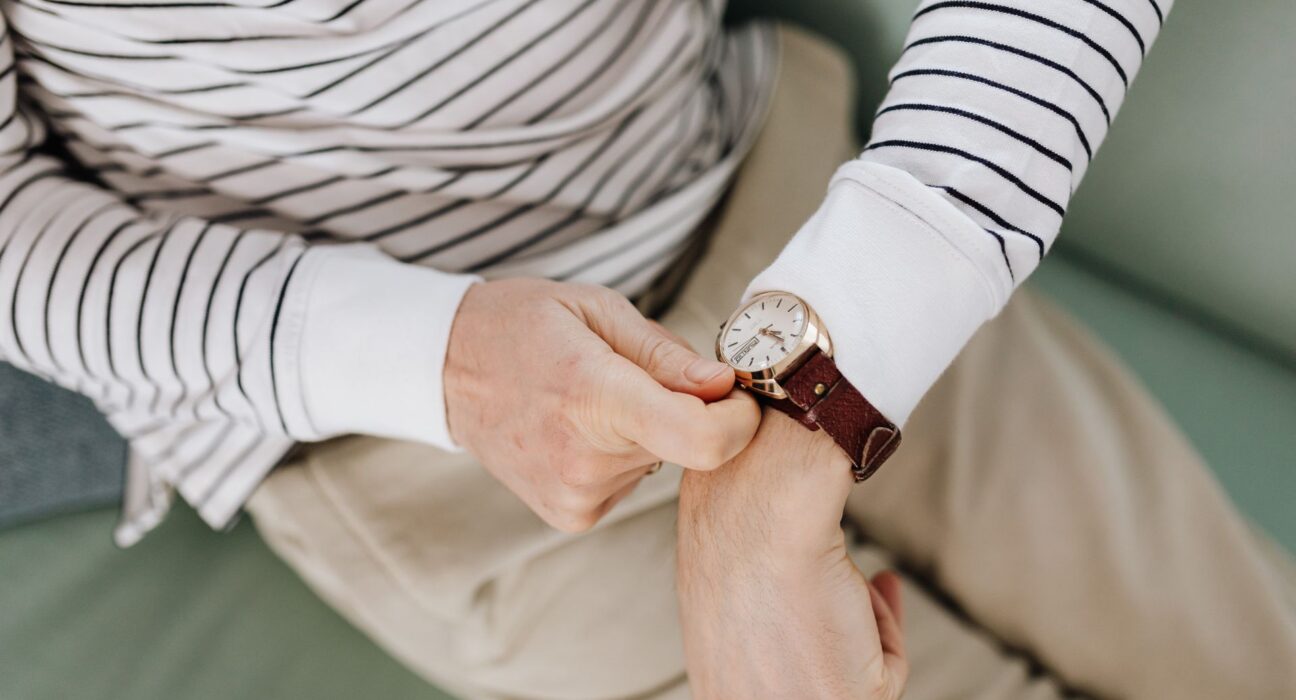
Many Longines watches draw their appeal from balanced cases, clear dials and details linked to the brand’s extensive archive. A replacement strap should support those qualities rather than compete with them. Leather is often the natural choice for a dress model or heritage-inspired watch, but the right result depends on more than selecting black or brown.
Proportion, grain, padding and taper all influence how the watch sits and looks. A strap can make a case appear slimmer, broader, older or more contemporary. Thinking through those effects is especially useful when the original strap has worn out or when a pre-owned watch arrives on a combination that does not feel quite right.
Start with the character of the case and dial
A clean silver dial and polished case usually suit smooth leather with discreet stitching. Black creates a formal contrast, while dark brown brings warmth without becoming casual. Blue leather can work with blued hands or a blue dial, but an exact colour match is not required. A slightly darker strap often provides better definition.
Heritage models with warm lume tones, railway tracks or vintage-style numerals can carry more texture. Calfskin with a natural grain, light pull-up effect or modest contrast stitching can make the watch feel relaxed. Very distressed leather should be used carefully because it may overwhelm the refined finishing of the case.
Fit comes before colour
The lug width must be measured on the watch or confirmed from reliable model information. Longines uses several widths across its collections, and even watches within the same family can differ. The strap should fill the gap neatly without compression, fraying or exposed spring bars.
Collections of compatible Longines straps make it easier to narrow the search by width, material and length. Watch Obsession includes options from strap makers such as Hirsch, Morellato and RIOS1931, with choices that cover classic calfskin, embossed finishes and more casual constructions.
Length controls where the buckle sits on the wrist. A strap that is too long can leave excess tail and push the buckle off centre. One that is too short may use the final hole and leave little material inside the keepers. Comparing both sections with a comfortable existing strap gives a better guide than overall wrist size alone.
Taper and padding set the level of formality
A pronounced taper towards the buckle generally looks elegant. It reduces visual weight and echoes the finer proportions of many dress watches. A 20 mm strap that narrows to 16 mm will feel different from one that tapers only to 18 mm, even when the material and colour are identical.
Padding can give a larger case more presence, but it should fall away smoothly towards the tip. Heavy, abrupt padding may prevent the strap from bending close to the lugs and can make a thin watch sit high. Flat or lightly padded leather often works better on compact and vintage-inspired pieces.
Edge treatment also matters. Painted edges look precise and formal. Cut or folded edges can feel more traditional, depending on the leather and construction. Stitching close to the edge keeps the design neat, while thick contrast thread creates a stronger casual signal.
Choose a finish that suits real use
Smooth calfskin is versatile but will show creases and moisture if worn hard. Embossed leather can add pattern and may disguise minor marks. Shell cordovan has a distinctive surface and develops wear differently, while genuine exotic leather requires more specific care and may carry a higher cost.
Owners who wear the watch daily should think about weather and routine. Leather needs time to dry after perspiration and is not the first choice for swimming. Rotating it with rubber or fabric during hot and wet periods can extend its life. Water-resistant leather may offer more reassurance, but the maker’s guidance still defines what it can handle.
The lining touches the skin and deserves attention. A smooth, well-finished lining can improve comfort, particularly at the edges. People with sensitivity to certain materials should check product specifications rather than assuming that all leather straps use the same lining or treatment.
Reusing the original buckle needs planning
A signed Longines buckle can preserve a familiar detail, but it will fit only if the replacement strap has the correct buckle-end width and suitable thickness. Measure the inside of the buckle where the strap passes through. Also inspect the pin and spring bar before reuse.
Deployant clasps impose their own requirements. Some need a strap without the usual keepers, while others work only within a limited thickness. The holes and tail must match the clasp design. When compatibility is uncertain, advice from the strap retailer or a watchmaker is safer than trimming or forcing the leather.
Hardware colour should relate to the case. Polished steel suits polished cases, while brushed steel can look at home on a watch with satin surfaces. Gold and rose gold finishes need a reasonably close visual match. A small difference can be more noticeable at the buckle than expected.
Care begins on the first day
Leather develops creases where it bends, which is normal. Avoid pulling the strap sharply back against the buckle when fastening it. Guide the tail through the keepers rather than dragging it, and use a different hole if the wrist changes size in warm weather.
After wear, wipe the strap with a dry soft cloth and let it air away from direct heat. Do not store it damp in a closed watch box. Creams and conditioners should be used only when they are appropriate for the specific leather, finish and lining.
A considered leather strap can restore the balance that makes a classic Longines appealing. Accurate sizing keeps the watch secure, while the right taper and finish preserve its refinement. The goal is not to make the strap the centre of attention. It should make the whole watch feel complete again.
For more, visit Pure Magazine