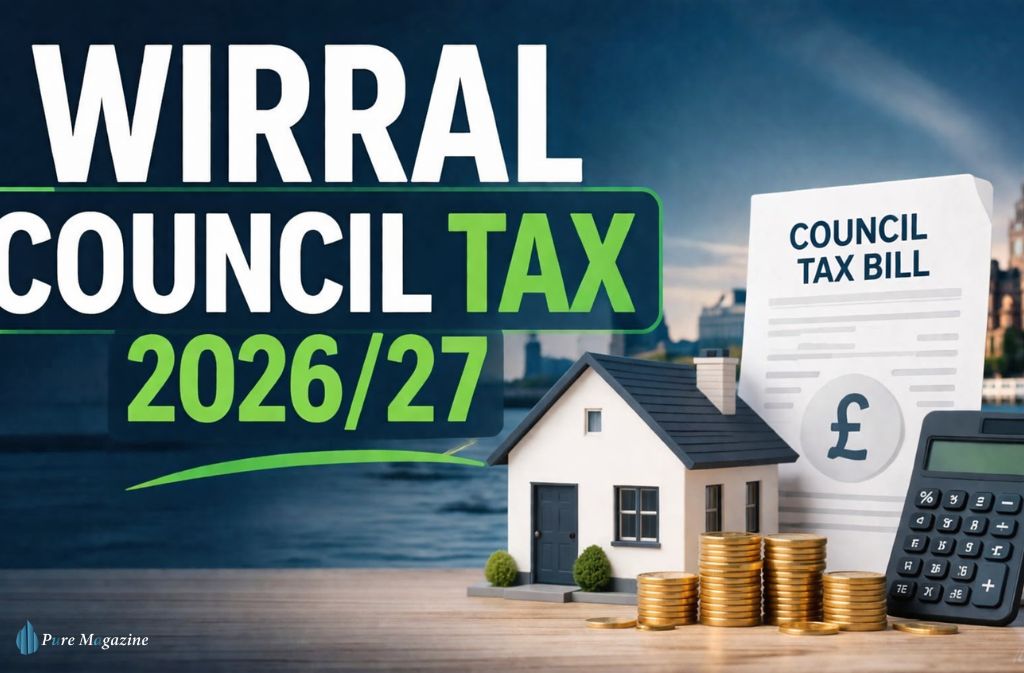
That council tax bill for 2026/27 isn’t small — and if you’re living in the Wirral, you’ve probably noticed it’s gone up again.
The confirmed Band D bill now sits at £2,500.59, and for many households, that’s a serious chunk of yearly income. But here’s the thing: most people don’t actually understand why they’re paying that amount — or how to reduce it.
Here’s what you’ll find below: the exact 2026 Wirral council tax rates, what’s behind the 4.99% increase, hidden discounts and support options, and practical ways to lower your bill legally.
2026/27 Full Council Tax Rates
The final, confirmed rates (including all precepts) from Wirral Borough Council are:
| Band | Annual Bill |
|---|---|
| Band A | £1,667.06 |
| Band B | £1,944.90 |
| Band C | £2,222.75 |
| Band D | £2,500.59 |
| Band E | £3,056.28 |
| Band F | £3,611.96 |
| Band G | £4,167.65 |
| Band H | £5,001.18 |
These are total bills, meaning they already include council services, the police precept, and fire & rescue services.
Where Is Your Council Tax Actually Going?
This is something most people skip — but it matters.
For a Band D property (£2,500.59), part of your bill goes to:
- Merseyside Police: £293.97
- Merseyside Fire & Rescue: £101.25
- Remaining amount: Local services run by the council
You’re not just paying the council — you’re funding multiple services bundled into one bill. That’s why increases feel bigger than expected.
Why Did Wirral Council Tax Go Up in 2026?
Let’s be direct — it wasn’t optional.
The 4.99% increase breaks down as 2.99% standard increase plus a 2% Adult Social Care precept — the maximum allowed without triggering a local referendum. The council also requested around £6 million in Exceptional Financial Support from the government to balance its budget. Without that, cuts to services would have been unavoidable.
This increase isn’t just inflation — it’s about keeping essential services running amid rising demand, particularly in social care and SEND.
The Single Person Discount (Most Common Way to Save)
Most people never check this properly.
If you live alone, you get 25% off your bill automatically. For a Band D property, that brings £2,500.59 down to approximately £1,875 — over £600 saved just for updating your status with the council.
The single person discount applies regardless of income and has no means test. It just needs to be claimed.
Big 2026 Change: Council Tax Reduction Scheme (LCTRS)
This is critical if you’re on a low income.
From April 2026, working-age residents in Wirral must pay at least 50% of their council tax, even on low incomes. Full 100% support is no longer standard for working-age claimants — a significant change from previous years. A lot of older online advice is now outdated, and many people expect full relief that they won’t get under the new scheme.
For a broader picture of how council tax reduction schemes work and what to claim, the national framework gives useful context alongside Wirral’s local rules.
New 2026 Support You Might Not Know About
The council introduced targeted 100% discretionary relief for:
- Care leavers (up to age 25)
- Residents with a terminal illness (SR1 form)
- Survivors of domestic abuse are forced to leave home
These are not automatic — you have to apply directly through the council.
Struggling to Pay? Read This Before You Miss a Payment
If you’re staring at a £2,500 bill and thinking it isn’t doable, don’t wait.
What actually helps: contact the council before missing a payment, ask for a 12-month payment plan instead of the default 10, and apply for reductions immediately. The standard bill is split over 10 months — switching to 12 reduces each payment without changing the total.
What happens if you ignore it: reminder letter, final notice, court summons, enforcement agents. Early contact gives you more flexibility. Late contact closes options quickly.
Understanding your full council tax payment options — including what a court liability order means — is worth doing before things escalate.
Empty Homes & Second Property Premiums (2026 Crackdown)
This is one of the bigger shifts this year.
Long-term empty homes can now face a 100% premium on top of the standard rate — meaning some owners pay 200% of the normal charge. Second homes in Wirral also attract the same premium. The goal is straightforward: push unused properties back into the housing market.
If you own a property in Wirral that’s unoccupied or used only occasionally, understanding council tax on empty properties is worth doing before the next billing cycle.
Paying Your Bill: What’s Changed in 2026?
Everything is now more digital.
The council relies heavily on its MyWirral online account system. Through it you can view your bill, set up direct debit, apply for discounts, and track payments. Paper is being phased out — digital is the default route for most transactions.
You can also pay via GOV.UK’s council tax payment service, which routes to Wirral Council directly.
Common Mistakes That Cost People Money
- Not claiming single-person discount
- Assuming old benefit rules still apply (the 2026 LCTRS changes are significant)
- Ignoring letters until it’s too late
- Paying over 10 months instead of spreading to 12
- Never checking if their band is correct
Council tax bands were set in 1991, and some properties are in the wrong one. Checking neighbouring properties of similar size through the Valuation Office Agency is free and can result in a rebate if the band is too high.
Quick Checklist
- Check your band
- Apply for all discounts you’re eligible for
- Set up or log in to your MyWirral account
- Switch to 12-month payments if cash flow is tight
- Contact the council early if you’re struggling
FAQs
Q. How much is Council Tax Band A in Wirral 2026?
Council Tax Band A in Wirral for 2026/27 is £1,667.06 per year, including all local precepts such as police and fire services.
Q. Is Wirral council tax going up in 2026?
Yes, Wirral Borough Council increased council tax by 4.99% for the 2026/27 financial year, combining a 2.99% general rise and a 2% adult social care charge.
Q. What is the Band D council tax in Wirral?
The standard Band D council tax in Wirral for 2026/27 is £2,500.59 annually, which is used as the baseline for calculating all other property bands.
Q. Can I reduce my Wirral council tax bill?
Yes, you can reduce your Wirral council tax through:
- Single person discount (25%)
- Council Tax Reduction Scheme (income-based)
- Exemptions for students or disabilities
Applying for eligible discounts can significantly lower your total bill.
Q. What is the minimum council tax payment in Wirral now?
Under the updated 2026 Local Council Tax Reduction Scheme, working-age residents must pay at least 50% of their council tax bill, even if they qualify for support.
Q. How do I pay Wirral council tax?
You can pay your Wirral council tax:
- Online via the MyWirral account
- By direct debit (monthly payments)
- Through bank transfer or approved payment locations
Most residents use direct debit for convenience and to avoid missed payments.
Q. What happens if I don’t pay council tax in Wirral?
If you don’t pay your council tax:
- You’ll receive a reminder notice
- A final demand may follow
- The case can go to court (liability order)
- Enforcement agents (bailiffs) may be used
Contacting the council early can help you arrange a payment plan and avoid legal action.
Q. How much is Wirral council tax per month?
For a Band D property (£2,500.59 yearly), monthly payments are typically:
- Around £250/month over 10 months, or
- About £208/month over 12 months
The exact amount depends on your payment plan.
Q. Can I challenge my council tax band in Wirral?
Yes, you can challenge your band if you believe your property is incorrectly valued. Submit your appeal through the Valuation Office Agency, and if your claim is successful, your council tax bill may be reduced.
For more on council tax rates, discounts, and UK tax changes affecting households, visit Pure Magazine.