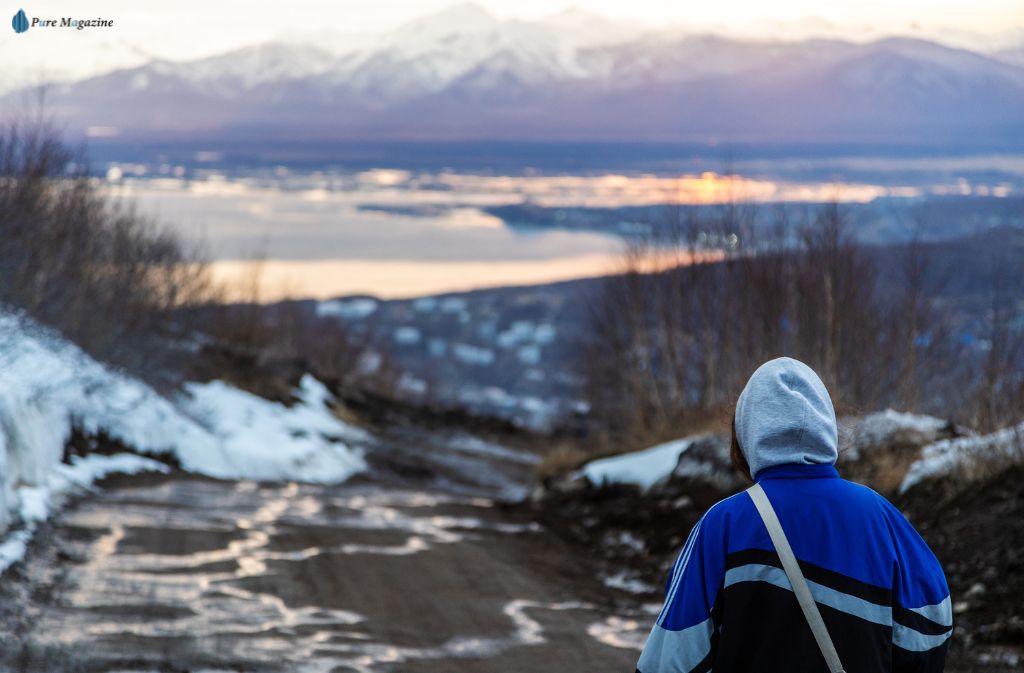
There are places you go for a vacation, to sip margaritas by a pool or tour museums in a bustling city. Then there are places you go that change you. Alaska is firmly in the latter category. It is not just a destination on a map; it is a force of nature that demands your full attention. The moment you step off the plane, the air feels different—crisper, cleaner, and charged with a wild energy that is absent in the lower 48.
The Overwhelming Presence of Nature
In most places, nature is something you look at. In Alaska, nature is something you feel. It surrounds you, making you acutely aware of your own smallness. This sensation can be intimidating at first, but it quickly transforms into a sense of awe. You realize that you are just a visitor in a vast, functioning ecosystem that doesn’t revolve around human needs.
The scale of the environment forces you to be present. You can’t be thinking about your grocery list when you are watching a glacier calve into the ocean or hiking through a dense forest where a moose might step out at any moment. This immersion acts as a hard reset for your brain. The constant sensory input of the natural world—the smell of spruce, the sound of rushing water, the chill of the wind—anchors you firmly in the “now.”
Accessing this level of immersion often requires getting away from the main hubs. Finding the right base camp is crucial. For example, securing Katmai National Park lodging allows you to wake up right in the heart of bear country, removing the barriers between you and the wild. Being that close to the pulse of the land strips away the artificial layers we build around ourselves, leaving us open to a rawer, more authentic experience.
Disconnecting to Reconnect
We often talk about “unplugging” as a luxury, but in many parts of Alaska, it is a necessity. Cell service is spotty or nonexistent once you leave the major towns. Initially, this loss of connectivity can trigger a panic response. We are so accustomed to the dopamine hit of a new notification that silence feels wrong. You might find yourself phantom-checking your pocket for a phone that has no signal.
However, after a day or two, the withdrawal symptoms subside. You stop reaching for your device to fill the empty moments. Instead, you let the moments be empty. You watch the clouds move across a peak. You listen to the crackle of a fire. You actually finish a conversation without glancing at a screen.
This forced disconnection creates space for a different kind of connection. You reconnect with yourself. Without the constant influence of social media and news cycles telling you what to think or feel, you remember who you are. You also reconnect with the people around you. Shared experiences in the wild create bonds that are stronger and deeper than those formed over digital networks. The isolation from the world leads to an intimacy with your immediate surroundings.
Resilience in the Face of Wilderness
Alaska is beautiful, but it is not soft. The weather can turn in an instant. The terrain is rugged and unforgiving. Even a simple hike can present challenges that require problem-solving and perseverance. You might get cold, wet, tired, or a little scared.
Facing these physical challenges builds mental resilience. When you push your body to climb a ridge or kayak against a current, you are proving to yourself that you are capable of more than you thought. This isn’t the abstract stress of a deadline; it is tangible, immediate, and solvable.
Overcoming these obstacles provides a dopamine rush that is far more satisfying than a “like” on a photo. It teaches you to adapt. If it rains, you put on gear and keep going. If the trail is blocked, you find a way around. This mindset shifts how you view problems back home. You realize that if you can handle the unpredictability of the Alaskan wild, you can handle the unpredictability of daily life.
Embracing the Quiet
True silence is rare in the modern world. There is almost always a background noise—cars, appliances, other people. In the vast expanses of Alaska, you can experience a silence so profound it has a physical weight. It is the silence of a snow-covered valley or a calm lake at dawn.
At first, the quiet can be loud. Your own thoughts might seem deafening without the usual distractions to drown them out. But as you settle into it, the silence becomes restorative. It allows your mind to wander, to daydream, and to process thoughts that have been pushed to the back burner.
This solitude is not about being lonely; it’s about being alone with your thoughts and being okay with that. It fosters creativity and clarity. Many people find that their best ideas or solutions to complex problems come to them during these quiet moments in the wild. The mental clutter clears away, leaving room for insight.
A New Perspective on Value
Perhaps the most significant shift is a re-evaluation of what matters. Standing in front of a mountain range that has existed for eons makes your quarterly report seem significantly less critical. The tangible reality of survival—warmth, food, shelter, companionship—takes center stage.
You begin to value experiences over possessions. The memory of a whale breaching or a sunset over the tundra becomes more valuable than a new car or expensive clothes. You appreciate the simple things: a hot cup of coffee on a cold morning, dry socks, a warm fire.
This perspective shift often follows you home. You might find yourself less interested in the rat race, more protective of your time, and more inclined to seek out nature in your own backyard. Alaska teaches you that life is grand and wild, and that we often make it far too small and complicated.
Conclusion
You now know that you can survive without your phone. You know that you are capable of handling physical challenges. You know the peace of true silence. While you cannot stay in Alaska forever, you can keep that mindset alive. You can carve out moments of quiet in your day. You can prioritize time outside. You can remember that you are part of something much larger than your office or your neighborhood.
For more, visit Pure Magazine