Being off work sick is stressful enough. Chasing the right paperwork shouldn’t make it worse.
Every year, thousands of people search for a self certification form NHS and end up confused by broken PDFs, outdated advice, or employers asking for forms that don’t officially exist. The result? Delayed sick pay, unnecessary GP appointments, and a lot of avoidable stress.
Here’s the clear reality in 2026: there is no single universal NHS self‑certification form. But UK law still allows you to self‑certify sickness for a limited period — and employers must accept it when done correctly.
This guide explains exactly how NHS self‑certification works, how long it covers (including weekends), where to get a valid form or template, how it links to Statutory Sick Pay (SSP), and when a GP fit note is actually required. It’s written to help you get it right the first time.
What Is an NHS Self-Certification Form?
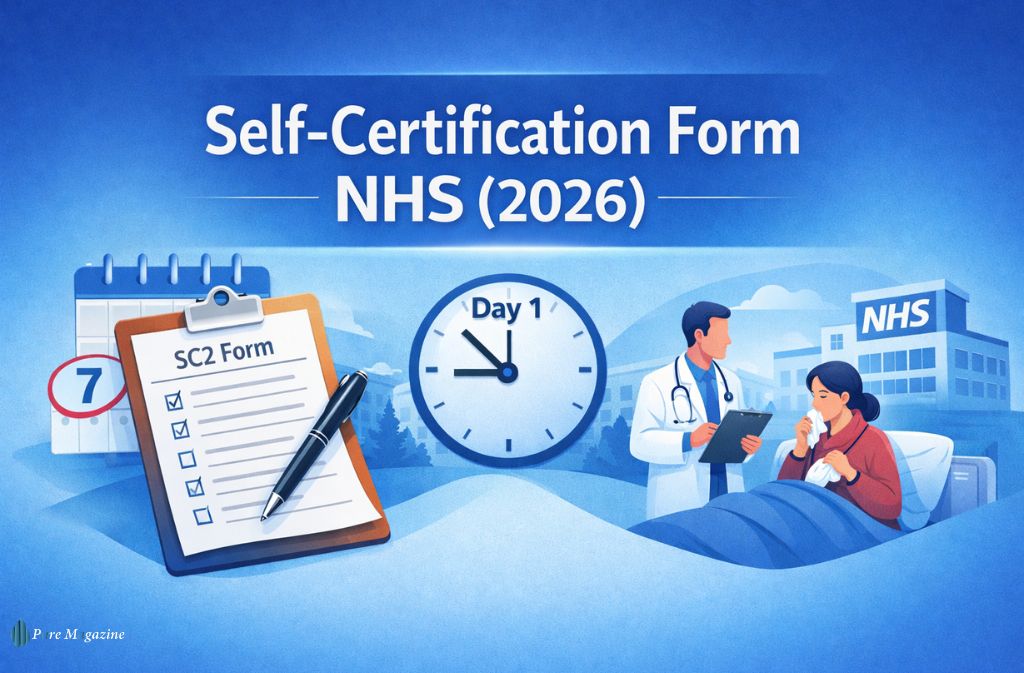
An NHS self‑certification form isn’t a single official document issued by the NHS. Instead, it’s a general term used to describe any written declaration you provide to your employer confirming that you were unable to work due to sickness for a short period.
Under UK employment rules, employees can self‑certify illness for the first 7 calendar days they are off work. During this time:
- You do not need to see a GP
- You do not need a fit note
- You may still qualify for Statutory Sick Pay (SSP)
The system exists partly to reduce unnecessary GP appointments for short‑term illness, while still giving employers valid evidence of absence.
How Long Does Self-Certification Cover?
The 7‑Day Rule (Explained Properly)
Self‑certification covers 7 calendar days, not working days.
That means:
- Weekends count
- Bank holidays count
- Non‑working days still count
Example
If you are ill from Thursday to the following Wednesday, that is 7 days in total. You can self‑certify for the entire period.
If you are still unwell on day 8, a GP or NHS clinician must issue a fit note.
SSP Day One Rule (Important 2026 Update)
As of 6 April 2026, employees qualify for Statutory Sick Pay (SSP) from their first day of illness.
The previous three‑day waiting period has been removed under the Employment Rights Act 2025. This means:
- Self‑certification now supports SSP claims from day one
- Employers can no longer withhold SSP until day four
- Correct self‑certification is more important than ever
This change is still catching some employers out, so clear documentation helps avoid disputes.
Can I Download a Self-Certification Form NHS?
Yes — with an important clarification.
There is no single official NHS self‑certification PDF. However, employers routinely accept several legitimate alternatives.
Accepted options include:
- Your employer’s own self‑certification form
- The SC2 form (used for SSP purposes)
- A GP practice self‑certification template
- A written self‑declaration containing the required details
This is why searches like “nhs self certification form pdf” are so common — people are looking for something official, when the system is actually flexible.
Where Do I Get a Valid NHS Self-Certification Form?
1. Ask Your Employer First
Many employers already have an internal form. Using it avoids unnecessary delays or follow‑up questions.
2. Use the SC2 Self-Certification Form
The SC2 form is provided for Statutory Sick Pay claims and is widely accepted across the UK, especially where no internal form exists.
3. Use a GP Practice Template
Many NHS GP practices publish self‑certification templates on their websites. These are usually accepted even if you’re not registered at that practice.
4. Write Your Own Declaration
A self‑written statement is legally valid if it includes:
- Your full name
- Dates of sickness
- Confirmation you were unfit for work due to illness
- Your signature and the date
Also Read: Working From Home Tax Relief UK: Claim Before April 2026
How to Self-Certify for 7 Days (Step‑by‑Step)
Imagine waking up on a Monday barely able to get out of bed — then worrying whether HR will reject your sick pay paperwork. This process exists so you can recover first, not chase signatures.
Step 1: Count Calendar Days
Include weekends and bank holidays. Do not count only working days.
Step 2: Complete the Form or Statement
Make sure dates are clear and accurate. Inconsistent dates are one of the most common reasons forms are queried.
Step 3: Submit It Promptly
Most employers require self‑certification to be submitted either:
- On your return to work, or
- Within a set HR deadline
Digital submissions are widely accepted where the employer’s HR or payroll system allows it.
Step 4: Keep a Copy
Always keep a copy for your records in case of payroll or SSP disputes.
Self-Certification vs Fit Note
| Feature | Self‑Certification | Fit Note |
|---|---|---|
| Covers | First 7 calendar days | Day 8 onwards |
| Issued by | You | GP or NHS clinician |
| Appointment required | No | Sometimes |
| SSP eligible | Yes | Yes |
| Format | Form or written statement | Official fit note |
Can I Get a Sick Note Without a Doctor’s Appointment?
Yes — if your illness lasts 7 days or fewer.
Once your sickness goes beyond 7 days:
- A fit note is required
- Many fit notes are now issued digitally
- A face‑to‑face appointment is not always necessary
The NHS still instructs GPs not to issue free fit notes for absences under 7 days.
Common Mistakes That Cause Problems
These errors frequently delay sick pay or trigger HR disputes:
- Counting only working days
- Leaving sickness dates unclear
- Submitting the form late
- Using templates missing key details
- Assuming there is a single “official NHS form”
Quick warning
Some employers still ask for a doctor’s note for a two‑ or three‑day illness. For SSP purposes, they technically can’t require this within the first 7 days. If it happens, pointing them to GOV.UK guidance usually resolves it quickly.
Does Self-Certification Affect Statutory Sick Pay (SSP)?
No — self‑certification fully supports SSP claims when completed correctly.
As of 2026:
- SSP is payable from day one of illness
- Self‑certification is valid evidence for short‑term sickness
- Employers may request reasonable information, but not a GP fit note within the first 7 days
Real‑World Example
Situation: Sarah works in retail and is ill from Monday to Sunday. She returns to work the following Monday.
What she does: She completes a self‑certification form covering all 7 calendar days and submits it on her return.
Outcome: Her SSP is processed correctly, no GP appointment is required, and there is no payroll delay.
Also Check: P46 Form Explained (2026): What Replaced It & What to Use Now
A GP’s Perspective
A London‑based GP explained:
“We spend a surprising amount of time issuing notes for short‑term illnesses like colds or stomach bugs. When people self‑certify properly, it frees up appointments for patients who actually need clinical care.”
2026 Best Practices to Follow
- Use clear, accurate dates
- Submit self‑certification promptly
- Keep a copy for your records
- Don’t book a GP appointment unnecessarily
- Know your SSP rights under the day‑one rule
FAQs
Q. Can I download a self-certification form NHS?
Yes. You can download a valid self-certification form by using your employer’s sickness form, the HMRC SC2 self-certification form, or a self-certification template provided by an NHS GP practice. There is no single official NHS self-certification form.
Q. How many days does self-certification cover?
Self-certification covers up to 7 calendar days of sickness. This includes weekends, bank holidays, and non-working days. If your illness lasts longer than 7 days, you must provide a GP or NHS fit note from day 8 onward.
Q. Is there an official NHS self-certification form?
No. The NHS does not issue a single universal self-certification form. Employees can self-certify sickness using an employer form, the SC2 form for Statutory Sick Pay (SSP), or a written self-declaration that meets employer requirements.
Q. Can my employer refuse self-certification?
For Statutory Sick Pay purposes, an employer cannot require a GP fit note during the first 7 days of sickness. They may request reasonable information, but valid self-certification must be accepted for short-term illness.
Q. Do I need a GP appointment for a sick note?
Only if your sickness lasts longer than 7 days.
Q. Can I self‑certify online?
Yes, where your employer’s HR or payroll system allows digital submissions.
Conclusion
The self certification form NHS system is simpler than it first appears — once you understand how it actually works.
You can self‑certify sickness for 7 calendar days, including weekends and bank holidays, without seeing a doctor. There is no single NHS form, but there are several valid and widely accepted options.
If your illness lasts longer, a fit note takes over. Until then, accurate self‑certification protects your pay, saves time, and avoids unnecessary GP appointments.
Related: HMRC Employer Helpline 2026: Numbers, Hours & Human Shortcut