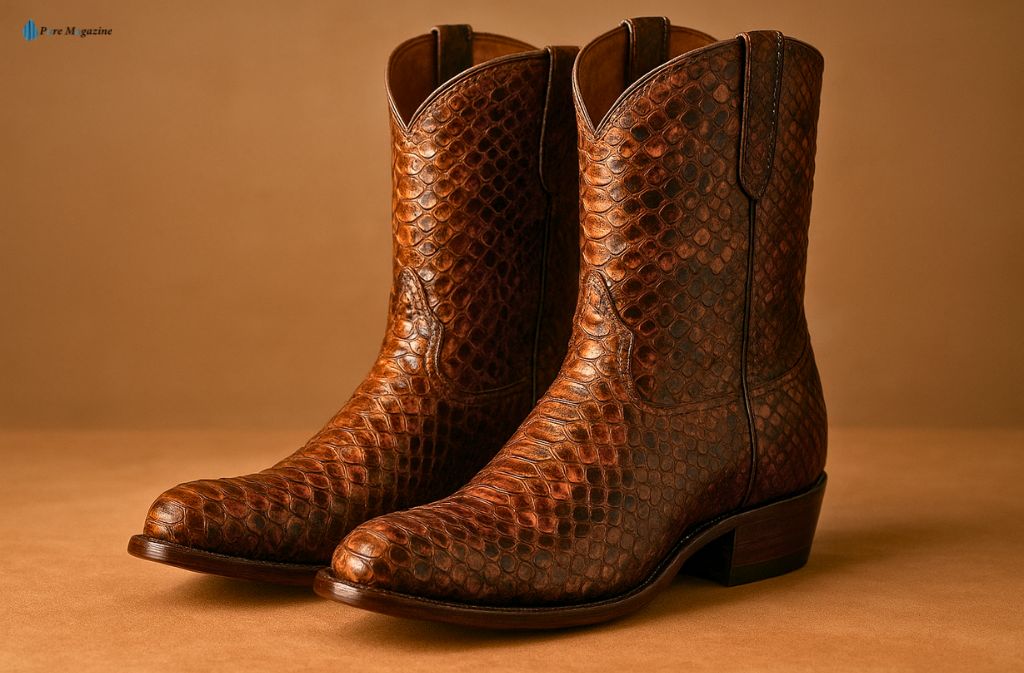
Python boots have a reputation that precedes them. They’re bold. They’re expensive. And for many buyers, they’re confused.
If you’ve ever wondered why Python boots cost so much, whether they’re actually durable, or how to tell genuine Python skin from a convincing fake, you’re not alone. In 2025, searches for these boots aren’t just transactional anymore. People want reassurance before they spend four figures on exotic leather footwear.
Unlike standard leather boots, python skin behaves differently. It flexes differently. It ages differently. And if it’s not cared for properly, it can crack, curl, or dry out faster than expected.
This guide goes beyond product listings. You’ll learn what Python boots are really made of, how long they last, how to care for them properly, and whether they’re legal where you live. We’ll also break down square toe vs round toe, men’s vs women’s styles, and how to avoid costly mistakes first-time buyers make.
If you want a practical, honest, 2025-ready resource—not sales fluff—you’re in the right place.
What Are Python Boots?
Python boots are made using genuine python snakeskin, specifically sourced from species like the Burmese python or reticulated python. The skin is tanned, treated, and stitched over a leather base to create a boot that’s lightweight, flexible, and visually distinctive.
Common Types of Python Boots
- Python cowboy boots – Western silhouette, popular in Texas and Mexico
- Python square toe boots – Modern, wider fit
- Black python boots – Dress-forward and versatile
- Natural or white python boots – Statement pieces
- Men’s python boots – Thicker sole, wider shaft
- Women’s python boots – Slimmer profiles, higher heels
2025 insight: Most top brands now use reinforced leather lining under the python skin to improve durability without sacrificing flexibility.
Why Are Python Boots So Expensive?
These boots are expensive for reasons beyond branding.
Cost Drivers Explained
- Limited usable hide
A single python skin yields less usable surface than cowhide. - Labor-intensive tanning
Python skin requires slow tanning to preserve scale structure. - Hand-cut alignment
Scales must be aligned manually to avoid lifting. - Import & regulation compliance
Legal sourcing adds cost (CITES permits). - Low error tolerance
One mistake can ruin the entire skin.
Bottom line: You’re paying for craftsmanship, not just exotic appearance.
Are Python Boots Durable?
Yes—but only if you understand what “durable” means for exotic leather.
Python vs Cowhide Durability
| Feature | Python Boots | Cowhide Boots |
|---|---|---|
| Flexibility | Very high | Moderate |
| Tear resistance | Moderate | High |
| Moisture tolerance | Low | High |
| Weight | Lightweight | Heavier |
| Maintenance need | High | Low |
These boots won’t outlast work boots—but they’re not meant to. With proper care, 10–15 years is realistic for occasional wear.
How to Care for Python Boots (2025 Method)
This is where most owners go wrong.
Step-by-Step Python Boot Care System
Frequency: Every 4–6 wears
- Dry brush first
Use a soft horsehair brush with the grain of the scales. - Spot clean only
Damp cloth—never soak. - Apply exotic leather conditioner
Focus on scale edges. - Let absorb naturally
No heat, no sunlight. - Store with boot trees
Prevent curling and scale lift.
❌ Never use:
- Saddle soap
- Alcohol cleaners
- Excess water
- Heat guns or hair dryers
How to Clean Python Boots Safely
Cleaning is different from conditioning.
Safe Cleaning Rules
- Clean only when visibly dirty
- Always brush toward the scale direction
- Use exotic-specific products only
Pro tip (2025): Silicone-free conditioners perform better long-term and reduce scale brittleness.
How to Spot Fake Python Boots
Fakes are common—and getting better.
Real vs Fake Python Skin
| Indicator | Genuine Python | Fake Python |
|---|---|---|
| Scale texture | Uneven, natural | Uniform |
| Flex | Moves independently | Moves as a sheet |
| Pattern | Non-repeating | Repeats |
| Price | Higher | Suspiciously low |
If the scales feel glued down or plasticky, walk away.
Are Python Boots Legal in 2025?
Generally, yes—but with exceptions.
Legal Overview
- United States: Legal federally
- California: Restrictions on certain exotic leathers (python legality varies by import date & documentation)
- International shipping: Requires CITES permits
Always buy from reputable sellers who disclose sourcing.
Also Check: Exploring the Timeless Appeal of Blundstone Boots
Square Toe vs Round Toe Python Boots
Which Is Better?
-
Square toe:
- More room
- Modern look
- Popular for daily wear
-
Round toe:
- Classic western
- Dressier silhouette
- Slightly tighter fit
Fit matters more than trend—especially with exotic leather.
Common Mistakes First-Time Buyers Make
- Buying these boots as everyday work boots
- Skipping conditioning for “later.”
- Storing in dry heat
- Over-cleaning
- Choosing style over fit
Python boots reward patience—not abuse.
2025 Trends in Python Boots
- Matte finishes over glossy
- Square-toe dominance
- Neutral colors (black, sand, bone)
- Thinner soles for dress versatility
- Hybrid western-dress designs
Expect more subtle luxury, less flash.
FAQs
Q1. Are Python boots durable enough for regular wear?
Yes, they are durable for occasional use and stylish wear. They are not designed for daily labor or heavy work, but with proper conditioning and storage, they can last for years. For daily use, consider alternating with other leather boots to preserve the skin.
Q2. How often should I condition Python boots?
Condition your boots every 4–6 wears or whenever the leather appears dry. Using a high-quality exotic leather conditioner protects the scales, keeps the skin supple, and prevents cracking. Regular conditioning extends the lifespan of your boots.
Q3. Can Python boots get wet?
It can handle light moisture, like rain splashes, but avoid soaking them. Heavy water exposure can damage the scales and underlying leather. Always let boots air dry naturally, away from direct heat or sunlight, to maintain their appearance.
Q4. Are Python boots illegal in California?
These boots are generally legal, but certain exotic leather regulations apply in California. Always confirm the seller provides CITES documentation and adheres to state laws before purchasing exotic python boots.
Q5. Why do Python scales lift over time?
Python scales can lift due to dryness, improper storage, or lack of conditioning. Store boots with boot trees, avoid direct heat, and condition them regularly to keep the scales flat and flexible.
Q6. How long do python boots last?
With proper care, they can last 10–15 years or longer. Regular cleaning, conditioning, and correct storage are key to maintaining their durability, appearance, and value.
Conclusion
Python boots aren’t about toughness—they’re about refinement. When you understand how they’re made, how they age, and how to care for them, they become a long-term investment rather than a fragile luxury.
If you want boots that stand out without shouting—and you’re willing to maintain them properly—python boots remain one of the most distinctive footwear choices in 2025.
Related: Modernize Your Winter Ride with the Best, Snowboard Equipment and Snowboard Boots