Over 22 million people in the UK hold Premium Bonds. Most of them have asked the same question at some point: if I win, do I pay tax on it?
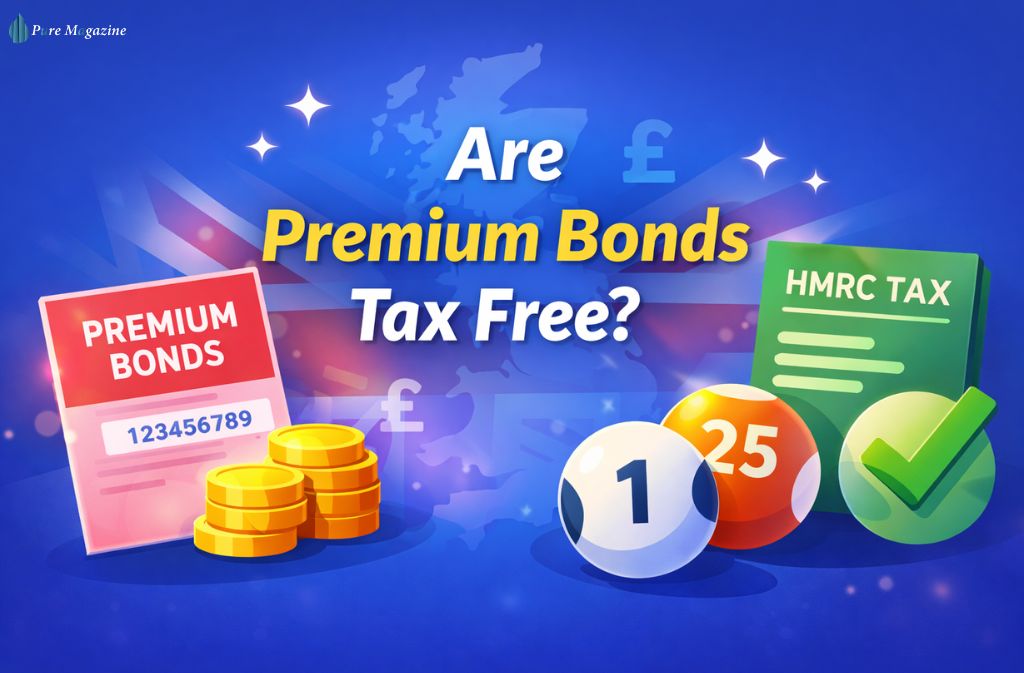
The answer is no — and it’s one of the most straightforward rules in the UK tax system. Every prize, from a £25 win to the £1 million jackpot, is completely free of Income Tax and Capital Gains Tax. No deductions, no declarations, nothing owed to HMRC.
But the fuller picture is worth understanding — particularly in 2026, after NS&I announced on 24 February 2026 that it was cutting the prize fund rate for the third time in twelve months. The rate dropped from 3.60% to 3.30% from the April 2026 draw, with odds lengthening from 22,000 to 1 to 23,000 to 1. That’s the sixth cut since September 2023.
Whether Premium Bonds still make sense for you in 2026 depends on your tax situation, your savings level, and whether you’ve exhausted better options first.
What Premium Bonds Are
Premium Bonds are a government-backed savings product issued by National Savings and Investments — a state-owned savings organisation backed by HM Treasury. Instead of paying interest, each £1 invested becomes a unique bond number entered into a monthly prize draw.
As NS&I’s official Premium Bonds page confirms, the key features are:
- Minimum investment: £25
- Maximum holding: £50,000 per person
- Monthly prize draw
- Prizes from £25 to £1 million
- 100% government-backed capital security
- All prizes free of UK Income Tax and Capital Gains Tax
New bonds must be held for one full calendar month before entering the draw. Nine out of ten prizes are paid directly into the holder’s nominated bank account or automatically reinvested.
Are Premium Bonds Tax Free?
Yes — completely.
As NS&I’s corporate announcement confirms explicitly: “All Premium Bonds prizes are free of UK Income Tax and Capital Gains Tax.”
Premium Bond prizes are completely tax free, so you keep every penny you win. HMRC takes nothing and expects nothing in return.
The reason sits in how prizes are legally classified. Premium Bond winnings are treated as prize money — not savings interest. That distinction is what creates the exemption. As GOV.UK’s guidance on tax-free savings confirms, prizes from NS&I savings schemes are specifically listed among non-taxable returns.
Do You Need to Declare Winnings to HMRC?
No. Premium Bond prizes don’t appear on Self Assessment returns, don’t affect your income tax band, and don’t reduce any of your tax allowances. The money arrives and that’s the end of it.
Do Premium Bonds Affect the Personal Savings Allowance?
No — and this is the key practical advantage for higher earners.
The Personal Savings Allowance governs how much interest income you can receive before tax applies. Premium Bond prizes aren’t interest — so they fall entirely outside the allowance calculation.
| Tax Band | Personal Savings Allowance | Premium Bond Prize Tax |
|---|---|---|
| Basic rate (20%) | £1,000 | £0 |
| Higher rate (40%) | £500 | £0 |
| Additional rate (45%) | £0 | £0 |
As MoneySavingExpert’s Premium Bonds analysis notes, with today’s top easy-access savings rate at 4.5%, a basic-rate taxpayer needs only £22,222 in savings before exceeding their £1,000 PSA and starting to pay tax on interest. For higher-rate taxpayers, that threshold is £11,111. Premium Bonds sidestep this entirely — which is exactly why they make most sense for people with larger cash holdings.
The 2026 Rate Cut: What Changed and Why
NS&I’s February 2026 announcement was the sixth prize fund cut since September 2023.
| Period | Prize Fund Rate |
|---|---|
| January 2024 (recent high) | 4.65% |
| August 2025 | 3.60% |
| From April 2026 | 3.30% |
As NS&I retail director Andrew Westhead confirmed: the change “reflects changes in the wider savings market.” In plain terms, as the Bank of England cut rates through 2024 and 2025, savings rates fell across the board — and NS&I followed.
The practical impact, as analysts note: someone holding £10,000 in Premium Bonds sees average annual prize payouts fall from £360 to £330. The April 2026 draw is still expected to distribute around £375 million across nearly six million tax-free prizes — down from £408 million in February 2026.
The two £1 million monthly jackpots remain unchanged. What fell is the number of medium-value prizes (£100,000 down from 78 to 71, £50,000 down from 154 to 143) while £25 prizes actually increased — from roughly 2.6 million to 2.8 million.
The Reality of Winning: What the Data Shows
A Freedom of Information request analysed by AJ Bell in April 2025 revealed a stat worth sitting with: 63% of Premium Bonds holders have never won a single prize. The average balance for non-winners is just £106.79, compared to £23,397 for those who have won.
This isn’t a flaw in the system — it’s the system working as designed. Every £1 bond has an equal 1-in-23,000 chance per draw, which means small holdings rarely win. Someone with £50,000 invested has 50,000 chances every month. Someone with £500 has 500.
Premium Bonds behave less like a savings account and more like a government-backed lottery with your capital protected. Understanding that clearly is the starting point for deciding whether they belong in your savings strategy.
Premium Bonds vs Savings Accounts vs Cash ISAs (2026)
| Feature | Premium Bonds | Easy Access Savings | Cash ISA |
|---|---|---|---|
| Returns | Prize-based | Guaranteed interest | Guaranteed interest |
| Tax on returns | None | Depends on PSA | None |
| Typical 2026 return | ~3.30% average | ~4–4.5% | ~4% |
| Large prize potential | Yes | No | No |
| Capital security | HM Treasury | FSCS up to £85k | FSCS up to £85k |
As MoneySavingExpert confirms, Premium Bonds are probably a decent choice for savers who’ve fully used their £20,000 ISA allowance, earn enough interest from other savings to exceed their PSA, and want tax-free treatment on additional cash. For everyone else, a high-interest savings account or Cash ISA currently offers more predictable and higher returns.
Understanding how your income tax band affects the net return on savings interest puts this comparison in sharper focus — a 40% taxpayer keeping money in an easy-access account at 4.5% effectively earns 2.7% after tax on amounts above the £500 PSA. Premium Bonds at 3.30% — with no guarantee of reaching that average — starts to look more competitive in that context.
Are Premium Bonds Beating Inflation?
Not at the average expected return. With the prize fund rate at 3.30% and the best easy-access accounts at 4–4.5%, Premium Bonds now trail straightforward cash savings for most people. As Rest Less confirms, the rate has been cut repeatedly as the savings market repriced downwards — and the gap between guaranteed savings returns and the Premium Bond expected return has narrowed but not closed.
Whether how much you can earn before paying tax and what remains in your savings allowance determines whether the tax-free prize treatment outweighs the lower expected return.
When Premium Bonds Make the Most Sense
Higher-rate taxpayers with savings above ~£11,111 — once the £500 PSA is exhausted, every additional pound of savings interest is taxed at 40%. At that point, Premium Bonds’ tax-free prizes compete more favourably with the after-tax return on savings accounts.
People who’ve maximised their ISA allowance — the £20,000 annual ISA limit is the first port of call for tax-efficient saving. Premium Bonds make most sense as a home for cash that can’t fit within the ISA.
Savers approaching the £12,570 personal allowance — understanding how much you can earn before paying tax matters when positioning savings across different products.
The ISA Allowance Change Coming in 2027
The ISA limit stays at £20,000 for 2026/27, but the government has confirmed Cash ISA allowances will fall to £12,000 from April 2027. If that change takes effect, savers with more than £12,000 to place in tax-free cash savings each year will need an alternative — which could increase Premium Bond demand significantly.
The Sensible Savings Structure Many Use
- Maximise the £20,000 ISA allowance in a competitive Cash ISA
- Hold remaining savings in the best available easy-access account up to PSA limits
- Place excess cash in Premium Bonds for tax-free prize potential on amounts that would otherwise attract tax
This order matters. Premium Bonds work best at step three — not as a starting point.
Common Misconceptions
“Premium Bonds pay interest.” They don’t. Returns are entirely prize-dependent with no guaranteed return whatsoever.
“Winnings affect my tax band.” They don’t — prizes aren’t income.
“I’ll win regularly with a small holding.” With 1-in-23,000 odds per bond per month, a £500 holding has a 2.2% chance of winning anything at all in a given draw. It might win nothing for years.
FAQs
Q. Are Premium Bond winnings tax free?
Yes — free of both Income Tax and Capital Gains Tax, as confirmed by NS&I’s official corporate announcement.
Q. Do I have to declare Premium Bond prizes to HMRC?
No — prizes aren’t income and don’t appear on Self Assessment returns.
Q. What are the odds of winning Premium Bonds in 2026?
1 in 23,000 per £1 bond from the April 2026 draw — confirmed by NS&I’s February 2026 announcement.
Q. What is the maximum amount I can hold?
£50,000 per person, as confirmed on NS&I’s Premium Bonds page.
Q. Do Premium Bonds count toward the Personal Savings Allowance?
No — prizes aren’t interest, so the PSA doesn’t apply. This is the core tax advantage for higher earners with larger savings balances.
Q. Are Premium Bonds better than savings accounts?
Depends entirely on your tax position and savings level. As MoneySavingExpert’s 2026 analysis confirms, they make most sense for those who’ve maxed their ISA allowance and exceeded their PSA on other savings.
Conclusion
Premium Bonds are tax free — that answer is unambiguous and unchanged by the 2026 rate cuts. Every prize from £25 to £1 million is exempt from Income Tax and Capital Gains Tax, requires no HMRC declaration, and sits entirely outside the Personal Savings Allowance calculation.
What has changed is the return. At 3.30% from April 2026, the prize fund rate trails the best easy-access savings accounts by over a percentage point — and most holders won’t achieve even the average return due to the randomness of prize draws. The 63% of holders who’ve never won illustrate this most clearly.
For reliable, plain-English guidance on UK tax and personal finance in 2026, Pure Magazine is the resource worth bookmarking.