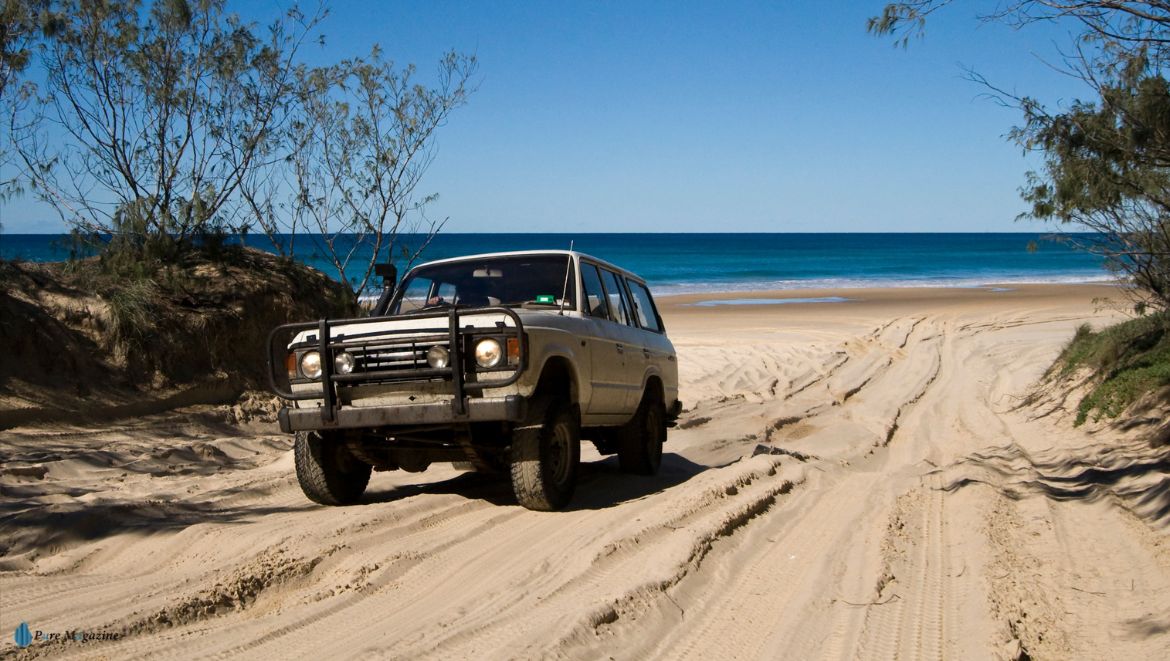
For most people, the moment they drive their new car off the lot, they’ve just watched thousands of dollars evaporate into thin air. It’s called depreciation, it’s part and parcel of car ownership, and it’s the price people have to pay to drive something sparkly and new. Right?
Except when it comes to four-wheel drives, conventional wisdom flies out the window. Certain 4WDs, especially heavy-duty workhorses and go-anywhere vehicles, don’t follow the same depreciation patterns as sedans. In fact, when buying a 4WD, used isn’t just a sensible economic alternative to save cash; it’s the smart money decision. Buyers end up with the same vehicle they could have spent $100,000 on new for $60,000, and it’s already proven itself in real-world scenarios.
Why 4WDs Don’t Depreciate Like Other Cars
Passenger cars have depreciation in line with sales expectations. A new family sedan, purchased for $40,000, might depreciate 20-30% in value by the first year. By the time it’s three years old, with a standard 60,000 kilometers on it, many buyers are seeking to cut their losses at half value. Four-wheel drives, especially those heavy-duty, real 4WDs built for touring and off-road exploration, tell a different story.
For some reason, four-wheel drives don’t depreciate like sedans. There are several factors involved, and they all relate to supply and demand. But in a positive light. Australia has a large appetite for capable 4WD,s and certain models develop a reputation that only increases in desirability over time.
When a capable example is discontinued, the remaining iterations don’t flounder; they surge in value. People who need genuine capability don’t want the newest crossover with tech gadgets; they want something that survived in the Australian outback for ten years and got them home every time it was expected to.
Take, for example, the heavy-duty wagon market. Certain models have proven reliable with hundreds of thousands of kilometers on them; loyal buyers know that they’ve got something good. This means that certain examples with even 100,000 kilometers have owners clinging onto them for dear life because they know that if they sell it, they’ll not be able to get another good one when they’re inevitably looking for something else.
Thus, fewer good examples enter the used market. When one does come along, in pristine condition, buyers snatch it up quickly. This is a good thing; it means people want to keep them.
Where Buying New Makes Less Sense
Let’s put things into numbers, and this gets exciting. A premium 4WD costs anywhere from $80,000-$120,000 new, depending upon brand and features. The same vehicle comes with a price tag of $65,000-$95,000 after three years and at 60,000 kilometers on the odometer. Not too bad for depreciation! The price drop isn’t as dramatic as typical sedan, making this beneficial to buyers should they choose.
On the other hand. Buy the same three-year-old vehicle, drive it for three more years, and what happens? Better yet, what doesn’t happen? Little depreciation occurs during this time, and it’s been proven that four-wheel drives reach better value retention ratios when they’ve been in good condition for several years. Instead of losing cash hand over fist just because they own it, owners find that by purchasing used, they aren’t crucified post-sale.
The problem lies in quality. People want proven models with tested reliability. Take, for example, a well-served 200 series landcruiser. This is something that buyers search for on the used market; any example that’s been serviced well but abused off-road may well fall short of acceptable cost versus condition standards, yet buyers become flustered trying to find one without significant wear-and-tear because they’re everywhere.
Insurance runs cheaper on used models, too. A comprehensive coverage plan for a $90,000 used 4WD is far cheaper than insuring a new one worth $115,000. Five years later, thousands could save enough to spend on actual adventuring rather than insurance costs.
Which Models Are Worth Buying Used
It’s not every Four Wheel Drive that deems such premiums on the used market; those that do have specific characteristics worth celebrating. Four-wheel drives built to last bear reputations for reliability that span generations, not just a few good decades. They’re built tough, so high mileage isn’t indicative of problems; in fact, it’s more likely a badge of honor proving they’ve withstood serious use.
They’re constructed well with parts availability that doesn’t leave owners in shambles should something need replacement down the line.
They’ve got enough service history to support buying one with 150,000 kilometers instead of another example boasting only 80,000 mixed miles. They get worked; towing caravans, traversing deserts, hauling families and camping gear for weekend getaways—those that make it get made available, and there’s usually plenty of them out there.
Combined problems of certain vehicles get sufficiently documented over time, which works in buyers’ favor down the line; experienced buyers know which red flags they don’t want to touch versus those that can be overlooked because they exist everywhere and are little more than cosmetic repairs.
In addition, such knowledge only develops because these vehicles have been around long enough to find kinks worth fixing and ones that hold value enough to tolerate their quirks that don’t warrant trade-in for something less reliable.
What Features Retain Value
The best part about heavy-duty four-wheel drives is that they retain value thanks to capability, not gadgetry, and that’s a breath of fresh air. Sure, technology is nice, but a proper low-range transfer case, heavy-duty construction, serious towing capacity and ability to take abuse without falling apart save sanity and money over time.
Diesel engine versions tend to get a premium as well, thanks to their longevity as well as torque characteristics; buyers appreciate a diesel over a petrol Four Wheel Drive as a diesel will be running strong long after petrol engines have met their demise. That’s money well spent.
Seating configurations of seven or eight seats also boom in availability on the used market since they’re genuinely helpful at accommodating families needing space for bodies as well as stored gear. You can fit your kids and their friends, and all of your camping gea,r without Tetris-like packing.
When Buying New Makes Sense
New doesn’t make sense only if it makes sense; there’s nothing wrong with new making sense sometimes. For starters, if you care about updated safety features, family use puts more pressure on finding one that’s newer than older. New technology offers immediate advantages that genuinely save lives, from automatic emergency braking to blind spot detection to solid crash structures when applied properly; these assumptions breathe peace of mind that’s well-earned.
When buyers cannot do simple things, like fix their own vehicles, they’d benefit from a comprehensive new car warranty, where buying something pre-owned doesn’t offer longevity at all compared to time-limited warranties.
It’s important to note that buying new always pays for such coverage through steeper initial costs and inevitable depreciation, but some people find this is worthwhile.
Fuel efficiency gained in recent years shows dramatic improvement between old models and new; a turbo-diesel compared to one ten years ago boasts 20-30% better mileage than those older counterparts, making high-mileage driving cumulative savings, and most commendable.
All in all, this depreciation punch might pack some punch, but in retrospect, and with critical thinking, it pays off.
When Is the Sweet Spot for Buying Used 4WDs
The sweet spot used to buy is between three and ten years old; this way, they’ve already taken their depreciation hits, but it’s not three decades down the road where some electrical components are finally failing because owners neglected to understand parts replacement needs, they’re still under decent kilometers to hit service gaps with full years left behind.
Any reputable dealer provides statutory warranties and consumer guarantees, and should there be any consumer error should major issues should arise during ownership. Buying privately works wonders if you know what you’re doing, with little buyer’s remorse if it’s an easy fix, but if you’ve got no skill, then avoid the risk.
Get a pre-purchase inspection no matter what, for everything. Essentially, even if it looks perfect and sellers sound genuinely honest, spending $200-$300 on a pre-purchase inspection will save thousands down the line should an issue arise that was avoidable!
Truthfully, for average buyers, the pre-purchase inspection reveals what buyers would never think about so it’s worth every cent down the line for peace of mind.
The Bottom Line
The used market for 4WDs is different because these vehicles fulfill purposes over novelty, so three years old is practically as good as brand new, and for roughly 70% of the price, plus 30% blown on depreciation due to stupid mistakes, which isn’t much.
For buyers who appreciate good quality over anything newer, not wanting vehicles where they’ve averaged $0 maintained thus far, the math makes sense.
Buyers need to be patient; research must be done into comparable sales data instead of settling for anything even close, and what’s finally found will retain value like crazy so much so it will serve for years, and cost so much less than buying new, that for many Australian families this is not only good value, but also the smart thing to do so they can spend more money on actual adventuring instead of wasting it on depreciation, and isn’t that what owning a 4WD is all about anyway?
For more, visit PureMagazine