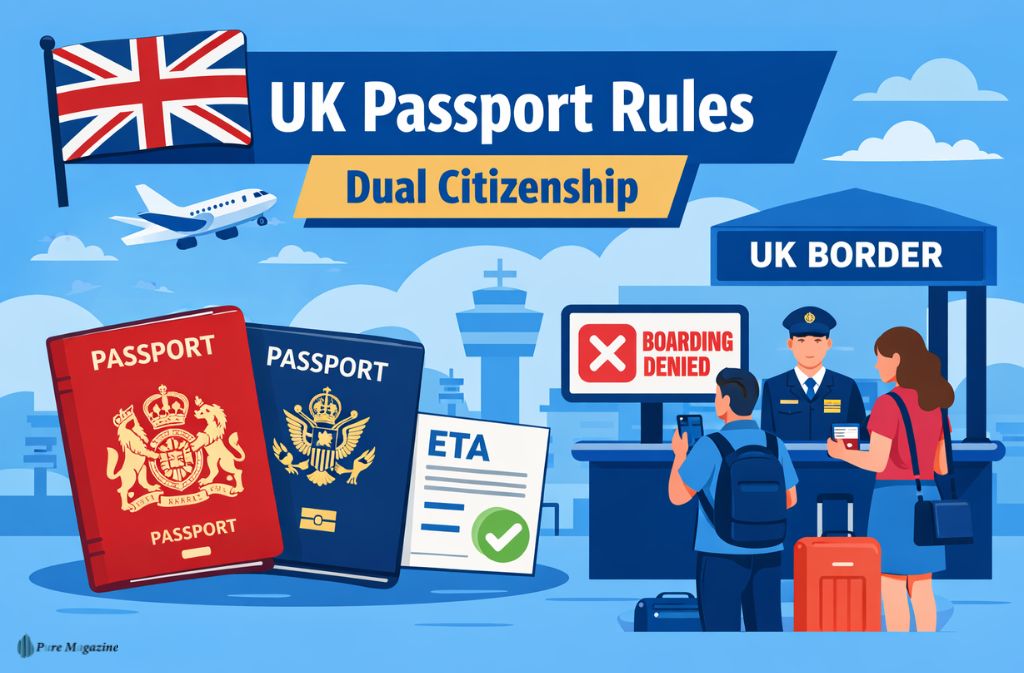
Multiple dual nationals have been denied boarding before even reaching security. Not because they weren’t British. Not because they needed a visa. But because the airline system couldn’t “see” their British status.
As of 25 February 2026, the flexibility around which passport to use has effectively ended. The UK’s digital border enforcement now requires a clear British passport link in airline systems — or boarding can be refused.
If you’re searching for UK passport rules on dual citizenship, you don’t just want definitions. You want to avoid being stranded at check-in.
This guide explains:
- What changed on 25 February 2026
- Why airlines are suddenly strict
- The Name Mismatch Crisis catching dual nationals
- How the ETA system interacts with dual citizenship
- What to do if your UK passport is expired
- A practical decision framework for 2026 travel
All guidance aligns with official information from GOV.UK and the Home Office as of 2026.
What Changed on 25 February 2026?
The key shift wasn’t a new law. It was hard enforcement.
From 25 February 2026, airlines began fully enforcing digital pre-clearance checks linked to the UK’s Electronic Travel Authorisation (ETA) system and Advance Passenger Information (API) feeds.
Here’s what that means in practice:
- Airlines must confirm every passenger has permission to enter the UK before departure.
- British citizens are expected to use a valid UK passport.
- Visa-free foreign nationals must hold an approved ETA.
- Carrier fines apply if airlines transport someone without correct documentation.
So if you are a British citizen and attempt to board using only your foreign passport, the system may treat you as a non-British national — and demand an ETA.
Why Airlines Won’t “Just Let You Board”
Many travellers still assume check-in staff can override the system.
In 2026, they usually cannot.
Airlines transmit your passport details through the Advance Passenger Information (API) system before departure. That data is screened digitally to confirm:
- Right of Abode
- Visa status
- ETA requirement
- Passport validity
If the API feed flags you as:
- A visa-free foreign national
- Without an ETA
- And without a British passport record
Boarding may be denied.
Airlines face financial penalties for transporting improperly documented passengers. That’s why staff are cautious — not difficult.
Core UK Passport Rules Dual Citizenship (2026)
The UK allows dual citizenship. You can be both a British citizen and hold another nationality.
However, under current enforcement:
If You Are a British Citizen:
- You should enter the UK using your British passport.
- You do not need an ETA.
- You do not need a visa.
If You Attempt Entry Using a Foreign Passport:
- The system may require an ETA.
- British citizens are generally blocked from ETA approval.
- You risk boarding denial.
If Your British Passport Is Expired:
You may need:
- A renewed UK passport, or
- A Certificate of Entitlement to the Right of Abode (currently £589, per GOV.UK).
The Certificate is placed inside your foreign passport and proves your right to enter the UK.
The Name Alignment Crisis (2026 Boarding Risk)
This is now one of the most common denial triggers.
Airline systems compare:
- Full legal name
- Date of birth
- Nationality markers
If your British passport says:
Sofia Georgiou
But your Spanish passport says:
Sofia Martínez Georgiou (married name structure)
The system may not reconcile the identity.
Common risk groups:
- Women who changed surnames after marriage
- Hyphenated vs non-hyphenated names
- Countries with different surname ordering
- Diacritic differences (é vs e)
What To Do:
- Ensure names match across passports wherever possible.
- Carry supporting documentation (marriage certificate).
- Consider aligning future passport renewals.
Airlines are not required to manually resolve name discrepancies.
Can a British Dual National Use a US Passport to Enter the UK in 2026?
No. Unless the US passport contains a £589 Certificate of Entitlement proving Right of Abode, airline systems will block boarding under post–25 February 2026 enforcement.
The ETA System Explained for Dual Citizens
The UK’s ETA currently costs £16.
Important distinctions:
- British citizens do NOT need an ETA.
- Dual nationals travelling on a foreign passport may be prompted to apply.
- British citizens are generally not eligible for ETA approval.
Applying for an ETA when you are British may:
- Delay travel
- Create confusion in records
- Waste money
The correct approach is using your British passport.
Urgent Travel Protocol (If Your UK Passport Is Expired)
What if you must fly tomorrow?
Here are your realistic options:
1: Emergency Travel Document (ETD)
- Available through British consulates abroad.
- Valid for specific journeys.
- Useful in urgent cases.
2: Certificate of Entitlement (£589)
- Placed in foreign passport.
- Long-term proof of Right of Abode.
- Processing time varies.
3: Attempting ETA (£16)
- Not recommended.
- Likely to fail for British citizens.
- Risk of boarding denial.
Comparison: Which Document Should You Use?
| Situation | Correct Document | Risk Level |
|---|---|---|
| British passport valid | Use British passport | Low |
| British passport expired, urgent travel | ETD | Medium |
| No UK passport, long-term solution | Certificate (£589) | Low |
| Travel on foreign passport only | High denial risk | High |
Disadvantages of Dual Citizenship UK (Practical Reality)
Dual nationality offers flexibility — but complexity too.
Common friction points:
- Passport alignment issues
- Confusion over ETA requirements
- Tax obligations in some countries
- Limited diplomatic support when in your other country
Most issues arise from documentation, not legal status.
Also Check: UK Micro Influencers Tax Obligations 2026: DPR, Gifted Products & HMRC Nudge Letters
Decision Flow: Do I Need My UK Passport Today?
Are you a British citizen?
>>>>>>>>>>→ Yes
→ Do you have a valid UK passport?
>>>>>>> → Yes → Use it
→ No → Is travel urgent?
>>>> → No → Renew passport
If travelling on a foreign passport only:
→ Expect system to require ETA
→ Risk denial without Certificate of Entitlement
FAQs
Q. Do UK dual citizens need an ETA in 2026?
No. British citizens do not need an Electronic Travel Authorisation (ETA) to enter the UK in 2026.
If you hold British citizenship — even if you also hold another nationality — you are exempt from the UK ETA requirement. However, you must travel using a valid UK passport. If you travel on your foreign passport instead, airline systems may incorrectly treat you as a visa-free foreign national and request an ETA.
Q. What happens if I try to enter the UK with my foreign passport as a dual citizen?
You may be denied boarding if the airline system requires an ETA and you cannot provide one.
Since 25 February 2026, airlines verify entry eligibility before departure using Advance Passenger Information (API) checks. If you present only a foreign passport and no British passport record appears, the system may require a valid ETA. British citizens are generally not eligible for ETA approval, which can result in boarding refusal.
Q. What changed on 25 February 2026 for UK dual citizens?
On 25 February 2026, the UK fully enforced digital pre-clearance checks before boarding.
Airlines must now confirm a passenger’s Right of Abode, visa status, or ETA approval before departure. This means dual nationals must ensure their British citizenship is clearly linked through a valid UK passport or Certificate of Entitlement. The change strengthened enforcement — it did not change dual citizenship law.
Q. How much does a Certificate of Entitlement cost in 2026?
The Certificate of Entitlement to the Right of Abode costs £589 in 2026.
This fee is confirmed by GOV.UK. The certificate is placed inside a foreign passport and proves that the holder has the right to live and enter the UK without restriction. It is typically used when a British passport is unavailable.
Q. Why are airlines stricter with dual nationals in 2026?
Airlines face financial penalties if they transport passengers without verified entry permission.
Under current enforcement, carriers must check passport data through Advance Passenger Information (API) systems before departure. If the system cannot confirm British citizenship or a valid ETA, boarding may be refused. Airlines are complying with carrier liability rules — not applying new nationality laws.
Q. Can UK dual citizens apply for a UK ETA instead of using a British passport?
No. British citizens are generally not eligible to receive a UK ETA.
The ETA system is designed for visa-free foreign nationals. If you are a British citizen, the correct document for entering the UK is a valid UK passport. Applying for an ETA as a British citizen may result in rejection or travel delays.
Q. Can a British dual national use a US passport to enter the UK in 2026?
Only if the US passport contains a valid Certificate of Entitlement proving Right of Abode.
Without that certificate, airline systems will likely require an ETA, which British citizens cannot obtain. The safest and simplest method remains travelling with a valid British passport.
Q. What is the safest way for UK dual citizens to travel in 2026?
Always carry and use your valid UK passport when entering the UK.
Also ensure:
- Your passport is not expired
- Your name matches across documents
- You verify entry requirements for your other nationality
Following these steps avoids ETA confusion and boarding delays.
Key Takeaways for 2026
- The 25 February 2026 enforcement date matters.
- Airlines verify entry status digitally before departure.
- British citizens should use a valid UK passport.
- Name mismatches are a growing boarding denial cause.
- The Certificate of Entitlement costs £589.
- ETA costs £16 — but is not for British citizens.
Understanding UK passport rules dual citizenship now means avoiding airport disruption later.