


Overview of Total Hip Replacement Surgery
Purpose of Hip Arthroplasty
Total hip replacement, clinically known as hip arthroplasty, is a procedure performed to restore joint function and relieve chronic pain caused by degenerative conditions such as osteoarthritis, rheumatoid arthritis, or trauma. The process involves replacing the damaged hip joint with a prosthesis, requiring precise preparation of both the acetabulum and femur. This level of surgical accuracy is only achievable through the use of specialized hip arthroplasty instruments designed specifically for each stage of the procedure.
The complexity of joint replacement demands more than general tools. Surgeons depend on highly calibrated orthopedic surgical instruments that allow controlled bone removal, accurate alignment, and stable implant fixation. Each step must be executed with precision to avoid complications such as implant misalignment or uneven load distribution. These factors directly influence long-term outcomes, including mobility, pain relief, and implant longevity.
Clinics aiming to standardize orthopedic procedures often rely on complete instrument systems to ensure consistency across surgeries. This approach reduces variability and improves reproducibility, especially in high-volume surgical environments.
Quick Definition
A total hip prosthesis instrument set is a specialized orthopedic toolkit used during hip arthroplasty to prepare bone structures and accurately position prosthetic implants, ensuring surgical precision and long-term joint stability.
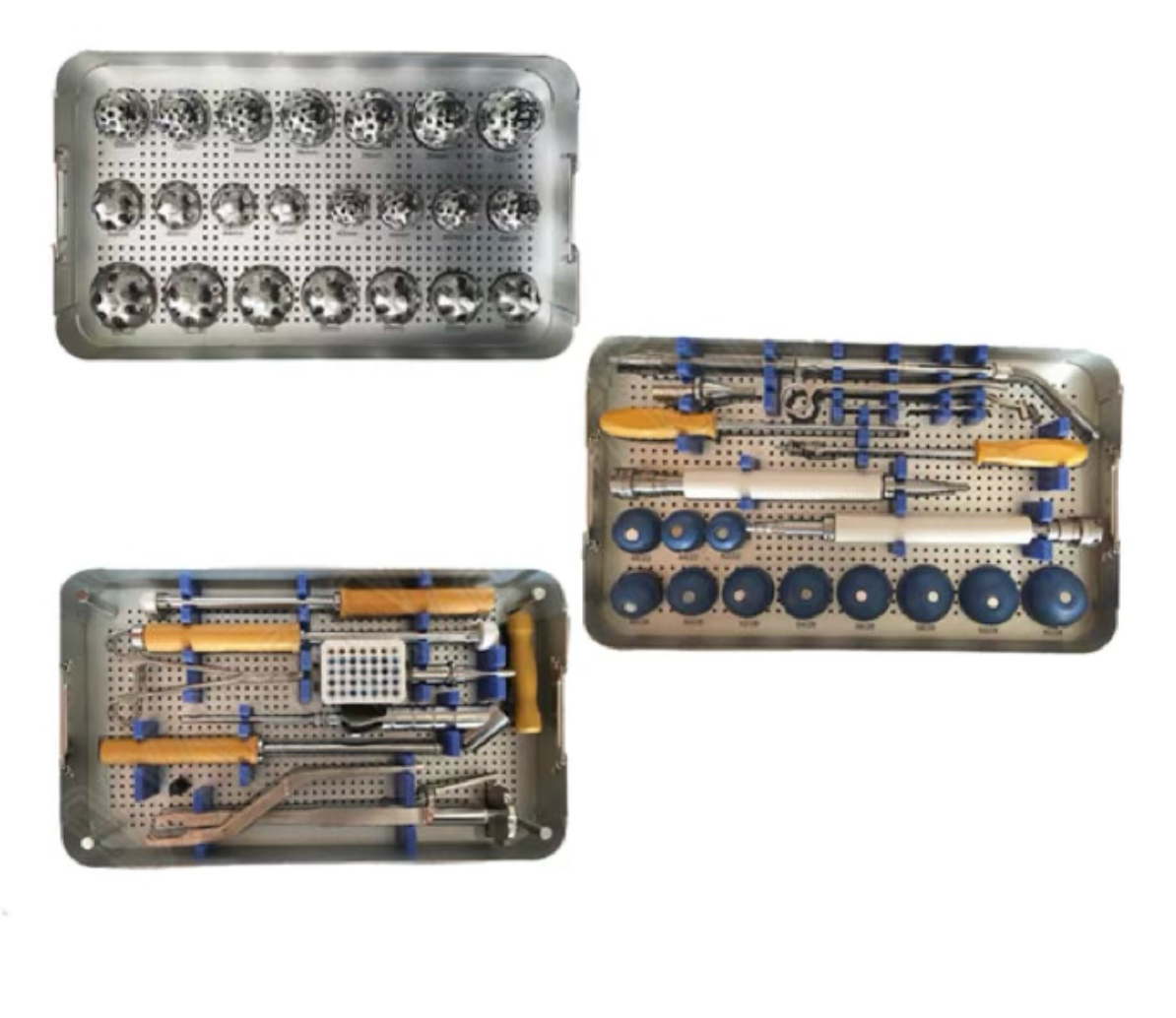

Clinics using a high-quality total hip prosthesis instrument set can achieve more consistent implant positioning and improved surgical predictability. This consistency is essential in procedures where even minor deviations can affect joint mechanics and patient outcomes.
What is a Total Hip Prosthesis Instruments Set?
Components and Structure
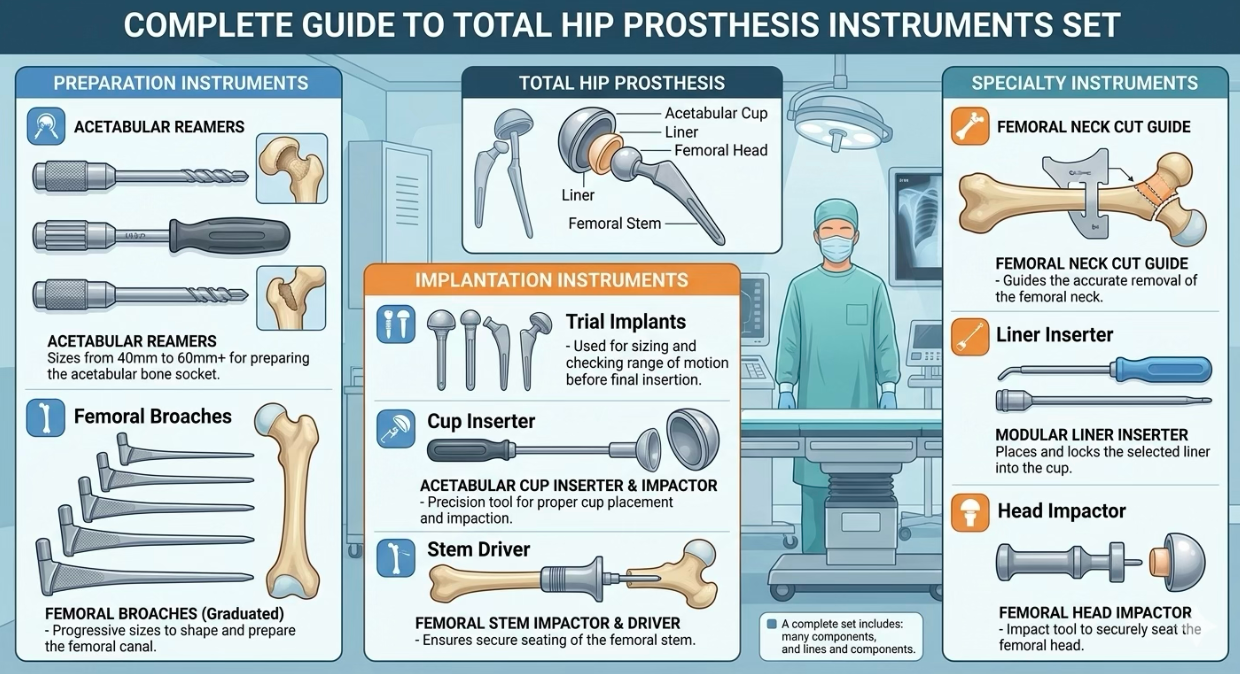
A Total Hip Prosthesis Instruments Set is a comprehensive collection of joint replacement tools designed to support every phase of hip replacement surgery. These sets typically include acetabular reamers, femoral broaches, rasps, trial implants, alignment guides, and implant insertion devices. Each instrument is engineered to match specific implant systems, ensuring compatibility and precision during the procedure.
The modular design of these sets allows surgeons to adapt to different surgical approaches and patient anatomies. This flexibility is critical when dealing with variations in bone density, size, and structural integrity. High-quality sets are manufactured with strict tolerances, ensuring that each component performs reliably under surgical conditions.
Role in Surgical Workflow
The instrument set acts as a structured framework guiding the surgeon through each stage of the operation. From initial bone preparation to final implant placement, each tool serves a defined purpose. This systematic approach reduces procedural variability and enhances overall efficiency.
Without dedicated hip arthroplasty instruments, surgeons would face increased complexity and a higher risk of error. The integration of specialized tools simplifies the workflow and ensures that each step is performed with precision.
Core Instruments in a Hip Prosthesis Set
Reamers and Acetabular Preparation Tools
Acetabular reamers are used to shape the hip socket, removing damaged cartilage and bone while maintaining proper orientation. Accurate reaming ensures that the prosthetic cup fits securely and aligns correctly with the pelvis.
Femoral Broaches and Rasps
Femoral broaches prepare the internal canal of the femur, shaping it to match the implant stem. Proper broaching is essential for achieving a stable fit and preventing implant loosening over time.
Trial Implants and Alignment Tools
Trial components allow surgeons to assess fit, alignment, and joint movement before final implantation. Alignment tools ensure correct positioning, reducing the risk of dislocation and uneven wear.
Impactors and Extractors
Impactors are used to insert implants with controlled force, while extractors allow adjustments if necessary. These tools ensure precise placement without damaging surrounding bone structures.
Step-by-Step Use of Instruments in Surgery
Acetabular Preparation Phase
The procedure begins with the removal of the damaged femoral head, followed by acetabular preparation using reamers. The surgeon must maintain correct orientation to ensure optimal implant positioning and stability.
Femoral Canal Preparation
The femoral canal is shaped using broaches and rasps. This step requires careful control to avoid fractures and achieve a secure implant fit. Bone preservation is a key consideration during this phase.
Implant Placement and Fixation
Trial implants are used to confirm alignment and joint function. Once verified, the final prosthesis is inserted using impactors. Accurate placement is critical for long-term success and patient mobility.
Surgical Accuracy Challenges in Hip Replacement (Expert Insight)
Even with advanced orthopedic surgical instruments, achieving precise implant positioning presents several challenges. Acetabular alignment errors can lead to instability or dislocation if the cup angle deviates from the optimal range. Small angular variations can significantly impact joint biomechanics, increasing wear and reducing implant lifespan.
Femoral canal mismatch is another critical issue. If the prepared canal does not match the implant stem accurately, it can result in improper load distribution. This may lead to micromotion, loosening, or long-term failure of the prosthesis. Surgeons must carefully balance preparation depth and alignment to achieve optimal fit.
Bone density variations, particularly in osteoporotic patients, introduce additional complexity. Reduced bone strength requires controlled force application during reaming and broaching to prevent fractures. These challenges highlight that precision instruments alone are not sufficient—clinical judgment, surgical technique, and experience remain equally critical in achieving successful outcomes.
Total Hip Prosthesis Instruments Set vs Generic Orthopedic Tools
- Feature: Total Hip Prosthesis Instruments Set, Generic Orthopedic Tools
- Precision High, procedure-specific Generalized
- Compatibility Implant-matched Limited
- Efficiency Streamlined workflow Slower
- Outcome Consistent results Variable
Generic tools lack the specialization required for complex procedures like hip replacement. Dedicated joint replacement tools provide a structured and reliable approach, improving surgical accuracy and efficiency.
Materials and Manufacturing Standards
High-quality orthopedic surgical instruments are typically made from surgical-grade stainless steel or titanium. These materials provide durability, strength, and resistance to corrosion. Precision manufacturing ensures that each instrument meets strict dimensional standards, allowing seamless integration with implant systems.
Advanced coatings and surface treatments may also be applied to improve wear resistance and maintain sharpness over repeated use. These factors contribute to consistent performance and long-term reliability in surgical environments.
Risks of Using Low-Quality Instrument Sets
Using substandard instruments introduces significant clinical risks. Poorly manufactured tools may have inconsistent dimensions, dull edges, or inadequate strength. These issues can compromise bone preparation and reduce the accuracy of implant placement.
Poorly manufactured instruments can compromise implant positioning accuracy, directly affecting joint stability and increasing the likelihood of revision surgery. This not only impacts patient outcomes but also increases healthcare costs and procedural complexity.
Sterilization and Maintenance Protocols
Proper sterilization is essential to maintain patient safety and instrument performance. Tools must be thoroughly cleaned, inspected, and sterilized after each use. Autoclaving is the standard method used to eliminate contaminants and ensure sterility.
Regular maintenance and inspection help identify wear or damage that could affect performance. Replacing worn instruments ensures consistent precision and reduces the risk of intraoperative complications.
Cost and Procurement Insights
The cost of a Total Hip Prosthesis Instruments Set varies depending on material quality, manufacturing standards, and brand reputation. While premium sets require a higher initial investment, they offer better durability and performance over time.
Clinics should prioritize certified suppliers to ensure compliance with medical standards. Investing in high-quality hip arthroplasty instruments supports consistent outcomes and long-term operational efficiency.
Conclusion
The Total Hip Prosthesis Instruments Set is a critical component in modern hip replacement surgery. Its role extends beyond basic functionality, providing a structured and precise framework for executing complex procedures. High-quality orthopedic surgical instruments improve accuracy, reduce complications, and enhance long-term patient outcomes. Selecting the right instrument set is essential for achieving consistent surgical success and maintaining clinical excellence.
FAQs
1. What is included in a Total Hip Prosthesis Instruments Set?
It includes reamers, broaches, trial implants, alignment guides, and implant insertion tools.
2. Why are specialized instruments necessary for hip replacement?
They ensure precision, compatibility, and consistent surgical outcomes.
3. Can generic orthopedic tools be used instead?
They are not recommended due to lower precision and limited compatibility.
4. How often should these instruments be replaced?
Replacement depends on usage and wear, but regular inspection is essential.
5. What materials are best for these instruments?
Surgical-grade stainless steel and titanium are commonly used due to their durability and resistance to corrosion.
For more, visit Pure Magazine