It’s no secret that vintage and antique jewellery is having a major moment right now. Right now, It’s all vintage, all the time. The trends are still shifting, though, as the years progress. Old cuts, Georgian and Victorian are losing some of the spotlight, and aesthetic pieces and Deco are inching their way forward.
The 70/30 Principle and Why it Holds
Many people who dress well follow an unspoken rule: keep about 70% of what you wear in the present, and let 30% of it evoke the past. When that ratio changes, and more than a third of your look lands in a bygone era, you stop looking stylish and start looking like a stagecoach driver.
This philosophy extends to jewelry. A single Art Deco cocktail ring, geometric, architectural, unmistakably of its period, worn with a sleek modern suit, stands out. Worn with a Victorian snake bangle and an Edwardian filigree pendant, it will make you feel like you are visiting it in a museum rather than wearing it.
One strong vintage piece is going to get more attention than three vintage pieces that are all screaming for it. That’s the general idea.
Sourcing Pieces That Hold Up
This is where a lot of otherwise good styling falls apart. The materials have to be right. Solid gold, natural gemstones, pieces with verifiable hallmarks, these are the details that make mixing eras feel high-end rather than arbitrary. A reproduction, however well-made, doesn’t carry the same visual weight as a genuine period piece, and most people can feel that difference even when they can’t name it.
Finding a reputable antique jewellery store is the first practical step toward building a collection with real provenance. Provenance matters here, not just for investment value, but because the history of a piece is part of what you’re wearing. A ring with a traceable origin from the 1920s has a different presence than an anonymous piece of similar age. That specificity is what allows vintage jewellery to function as personal storytelling rather than just decoration.
Sales of period-specific pieces like Art Deco and Victorian jewellery have grown by approximately 54% year-over-year as consumers shift toward unique, sustainable luxury (The RealReal). That kind of movement reflects something real: people are looking for items that mass production can’t replicate.
Contrast as a Design Strategy
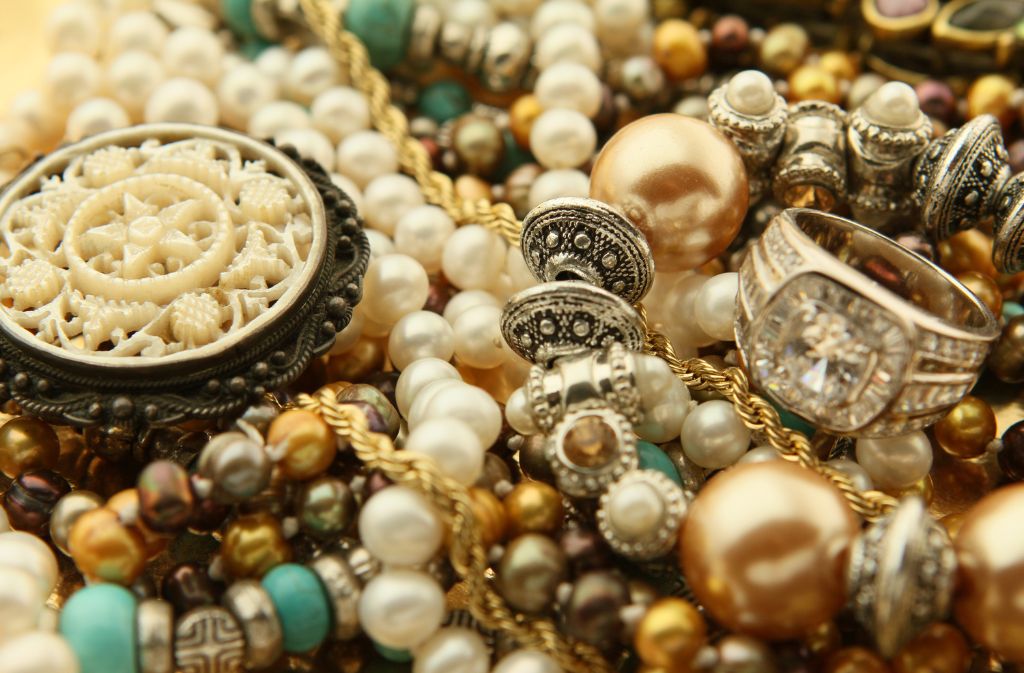
What makes an item that is 100+ years old look fascinating in a modern context is the dynamic between it and everything around it. Vintage craft, hand-carved settings, old mine cut diamonds, the soft patina of aged gold, reads differently against the sharp, clean lines of contemporary tailoring than it does surrounded by other antique pieces.
A Victorian brooch pinned to the lapel of a structured minimalist blazer works because the contrast is doing something. The intricate detail of the brooch and the deliberate simplicity of the jacket are in conversation. Remove either and the story falls apart.
This is why texture matters. Filigree work, engraved surfaces, and the irregular sparkle of older diamond cuts don’t need ornamentation around them. They need space.
Bridging Eras Without Breaking the Logic
One method that seems to always do the trick is ‘sandwiching‘, which essentially means nestling a vintage piece between modern ones in such a way that you appear to have made a conscious stylistic decision to mix timeframes.
An antique pendant hanging from a modern, hefty link or utilitarian style chain is perhaps the most obvious example. The pendant supplies the heritage whilst the chain indicates the ‘now’. The two together don’t force your hand in choosing a camp, they simply sit beautifully across both.
Mixing your metals works along much the same logic. A yellow gold Victorian locket layered over a white gold, daintily modern chain doesn’t clash, it adds depth. An old, warmer metal up against a crisp, clean modern setting reads as intentional when the proportions are right.
The High-Low Pairing
The final strategy is possibly the most unconventional, but trust us, it always works. The right piece of absurdly beautiful antique jewellery, the kind that should never be languishing in a safe-deposit box, will often look infinitely cooler opposite a casual, everyday basic than it will a formal one.
A 100-year-old diamond brooch worn on a white t-shirt. An Edwardian ring paired with a stiff, structured denim jacket. The lack of competition from your other garments effectively allows the jewel to dominate your outfit, making it the undivided star of the show. Sometimes, a bit too much company can sour the impact of a full-on statement piece.
It also subtly communicates something about you as the wearer: that you’re wearing it simply because you like it, and not because the occasion calls for it. That’s the difference between a collector and someone who just happens to possess some very nice things.
Mixing vintage with contemporary works when the vintage element has been chosen for a reason and placed with precision. The goal isn’t to look like you’re from another decade. It’s to make it clear that you understand both, and that you decided to bring something through.
For more, visit Pure Magazine