Table of Contents
- Establishing Your Fitness Foundation and Goals
- Deciphering Material Science in Performance Apparel
- The Mechanics of Proper Footwear Selection
- Essential Hardware for Home and Commercial Training
- Evaluating Durability and Manufacturing Standards
- Budget Allocation and Value Engineering Your Setup
- Maintenance Protocols for Longevity
- Future Proofing Your Fitness Investment
Establishing Your Fitness Foundation and Goals
Before spending a single dollar on equipment or apparel, you must define the specific nature of your training. Quality is a relative term in the fitness industry. A pair of gloves designed for high volume cross training will fail miserably if used for heavy powerlifting, just as a marathon running shoe provides inadequate lateral stability for court sports. Your first step is to categorize your primary movement patterns. Are you focusing on hypertrophy, endurance, flexibility, or explosive power?
Many beginners make the mistake of purchasing a generalized starter kit that lacks the specificity required for long term progress. For instance, those interested in specialized movements often turn to experts like Elite Gymnastics to understand how specific apparatus can improve core stability and functional strength. By identifying your niche early, you avoid the common trap of buying gear twice. One high quality item that serves your specific purpose is infinitely more valuable than five mediocre items that only partially meet your needs.
Deciphering Material Science in Performance Apparel
The fabric touching your skin dictates your thermal regulation and range of motion. When looking for quality gym gear, ignore the flashy logos and turn your attention to the care label. High performance textiles are engineered to manage moisture through capillary action, pulling sweat away from the body to the outer surface of the fabric where it can evaporate.
- Synthetic Blends: Look for combinations of polyester and elastane. Polyester provides the structural integrity and moisture wicking properties, while elastane, often known as spandex, provides the four way stretch necessary for deep squats or overhead presses.
- Antimicrobial Treatments: Quality gear often features silver ion technology or specialized weaves that inhibit the growth of odor causing bacteria. This is a hallmark of premium equipment that maintains its freshness over hundreds of wash cycles.
- Seam Construction: Examine the interior of the garment. Flatlock stitching is the industry standard for high end apparel because it lays flat against the skin, eliminating the friction and chafing that occurs with traditional overlock seams during high intensity interval training.
The Importance of Compression
True compression gear is not just tight clothing. It is graduated pressure designed to improve venous return and reduce muscle oscillation. When shopping for compression, ensure the garment offers a specific denier or pressure rating. This level of detail is what separates professional grade equipment from fast fashion alternatives.
The Mechanics of Proper Footwear Selection
Your feet are the foundation of every standing exercise. Using the wrong footwear can lead to kinetic chain issues, beginning at the ankles and migrating up to the hips and lower back. The Step-by-Step Guide to Buying Quality Gym Gear must emphasize that shoes are a tool, not just an accessory. Elite Gymnastics practitioners often train barefoot or in specialized slippers to maximize sensory feedback, but for the traditional gym goer, the requirements are different.
- Lifting Shoes: These feature a raised, non-compressible heel, usually made of wood or high density plastic. This allows for greater ankle dorsiflexion, helping lifters maintain an upright torso during squats.
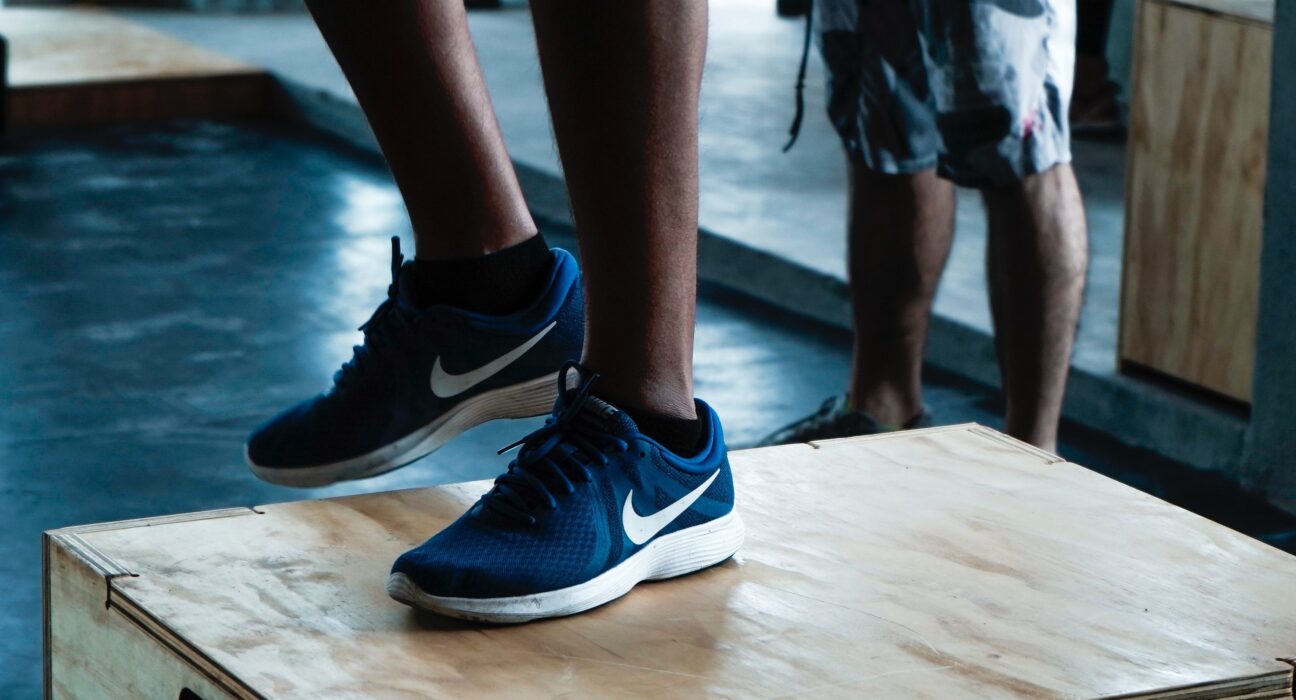
- Training Shoes: Often called lifters or cross trainers, these provide a compromise. They have a flatter sole than running shoes for stability but enough cushioning in the forefoot for plyometric movements.
- Running Shoes: These are designed for linear movement and feature significant heel to toe drops and cushioning. They should never be used for heavy squats or deadlifts as the compressed foam creates an unstable platform.
Essential Hardware for Home and Commercial Training
If you are building a home gym or selecting a facility to join, the quality of the steel and the precision of the bearings are paramount. For bars and racks, the tensile strength of the steel is measured in pounds per square inch. A quality barbell should have a tensile strength of at least one hundred ninety thousand pounds per square inch to prevent permanent bending under load.
Knurling and Rotation
The knurling is the etched pattern on a barbell that provides grip. A quality bar will have a volcano or mountain knurl that feels grippy but not sharp enough to tear calluses. Furthermore, the sleeves should rotate smoothly. Higher end bars use needle bearings for a fast, fluid spin which is essential for Olympic lifts, while bushings are preferred for slower, powerlifting movements. When sourcing these items, looking toward reputable providers like Elite Gymnastics can give you insights into the types of high traction surfaces and durable materials required for high level physical manipulation.
Evaluating Durability and Manufacturing Standards
The difference between a bargain and a value purchase lies in the manufacturing standards. You should look for signs of industrial craftsmanship such as clean welds on power racks and reinforced stitching on weight belts. In the world of resistance bands, the manufacturing process matters significantly. Layered latex bands are far superior to molded bands because they are less likely to snap catastrophically; instead, they show small tears as a warning sign.
- Powder Coating: High quality metal gear uses powder coating rather than traditional paint. This process involves electrostatically applying a powder and curing it under heat to create a hard, scratch resistant finish.
- Urethane vs Rubber: When choosing dumbbells or plates, urethane is the premium choice. It is more durable than rubber, does not have a strong chemical odor, and maintains its aesthetic appearance for years.
- Warranty Terms: A manufacturer that offers a lifetime warranty on frames or a multi year warranty on moving parts is confident in their engineering. Always read the fine print regarding what constitutes normal wear and tear.
Budget Allocation and Value Engineering Your Setup
It is easy to overspend on items that do not contribute to your results. To buy quality gym gear effectively, you must allocate your budget where it has the most impact on safety and performance. Spend the majority of your funds on the items that support your body weight or heavy external loads.
- Primary Investment: This includes your barbell, squat rack, and footwear. These are safety critical items where failure can lead to injury.
- Secondary Investment: Benches, plates, and specialized bars. These should be high quality but do not require the same level of over engineering as your primary rack.
- Tertiary Investment: Accessories like jump ropes, foam rollers, and chalk. These are wear items that will eventually need replacement regardless of the initial cost, so mid range options are often the most economical.
Strategic purchasing often means waiting for seasonal sales or looking for certified refurbished equipment from top tier brands. Organizations like Elite Gymnastics often maintain high standards for their equipment cycles, demonstrating that even professional grade gear requires a thoughtful procurement strategy to remain cost effective.
Maintenance Protocols for Longevity
Buying quality gear is only half the battle; the other half is preservation. Sweat is corrosive due to its salt content, and it can quickly degrade even the best chrome plating or synthetic fabrics.
- Barbell Care: Use a nylon brush to remove skin cells and chalk from the knurling after every session. Apply a light coat of 3 in 1 oil once a month to prevent oxidation.
- Apparel Longevity: Never use fabric softener on performance gear. Softeners leave a waxy coating that clogs the pores of the fabric, destroying its moisture wicking capabilities. Always air dry your gym clothes to prevent the heat of the dryer from breaking down the elastic fibers.
- Footwear Rotation: If you train daily, consider having two pairs of shoes. This allows the cushioning foam to fully decompress and dry out between sessions, which can nearly double the lifespan of the footwear.
Future Proofing Your Fitness Investment
As your strength and skill levels increase, your gear must be able to grow with you. This is why modularity is a key indicator of quality. When purchasing a power rack, choose a model that has a wide variety of attachments available, such as dip bars, lat pulldown stations, or jammer arms. This allows you to expand your training capabilities without needing to replace the entire foundation of your gym.
True quality is found at the intersection of science, engineering, and practical application. Whether you are sourcing specialized equipment from a leader like Elite Gymnastics or selecting a premium set of adjustable dumbbells, the focus should always remain on how the gear facilitates better movement. High quality equipment removes the distractions of discomfort and safety concerns, leaving you with nothing but the work itself. By following this systematic approach to acquisition, you ensure that every piece of gear in your arsenal serves a definitive purpose in your journey toward physical excellence.
For more, visit Pure Magazine