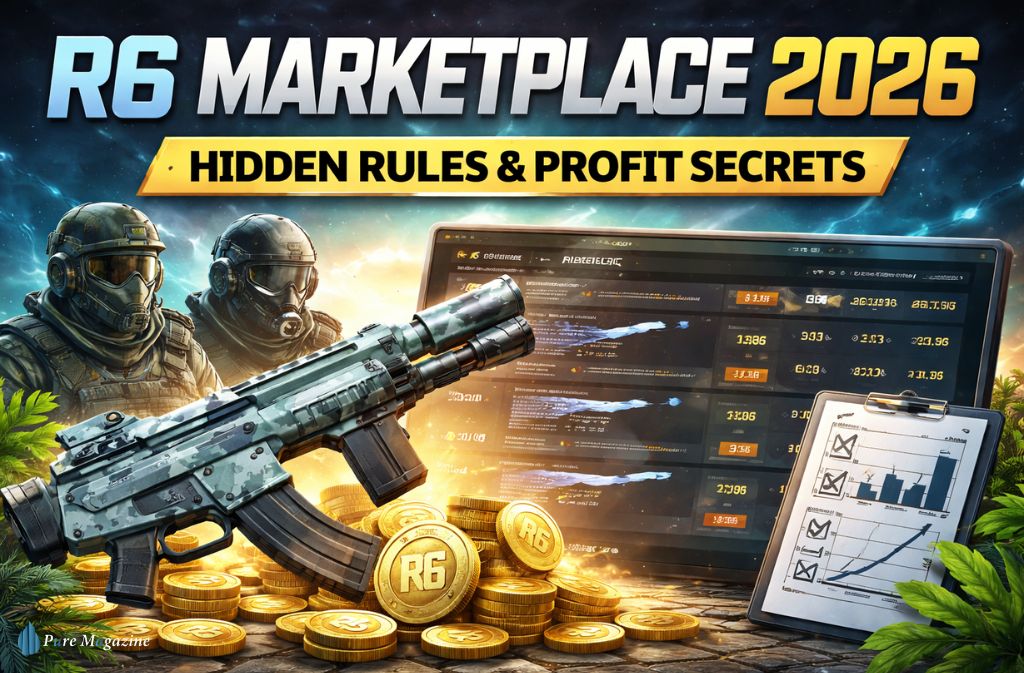
The R6 Marketplace looks simple at first glance—buy a skin, sell a skin, done.
But spend a few days inside it, and a different picture emerges. Prices move unexpectedly. Some items sell instantly, others sit for weeks. And sometimes, what looked like a “great deal” turns into a loss you can’t escape for 15 days.
This isn’t just a cosmetic shop—it’s a controlled in-game economy with rules most players don’t fully understand.
In this guide, you’ll learn:
- How the R6 marketplace actually works (not just the basics)
- The hidden mechanics like FIFO queue and cooldowns
- Real strategies used by experienced players
- Mistakes that quietly drain your credits
If you want to stop guessing and start making smarter decisions, this is where it clicks.
What Is R6 Marketplace?
The R6 Marketplace is Ubisoft’s official trading system where players buy and sell Rainbow Six Siege cosmetic items using R6 Credits within a regulated, queue-based system.
It’s not a free market like third-party sites. Instead, it’s:
- Fully controlled by Ubisoft
- Built on structured buy/sell orders
- Designed to prevent abuse and manipulation
Key Features:
- Player-to-player cosmetic trading
- 10% transaction fee on sales
- 15-day resale cooldown
- Order-based system (not instant trading)
How the R6 Marketplace Works (Real Mechanics Explained)
The R6 marketplace operates on a price-and-time priority system, meaning the best price gets matched first, and older orders at that price are filled before newer ones.
Core Mechanics You Need to Understand
1. FIFO Order System (First-In, First-Out)
If multiple players list an item at the same price:
- The earliest listing sells first
👉 This means timing can matter as much as pricing.
2. The 10% Transaction Fee (The “Credit Sink”)
Every completed sale loses 10% to Ubisoft.
Example:
- Sell price: 1000 credits
- You receive: 900 credits
Why this exists:
- Removes excess credits from the economy
- Prevents inflation
- Keeps prices stable
👉 Without this, the marketplace would spiral into chaos.
3. The 15-Day Resale Cooldown (Critical Rule)
Any item you purchase cannot be resold for 15 days.
This changes everything:
- No quick flipping
- No instant reactions to price drops
- Forces long-term thinking
👉 Many players lose credits simply because they ignore this rule.
4. Order Duration System
- Orders stay active for up to 30 days
- If not filled → they expire
Mastering the Flip: Buying & Selling Like a Pro
Most guides say “buy low, sell high.” That’s not enough here.
Let’s break down what actually works in 2026.
Strategy 1: The Low-Ball Patience Method
This is the modern version of “sniping.”
How it works:
- Place a very low buy order
- Leave it active for days or weeks
- Wait for a pricing mistake
Example:
- Market price: 2000 credits
- Your order: 120 credits
Eventually, someone lists incorrectly—you win.
👉 It’s not about speed anymore. It’s about patience.
Strategy 2: Volume-Based Decision Making
Price alone doesn’t tell the full story.
What matters more:
- How many items sold recently
- How many are listed
👉 A skin priced at 500 credits means nothing if no one is buying it.
Strategy 3: Queue Positioning
If you list at the same price as others:
- You enter the queue
- Earlier listings get priority
👉 Sometimes listing slightly lower—or earlier—is the difference between selling and waiting forever.
R6 Marketplace Profit Calculator (Avoid Hidden Losses)
Most players think they’re making profit—but forget the 10% fee.
| Buy Price | Fee (10%) | Break-Even Sell Price | 10% Profit Target |
|---|---|---|---|
| 500 | 50 | 556 | 612 |
| 1000 | 100 | 1112 | 1223 |
| 5000 | 500 | 5556 | 6112 |
Key Insight:
- Small flips are inefficient
- Fees eat your margins
- Bigger trades = better outcomes
Real Market Examples (What Actually Moves)
Understanding item behavior is where experience shows.
Glacier Skins
- Extremely rare
- Low supply
- Prices fluctuate heavily
👉 Better for long-term holding than quick flips
Gold Dust Skins
- High demand
- More consistent pricing
👉 Good for predictable trades
Old Battle Pass Skins (2020–2022)
These are rising steadily.
Why?
Because new players missed them.
That creates FOMO-driven demand—and slow, consistent price growth.
2026 Market Trends You Should Know
The marketplace has matured.
Key trends:
- Prices are stabilizing
- Fewer extreme spikes
- More informed players
Big shift:
Legacy and discontinued items are gaining value slowly—not explosively.
👉 This is no longer a “gold rush.” It’s a strategy game.
R6 Marketplace vs Third-Party Sites
| Feature | R6 Marketplace | Third-Party Sites |
|---|---|---|
| Transaction Fee | 10% | Varies |
| Resale Lock | 15 Days | None |
| Safety | High (Ubisoft-controlled) | Risky |
| Order Style | FIFO Queue | Direct trade |
| Real Money | No | Yes |
Reality:
- Official marketplace = safe but limited
- Third-party = flexible but risky
External Tools Smart Players Use
Serious players don’t rely on guesswork.
They use:
- Price tracking tools
- Community marketplaces
- Data-driven platforms
These help:
- Track trends
- Avoid bad trades
- Spot undervalued items
Regional Timing Edge (Underrated Insight)
Market behavior changes throughout the day.
Observed patterns:
- US evening → highest activity
- Late night → more pricing mistakes
- Weekends → more volatility
👉 Timing matters more than most people think.
What the Graphs Don’t Tell You (Hard Lesson)
I once bought a Black Ice skin thinking it was safe.
- Price looked stable
- Graph showed consistency
But I ignored volume.
Within days:
- Price dropped ~400 credits
- I was stuck (15-day lock)
That’s when it clicked:
Price shows history. Volume shows reality.
Common Mistakes That Cost Credits
- Ignoring the 15-day cooldown
- Trusting average price blindly
- Listing too late in queue
- Chasing hype items
- Forgetting the 10% fee
Quick Cheat Sheet
- ✔ FIFO system → time matters
- ✔ 15-day lock → no instant flipping
- ✔ 10% fee → calculate profit first
- ✔ Volume > price
- ✔ Patience beats speed
FAQs
Q. How does R6 Marketplace work?
The R6 Marketplace works on a price-and-time priority system, meaning the lowest price gets matched first, and if multiple orders have the same price, the earliest listing is completed first. Players place buy or sell orders, and Ubisoft automatically matches them within this queue system.
Q. What is the 15-day cooldown in R6 Marketplace?
The 15-day cooldown means any item you purchase cannot be resold for 15 days. This rule prevents instant flipping and market abuse, forcing players to hold items before listing them again.
Q. Is R6 Marketplace safe to use?
Yes, the R6 Marketplace is safe because it is an official Ubisoft platform. All transactions are processed within the system, with no direct player-to-player interaction, which eliminates scam risks.
Q. Can you flip skins on R6 Marketplace?
Yes, you can flip skins on the R6 Marketplace, but short-term flipping is limited due to the 15-day cooldown and 10% transaction fee. Most successful strategies rely on patience and long-term pricing opportunities.
Q. Why is my R6 Marketplace order not selling?
If your order is not selling, it is likely because other players listed the same item at the same price before you. The system follows a first-in, first-out (FIFO) queue, so earlier listings get priority.
Q. What is the best strategy for R6 Marketplace in 2026?
The best strategy is to place low buy orders and wait for undervalued listings, rather than chasing current prices. Successful players focus on patience, market trends, and volume—not just price.
Q. Is R6 Marketplace available worldwide?
The R6 Marketplace is not fully available worldwide. Access depends on your region and Ubisoft account eligibility, although availability continues to expand over time.
Conclusion
The R6 marketplace isn’t complicated—but it is misunderstood.
Here’s what separates smart players:
- They understand the system
- They respect the cooldown
- They track demand, not just price
- They play long-term
If you treat it casually, you’ll lose credits.
If you treat it like a system, you’ll start spotting opportunities most players miss.
For more, visit Pure Magazine