Getting older changes a lot of things — including how your body handles protein.
Most people don’t notice muscle loss until something signals it: a stumble on the stairs, struggling with a jar lid, or feeling more tired after a walk that used to be easy. By that point, the process has often been quietly underway for years. Adults can shed up to 8% of muscle mass every decade after 60, and that loss doesn’t slow down without deliberate effort.
Protein supplements have become a popular response to this, but the information out there is all over the place. Much of it is written for bodybuilders, not a 68-year-old trying to stay mobile and independent. This guide is different.
Here’s what we’ll actually cover:
- Why your protein needs go up as you age, not down
- Which types of protein are worth your money in 2026
- How much to take, and when
- What to watch out for — including ingredients that can cause problems
Let’s get into it.
What Are Protein Supplements for Seniors, Really?
At their core, protein supplements are products that help older adults fill the gap between what they eat and what their body actually needs.
That gap exists for a few reasons. Appetite tends to shrink with age. Digestion changes. And the body becomes less efficient at pulling protein from food and converting it into muscle tissue. The result is a situation where eating the same amount as you always have simply stops being enough.
Protein supplements — whether powders, ready-made shakes, or meal replacements — are a practical way to close that gap without overhauling your entire diet.
The Real Reason Older Adults Need More Protein
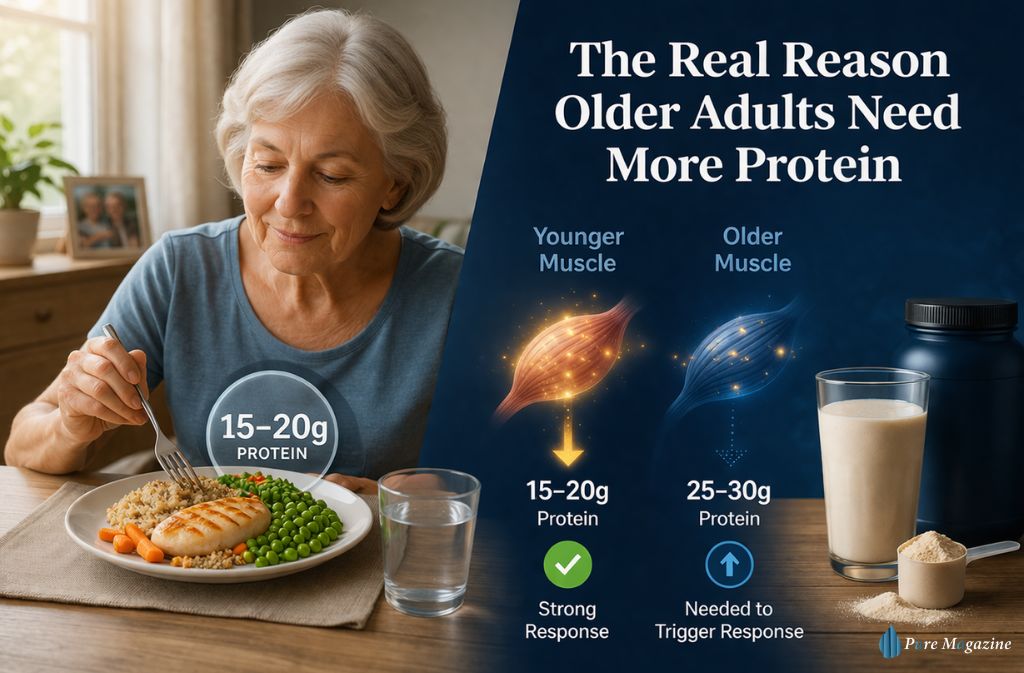
There’s a biological phenomenon called anabolic resistance that most supplement guides don’t bother explaining — but it’s central to understanding why protein matters so much later in life.
In younger adults, a meal containing 15–20g of protein is enough to meaningfully stimulate muscle repair and growth. In older adults, that same amount often produces little response. The threshold rises to around 25–30g per meal before the body really engages.
So it’s not just about eating more protein in total. It’s about hitting a higher bar at each meal, with protein that’s actually dense in the right amino acids. Supplements make that easier — and for many seniors, genuinely necessary.
Do Protein Supplements Actually Help?
The evidence says yes — provided you’re using them to address a real shortfall, not as a substitute for eating well overall.
Consistent, adequate protein intake in older adults has been linked to better muscle retention, improved recovery after illness or surgery, stronger balance, and reduced risk of frailty. Research published through the National Institutes of Health supports this, reflecting a broad scientific consensus that protein needs rise with age rather than declining.
That said, supplements aren’t magic. They work when they’re part of a broader pattern — decent diet, some physical activity, and realistic expectations about timelines.
Signs that a supplement might genuinely be useful for you:
- You regularly skip high-protein meals or eat very little at breakfast
- Your weight has been dropping without trying
- You’re recovering from an illness, injury, or hospital stay
- Chewing certain foods has become uncomfortable or difficult
How Much Protein Do Seniors Actually Need?
Current 2026 clinical guidance puts the target at 1.2 to 1.5g of protein per kilogram of body weight daily. During illness or active recovery, that can rise to 1.6g/kg — but that’s a short-term figure and ideally supervised by a healthcare professional.
To make that concrete: a 70kg person needs roughly 84–105g of protein per day. Spread across three meals, that works out to around 28–35g per sitting — more than most older adults currently eat at breakfast in particular.
Why leucine matters
Within that protein, leucine is the amino acid that does the heaviest lifting when it comes to triggering muscle repair. The target per serving sits at 2.5–3g. Whey protein naturally hits this. Plant-based options often need a larger serving — around 30g or more — to reach the same level.
The Main Types of Protein Supplements
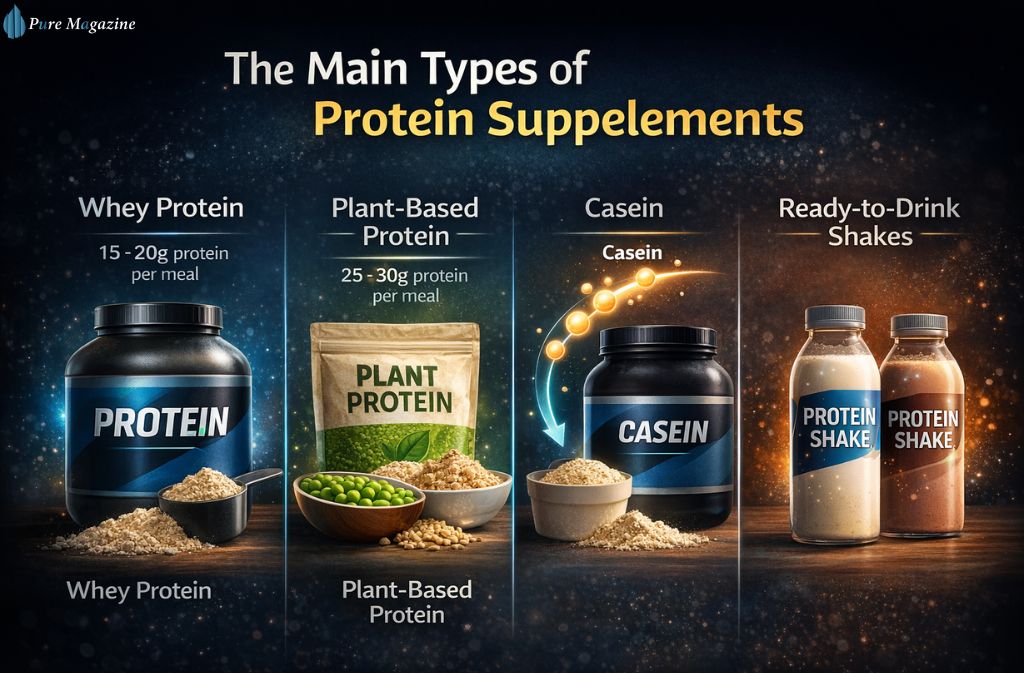
Whey protein
Whey remains the most researched option for muscle support in older adults. It digests quickly, contains all essential amino acids, and has high leucine content — which is why it consistently performs well in studies on sarcopenia and muscle maintenance.
One practical note: some seniors find standard whey concentrate causes bloating. Switching to whey isolate — which has most of the lactose removed — usually fixes this. If dairy is an issue altogether, plant-based blends are a genuinely strong alternative.
Plant-based protein
A well-formulated pea and rice blend offers a complete amino acid profile and is often easier to digest for people with sensitive stomachs. Its leucine content is lower per gram than whey, so serving sizes need to be larger, but for consistent daily use, many find plant-based options more comfortable over the long term. For a detailed look at how plant versus whey protein affects women, research on women and protein shakes covers this topic thoroughly.
Casein
Casein is absorbed slowly — over several hours — making it particularly useful when taken before bed. Overnight is actually one of the longer fasting windows most people experience, and casein can help reduce the muscle breakdown that occurs during that time.
Ready-to-drink shakes
Pre-made protein drinks are primarily about convenience. For seniors with low appetite, limited energy for preparation, or difficulty with portion sizes, they remove a lot of friction. The trade-off is that label quality varies enormously — more on that below.
A word on collagen
Collagen supplements have become popular for skin and joint support, and there is reasonable evidence for those benefits. However, collagen is not a substitute for protein when it comes to muscle — its amino acid profile does not support muscle protein synthesis like whey or plant-based blends do. Research on collagen and protein supplementation explains this distinction clearly for those considering it as part of a broader supplement routine.
2026 Protein Type Comparison
| Type | Best For | Leucine Content | Verdict |
|---|---|---|---|
| Whey Isolate | Muscle recovery | Highest (~2.7–3g) | Best overall |
| Plant Blend | Sensitive digestion | Moderate | Strong alternative |
| Casein | Overnight repair | High | Useful addition |
| Collagen | Skin/joints | Very low | Not for muscle |
| RTD Shakes | Low appetite | Varies | Check labels carefully |
Choosing the Right Supplement: A Practical Approach
Rather than picking based on packaging or price, work through these four questions:
Are you actually falling short on protein? If your diet reliably includes eggs, fish, meat, dairy, or legumes across most meals, a supplement may not add much. If breakfast is usually toast and dinner is often light, there’s a real gap to fill.
How does your digestion respond to dairy? If you’ve had issues with milk-based products, start with a plant-based blend or whey isolate rather than standard whey concentrate.
How important is convenience? If preparation is a barrier, ready-to-drink wins on practicality — just be selective about which ones.
What’s actually in it? Turn the packaging over. High sugar content, vague “proprietary blends,” and multiple artificial additives are worth avoiding in a product you’re taking every day.
The Breakfast Gap Problem
Here’s something worth paying attention to: most of the protein deficit in older adults’ diets comes from breakfast.
Tea, toast, maybe some cereal — it’s a common morning routine, and it delivers almost no protein. By contrast, starting the day with eggs, Greek yogurt, or a protein shake means you’re already a third of the way to your daily target before 9 am. That shift alone, without changing anything else, can make a significant difference to how consistently you hit your targets.
Protein works best when it’s distributed fairly evenly across three meals rather than concentrated in one. Your muscles can only use so much at once, and spreading it out takes better advantage of each window.
Kidney Health: Setting the Record Straight
There’s a persistent concern that high protein intake damages the kidneys. For healthy older adults, the evidence doesn’t support this. The National Kidney Foundation is clear that protein restriction is only clinically indicated for people already managing Chronic Kidney Disease, specifically Stage 3 and above.
If you have diagnosed kidney disease or your doctor has mentioned reduced kidney function, get specific guidance before increasing protein. For everyone else, the current evidence supports higher intake as genuinely beneficial.
What to Watch Out For on Labels
Ready-made protein drinks are the format most likely to contain ingredients worth scrutinising:
- Phosphorus — elevated in some shakes, which can be a concern for kidney health
- Potassium — an issue for those taking certain heart or blood pressure medications
- Artificial sweeteners and fillers — less of a safety issue, more of a quality one for daily long-term use
Are You Losing Muscle Without Realising It?
A simple screening tool called SARC-F can help flag early sarcopenia. Ask yourself honestly:
- Do you find it hard to lift or carry anything around 5–10kg?
- Has walking any real distance become more difficult lately?
- Have you had a fall, or feel less confident about your balance?
Two or more of these warrant taking protein intake more seriously — and probably a conversation with your GP. The peer-reviewed SARC-F validation study is the clinical basis for this tool, if you want the background.
Mistakes Worth Avoiding
A few patterns come up repeatedly when people don’t get the results they expected:
Taking a large protein shake once a day and calling it done — this misses the distribution benefit entirely. Spreading it across meals works better.
Using protein shakes instead of meals rather than alongside them. Supplements fill gaps; they don’t replace real food.
Picking a product based on the front of the packaging rather than the ingredient list on the back.
Ignoring existing health conditions that genuinely affect how much protein is appropriate.
Practical Tips for 2026
- Aim for 25–30g of protein per meal, three times a day
- Pair protein intake with movement — even light resistance work or a walk helps the body use it
- Take protein within an hour of activity when possible
- Consider adding Vitamin D (800–1000 IU daily) — deficiency is widespread in older UK adults and directly affects muscle function, as the NHS vitamin D guidelines note
- Give it time — meaningful changes in strength and energy take weeks of consistency, not days
FAQs
Q. Are protein supplements good for seniors?
Yes—protein supplements are beneficial for seniors when dietary intake is insufficient. They help maintain muscle mass, support recovery, and improve strength and mobility over time. This becomes especially important due to age-related muscle loss and reduced protein absorption.
Q. What is the best protein supplement for seniors?
Whey protein isolate is generally the best option for seniors because it is fast-digesting, high in leucine (the key amino acid for muscle repair), and easily absorbed. For those with dairy intolerance, a pea and rice protein blend is a strong alternative when taken consistently.
Q. Should a 70-year-old take protein powder?
A 70-year-old should consider protein powder if they are not meeting daily protein needs through food. It’s a practical and well-supported option for maintaining muscle health, especially in cases of low appetite, weight loss, or recovery from illness.
Q. Can seniors drink protein shakes every day?
Yes, seniors can safely drink protein shakes daily as long as their overall diet is balanced and the product contains clean, high-quality ingredients. Daily use makes it important to avoid added sugars, artificial fillers, and unnecessary additives.
Q. What protein works best for seniors over 80?
For seniors over 80, easy-to-digest protein sources work best. Whey isolate and ready-to-drink protein shakes are ideal because they require minimal effort to consume and are gentle on digestion, especially when appetite is reduced.
Q. Are protein supplements safe for the kidneys?
Protein supplements are safe for seniors with healthy kidney function. However, those with chronic kidney disease (CKD) or reduced kidney function should consult a healthcare professional before increasing protein intake. Kidney health guidelines from reputable organizations should be followed.
Q. Does biotin interact with protein supplements?
No, biotin does not directly interact with protein supplements. Protein supports muscle repair, while biotin plays a role in metabolism and hair health. They can be taken together, but they serve completely different purposes.
Q. How much protein should seniors consume daily?
Most seniors need 1.2 to 1.5 grams of protein per kilogram of body weight per day. This higher intake helps counter muscle loss and supports overall health. Spreading protein evenly across meals improves absorption and effectiveness.
Q. What is the leucine threshold for seniors?
The leucine threshold for seniors is approximately 2.5 to 3 grams per meal. This amount is needed to effectively stimulate muscle protein synthesis due to anabolic resistance. High-quality protein sources like whey help meet this requirement.
Conclusion
Protein isn’t just for athletes. For older adults, it’s one of the most important tools for staying physically capable and independent as the years go on.
The fundamentals are straightforward: your needs have gone up, not down. Leucine content matters. Spreading intake across meals beats cramming it all in at once. And the quality of the product and the wider diet matter more than volume.
Start by honestly assessing where your current intake actually sits, then close the gap with the right product for your digestion, lifestyle, and health situation.
Related: C4 Workout Supplement (2026): Benefits, Side Effects & Is It Worth It?