A single misspelled word can quietly lead thousands of people into misinformation. That’s exactly what’s happening with piragnia.
The term appears across blogs, image captions, and even Google results, yet it isn’t a scientific name, a recognized species, or a real biological classification. In almost every case, people searching for piragnia are actually looking for information about piranhas—one of the most misunderstood freshwater fish in the world.
This confusion matters. When incorrect terms circulate without explanation, myths grow faster than facts. Some websites describe piragnia as a deadly Amazon predator. Others present it as a rare or newly discovered fish. Very few stop to clarify the most important point: piragnia isn’t real—but the animal behind the confusion is.
This guide exists to fix that gap. You’ll learn what piragnia really refers to, why the term exists online, what science actually says about piranhas, and how fear replaced facts in popular culture. If you want clarity instead of recycled myths, you’re in the right place.
What Is Piragnia? (The Short, Accurate Answer)
Piragnia is not a real fish.
It is a common misspelling or phonetic variation of “piranha.”
There is:
- ❌ No species named piragnia
- ❌ No scientific classification using the term
- ❌ No listing in FishBase or the Catalog of Fishes
The word persists online because it looks and sounds plausible—especially to people encountering the name for the first time through images, social media, or low-quality content sites.
From an SEO perspective, piragnia is a misspelled entity query. From a user perspective, it’s a perfectly reasonable question.
Why “Piragnia” Sounds Right: The Linguistic Explanation
The confusion isn’t random—it’s linguistic.
The word piranha comes from the Tupi language, spoken by Indigenous peoples of the Amazon region. It combines:
- pira → fish
- anha → tooth
Loosely translated, piranha means “tooth-fish.”
The “nh” sound in Tupi doesn’t exist in standard English phonetics. When people unfamiliar with the language hear or read the word, it’s often reinterpreted as:
- ni
- gn
- nia
That’s how piragnia emerges—not as an invented creature, but as a phonetic mutation of an Indigenous word entering global usage. Similar distortions happen frequently when non-English names spread without linguistic context.
In short, piragnia exists because piranha doesn’t sound English.
The Real Animal People Mean: Piranha Explained Clearly
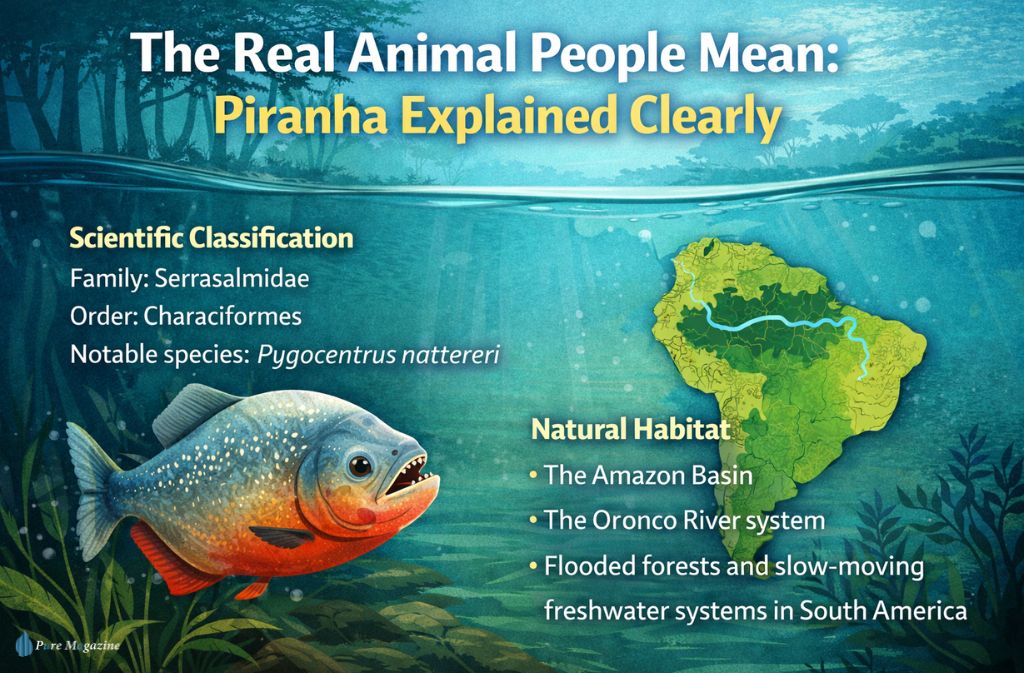
Scientific Classification
- Family: Serrasalmidae
- Order: Characiformes
- Notable species: Pygocentrus nattereri (red-bellied piranha)
Piranhas were once grouped under Characidae, but modern taxonomy places them firmly in Serrasalmidae, alongside pacus and silver dollars.
Natural Habitat
Piranhas are native to:
- The Amazon Basin
- The Orinoco River system
- Flooded forests and slow-moving freshwater systems in South America
They are not saltwater fish, and they are not globally distributed.
Piragnia vs Piranha: Side-by-Side Comparison
| Feature | Piragnia | Piranha |
|---|---|---|
| Scientific validity | ❌ None | ✅ Verified |
| Listed in FishBase | ❌ | ✅ |
| Biological classification | ❌ | ✅ Serrasalmidae |
| Real animal | ❌ | ✅ |
| Source of myths | SEO & phonetics | Media exaggeration |
Common Myths About “Piragnia” (Debunked)
Myth 1: They attack humans constantly
Reality: Documented attacks are rare and typically involve minor nips during dry seasons when food is scarce.
Myth 2: They strip animals to bones in seconds
Reality: This behavior is exaggerated and often staged for demonstrations or films.
Myth 3: All piranhas are aggressive carnivores
Reality: Many species are omnivorous or primarily herbivorous, feeding on seeds, fruits, and aquatic plants.
Are Piranhas Dangerous? A Practical Risk Framework
Piranhas aren’t harmless—but they aren’t indiscriminate killers either. Risk depends on context, not reputation.
Higher-Risk Situations
- Low water levels during dry seasons
- Artificial feeding events
- Presence of bait, blood, or fishing activity
Lower-Risk Situations
- Normal swimming areas
- Clear water with a stable food supply
- Non-provoked environments
Most incidents occur because of human behavior, not predatory intent.
Also Check: 6 Reasons Fishing Workers Should Invest in Safer Marine Gear
Piranhas in Popular Culture vs Biological Reality
Much of the fear surrounding piragnia comes from stories—not science.
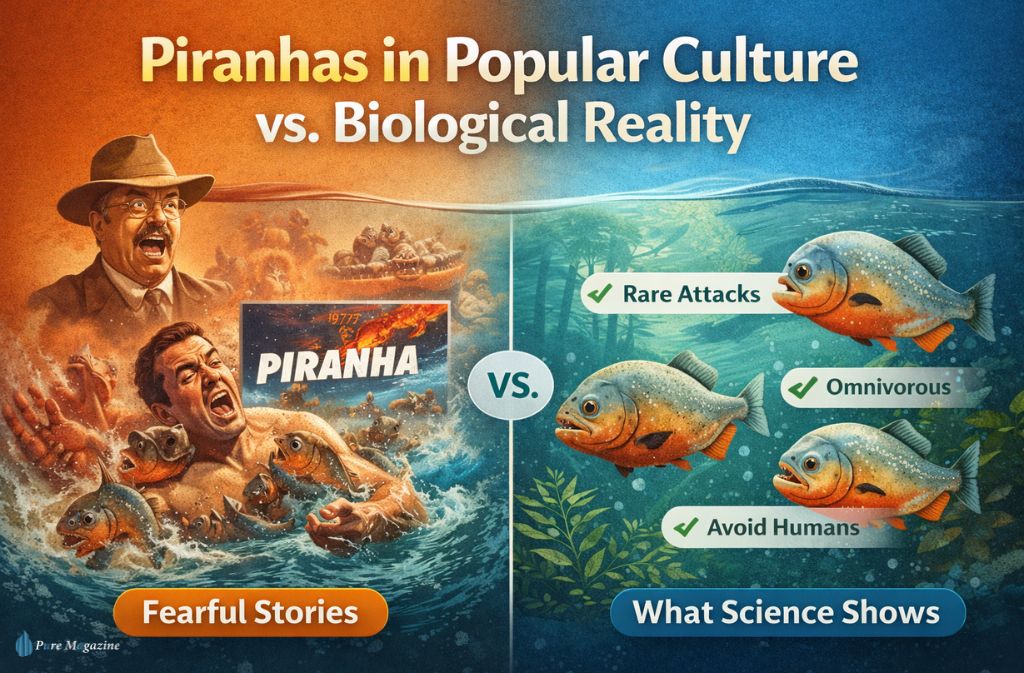
The Roosevelt Effect (1913)
During Theodore Roosevelt’s expedition to Brazil, he witnessed a staged feeding event where starved piranhas were driven into a confined area and fed livestock carcasses. His account described them as “the most ferocious fish in the world.”
What’s often left out:
- The fish were intentionally starved
- The scenario was artificially created
- The behavior was abnormal
That single account became the foundation of the man-eating piranha myth.
Hollywood Amplification
The 1978 film Piranha and its remakes cemented the image of hyper-aggressive fish attacking humans en masse. These portrayals prioritized shock over biology and permanently shaped public perception.
What Science Shows Instead
Modern ichthyology demonstrates that:
- Piranhas generally avoid humans
- Many species are opportunistic feeders
- Large-scale attacks are extremely rare
Fear spread faster than corrections—and never fully stopped.
Why the “Piragnia” Keyword Exists Online
From an SEO standpoint, piragnia is a shadow keyword:
- High curiosity
- Low competition
- No authoritative correction
High-authority sites don’t target it because it isn’t a real term. That leaves space for low-quality pages to rank—until an accurate, explanatory resource fills the gap.
Google increasingly rewards entity clarification content, especially when misinformation is involved. This query is a textbook example.
Common Mistakes People Make When Researching Piragnia
- Assuming it’s a rare species
- Trusting image-only pages
- Confusing films with field biology
- Ignoring scientific databases
The biggest mistake is believing repetition equals truth.
Also Check: Cadibara Meaning Explained: The Capybara Mystery Solved (2026)
What To Do If You Encounter Piranhas in the Wild
Simple, practical guidance:
- Stay calm
- Avoid splashing
- Don’t feed wildlife
- Follow local advisories
In most environments, doing nothing is the safest option.
FAQs
Q. Is piragnia a real fish?
No. Piragnia is not a real fish, species, or scientific term. It is a common misspelling of piranha, which is a freshwater fish native to South America.
Q. Why do people spell piranha as piragnia?
People spell piranha as piragnia because the word comes from the Tupi language, where the “nh” sound does not exist in English. This causes phonetic confusion and spelling variations online.
Q. Are piranhas dangerous to humans?
Piranhas are rarely dangerous to humans. Most reported incidents involve minor bites during dry seasons or feeding activity, not unprovoked attacks.
Q. Can people eat piranhas?
Yes. Piranhas are edible and commonly eaten in parts of South America, where they are prepared fried, grilled, or in stews.
Q. Are all piranhas carnivores?
No. Not all piranhas are carnivores. Many species are omnivorous or primarily herbivorous, feeding on seeds, fruits, and aquatic plants.
Q. Is piragnia just another name for piranha?
No. Piragnia is not an alternative name. It is an incorrect spelling that became common online due to repetition and SEO-driven content.
Q. Why does Google show results for piragnia?
Google shows results for piragnia because many users search for it, even though it is incorrect. Modern search systems prioritize answering intent, not just validating terminology.
Conclusion
Piragnia isn’t a hidden Amazon monster—it’s a misunderstanding that spread unchecked. The correct term is piranha, a real fish with a reputation shaped more by language, media, and history than by biology.
As of 2026, Google increasingly favors content that corrects false entities instead of repeating them. If you searched for piragnia, you weren’t wrong—you were just asking the right question under the wrong name.
Clarity beats fear every time.
Related: Fishing Guides Thunderonthegulf – Expert Tips, Trips, and Full Guide Experience