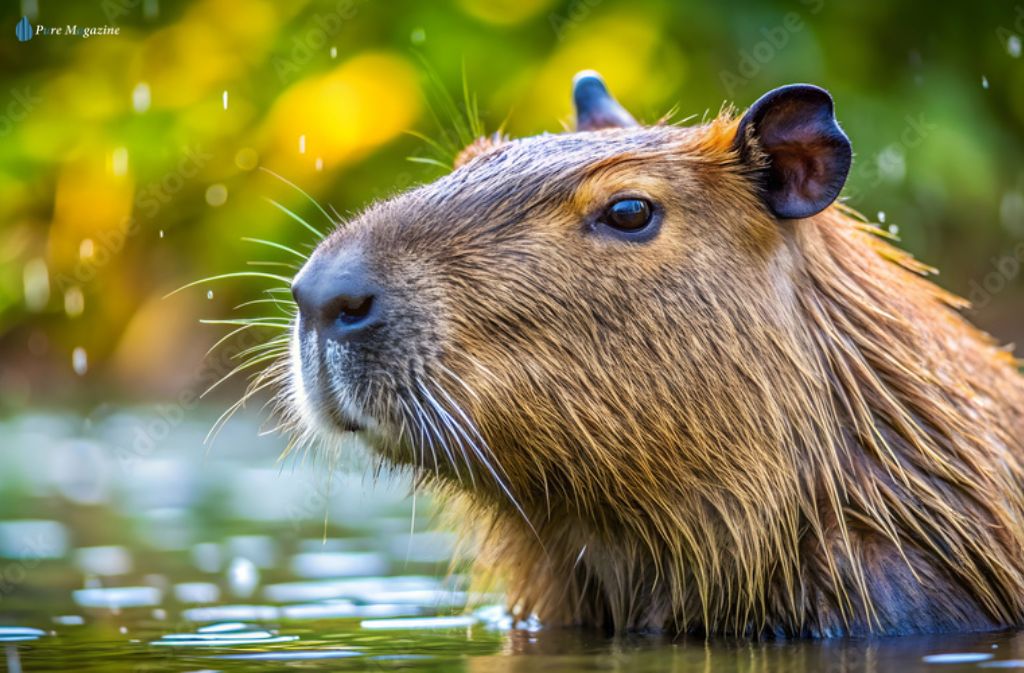
The word cadibara doesn’t look accidental. It’s too consistent, too widely used, and too close to something familiar to be random. People see it in searches, captions, comments, and even image results—and almost always wonder the same thing: Is this a real animal, or am I missing something?
Search engines don’t help much. Type “cadibara” into Google, and you’re immediately shown photos of a large, calm animal sitting in water, sometimes with birds on its back or other animals nearby. Some pages mention capybara. Others don’t explain the name at all.
That’s where the confusion starts.
What Cadibara usually points to isn’t a new species or a niche term. It’s the result of pronunciation, language crossover, and how people naturally spell words they hear more often than they read. The animal behind the word has always been the same. The spelling just took a different path.
This article clears that up completely—without academic fluff, and without pretending the confusion doesn’t exist.
What Does “Cadibara” Actually Refer To?
You won’t find cadibara listed in biology textbooks or scientific databases. There’s no formal classification, no Latin name, and no separate species attached to it.
In everyday use, cadibara almost always refers to the capybara.
That doesn’t mean people are “wrong” for searching it. It just means the spelling followed sound instead of rules. That happens more often than most people realize, especially with animal names that spread through videos and social media before formal reading.
Once a misspelling starts circulating at scale, it becomes a searchable term—and eventually feels legitimate.
Why This Spelling Exists in the First Place
The rise of cadibara isn’t tied to one single reason. It’s a mix of small, ordinary things that add up.
- The word capybara isn’t common in everyday conversation
- Many people have heard it spoken before they ever read it
- Spanish and Portuguese pronunciation softens the “py” sound
- Autocorrect doesn’t always intervene
- Social media repeats what already feels familiar
Over time, the spelling sticks—not because it’s correct, but because it’s recognizable.
That’s how cadibara became a thing.
The Real Animal Behind the Name: The Capybara
The animal people mean when they say cadibara is the capybara, scientifically known as Hydrochoerus hydrochaeris. It’s the largest rodent in the world, native to parts of South America, and surprisingly social.
At first glance, capybaras look almost cartoonish—round bodies, short legs, blunt faces. But their build is practical. Everything about them is shaped by water, group living, and survival in open environments.
They aren’t beavers. They aren’t giant guinea pigs. But they are closely related to guinea pigs, which explains certain traits people notice right away.
Where Capybaras Live (And Why Water Is Non-Negotiable)
Capybaras are rarely found far from water. Rivers, wetlands, marshes, and floodplains aren’t just preferred—they’re essential.
Across South America, capybaras inhabit regions where water is predictable enough to support large groups. When water disappears, so does their sense of safety.
Water allows them to:
- Cool down in hot climates
- Escape predators quickly
- Feed on aquatic plants
- Socialize without constant threat
During the dry season, things change. Groups grow larger, competition increases, and capybaras become easier to spot. That’s often when people first notice them.
Capybara Behavior Isn’t Random — It’s Structured
Capybaras look relaxed, sometimes almost indifferent. That calm appearance is misleading.
They live in organized social groups with clear roles. There are dominant males, subordinate males, females, and juveniles—and each has a place.
Dominant males maintain breeding rights. Subordinate males stay within the group but don’t challenge leadership unless conditions shift. Females form the stable center of the group, and young capybaras are raised communally.
Groups can be small or surprisingly large, depending on environment and resources. The structure isn’t rigid, but it isn’t chaotic either.
Communication: More Than Just Silence
Capybaras aren’t quiet animals. They communicate constantly, just not loudly.
They use:
- Whistles
- Clicks
- Soft purring sounds
- Sharp alarm barks
These sounds signal danger, maintain contact, and reinforce social bonds. Most people don’t notice this at first, especially when encountering capybaras through photos or videos.
What Capybaras Eat (And Why It Matters)
Capybaras are strict herbivores. Their diet is simple, but specialized.
They eat:
- Grasses
- Reeds
- Aquatic plants
- Occasionally fruit
One detail that surprises many people is coprophagy—the re-ingestion of certain droppings. It sounds unpleasant, but it’s a biological necessity for rodents that rely on tough plant material. Without it, they wouldn’t absorb enough nutrients to survive.
It’s normal for them. It’s just not something people talk about much.
Cadibara vs Similar Animals People Confuse It With
| Animal | Why People Confuse It | Key Difference |
|---|---|---|
| Groundhog | Size | Not aquatic |
| Beaver | Rodent status | Builds dams |
| Nutria | Semi-aquatic | Smaller, invasive |
| Lesser capybara | Same genus | Smaller species |
Capybaras are unique in how comfortably they move between land and water while maintaining large social groups.
Why Google Shows Mixed Results for “Cadibara”
From a search perspective, cadibara is what’s called an entity-ambiguous query.
Google understands that most people mean capybara, but it also recognizes that users aren’t confident. That’s why search results lean heavily on images, authoritative animal sites, and broad explanations—without directly correcting the spelling.
Pages that explain the confusion clearly tend to perform better in AI Overviews, because they resolve uncertainty instead of ignoring it.
Conservation Status (As of 2025)
Capybaras are not currently endangered, but that doesn’t mean they’re unaffected.
They face:
- Habitat loss
- Localized overhunting
- Environmental pressure during dry seasons
In some regions, they’re protected. In others, enforcement is inconsistent.
A historical footnote often mentioned is that the Catholic Church once classified capybaras as “fish” in certain areas, allowing them to be eaten during Lent. It’s an odd detail, but it highlights how long humans have interacted with this animal.
Key Points to Remember
- Cadibara is a spelling variation, not a species
- The correct animal is the capybara
- Capybaras are semi-aquatic rodents
- They live in structured social groups
- Confusion around the name is common and understandable
FAQs
Q. What does cadibara mean?
Cadibara isn’t an official animal name. It’s a common spelling variation people use when referring to the capybara, usually based on how the word sounds when spoken.
Q. Is cadibara a real animal?
There is no separate animal called a cadibara. In nearly all cases, the term is pointing to the capybara, the largest rodent native to South America.
Q. Why do so many people spell capybara as cadibara?
Most people hear the word before they read it. When they later search for it, they spell it phonetically rather than using the standard spelling.
Q. Are capybaras aggressive or dangerous?
Capybaras are generally calm and non-aggressive. They rely on group awareness and access to water to avoid danger rather than confrontation.
Q. Where do capybaras live naturally?
Capybaras live throughout parts of South America, almost always near rivers, wetlands, marshes, or floodplains where water is available year-round.
Q. Why are capybaras so popular online?
Their relaxed behavior, tolerance of other animals, and distinctive appearance make them visually appealing, which has helped them spread widely across social media platforms.
Q. How long do capybaras live?
In the wild, capybaras typically live between 8 and 12 years, depending on environmental conditions and predation levels.
Conclusion
The word cadibara feels mysterious because it sits between sound and spelling. What it actually points to is familiar: the capybara, a calm, highly social animal shaped by water, group life, and adaptability.
Understanding that connection removes the uncertainty. There’s no hidden species, no new discovery—just language doing what it always does online. Once you see that, the search results make sense, the images line up, and the name stops feeling strange.
Related: What Does Caviar Taste Like? Full 2025 Flavor Guide