Most property transactions don’t fail because of something complex. They fail because of something small.
The ID1 form is one of those things. When it’s missing, verified incorrectly, or signed by the wrong person, HM Land Registry doesn’t argue or negotiate. The application is rejected or delayed, and everything else stops.
That’s frustrating when you’re transferring a property. It’s worse when you’re mid-sale, a completion date is booked, and solicitors are already lining up funds.
The ID1 form exists to protect property owners. It also protects the Land Registry from fraud. The problem is that many explanations online focus on what the form is, not how people actually trip up when using it.
This guide highlights the real failure points: who truly needs an ID1 form, who can—and cannot—verify it in 2026, what it typically costs, and why people most often have their applications rejected. Follow this guide to get your Land Registry application accepted the first time—without paying for unnecessary legal work.
What Is an ID1 Form?
The ID1 form is an HM Land Registry identity verification form. It’s used when a private individual is involved in certain property transactions, and no solicitor or licensed conveyancer is acting for them.
In simple terms, it’s how the Land Registry checks that the person signing documents is real, present, and entitled to deal with the land involved.
Without it, the application won’t move forward.
What the ID1 Form Is Used For
The ID1 form is commonly required for:
- Private property sales or transfers
- Gifting property to a family member
- Transfers following probate
- Certain corrections or updates to the register
The verification must be done in person, using original documents, by an approved professional.
When Do You Need an ID1 Form?
In practice, you usually need an ID1 form when all of the following apply — and this is where people often get caught out:
- You’re a private individual (not a company)
- You are not using a solicitor or licensed conveyancer
- You’re submitting an application that affects registered land
Common Situations Where ID1 Is Required
- Selling a property privately
- Transferring ownership to a spouse or child
- Registering inherited property
- Making certain changes to the Land Registry record yourself
If a conveyancer is acting for you, they handle identity checks internally and an ID1 form is not needed.
Also Check: Stamp Duty Land Tax Return 2026: How to File, Rates & Deadlines
ID1 vs ID2 Form: What’s the Difference?
This confusion causes unnecessary delays every year.
| Feature | ID1 Form | ID2 Form |
|---|---|---|
| Applies to | Private individuals | Companies & corporate bodies |
| Typical use | Personal property transactions | Company-owned land |
| Verified by | Approved professional | Approved professional |
| Purpose | Individual identity | Corporate identity |
If a company owns the land, the ID2 form applies instead.
Who Can Verify an ID1 Form in 2026?
This is where things usually fall apart.
Only specific professions are allowed to verify an ID1 form, and HM Land Registry applies this narrowly in practice.
Approved Verifiers
- Solicitors
- Licensed conveyancers
- Chartered legal executives
- Notary publics
- Certain HM Land Registry staff (in limited circumstances)
Friends, family members, estate agents, and accountants cannot verify an ID1 form.
If they do, the application will be rejected. There’s no discretion here.
Expert tip: Post Office counters do not verify ID1 forms. This is still one of the most common misconceptions.
Do You Need a Solicitor to Complete an ID1 Form?
No. You don’t need a solicitor to handle the entire property transaction.
You do need a qualified professional to verify your identity and sign the ID1 certificate section. Many people use a local solicitor or notary public for verification only. It’s quicker, cheaper, and perfectly acceptable.
How Much Does an ID1 Form Cost?
There’s no fixed price, and costs vary more than most people expect.
As a general guide in 2026:
| Verifier | Typical Cost (per person) |
|---|---|
| Solicitor | £60–£120 |
| Licensed conveyancer | £50–£100 |
| Notary public | £80–£150 |
There’s no fee payable to HM Land Registry for the ID1 form itself — although many people assume there is, because almost everything else in the process seems to come with a charge.
Documents You Need for ID1 Verification
Verification must be done in person, with original documents.
What You’ll Usually Need
- A valid full passport or UK driving licence
- One proof of address, such as:
- Council tax statement
- Utility bill
- Bank statement
-
One passport-sized photograph
Photocopies, screenshots, or digital versions aren’t accepted. Even small discrepancies can trigger a rejection.
Step-by-Step: How to Complete the ID1 Form Correctly
Step 1: Download the Current Form
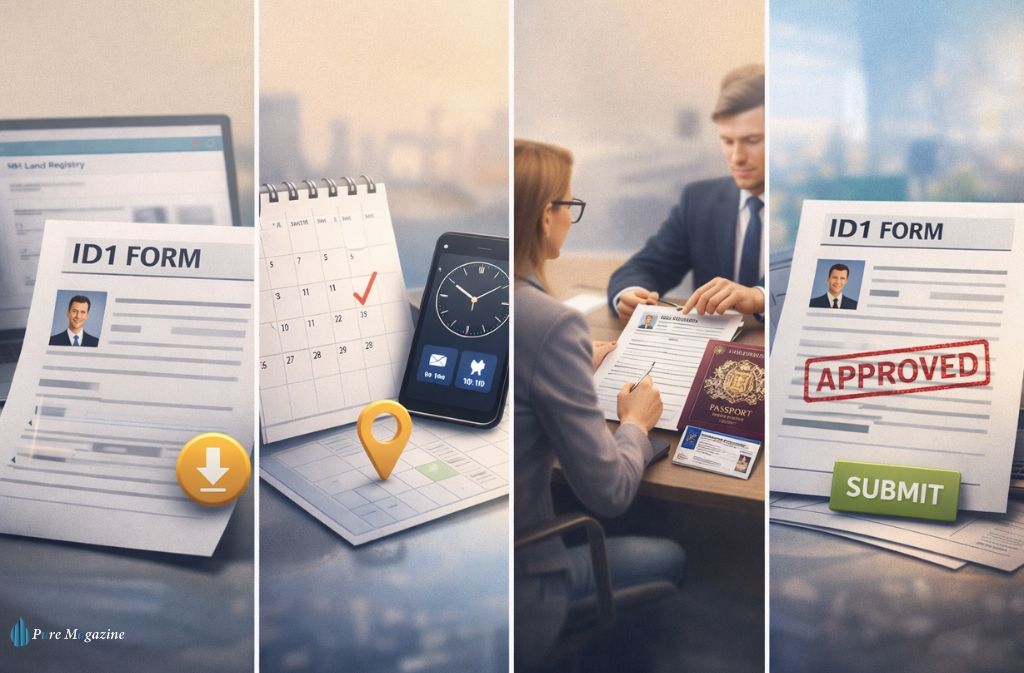
Always use the latest version from HM Land Registry. Outdated forms are still submitted — and still rejected.
Step 2: Complete Section A Carefully
Your details must match your ID exactly. Spelling, initials, and address format matter more than people expect.
Step 3: Book Verification
Arrange an in-person appointment with an authorised verifier.
Step 4: Attend Verification
Bring original documents and your photograph. The verifier completes and signs the certificate section.
Step 5: Submit With Your Application
The ID1 form must be sent with the Land Registry application, not separately.
Common Mistakes That Cause Rejection
These are the issues Land Registry examiners flag most often:
- Using an expired passport or driving licence (even something this small can halt an application)
- Address mismatches between documents
- The form is being verified by the wrong person — often an accountant or estate agent
- Missing signatures or dates
- Submitting an outdated version of the form
In many cases, applicants only find out weeks later, when the Land Registry raises a requisition and everything pauses.
What Happens If You Submit an ID1 Form Incorrectly?
The application doesn’t fail quietly.
HM Land Registry raises a requisition, sets a deadline for correction, and puts the application on hold. If the issue isn’t resolved in time, the application can be cancelled entirely — meaning fees, time, and paperwork are lost.
This is why ID1 errors often feel disproportionate. A small mistake can stall a much bigger transaction.
Real-World Example
Scenario: A homeowner transfers 50% of a property to their spouse without using a solicitor.
What went wrong: The ID1 form was verified by an accountant.
Outcome: Application rejected. Re-verification was required.
Fix: A licensed conveyancer verified the form correctly. The updated application was accepted within 10 working days.
Special Cases: Channel Islands & Overseas Applicants
If you’re based in the Channel Islands or overseas, a notary public is usually required. Some embassies can assist, but availability varies, and appointments can take time.
Planning this early avoids last-minute delays.
Also Read:
2026 Best Practices & What’s Changing
- Greater scrutiny around identity fraud
- More consistency checks between ID1 forms and application data
- Continued reliance on in-person verification
Digital identity tools are expanding, but ID1 remains mandatory for many Land Registry applications as of 2026.
FAQs
Q1. Do I need a solicitor to complete an ID1 form?
No. You do not need a solicitor to complete the ID1 form itself. However, you must use a qualified professional—such as a solicitor, licensed conveyancer, chartered legal executive, or notary public—to verify your identity before submitting the form to HM Land Registry.
Q2. Who can sign or verify an ID1 form?
Only certain professionals can verify and sign an ID1 form:
- Solicitors
- Licensed conveyancers
- Chartered legal executives
- Notary publics
Friends, family members, estate agents, or accountants cannot sign the ID1 form. If they do, the Land Registry will reject the application.
Q3. What is an ID1 form used for?
The ID1 form is used to verify the identity of private individuals involved in certain property transactions where no solicitor or conveyancer is acting. This allows HM Land Registry to safely process ownership changes, transfers, and probate registrations.
Q4. How long is an ID1 form valid?
HM Land Registry does not set a fixed expiry for ID1 forms. As a best-practice guideline (not a rule), most professionals recommend that verification is done within three months of submitting the form.
Q5. Can I verify an ID1 form online?
No — ID1 verification must be done in person with original documents. Trying to submit an online or scanned ID1 form will result in rejection. This is a common reason for delays in property transactions.
Q6. Is the ID1 form required for every property transaction?
No. The ID1 form is only required when no conveyancer or solicitor is acting on the transaction. If a licensed professional is handling your property sale or transfer, they will complete the verification themselves.
Conclusion
The ID1 form looks simple. In practice, it’s unforgiving.
Get the verifier wrong or submit mismatched documents, and the whole transaction slows down. Done properly, though, it’s a straightforward step that keeps your Land Registry application moving.
Key points to remember:
- You don’t need a solicitor for the whole process
- You do need an authorised professional for verification
- Costs are manageable with planning
- Accuracy matters more than speed
Handled correctly, the ID1 form does its job — quietly and without drama.
Related: Tax Consolidation Act 1997 Explained: 2026 Guide for Ireland