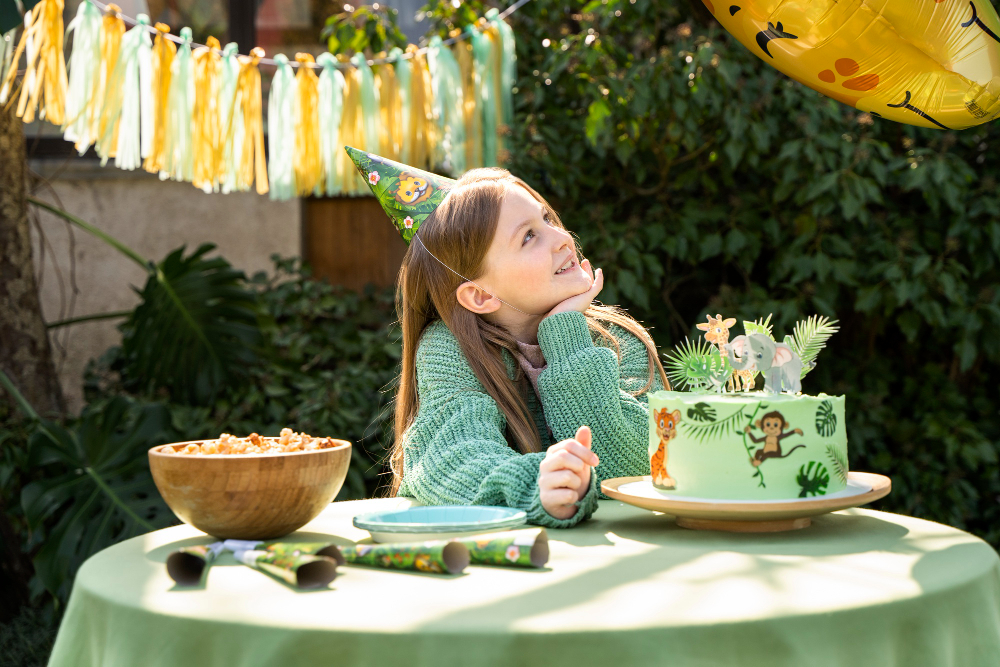
Many children who are passionate about animals don’t dream of having yet another zoo cake. They would prefer to actually experience being part of the zoo. Feeding an animal, cradling a baby animal, observing a keeper feed an animal and explain the purpose of what the creature is doing, these are the types of interaction that money should be spent on. Not only is there no wastage of food, but that animal-centric birthday creates a memory more likely to stick than those based on inanimate activities.
Age and Species: Matching the Child to the Encounter
Not every animal encounter is suitable for every age group, and you should probably consider that before booking anything.
Bigger, more unpredictable animals, big cats, primates, large reptiles, tend to have more age and height restrictions, and the keeper’s attention is inevitably split between the child and the animal’s safety. Smaller, calmer species generally make for better birthday experiences for kids under ten. They’re easier to interact with, less intimidating for hesitant kids, and the encounters tend to run more smoothly.
Capybaras are a good example of this. They’ve become really popular with kids who watch wildlife shows online, the world’s largest rodent, famously calm, and oddly photogenic. A capybara feeding session booking is the sort of experience that lands well because the child already has the context for it. They know what a capybara is. Meeting one in person, feeding it by hand, is the moment where something they’ve watched on a screen becomes real.
Behind-the-Scenes Access Changes the Whole Experience
While standard zoo admission is just fine for a casual family day out. For a birthday, it’s not going to cut it. Fundamentally, the child walks past all the same enclosures that they would on any weekend, with everyone else, and nothing about the day signals “this one is special”.
Behind the scenes experiences usually start with the child being walked around for an hour or more to all the same enclosures, but then things become different. The child is allowed to get up close, to help prepare a treat feed (or to see a health check, etc.), and to ask any questions they like of the keeper without having to fight with a dozen other voices to be heard. The group size is usually smaller, so there’s access to the keeper, to the animals, and quite often to being able to touch something (a bit of fur, or the back of a bug) that nobody else has been allowed to touch that day.
This is the kind of experience where the birthday thing really rings true with a child. It doesn’t matter how much you forked out to the zoo, or whether you came six months before the birthday or six months after, the seven-or-so-year-old isn’t thinking about how new the lego set is, they’re still pulling out the photo where they’ve been allowed to put a glove on and touch the side of a turtle. Or a snake. Or the crate for the-critically-endangered-animals that they noisily bang into after being grabbed by the collar of their shirt for getting too close to the snake, and the-for-some-reason-not-critically-endangered-butterflies.
Conservation Credentials Are Worth Checking
Celebrating a birthday at a zoo is not just fun, it is part of a larger initiative. Accredited zoos, of which there are hundreds across the world, including the likes of San Diego and Taronga in Australia, are committed to global species sustainability, breed animals under rigorous programs, and fund current conservation work with the profits they make on guests wanting to see them.
The latest study published in the journal “Science” found that there are one billion visits to zoos each year. Parents who take the time to search for their local zoo on an association’s website (like The World Association of Zoos and Aquariums) to know if their animals were acquired through reputable sources are more educated about what goes into their visit than they would suppose. According to a study in Conservation Biology of zoogoers in Australia, those who attend active visitor education events, such as talks or feeding sessions, report the greatest change in their conservation knowledge and the strongest agreement with wildlife conservation statements.
What to Look For When Comparing Experiences
How do you know if an animal experience is worth it? Well, here are a few qualifiers to consider over and above the “no beheadings” rule of thumb:
A specific keeper assigned to the session. Not a guide. A keeper in direct contact with that species who is willing and able to answer off-the-wall questions from an inquisitive eight-year-old.
Real engagement, preparing food, checking enclosures, even scratching that particularly itchy spot. Multi-sensory experiences are far more memorable than flat, look-don’t-touch exhibitions of cute baby wildlife. A photo can’t capture the musky smell of a tiger, the heft of a rabbit in a child’s arms, or the electric thrill of a cheetah racing towards introduced prey, ready to claim its meal.
Clarity regarding safety. Every worthwhile encounter operates under stringent guidelines. A responsible operator will happily detail these without draining the magic from the memory by turning the event into a sterile classroom lesson. The child should understand what to expect and why limitations are in place without being frightened or disenchanted.
The Real Gift
The most valuable gift you can give to a child obsessed with animals isn’t a product or a party but rather an experience with the animal they love, given by someone knowledgeable about that animal. A dedicated, well-organized encounter at a zoo with appropriate conservation programs achieves this more effectively than most other things: you make the child feel special, you link them with the real thing, and you sow a seed that frequently germinates. And that, pound for pound, is better value than a bouncy castle.
For more, visit Pure Magazine