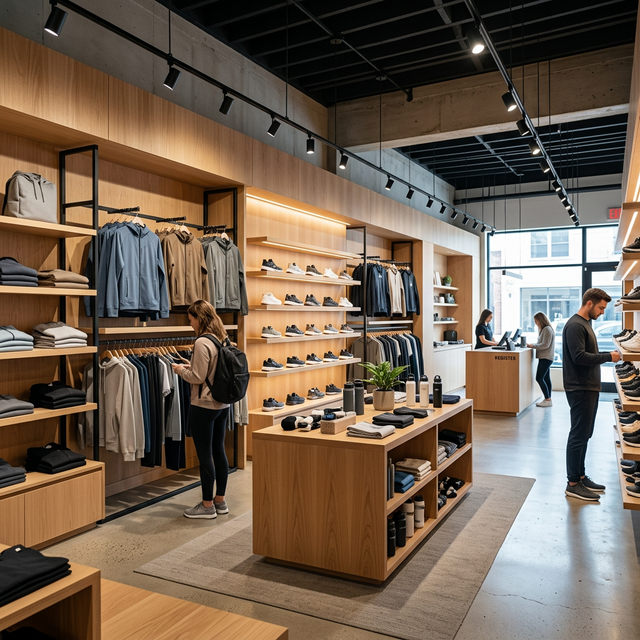
The sportswear market in Europe has never been more competitive – or more structurally interesting for independent retailers. Demand for premium athletic apparel and footwear continues to grow across demographics, yet the traditional path to stocking Nike, Adidas, Puma, and comparable labels has become increasingly difficult for smaller multi-brand stores and boutiques.
Understanding how successful independent sportswear retailers actually source their inventory – beyond the official distributor channel – reveals a more nuanced and strategically sophisticated picture than most industry commentary suggests.
The Official Distributor Model and Its Limitations
The conventional path to stocking premium sportswear brands involves establishing a direct relationship with the brand’s official national distributor, meeting minimum order requirements, committing to seasonal buy-ins months in advance, and accepting the brand’s terms on pricing, exclusivity zones, and visual merchandising.
For large sporting goods chains, this model works well. For independent retailers – boutiques, multi-brand sports shops, specialist concept stores – it presents a series of structural problems.
Minimum order values for a single brand can run from several thousand to tens of thousands of euros per season. These orders must be placed up to six months before delivery, with limited ability to adjust based on emerging demand signals. And with major brands tightening their authorized retailer networks in recent years to protect flagship and direct-to-consumer channels, many independents find their distributor access restricted or eliminated.
The result is a growing population of independent retailers who want to carry premium sportswear but cannot, or can no longer, access it through official channels.
The Role of Excess Inventory in the Wholesale Ecosystem
Here is a structural feature of the sportswear supply chain that most retail observers underestimate: major athletic brands routinely overproduce. Production planning models built around projected demand regularly collide with actual consumer behavior, resulting in significant volumes of authenticated, current-season or near-current-season stock that needs to move outside primary retail channels.
This excess inventory – including genuine Nike wholesale stock, Adidas overproduction, Puma inventory from cancelled retail orders, and equivalent supply from similar brands – enters the secondary B2B market in large, predictable volumes every season. The products are authentic, typically include full-size runs, and carry retail tags at their original recommended prices. They simply need to reach buyers through an alternative route.
For independent retailers, this creates a significant opportunity – provided they can access it reliably and at commercially viable pricing.
How the Access Problem Has Been Solved
Historically, accessing surplus premium sportswear stock required either personal relationships with distributors willing to offer their overstock, attendance at trade fairs and liquidation events, or working through intermediaries who extracted their own margin before passing stock to end buyers.
Each of these routes was characterized by unpredictability, high minimum values, limited transparency on product availability, and no ability to plan or repeat successful purchases.
Over the past several years, the emergence of private B2B wholesale platforms has changed this substantially. These platforms function as curated, verified marketplaces where brands, distributors, and large retailers can list excess inventory for purchase by a vetted network of B2B buyers – boutiques, multi-brand stores, resellers, and increasingly, live commerce operators.
The critical features that distinguish effective platforms from generic stock directories are buyer verification (ensuring the marketplace remains trade-only), confidentiality infrastructure (protecting supplier brand equity), and real-time inventory visibility with the ability to act quickly on available stock.
Retailers looking to access Nike wholesale stock and similar premium athletic inventory through this type of platform consistently report two advantages over traditional sourcing: lower effective wholesale cost – typically arriving at a discount of 40-75% below retail, depending on stock category – and the ability to buy based on current demand signals rather than seasonal forecasts made months earlier.
What Successful Sportswear Retailers Do Differently
The independent retailers generating the best results from off-price sportswear sourcing share a handful of consistent practices:
They separate brand access from the sourcing channel. The goal is to carry the brands that their customers want. The channel through which they source that inventory – official distributor, off-price platform, or a combination – is a business decision, not a brand loyalty question.
They track sell-through by brand and by model. Not all Nike product performs equally in a given market. Footwear from specific product lines may outsell apparel. Particular silhouettes move faster than others. Retailers who know their actual sell-through data by SKU make better buying decisions on both primary and secondary market channels.
They use off-price buying to fund primary-channel investment. The margin recovered from sourcing at 25-30% of retail versus 45-50% of retail generates capital that can be reinvested in the business, including in fresh-season distributor relationships for brands where official access is available and valuable.
They act fast on platform inventory. Premium sportswear stock on private B2B platforms moves within hours of listing. Retailers who check new inventory regularly – and have clear decision criteria for what to buy – capture the best available stock before competitors.
The Verification Question
One concern independent retailers raise about off-price sportswear sourcing is product authenticity. It is a legitimate concern: the wider wholesale market includes both authenticated excess inventory and counterfeit products misrepresented as legitimate overstock.
The distinction lies in the sourcing channel. Private B2B platforms that operate with supplier verification – onboarding only authenticated brands, distributors, and legitimate retailers with verifiable business credentials – provide a structural guarantee against counterfeit exposure that open markets cannot offer. Product sourced through verified private platforms comes with documentation of the chain of custody, and buyers can typically trace stock back to the original brand or distributor.
This authentication infrastructure is one of the defining characteristics of the current generation of private B2B wholesale platforms, and one reason independent retailers are increasingly treating them as a primary sourcing channel rather than a supplementary one.
For independent retailers and sportswear boutiques looking to source premium athletic brands at competitive wholesale prices, private B2B platforms offering verified excess inventory represent one of the most significant structural opportunities currently available in the European market.
For more, visit Pure Magazine