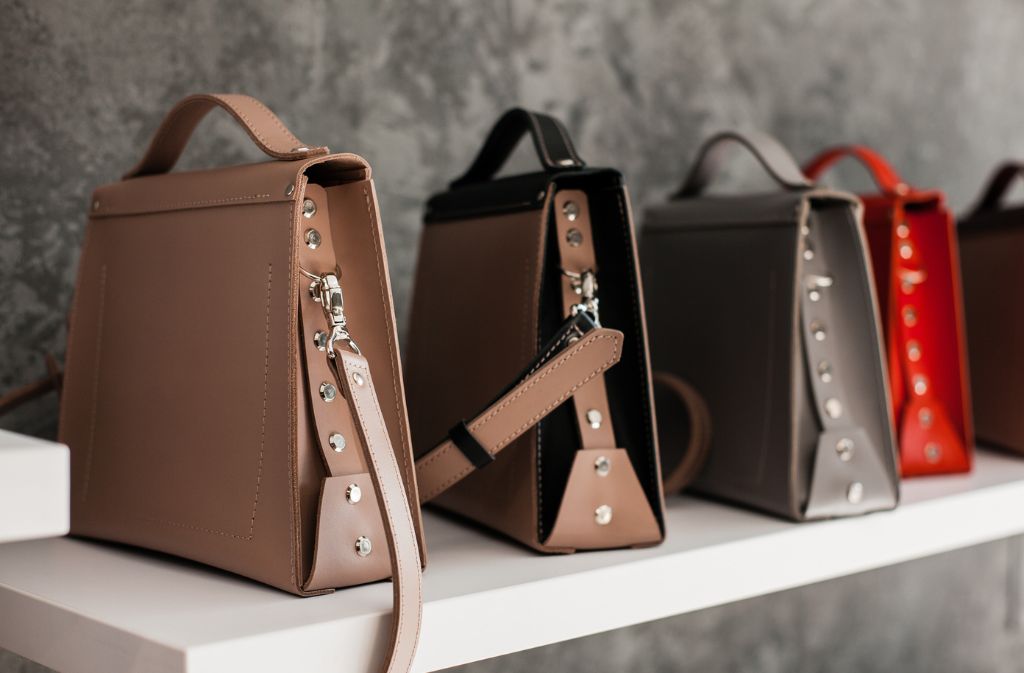
Walk into any high-end boutique and pick up a meticulously crafted leather handbag, a bespoke wallet, or a pair of handmade Oxford shoes. Run your fingers along the edges and the seams. You will likely notice something counterintuitive: despite being made from a notoriously thick, rugged material, the edges are folded gracefully, and the overlapping seams sit perfectly flush against one another.
Now, compare that to a beginner’s DIY leather project, which often features blocky, rigid edges stacked like pieces of a club sandwich.
The difference between the two is not simply the quality of the leather, nor is it the skill of the person holding the sewing needle. The secret to the sleek, flowing geometry of luxury leather goods is a masterclass in hidden material removal. It relies on an invisible mechanical process designed to solve a fundamental problem of physics: you cannot fold thick leather without creating massive, unmanageable bulk.
The Physics of the Fold
Leather is a dense, organic matrix of collagen fibers. Its thickness is typically measured in ounces or fractions of a millimeter. Consider a standard leather wallet made from a modest 2- millimeter-thick calfskin.
If a craftsman wants to fold the edge of that leather over to create a clean, finished rim (a “turned edge”), that 2mm edge suddenly doubles to 4mm. If that folded edge, then sewn to another 2mm panel to form the pocket; the sewing machine is suddenly forced to punch through 6mm of solid hide.
Not only is this incredibly difficult to sew, but the resulting seam will be incredibly stiff, heavy, and visually clunky. It ruins the delicate silhouette of the product. To solve this, the craftsman must violate the structural integrity of the leather at the exact point of the fold. They must remove half of the leather mass, but only at the margins.
The Art of Edge Thinning
Historically, reducing the thickness of a leather edge—a process known in the trade as “skiving”—was done entirely by hand. A master leatherworker would use a razor-sharp, rounded blade called a head knife or a French skiver to manually shave away ribbons of the flesh side of the hide.
Hand-skiving requires years of muscle memory. Because leather is an organic material, its density changes wildly even within a single hide. The back of the animal is dense and firm, while the belly is spongy and stretchy. A craftsman had to adjust the angle and pressure of their blade by instinct to achieve a perfectly uniform taper. Hand-skiving is an art form, but in a production environment where consistency and speed are paramount, it is a massive logistical bottleneck.
Enter the Bell Knife
To achieve absolute mathematical consistency in modern leathercraft, the industry relies on highly specialized engineering. For those outside the trade who might ask what is a skiving machine, it is best understood as a highly calibrated, motorized surgical tool designed to precisely shave away the underside of a leather edge down to the micrometer.
The heart of this machine is not a straight blade, but a “bell knife”—a razor-sharp cylinder of high-carbon steel shaped like a bowl or a bell. This blade spins horizontally at incredibly high speeds.
To operate it, the craftsman feeds the edge of the leather into the machine. A rough, motorized stone feed-roller grabs the bottom of the leather and pulls it aggressively toward the spinning bell knife. Above the leather sits a rigid metal “presser foot” that pins the material down against the blade.
The Geometry of the Cut
The brilliance of this machinery lies in its adjustability. By manipulating the angle and height of the presser’s foot relative to the spinning blade, the craftsman can dictate the exact geometry of the material being removed.
- The Bevel: If the craftsman needs to join two pieces of leather together seamlessly, they will angle the foot to create a wedge-shaped skive. They taper the edge of piece ‘A’ from 2mm down to paper-thin. They do the same to piece ‘B’. When the two wedged edges are overlapped, they interlock perfectly, creating a single joint that remains exactly 2mm thick. This is known as a lap seam, and it is the foundation of high-end shoemaking.
- The U-Skive: If the craftsman is making a rigid leather briefcase and needs the heavy bridle leather to fold exactly at 90 degrees, they will use the machine to carve a shallow, U-shaped trench straight down the middle of the flesh side. This removes the bulk at the hinge point, allowing the thick leather to fold sharply like a piece of cardboard without cracking the exterior grain.
- The Feather Edge: For a delicate rolled edge on a handbag, the machine is set to taper the leather down so thin that it becomes translucent, resembling a feather. This allows the edge to be folded over onto itself with practically zero added thickness.
The Invisible Foundation of Luxury
We rarely appreciate the things we cannot see. When we admire beautifully constructed leather goods, our eyes are drawn to the rich color of the dye, the polished brass hardware, and the perfectly spaced stitches.
However, the elegance of the final product relies entirely on what was removed before the first stitch was ever cast. The flowing lines and seamless joins of luxury goods are born from the brutal, precise, and calculated shaving of organic material. It is a reminder that in the world of high-end manufacturing, true mastery is often defined not by what is added to the product, but by what is skillfully taken away.
For more, visit Pure Magazine