The concept of a traditional gaming setup is being completely redefined in 2026. For decades, “serious” gaming meant being tethered to a specific desk, surrounded by a tangle of cables and the constant hum of cooling fans. Today, the rise of high-performance remote desktop gaming has shattered those physical boundaries. By decoupling the processing power from the screen in your hand, you can now enjoy ultra-high-definition experiences on devices that were never designed to handle AAA titles.
Whether you are a digital nomad, a professional managing an SEO agency from a local cafe, or a student with a basic laptop, the ability to tap into a high-end GPU from across the house—or across the country—is a true technological shift.
The Architecture of a Modern Gaming Stream
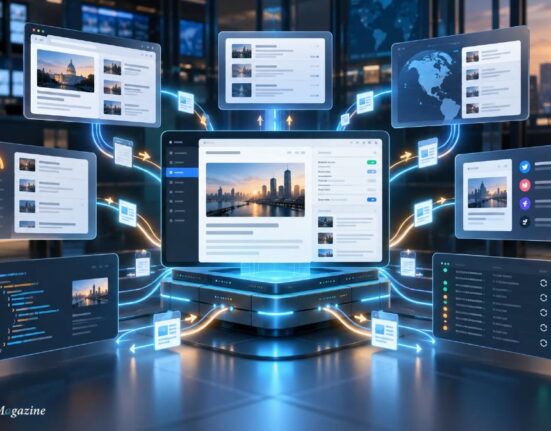
To the uninitiated, playing a fast-paced game over a network might seem like a recipe for lag and frustration. However, the underlying technology has matured significantly. Modern streaming protocols work by capturing the frame buffer of your host PC, encoding it into a highly compressed video stream, and sending it to your client device in a matter of milliseconds.
For this to feel seamless, the software must be exceptionally efficient at “Low Latency Encoding.” When you explore the best available solutions, you’ll find that top-tier platforms leverage hardware acceleration from modern GPUs to ensure the video is compressed and transmitted almost instantly. This means that when you move your mouse or press a key, the action happens on the screen without any perceptible delay.
Why Mobility is the New Gold Standard
The advantages of moving toward a remote-first model extend far beyond just being able to play in bed.
- Hardware Independence: You no longer need to spend thousands of dollars on a “gaming laptop” that will be heavy, hot, and have poor battery life. Instead, you can use a sleek, fanless ultrabook and simply stream the power from your stationary home rig.
- Centralized Gaming Hub: All your games, mods, and save files stay in one place. You don’t have to worry about syncing game data across multiple devices or managing limited storage on a portable handheld.
- Eco-Friendly and Silent: High-end GPUs consume a massive amount of power. By streaming, the heat and noise stay in a dedicated office or a ventilated closet, leaving your immediate environment cool and quiet.
Professional Productivity Meets High-End Performance
While we often talk about these systems in the context of entertainment, the implications for professional workflows are massive. For agency owners and digital marketers, the same technology allows for a “Virtual Office” experience that is both secure and incredibly powerful.
By choosing to download StarDesk remote, you aren’t just getting a tool for games; you are getting a secure portal to your most powerful workstation.
- SEO Auditing: Run resource-heavy crawling software or complex data analysis tools on your home PC while interacting with them on a tablet during a client meeting.
- Video Content Creation: Edit 4K video clips using your home PC’s rendering power, even if you are working from a basic laptop in a hotel room.
- Security: Since the data never leaves your host machine, you don’t have to worry about sensitive client information being stored on a portable device that could be lost or stolen.
Optimizing Your Network for the Perfect Session
To achieve a “local” feel, your network environment needs to be tuned for stability. Here is how to ensure your stream stays rock-solid:
- Prioritize the Host Connection: Your host PC is the source of the stream. It should always be connected via a wired Ethernet cable. This provides a consistent “upload” path that Wi-Fi simply cannot match for reliability.
- 5GHz/6GHz for Clients: If you are playing on a mobile device or a handheld, make sure you are using a modern Wi-Fi band. The older 2.4GHz band is prone to interference from other household gadgets, leading to “micro-stutters.”
- Frame Rate Sync: Match the frame rate of the game to the refresh rate of your client device. If your phone has a 60Hz screen, cap the game at 60 FPS. This prevents the network from wasting bandwidth on frames that your screen can’t even display.
The Future of Hardware-Agnostic Computing
We are rapidly approaching a future where the actual computer is a service rather than a physical object. In this world, the screen is just a window, and the “power” lives in the cloud or on a centralized home server. This democratization of technology means that the quality of your digital life is no longer determined by how much hardware you can carry in your backpack.
By utilizing advanced streaming protocols, you can effectively “future-proof” your mobile devices. Instead of buying a new phone or tablet because it “can’t run” the latest software, you simply continue to use it as a high-quality terminal for your primary powerhouse.
Conclusion: Embrace the Freedom of Remote Play
The shift toward a more flexible, mobile way of interacting with high-performance tech is inevitable. Whether you are looking to clear a difficult level in an RPG from your balcony or you need to manage a complex digital marketing campaign while traveling, the tools are ready for you.
Take control of your digital environment today. By taking the time to properly configure your software and optimizing your local network, you are removing the barriers between you and your most powerful tools. The desk is no longer your limit—it’s just one of the many places you can choose to work and play.
For more, visit Pure Magazine