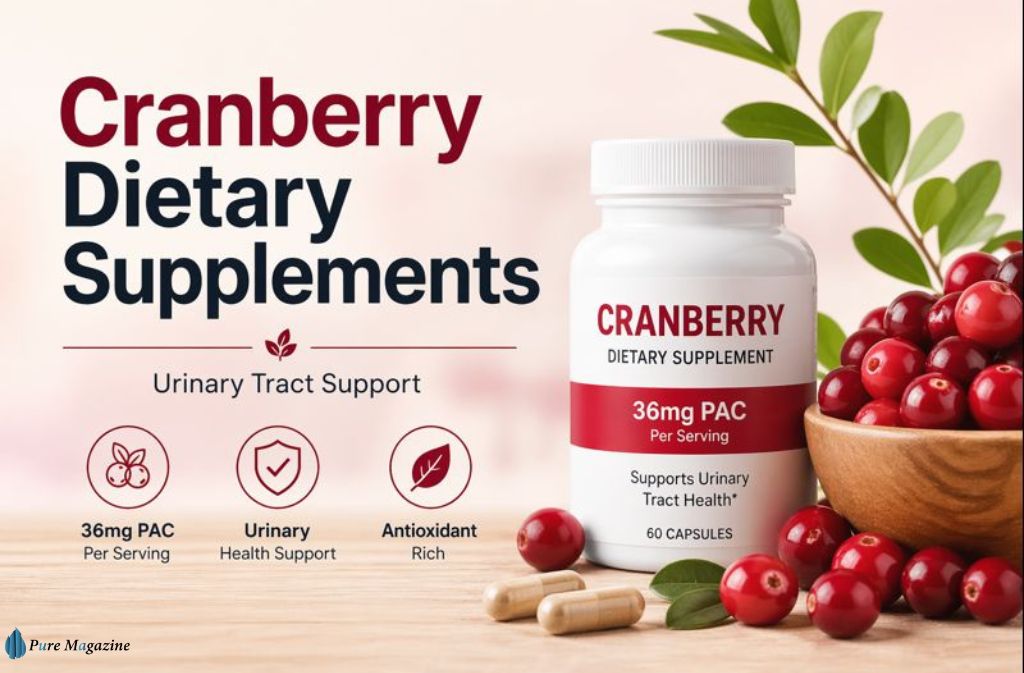
Walk into any pharmacy or health food store, and you’ll find cranberry supplements making wildly different claims. One bottle shouts “500mg cranberry.” Another says “10,000mg equivalent.” A third promises “maximum strength urinary support.” None of them mentions the number that actually matters.
That number is 36mg — the daily PAC content that evidence-based buyers now look for before anything else on the label.
When we look at how the cranberry supplement market has shifted in 2026, the clearest change isn’t in the products themselves — it’s in the buyers. People are reading past the front-label milligrams and asking a better question: how many Type-A proanthocyanidins does this actually contain? The brands that answer that question clearly are earning trust. The ones that don’t are increasingly being passed over.
This guide explains why PAC content matters, how to read a cranberry label quickly, which formats work best, what the interactions and risks are, and when cranberry simply isn’t enough.
What Are Cranberry Dietary Supplements?
Cranberry dietary supplements are capsules, tablets, gummies, powders, or softgels made from cranberry fruit or standardised cranberry extract, primarily used to support urinary tract health and provide antioxidant compounds.
Their appeal is straightforward: many people want the relevant compounds in cranberries without drinking sweetened juice daily. Supplements can deliver concentrated cranberry extract in a consistent dose, without the sugar load, refrigeration requirement, or tart taste that makes juice an impractical daily habit for most people.
Common reasons people buy them: urinary tract wellness support, bladder health maintenance, daily women’s health routines, antioxidant intake, and travel convenience.
The PAC Problem: Why Milligrams Can Be Misleading
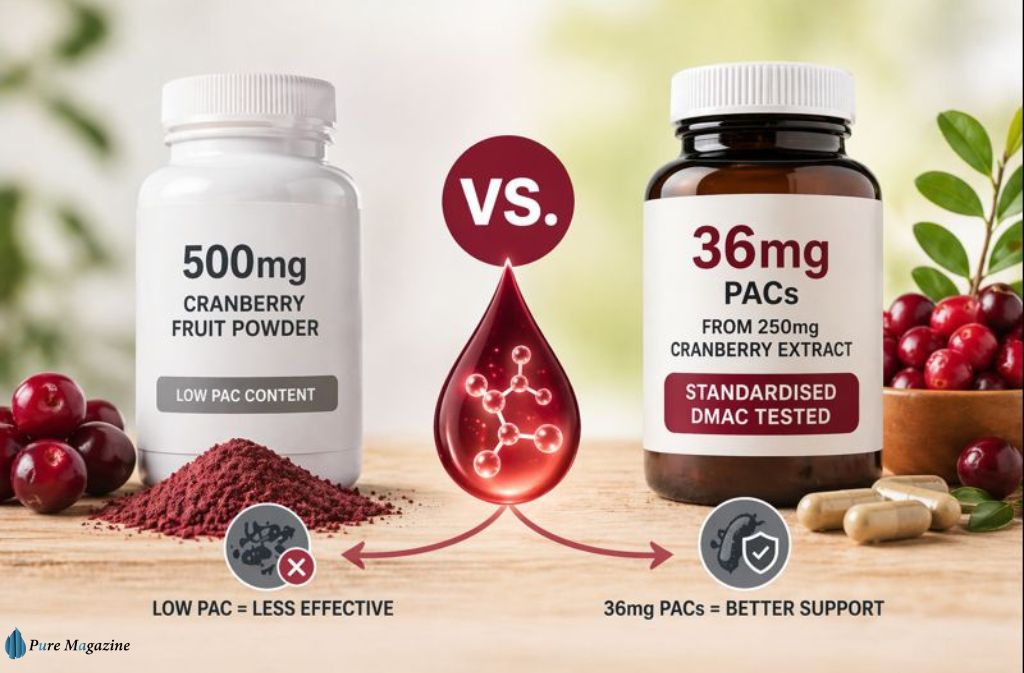
Here’s the issue with the “500mg cranberry” label that most guides don’t explain clearly enough.
Cranberry fruit powder and cranberry extract are not equivalent. A supplement containing 500mg of dried cranberry fruit powder may contain almost no active PACs — the compounds actually linked to urinary tract benefits. A supplement containing 250mg of standardised cranberry extract may provide a precisely measured 36mg of Type-A proanthocyanidins.
The second product is almost certainly more effective for urinary tract support, even though the milligram number on the front label is smaller.
PACs — Type-A proanthocyanidins — are the specific cranberry compounds most associated with urinary tract support. The mechanism is not antibiotic-like. Think of it as a non-stick effect: PACs appear to prevent certain bacteria (particularly E. coli) from adhering to the urinary tract lining, making them more likely to be flushed out rather than establishing an infection. A 2023 Cochrane Review on cranberries for preventing urinary tract infections found a modest but meaningful reduction in UTI recurrence with cranberry products — specifically noting that products with higher PAC content performed more consistently than lower-potency alternatives.
36mg PACs daily is the benchmark that has emerged from this research — the dose level most consistently associated with meaningful effect. The testing standard that matters is DMAC (4-dimethylaminocinnamaldehyde) — a specific method for measuring Type-A PAC content. Products that don’t specify their testing method or PAC content by DMAC analysis can’t reliably confirm they’re delivering what the evidence supports.
How to Read a Cranberry Supplement Label in 10 Seconds
| Look For | Be Cautious With |
|---|---|
| “Cranberry extract” (not just fruit powder) | Huge mg claims without PAC disclosure |
| 36mg PACs are clearly stated | Proprietary blends hiding PAC content |
| DMAC-tested PAC content | Added sugars in gummies |
| Third-party quality verification | No sourcing information |
| Standardised formula | Vague “equivalent” claims |
The “10,000mg equivalent” language deserves specific attention because it’s particularly misleading. This phrasing compares the supplement to fresh cranberry fruit by weight, which tells you almost nothing about active PAC content, since fresh fruit varies enormously in PAC concentration, and the comparison is made against a reference that isn’t standardised anywhere.
Cranberry Supplement Benefits: What the Evidence Actually Supports
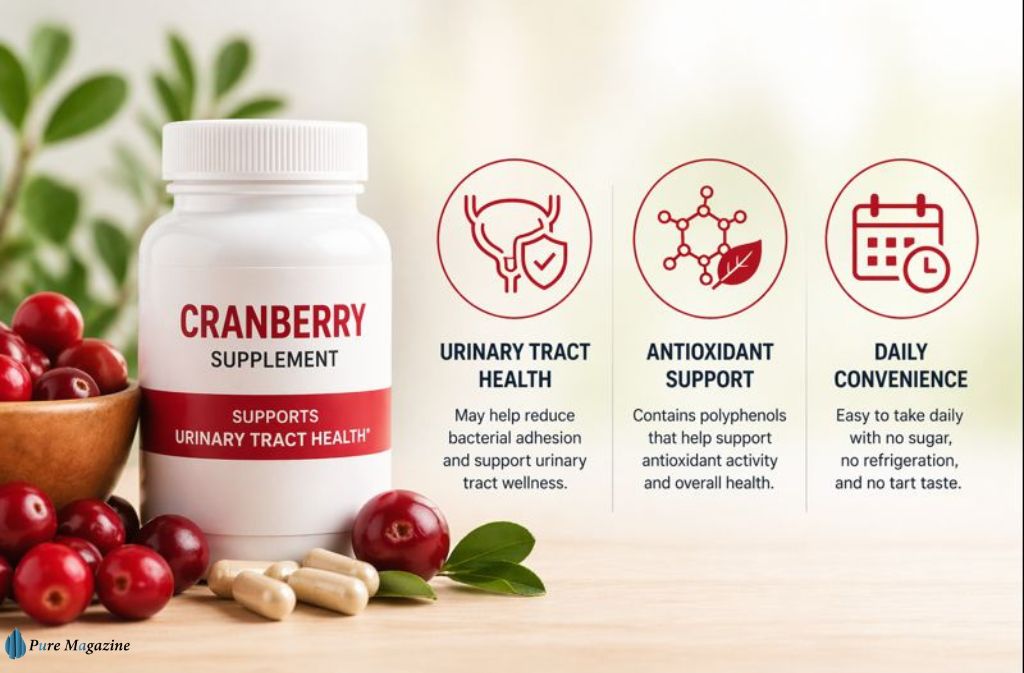
Urinary Tract Health
The mechanism — PAC-mediated reduction in bacterial adhesion — is the best-supported application. This is preventive support rather than treatment. Cranberry supplements may help reduce the frequency of recurrent UTIs in people prone to them; they don’t treat an active infection. That distinction matters enormously for setting appropriate expectations and knowing when to seek medical care instead.
Antioxidant Support
Cranberries contain polyphenols that contribute to antioxidant capacity. This is a genuine secondary benefit, though not a unique one — many fruits and vegetables provide similar antioxidant activity. It’s not a primary reason to choose cranberry supplements specifically over other antioxidant sources.
Convenient Daily Routine
Consistency is where supplements genuinely outperform juice for most people. No refrigeration, no sugar load, no tart taste barrier, no caloric contribution. For something used as daily preventive support, convenience is a real factor in whether people actually use it.
Cranberry Extract vs Cranberry Juice: Honest Comparison
| Factor | Cranberry Extract | Cranberry Juice |
|---|---|---|
| PAC Potency | Often higher, measurable | Variable, often lower |
| Sugar Content | Usually none | Often high |
| Calories | Minimal | Moderate to high |
| Convenience | High | Medium |
| Hydration | No | Yes |
| Consistency | Standardised | Variable |
The juice industry pushed the “mg equivalent” framing for years, partly because standardised extract was more expensive to produce, and the comparison made juice-derived products look potent. In practice, the PAC content of commercial cranberry juice varies widely, and the added sugar in most cranberry cocktail products creates a caloric and glycaemic load that undermines any health framing.
For hydration, drink water. For PAC delivery, a standardised supplement is more reliable.
The 2026 Combination Formula Trend
Multi-ingredient cranberry formulas have grown substantially, and for good reason — they address urinary tract health from multiple mechanisms simultaneously rather than relying on a single pathway.
| Ingredient | Mechanism |
|---|---|
| Cranberry PACs | Reduces bacterial adhesion to the urinary tract lining |
| D-Mannose | Binds to E. coli, facilitating urinary excretion |
| Probiotics | Supports vaginal and gut microbiome balance |
| Vitamin C | Antioxidant support, may mildly acidify urine |
D-mannose and PACs work through different mechanisms — one binds bacteria directly, the other prevents adhesion to tissue — making them genuinely complementary rather than redundant. A 2022 randomised trial in the European Review for Medical and Pharmacological Sciences found that D-mannose plus cranberry extract produced better recurrence prevention than cranberry alone.
If plain cranberry supplementation hasn’t produced noticeable benefit in the past, a combination formula is a reasonable next step rather than simply increasing the cranberry dose.
Bioavailability: How Your Gut Affects PAC Absorption
This is an area most cranberry guides skip entirely. PAC bioavailability varies significantly based on gut microbiome composition — certain gut bacteria metabolise proanthocyanidins into smaller phenolic compounds that may be more readily absorbed. People with more diverse gut microbiomes tend to extract more benefit from polyphenol-rich supplements, including cranberries.
This is why someone eating a diet that supports microbiome diversity — varied plant foods, fermented foods, adequate fibre — may experience more consistent results from the same cranberry supplement than someone on a restricted or highly processed diet. Supporting your microbiome isn’t just general wellness advice in this context; it directly affects how much active compound you absorb from each dose.
Choosing the Right Format
| User Profile | Best Format |
|---|---|
| Most adults generally use | Capsule with 36mg PACs, third-party tested |
| Sensitive stomach | Delayed-release or gastro-resistant capsule |
| Convenience priority | Once-daily softgel |
| Comprehensive urinary support | Cranberry + D-mannose + probiotic combination |
| Budget-conscious | Standard tablet with PAC content clearly disclosed |
Gummies deserve a specific note. Some are effective supplements with legitimate PAC content and minimal sugar. Others are essentially branded candy. Always check PAC content and sugar content on gummies specifically — the format is the most susceptible to marketing-over-substance formulation.
Sourcing and Sustainability in 2026
Conscious consumers in 2026 increasingly ask where the cranberry comes from, not just what it contains. Upcycled cranberry supplements — using the skins and seeds from the juice processing industry that would otherwise be discarded — have become a legitimate and growing category. These can be high in PACs because the skin fraction is particularly rich in proanthocyanidins, and they reduce waste from an industry that produces large quantities of byproducts.
Organic certification and non-GMO sourcing are relevant for buyers prioritising these factors. Neither guarantees better PAC content — a conventional standardised extract can outperform an organic fruit powder on active compound delivery — but sourcing transparency is a reasonable quality signal when two otherwise comparable products are being considered.
Side Effects and Safety
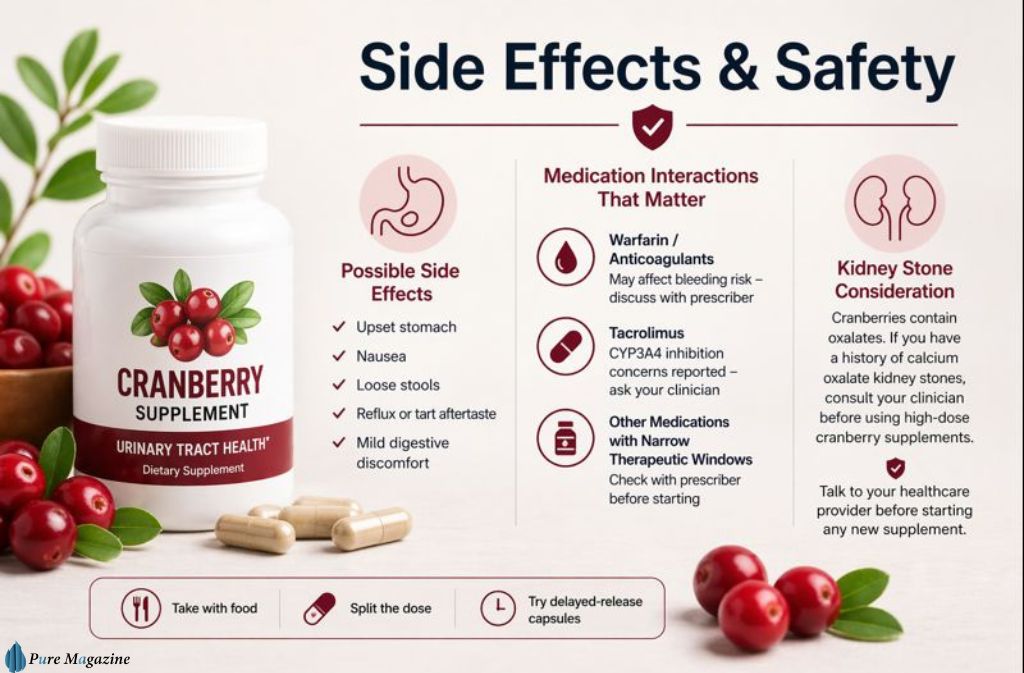
Cranberry supplements are generally well-tolerated. Possible side effects include upset stomach, nausea, loose stools, reflux or tart aftertaste, and mild digestive discomfort — most commonly at higher doses or in people with existing digestive sensitivity.
Taking with food, splitting the dose, or switching to a delayed-release capsule usually resolves digestive issues if they occur.
Medication interactions that matter:
| Medication | Interaction |
|---|---|
| Warfarin/anticoagulants | May affect bleeding risk — discuss with prescriber |
| Tacrolimus | CYP3A4 inhibition concerns reported — ask your clinician |
| Other medications with narrow therapeutic windows | Check with the prescriber before starting |
The warfarin interaction is the most clinically documented. Cranberries contain salicylic acid and compounds that may affect how warfarin is processed, potentially increasing bleeding risk. Anyone on anticoagulant therapy should discuss cranberry supplementation with their prescriber — not after starting, but before.
Kidney stone consideration: Cranberries contain oxalates. For people with a personal history of calcium oxalate kidney stones, high-dose cranberry supplementation warrants a conversation with a clinician before starting. This doesn’t mean cranberry is unsafe broadly — it means individual history matters for this specific risk.
Getting relevant health markers checked before starting supplementation makes particular sense for anyone managing conditions where cranberry’s interactions are relevant.
When Cranberry Supplements Are Not Enough
Cranberry supplements support urinary tract health preventively — they are not a treatment for active infection.
Seek prompt medical care if you experience: fever or chills alongside urinary symptoms, back or flank pain, blood in urine, severe burning or pain during urination, or nausea with urinary symptoms. These presentations suggest a more significant infection that requires proper evaluation and potentially antibiotic treatment. Using cranberry supplements as a substitute for medical care in these situations creates unnecessary risk.
For women managing recurrent UTIs, understanding how broader nutritional status affects immune and mucosal health gives context for a more comprehensive approach — cranberry addresses one mechanism, but overall immune resilience involves multiple systems.
Are You a Good Candidate? Quick Self-Assessment
Consider cranberry supplementation if:
- ☐ You experience recurrent mild UTIs or want preventive urinary support
- ☐ You’re not on warfarin, tacrolimus, or other interacting medications
- ☐ You don’t have a history of calcium oxalate kidney stones
- ☐ You’re not currently experiencing fever, back pain, or blood in urine
- ☐ You’re willing to use a standardised PAC-dosed product rather than a generic berry powder
If any box doesn’t apply, address that consideration before purchasing.
Common Buying Mistakes
Buying based on the largest milligram number on the front label — the clearest example of marketing overriding substance in this category. Ignoring PAC content entirely — the single most important quality metric. Choosing gummies without checking sugar content — some provide good PAC delivery but others are nutritionally closer to a sweet than a supplement. Using cranberries to manage active infection symptoms without seeking medical evaluation. Buying unverified brands without third-party testing — quality control matters for any supplement, and cranberry is no exception.
How to evaluate supplement quality beyond label claims applies directly here — a smaller, well-standardised product consistently outperforms a larger, poorly-characterised one.
Key Terms Glossary
Type-A PACs (Proanthocyanidins): The specific cranberry compounds associated with anti-adhesion activity in the urinary tract. Distinct from Type-B PACs found in other fruits like grapes.
DMAC Method: The gold-standard analytical method (4-dimethylaminocinnamaldehyde assay) for measuring Type-A PAC content in cranberry products. Look for this on quality supplement labels.
Standardised Extract: A supplement in which the active compound concentration has been measured and controlled to a specified level — as opposed to fruit powder, where active content varies.
Bacterial Adhesion: The mechanism by which E. coli and other uropathogens attach to urinary tract tissue. PACs may reduce this adhesion, making infection establishment less likely.
FAQs
Conclusion
Cranberry dietary supplements in 2026 aren’t complicated — but the market has made them look that way. Strip away the competing milligram claims and the “equivalent” language, and the purchase decision becomes simple: find a standardised extract that provides 36mg of Type-A PACs daily, tested by DMAC method, from a brand with transparent quality controls.
Everything else on the label is secondary to that number.
Combination formulas with D-mannose and probiotics offer a meaningful step up for people who haven’t seen results from PAC-only products. Gummies work if the PAC content is verified and the sugar is minimal. And no supplement — however well formulated — replaces medical evaluation when an active infection is the concern.
Buy for what’s inside the capsule. Not for what’s printed on the front of the bottle.
This article is for informational purposes only and does not constitute medical advice. Always consult a qualified healthcare professional before starting any supplement, particularly if you take warfarin, immunosuppressants, or have a history of kidney stones or recurrent urinary tract infections requiring medical management.
Explore our full library of expert-reviewed health and nutrition guides at Pure Magazine.