


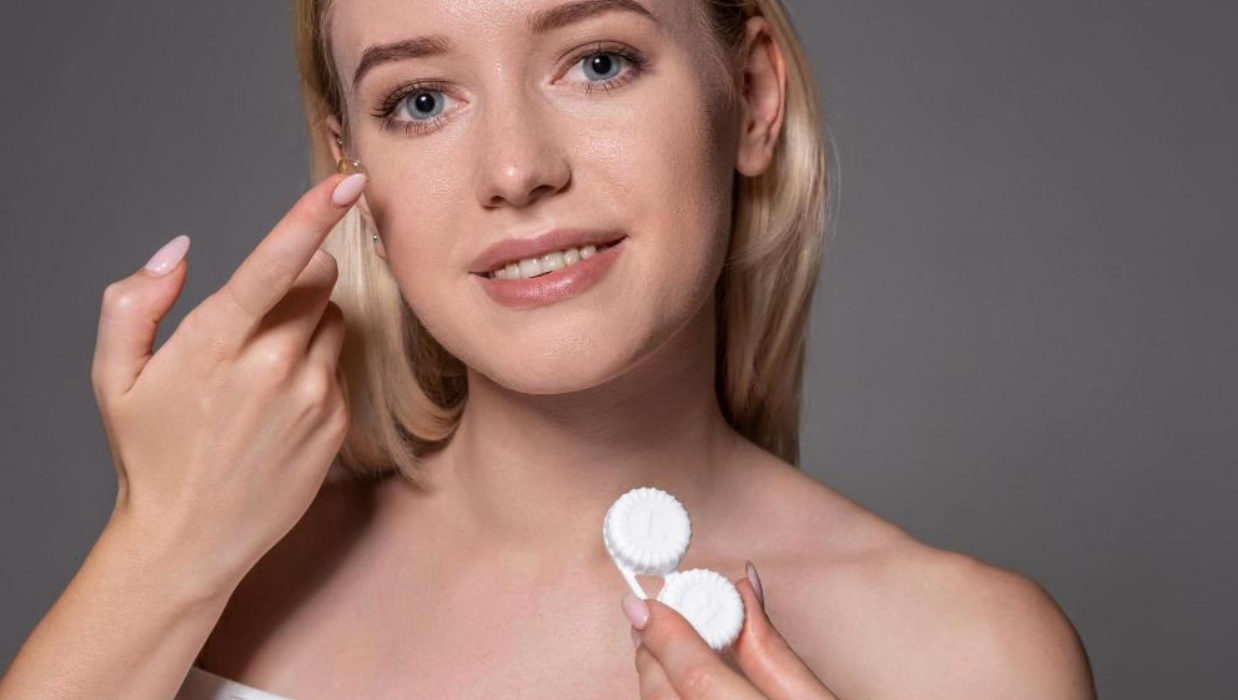
Ask anyone who made the switch from glasses to contact lenses and they will almost always say the same thing. Why did I wait so long?
It is one of those changes that sounds minor on paper but ends up affecting more of your daily life than you expected. No frames sliding down your nose mid-meeting. No fogging up when you walk into a warm room carrying a coffee. Awkward moment trying to wear sunglasses over prescription glasses like some sort of vision-correcting Russian doll.
But the decision is not quite the same for everyone. An adult weighing up their options is having a different conversation than a parent wondering whether their eleven-year-old is actually ready for the responsibility. Both conversations are worth having properly, so let us have them.
What Has Changed in the World of Contact Lenses
If your only reference point for contact lenses is something a relative wore in the nineties, it is worth knowing that things have moved on considerably. The lenses available today are thinner, more breathable, and far more comfortable than older generations. Silicone hydrogel materials, which allow significantly more oxygen to reach the surface of the eye, have become the standard rather than the exception. Daily disposables have made the whole thing dramatically simpler for new wearers. And the range of conditions that can now be corrected with lenses, including astigmatism and the need for different strengths at different distances, has expanded well beyond what was possible even fifteen years ago.
The short version: if you tried lenses before and found them uncomfortable, or if your mental image of them is dated, it is probably worth revisiting.
The Adult Experience: Easier Than Most People Expect
For most adults, getting into contact lenses is less of a big deal than they anticipated. You book a fitting with an optometrist, get your measurements taken, try a pair, learn how to put them in and take them out, and then you get on with it. The insertion part feels strange for about three days and then becomes completely automatic. Most people stop thinking about it pretty quickly.
That said, a few things tend to catch adult wearers off guard:
The dry eye thing is real. If you spend a lot of time staring at screens, and most of us do, your eyes may already be producing fewer tears than they should. Contact lenses sit on the tear film of the eye, so if that film is thin to begin with, some lenses will feel uncomfortable by the afternoon. The fix is usually finding the right lens material rather than abandoning lenses altogether. Daily disposables tend to work well here because there is no protein buildup on the lens surface by the end of the day.
The care routine requires actual commitment. Monthly and two-weekly lenses need to be cleaned and stored properly every single night. Not most nights. Every night. The people who end up with irritated eyes or infections are almost never using bad lenses. They are using good lenses badly. Sleeping in them when you are not supposed to, topping up solution instead of replacing it, keeping lenses past their replacement date because the pack is running low. These habits are the problem, not the product.
Age is genuinely not a barrier. There is a persistent idea that contact lenses are a young person’s thing, which is completely untrue. Multifocal contact lenses exist specifically for people dealing with presbyopia, the gradual loss of close-up focus that tends to start somewhere in the mid-forties. Plenty of people wear contact lenses comfortably well into their sixties and beyond. The main requirement is regular eye checks and honest communication with your optometrist about how your eyes are feeling.
Kids and Contact Lenses: The Question That Actually Matters
When parents ask whether their child is old enough for contact lenses, they are usually asking the wrong question. Age is almost never the real issue. Maturity and motivation are.
Research backs this up. Studies have consistently found that children as young as eight or nine can manage contact lenses successfully when they genuinely want to wear them and have the right support around them. The children who struggle are typically the ones who were not particularly invested in the idea to begin with, or who were handed the responsibility without enough guidance at the start.
So if your child is begging for contact lenses and has demonstrated they can handle basic responsibilities in other areas of their life, the age conversation is probably less important than you think. If they are indifferent or it is more your idea than theirs, it is worth waiting.
A few things that matter specifically for younger wearers:
Sport is usually the catalyst, and it is a good one. Glasses and contact sport are a genuinely awkward combination. Football, rugby, gymnastics, swimming, any activity where glasses become a liability or simply cannot be worn. Contact lenses solve this problem cleanly and make a real difference to both performance and confidence. If sport is the reason your child wants them, that motivation tends to translate into taking the responsibility seriously.
Daily disposables are the obvious choice for kids. No cleaning routine, no storage solution, no risk of contaminated lens cases or lenses being worn for longer than they should be. A fresh lens every morning and it goes in the bin at night. For parents especially, this removes a significant chunk of the worry and simplifies supervision considerably.
The hygiene conversation has to happen properly. Hands need to be washed before touching lenses, every single time without exception. This sounds obvious but it is the step that gets skipped when a child is rushing out the door for school. Building this into the routine from day one matters, and for younger children, parental oversight at least in the early weeks is genuinely useful rather than overprotective.
Prescriptions change faster in children. Young eyes are still developing, which means the prescription that fits perfectly in September might need adjusting by the following spring. Regular eye examinations are important for all contact lens wearers, but they are particularly important for children. Annual check-ups at minimum, and sooner if your child mentions anything feeling off with their vision.
Picking the Right Type of Lens
Once you have decided to go ahead, for yourself or your child, the type of lens matters more than most people realise before they start.
- Daily disposables are the most hygienic option and the simplest to manage. More expensive per lens but cheaper in terms of the accessories you do not need to buy and the infections you are less likely to deal with. Strongly recommended for first-time wearers of any age.
- Monthly lenses suit people who wear lenses consistently every day and are genuinely committed to the cleaning routine. The cost per wear is lower, but the responsibility is higher.
- Toric lenses correct astigmatism and are available across most replacement schedules. If you have been told your astigmatism rules out contact lenses, it is worth getting a second opinion because the technology has improved significantly.
- Multifocal lenses are worth exploring if you are over forty and finding that your near vision is starting to give you trouble. They take a little adjustment but many people get on very well with them.
Do You Have to Give Up Glasses Completely?
No, and most people do not. The majority of regular contact lens wearers still own and use a pair of glasses. Lenses for active days, busy days, days when you want a change. Glasses for early mornings, late evenings, days when your eyes are tired or irritated, or just whenever you feel like it.
Framing it as a permanent either-or choice creates pressure that does not need to exist. Plenty of people find that having both options available is actually the most practical setup, and it means you are never stuck if your eyes need a rest day.
Where to Start
The starting point is always the same regardless of age: a proper fitting with a qualified optometrist. Contact lenses are measured to the specific curvature of your eye and a lens that does not fit correctly will be uncomfortable regardless of how good the material is. The fitting appointment is not optional, and any retailer worth using will tell you the same thing.
Once you have your prescription and lens type sorted, ordering contact lenses regularly becomes one of the more straightforward parts of the whole thing.
The first week feels like a lot. By the second week it feels normal. By the third week you will probably forget you are wearing them at all, which is really the whole point.