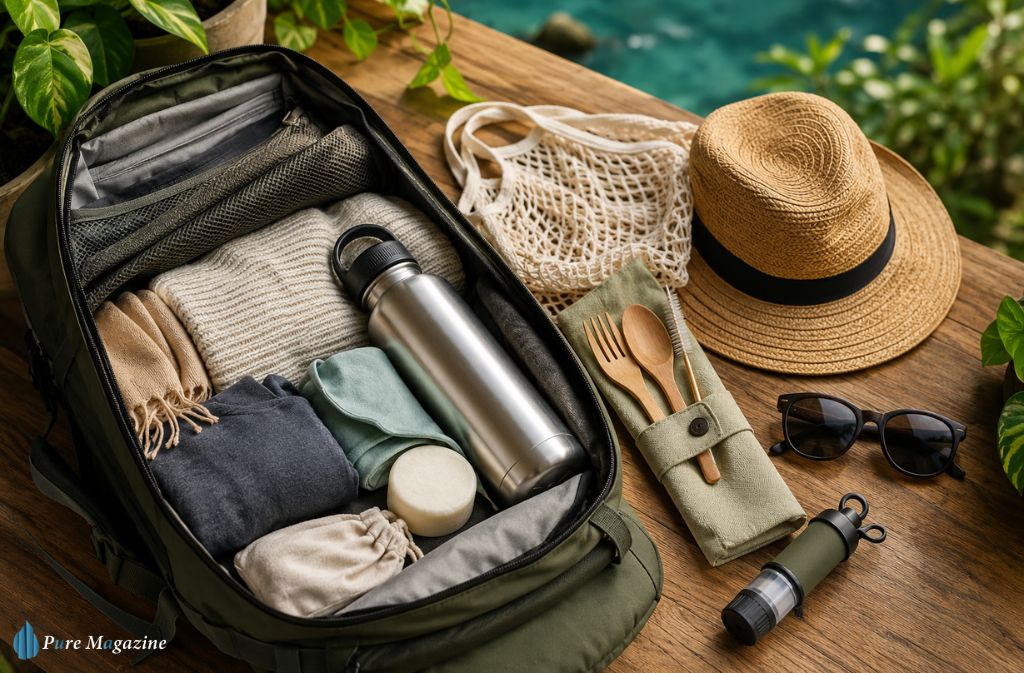
Most eco-friendly packing lists are a bamboo toothbrush and a reusable bag, stretched into 2,000 words. That’s not enough if you’re flying a budget carrier with a 7kg cabin limit, moving through three climates on one ticket, and packing with the extra safety math that solo travel adds. Here’s the version that accounts for all of it.
Why It’s Different When You’re Traveling Alone
Split a trip with a partner or a group and gear gets shared — one filter bottle, one first-aid kit, one set of chargers between you. Solo, you’re carrying the full load, so every extra item costs you twice: once in bag weight, once in whatever it took to make and ship the thing in the first place.
There’s a safety angle too, and most eco-travel content skips it. Solo, you probably want a bit more redundancy than someone traveling with backup — a power source that doesn’t die while you’re finding your way through an unfamiliar city at night, a way to purify water without buying bottled plastic somewhere the tap isn’t safe. The eco version of “just in case” gear tends to be reusable and multi-purpose anyway, so it works in your favor twice over: lighter bag, less waste.
The 7kg Carry-On Problem
Ryanair, AirAsia, Jetstar, Wizz Air — the budget carriers solo travelers actually fly cap cabin bags at 7kg (15 lb), not the 10–12kg you’d get on a full-service airline. That number should drive most of the decisions below, because a genuinely sustainable list and a genuinely liftable one usually end up being the same list.
Bag, clothing, toiletries, and tech (not counting what you wear onto the plane) should land around 5.8–6.4kg with this setup, which leaves a bit of room for a laptop or souvenirs before you hit the limit. Cold-weather trips eat most of that margin.
The Core List, by Category
Clothing
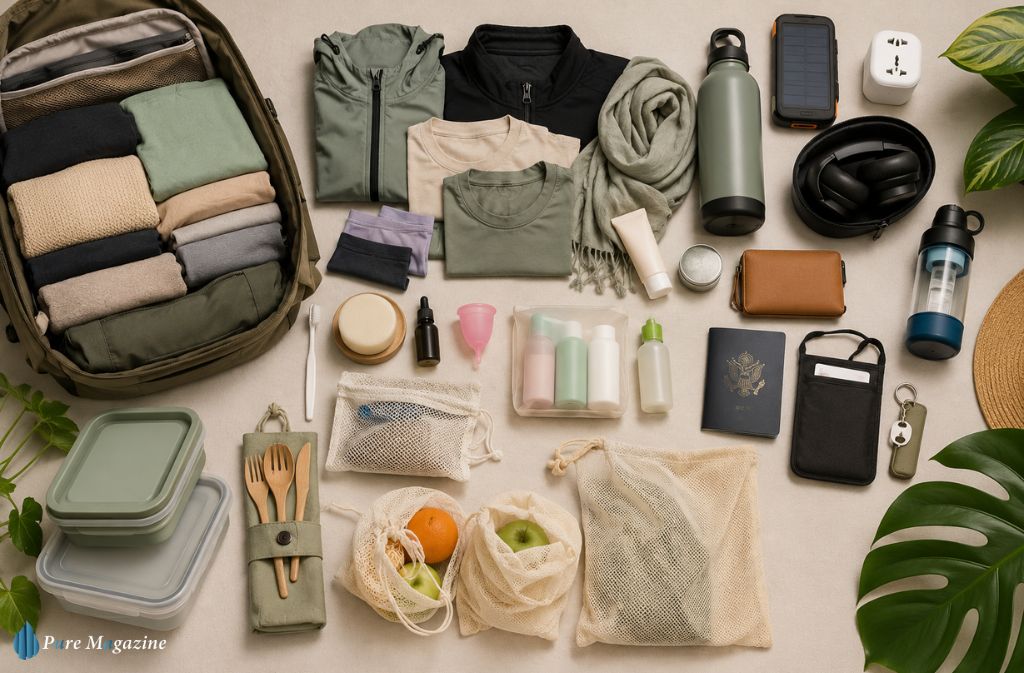
Synthetic performance fabric sheds microplastic in the wash. Merino wool and TENCEL (lyocell) don’t, and they resist odor well enough that you’re not hand-washing every second night in a shared hostel sink.
- 3–4 merino or TENCEL tops. Icebreaker and WoolX show up in most long-term travelers’ bags for a reason — they hold up to repeat hand-washing without pilling as fast as cheaper blends.
- 1 packable rain shell, PFAS-free. Older waterproof coatings use so-called “forever chemicals.” As of January 2025, California’s AB 1817 bans intentionally added PFAS in new textiles sold in the state, and it’s pushed most major outdoor brands toward PFAS-free treatments across the board, not just California-bound stock.
- 1 mid-layer that doubles as sleepwear.
- Underwear in merino or bamboo blend.
- A scarf or sarong. Modesty layer for religious sites, blanket on a cold overnight bus, backup towel.
Synthetics aren’t fully avoidable — leggings, swimwear, and quick-dry underwear often just perform better in synthetic blends. If any are going in the bag, a Guppyfriend washing bag catches the microplastic fiber that sheds in the wash. That’s the actual fix, not pretending you’ll go 100% natural fiber for three weeks.
Toiletries
Most “eco” lists stop at a bamboo toothbrush. The bigger wins are in what you’re refilling.
- Solid shampoo and conditioner bars. No liquid restrictions, no bottle waste — but let them dry fully before sealing them in a tin, or you’ll open your bag to soapy residue on everything else. A beeswax wrap around the bar first prevents this.
- Reusable silicone travel bottles for anything that has to stay liquid.
- A menstrual cup or reusable period underwear. One of the highest-impact swaps on a multi-week trip — it removes a recurring waste stream and one less thing to track down in an unfamiliar pharmacy.
- Reef-safe, mineral sunscreen. Hawaii’s state law has restricted retail sale of sunscreens containing oxybenzone or octinoxate since January 2021; Palau, the U.S. Virgin Islands, and parts of Mexico’s protected reef zones have similar rules.
- A compact bidet attachment or reusable wipes for destinations with limited toilet paper access.
Tech
- A solar charger or high-capacity power bank. The safety case matters as much as the sustainability one — not running out of battery in an unfamiliar city is worth the extra weight.
- A universal adapter with USB-C passthrough, so it’s one device instead of three.
- A filter-based water bottle. Grayl UltraPress and LifeStraw Peak are the two most commonly carried on multi-country trips; either can cut out dozens of single-use bottles over a few weeks.
- Noise-canceling earbuds for overnight transit.
Documents & Safety
- A slim RFID-blocking wallet or neck pouch. Carrying less here tends to mean carrying less everywhere else too.
- Digital copies of documents, stored offline. Cuts down on printed paperwork, and it’s a good excuse to do a proper digital declutter before you leave rather than mid-trip, when your phone is already full of half-downloaded boarding passes.
- A door stop alarm or portable lock for accommodation.
- A whistle or personal alarm clipped to your daypack.
Food & Hydration
- Collapsible silicone containers for markets and leftovers.
- A lightweight reusable cutlery set.
- Reusable produce or snack bags — also makes it easier to buy from bulk bins instead of packaged goods.
Eco Swaps vs. Conventional Items
| Category | Conventional | Eco-Friendly Swap | Cost & Lifespan |
|---|---|---|---|
| Hair & body care | Mini plastic bottles | Shampoo/conditioner bars | £8–14 per bar, 60–80 washes |
| Hydration | Bottled water | Filtered bottle (Grayl/LifeStraw) | £70–95, filter good for 250–500L |
| Period care | Disposable pads/tampons | Menstrual cup or period underwear | £20–35, lasts 2–10 years |
| Sun protection | Chemical sunscreen | Reef-safe mineral sunscreen | £12–18, same as conventional |
| Rain gear | PFAS-treated shells | PFAS-free waterproofing | £90–180, comparable lifespan |
| Snacking | Single-use packaging | Reusable containers/bags | £10–20 for a set, lasts years |
| Charging | Multiple wall adapters | One solar/USB-C power bank | £35–60, 3–5 years |
Front-loading these purchases adds up in one go, which is worth weighing the way you’d weigh any other pre-trip spend rather than an impulse buy the week before you fly — it’s the same logic behind financial self-care generally, just applied to a packing list.
Bag Choice and the Case for Packing Light
A 35–45L pack is the sweet spot for most solo eco-conscious trips: big enough for everything above, small enough to force some discipline. Packing cubes in recycled fabric compress clothing without needing vacuum bags. A bag made from recycled ripstop nylon — Cotopaxi’s Allpa series is the most visible example — closes the loop without costing more than a comparable non-recycled pack.
Packing light isn’t only about impact. A lighter bag is easier to keep close, easier to move fast with, easier to keep an eye on in a crowded transit hub. It also tracks with a bigger shift toward slower, more intentional travel — the same instinct behind slow living generally, just applied to a suitcase instead of a daily routine.
Mistakes People Make With Eco Packing
- Buying new “eco” gear before the trip. New products still carry a manufacturing footprint. Using what’s already in the drawer beats a brand-new bamboo version of something functionally identical.
- Packing single-use “just in case” items. Travel-size disposable razors, cutlery, ponchos — used once, binned somewhere with no way to process them.
- Ignoring what happens locally. A product labeled recyclable is only as good as the system it lands in. Much of Southeast Asia and Latin America has limited formal recycling, so cutting waste matters more than sorting it.
- Choosing “natural” over functional. A solid deodorant that doesn’t hold up in humidity just gets replaced locally, which defeats the point of bringing it.
- Underestimating screen time on the road. Transit days, visa paperwork, constant map-checking — it adds up fast, more so if you’re trying to work remotely between stops. Worth setting screen time boundaries before you leave rather than trying to enforce them mid-trip.
Adjusting by Destination
Tropical or humid: quick-dry fabric over layers, a compact travel fan instead of single-use cooling products, reef-safe sunscreen non-negotiable.
Cold: merino base layers earn their keep — better temperature regulation than synthetics, fewer washes when laundry access is limited. This is where the 7kg margin disappears fastest.
Urban: digital-first (e-tickets, digital passes), smaller daypack — walkable cities need less gear.
Remote or backpacking: the water filter and solar charger stop being nice-to-haves. Bottled water and outlets aren’t guaranteed.
FAQs
Q. Do I need a menstrual cup for a short trip?
The Short Version
The most sustainable packing list isn’t the one with the most eco-labeled products in it — it’s the one that avoids overpacking to begin with. A lighter, more intentional bag is easier to manage and easier to keep secure, which matters as much for solo travel as the environmental math does. Start with the swaps that solve a real recurring problem — hydration, period care, charging — and build out from there.
For more, visit Pure Magazine