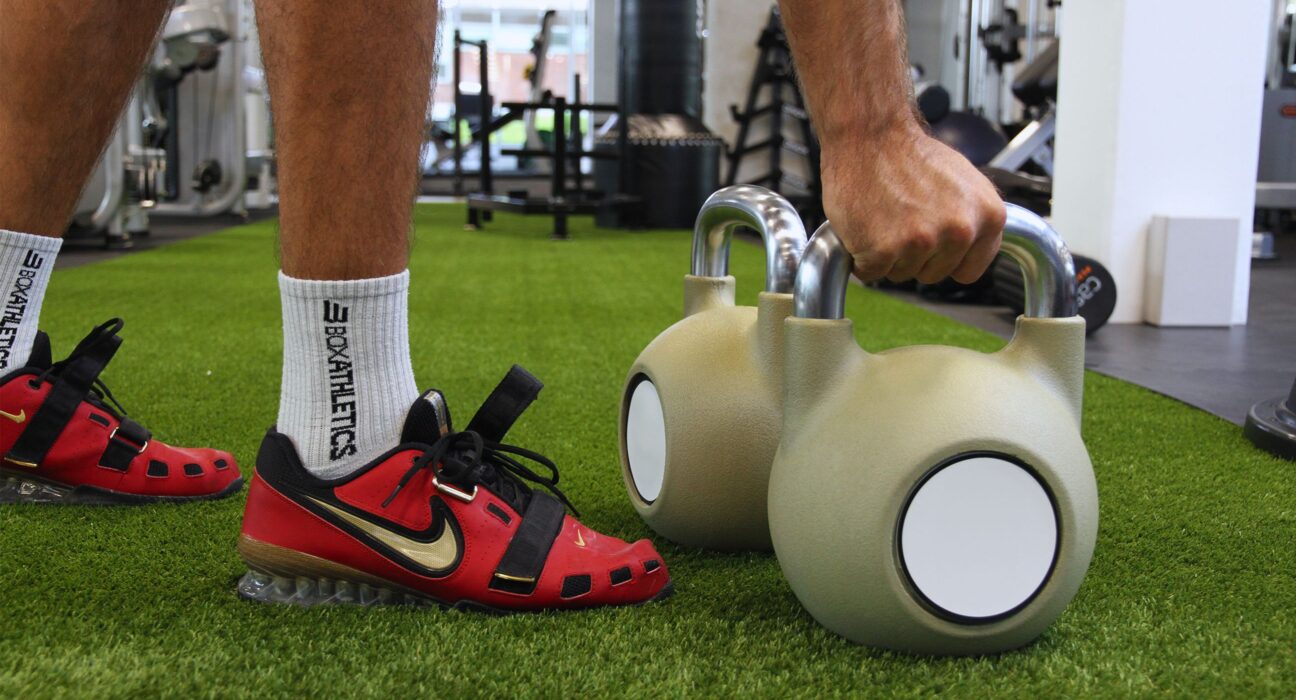
Compound movements put the body under real stress. Squats, deadlifts, and Olympic lifts each demand a stable base, controlled ankle mechanics, and reliable grip through the entire range of motion. Most athletes obsess over footwear and barbells but rarely consider socks. That gap in attention costs more than people realize. Sock construction directly affects how force moves through the foot, how stable the lift feels, and how the body holds up across a full training session.
1. Compression Fit
1.1 Arch and Midfoot Support
A sock that shifts during a lift creates friction, pressure points, and reduced sensory feedback from the floor. Compression-fit designs hold the arch firmly in place, which preserves the foot’s role as a stable contact point. That contact matters because force has to travel cleanly up through the kinetic chain for a lift to feel solid.
1.2 Ankle Stability During Load
Graduated compression around the ankle keeps soft tissue supported without restricting range of motion. During a heavy squat descent, even subtle lateral drift in the foot can pull the knee out of alignment. A well-constructed compression sock reduces that drift by keeping the foot seated correctly inside the shoe.
Athletes looking to upgrade their gear can browse quality weightlifting socks online before the next training block. Purpose-built options offer graduated compression, reinforced construction zones, and design choices suited to the specific strain patterns of compound lifts. Finding the right pair early prevents recurring discomfort from becoming a persistent mechanical problem.
2. Cushioning Placement
2.1 Targeted Heel Padding
Standard athletic socks spread cushioning evenly across the foot, but that approach does not reflect how load actually moves during a squat or deadlift. Targeted heel padding absorbs impact at the primary contact point without artificially raising the heel or dulling sensory feedback. Proprioception relies on accurate input from the foot, and excessive cushioning interferes with that signal.
2.2 Thin Toe Box Construction
Toe splay plays a real role in balance and grip during heavy pulls. A thick toe box limits how much the toes can spread against the insole, which reduces the foot’s natural gripping surface. Thinner construction in the forefoot allows the toes to open freely, contributing to better stability throughout the lift.
3. Moisture Management
High-volume compound training generates significant heat. Sweat-saturated socks lose structural integrity, bunch inside the shoe, and increase friction at the worst possible moments. Moisture-wicking fabrics pull sweat away from the skin and help the sock hold its shape through extended sessions.
3.1 Blister Prevention
Repeated loading cycles create friction between the foot and the shoe interior. A sock that stays dry and in place reduces that friction considerably. Blisters may seem trivial, but even minor skin breakdowns alter foot mechanics and chip away at training consistency over time.
4. Sock Length and Shin Protection
4.1 Mid-Calf vs. Crew Length
Sock length carries practical consequences for barbell work. During a conventional or sumo deadlift, the bar travels directly up the shin. A sock that reaches mid-calf creates a protective layer between the bar and the skin, reducing abrasion and allowing the lifter to stay focused on technique rather than discomfort.
4.2 Non-Slip Cuff Design
A sock that slides down mid-set forces small adjustments that break concentration and disrupt rhythm. A non-slip cuff keeps the sock at a consistent height throughout the session. During superset training or higher-volume blocks, that consistency adds up in ways that genuinely affect how a session feels and performs.
Conclusion
Every layer between an athlete and the platform deserves deliberate attention. Sock construction shapes stability, comfort, and foot mechanics across all major compound lifts in ways that are easy to overlook until something goes wrong.
Compression fit, targeted cushioning, moisture management, and appropriate length each solve a specific problem that arises under heavy load. Treating sock selection as a real equipment decision, rather than a default afterthought, builds a stronger foundation for consistent training and long-term performance.
For more, visit Pure Magazine