


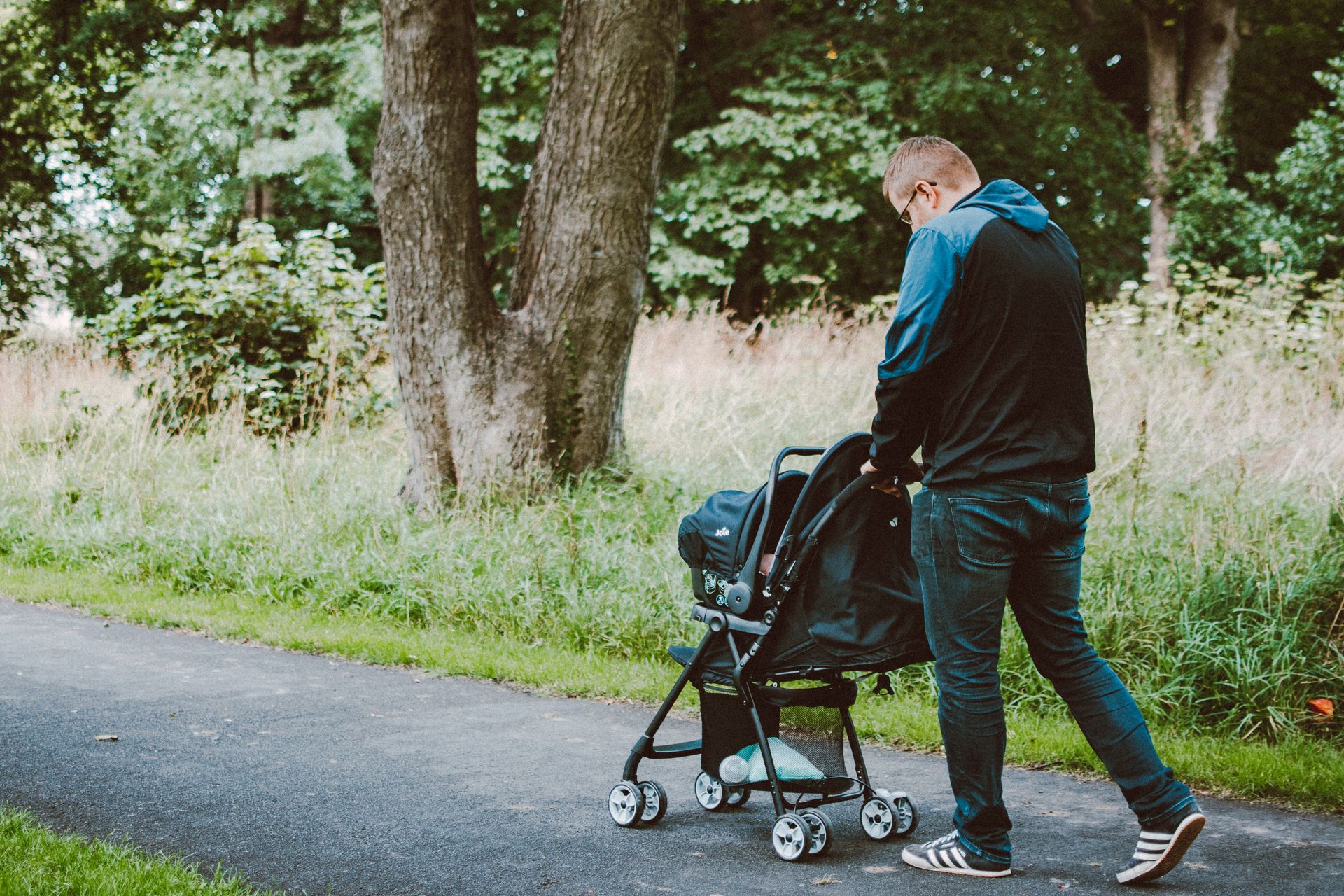
The best pushchair is not the one with the longest feature list. It is the one that fits your daily routes and your plans for the next few years. A model that feels perfect on a smooth shop floor can be awkward on a packed train or at an airport gate. And a single pushchair stops being enough the moment a second baby arrives. Thinking ahead before you buy saves money and frustration later.
Start with how you actually get around
Your daily routes tell you more than any brochure. If you mostly walk through town, you want a pushchair that steers easily with one hand, because the other hand is often holding a bag or an older child. If you take the bus or the train, the fold matters most. You need to collapse the pushchair quickly while people wait behind you, and carry it up steps without struggling.
Drivers face a different question. A pushchair that does not fit in the boot forces you to rearrange the car every single trip. Measure your boot before you look at models, not after. It is a two-minute job that rules out poor matches straight away.
Travelling with a baby changes the maths
Holidays and longer trips put different demands on a pushchair than the school run does. In an airport or on a train platform, every extra kilo counts, and a bulky fold becomes a real obstacle. That is why many parents buy a second, lighter pushchair just for trips. A compact travel stroller folds down small, which makes it easier to stow in overhead racks or carry through a busy terminal.
Flying needs one extra check. A compact fold may meet the cabin baggage requirements of many airlines, but rules differ from airline to airline. Check with your airline before you travel, so you know at the gate whether the pushchair goes in the cabin or in the hold. That saves an unpleasant surprise at boarding.
When a second child arrives
A growing family is the other moment to rethink your setup. A toddler of two or three can walk, but rarely for long. On a full day out, those little legs give up halfway, and then you are carrying a child on one arm while pushing a pram with the other. That gets heavy fast, and it slows every outing down.
In that situation a double pram solves the problem at the source. The baby and the toddler each have their own seat, and you keep both hands on the handlebar. Before you choose one, check the width against your front door and your usual shop entrances. A double that does not fit through your own hallway will end up unused in the shed.
Also check the limits for each seat. Manufacturers state a maximum weight and height per seat, and those limits determine how long the pram remains suitable for both children.
What to test before you buy
A pushchair is a purchase you live with daily for years, so test it the way you will actually use it. Useful checks include:
- Fold it yourself, ideally with one hand, because in real life the other hand is often holding your baby.
- Lift it to shoulder height, as if putting it in a boot or on a luggage rack.
- Push it one-handed in a tight circle to feel how it steers in a crowded space.
- Measure your home, including the doorways and the spot where you will store it.
If a model passes these tests for your routes and your family plans, you have found your match. If it only shines in the showroom, keep looking. The right pushchair is the one you stop noticing, because it simply works everywhere you go.
For more, visit Pure Magazine