


There is a particular kind of confidence that comes from feeling good about your smile. Not the performative kind, but the quiet, settled kind that means you photograph easily, laugh openly, and do not spend the second half of every conversation wondering if someone noticed the gap in your front teeth.
For a long time, adult orthodontics felt like a trade-off most grown-ups were not willing to make. Metal braces meant months of self-consciousness, awkward lunch meetings, and the faint sense that you had somehow regressed. But something has shifted in the UK over the past several years. Quietly and steadily, clear aligner treatment, with Invisalign leading the way, has become the go-to solution for adults who want straighter teeth without making their dental journey everyone else’s business
Why Are So Many Adults Choosing Invisalign in the UK?
It is not one thing driving the surge in adult orthodontic treatment. It is a confluence of factors that have made now feel like the right moment for a generation of people who put their dental alignment firmly on the back burner.
Cosmetic dentistry has undergone something of a cultural reframe. Where it once felt vain or medically unnecessary, it is now understood as part of a broader commitment to self-care and long-term health. Misaligned teeth are not just an aesthetic concern. They can affect bite function, cause uneven wear, and make thorough cleaning more difficult, which matters considerably for gum health over time.
At the same time, remote and hybrid working has made the timing feel oddly convenient. People who might have felt too visible in an office environment, too aware of raised eyebrows in meetings, found that treatment felt far more manageable when a significant portion of their professional life moved to a camera square on a laptop screen.
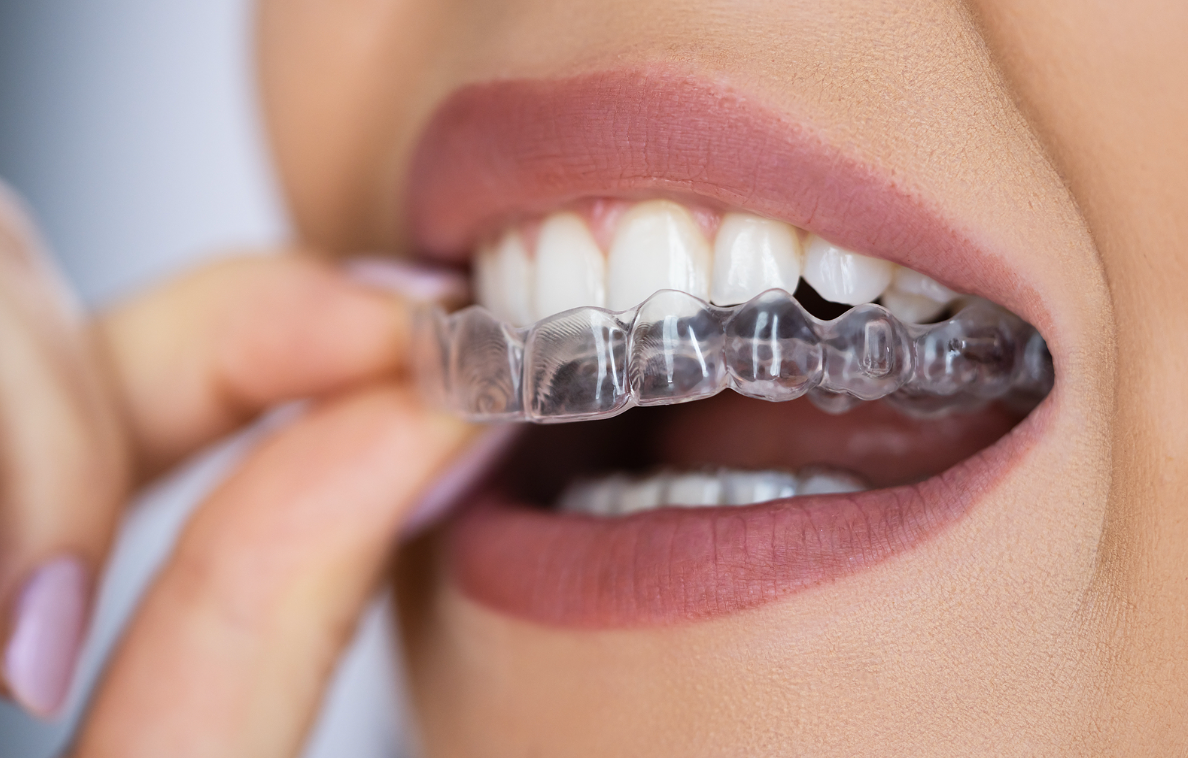
And then there is the Invisalign product itself, which has evolved considerably. The aligners are made from a smooth, medical-grade thermoplastic that fits snugly over the teeth, gradually shifting them into alignment over a course of treatment typically ranging from six to eighteen months, depending on the complexity of the case. They are removable, which means meals and drinks remain completely unaffected. There is no dietary restriction list and no emergency appointments for snapped wires.
Is Invisalign Really Better Than Traditional Braces?
This is the question most people start with, and the honest answer is: it depends on what matters most to you.
For the majority of adult cases, including mild to moderate alignment issues, gaps, crowding, and certain bite corrections, Invisalign is highly effective. For more complex orthodontic needs, traditional fixed appliances may still be the clinically recommended route. A consultation with a qualified dental professional is always the right starting point.
But for the lifestyle factors that matter most to adults, Invisalign tends to come out ahead:
- Visibility: The aligners are virtually invisible in normal social and professional settings. Most people will not notice unless you tell them.
- Comfort: Without brackets and wires, there is no risk of mouth sores from sharp edges. The adjustment discomfort from new trays is typically mild and short-lived.
- Convenience: Aligners are removed to eat and clean your teeth, so your oral hygiene routine stays largely unchanged.
- Appointment load: Invisalign typically requires fewer in-practice visits than traditional braces, making it more manageable for busy schedules.
- Predictability: Using 3D imaging technology, Invisalign treatment is planned digitally before it begins. Many patients can see a projected outcome before committing to a single tray.
That last point tends to surprise people. The idea that you can visualise, however roughly, what your smile might look like before a single aligner is worn changes the decision-making process considerably.
How Does Clear Aligner Treatment Fit Into a Busy Lifestyle?
One of the persistent misconceptions about orthodontic treatment is that it demands a significant restructuring of daily life. With Invisalign, that simply is not the case for most adults.
The aligners need to be worn for a minimum of 20 to 22 hours per day to be effective, but that still leaves a comfortable window for meals, morning coffee, evening drinks, and teeth brushing. Most people find that after the first fortnight, wearing and removing the aligners becomes as automatic as any other part of their routine.
Travel is straightforward. The aligner cases are compact, and there is no specialist equipment required to maintain them. Work presentations, client dinners, date nights: none of these require removal or awkward explanation.
For those who have spent years postponing treatment precisely because of the disruption they imagined it would cause, this is often the factor that tips the decision. The treatment slots into adult life rather than demanding that adult life rearrange itself around treatment.
What Adults Should Know Before Starting Invisalign
If you are at the research stage, quietly Googling at midnight, reading forums, watching before-and-after videos, there are a few things worth knowing before booking a consultation.
Commitment matters more than many people expect. The flexibility of removable aligners is one of their greatest strengths, but it also places responsibility on the wearer. The treatment works because the aligners are worn consistently. People who find themselves removing them for extended periods throughout the day will see slower progress and less predictable results. It is a lifestyle choice, not a passive one.
Not all providers are equal. Invisalign treatment requires a trained and certified dental provider. The experience of whoever is overseeing your treatment, how they assess your case, how precisely they plan your aligner sequence, and how they monitor progress, makes a real difference to outcomes. This is not a treatment to seek out based on price alone.
The consultation is genuinely informative. Most Invisalign-certified practices offer an initial consultation that includes a clinical assessment, digital imaging, and an honest conversation about whether clear aligners are suitable for your specific case. It is worth having, even if you are not yet certain you want to proceed.
For those based in or around Hampshire, Invisalign Winchester is available through experienced local practices where treatment is planned carefully and patient outcomes are central to the process.
Retainers are part of the deal. Once active treatment is complete, retainers are required to maintain the result. This is true of all orthodontic treatment, not just Invisalign. The good news is that Invisalign retainers are similarly discreet to the aligners worn throughout treatment.
The Confidence Shift: What People Are Not Saying Out Loud
Ask most adults who have completed Invisalign treatment what the biggest impact has been, and the answers tend to be quietly consistent. It is rarely “my teeth look straighter.” It is usually something more layered. They smile more freely in photos. They feel less self-conscious in job interviews. They stopped covering their mouth when they laugh.
There is something about finally addressing something you have been quietly managing around for years, finding ways to smile at a certain angle or not smiling at all, that feels disproportionately significant once it is resolved. The physical change is meaningful, but the psychological shift can be more so.
This is, at its core, why Invisalign’s rise in the UK is not really a dental story. It is a confidence story. A self-investment story. And increasingly, it is one that adults across the country are deciding to write for themselves.
If you are considering treatment, speaking with a trusted Winchester dentist is a sensible first step to understanding your options and what a treatment plan for your specific situation might look like.
Invisalign vs Traditional Braces: Comparison Table
| Feature | Invisalign Clear Aligners | Traditional Fixed Braces |
| Visibility | Virtually invisible | Clearly visible metal or ceramic brackets |
| Removability | Yes, removed to eat and clean | Fixed in place throughout treatment |
| Eating restrictions | None | Avoid hard, sticky, or chewy foods |
| Oral hygiene | Unchanged routine | Requires specialist cleaning around brackets |
| Comfort | Smooth plastic, no sharp edges | Potential for wire irritation and mouth sores |
| Appointment frequency | Typically fewer visits | Regular tightening appointments required |
| Treatment planning | Digital 3D preview before starting | Less detailed upfront visualisation |
| Suitable for | Mild to moderate cases; many adult concerns | Broad range including complex corrections |
| Treatment length | Typically 6 to 18 months | Typically 18 to 36 months |
| Lifestyle disruption | Minimal for most adults | More significant daily adjustment required |
Treatment suitability varies by individual case. A clinical consultation is always recommended.
Conclusion: Is Now the Right Time to Start?
The question most people sit with longest is not whether Invisalign works. It is whether now is the right time for them personally.
The answer, for most adults, is that there is rarely a perfect moment. But the conditions have arguably never been better. The technology is more refined, the treatment is more accessible, and the social acceptance of adults investing in their smile has never been higher. Clear aligner treatment no longer carries any of the awkwardness it once might have done. If anything, it has become something people talk about openly and even proudly.
What tends to move people from consideration to commitment is simply starting the conversation. A single consultation appointment costs nothing more than an hour and it replaces months of online research with a clear, personalised picture of what treatment would actually involve for you specifically: the timeline, the cost, and the expected result.
If your smile is something you have been meaning to address, the gap between thinking about it and doing something about it is smaller than you might imagine. And the version of yourself on the other side of treatment, the one who laughs without thinking about it, tends to wonder why it took so long to begin.
FAQ
Q: Is Invisalign as effective as traditional braces? For mild to moderate alignment issues, including crowding, spacing, and some bite corrections, Invisalign is clinically effective for the majority of adult cases. More complex orthodontic needs may require fixed appliances. Your dental provider will assess your specific situation during a consultation and advise on the most appropriate route.
Q: Will people be able to see my Invisalign aligners? In most everyday settings, including work, social events, and everyday conversation, the aligners are not noticeable. They are made from clear thermoplastic and sit closely against the teeth. Some people choose to tell others they are in treatment; many do not feel the need to.
Q: How long does Invisalign treatment take for adults in the UK? Treatment length depends on the complexity of each case, but adults typically complete Invisalign treatment in six to eighteen months. Some mild cases can be addressed in as little as three to six months. A full treatment timeline will be confirmed during your initial consultation once your case has been assessed.
For more, visit Pure Magazine
