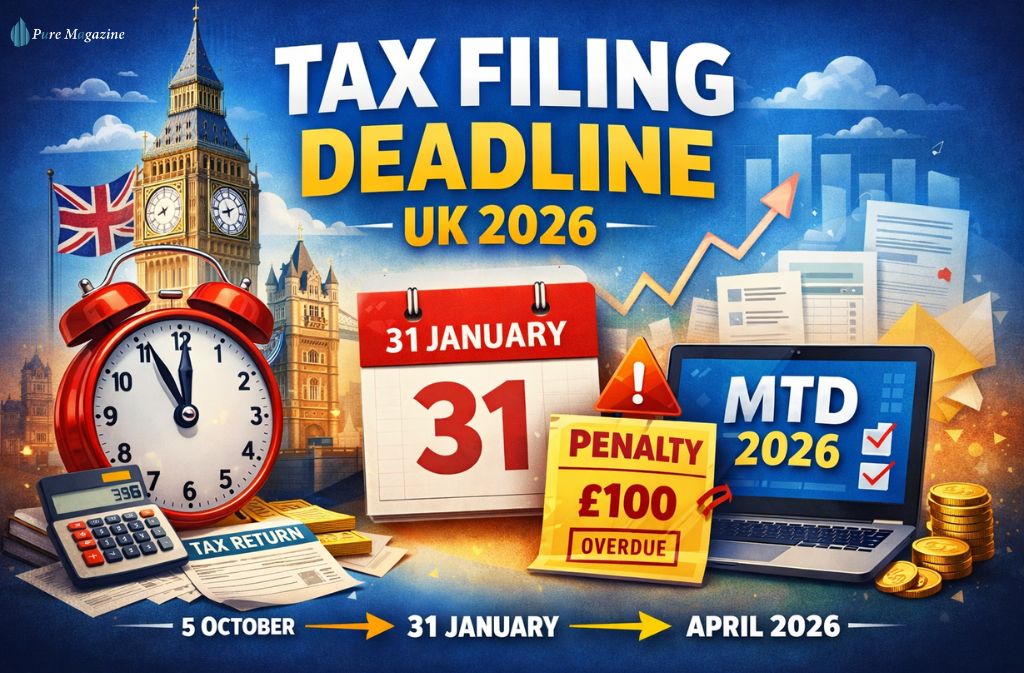
TL;DR – 2026 Snapshot
|
Understanding the UK Tax Filing Deadline
Every year, millions submit returns to HM Revenue & Customs, yet confusion around the tax filing deadline never really disappears. The issue isn’t that the dates change — they rarely do. It’s that people misunderstand which deadline applies to them and when payment is actually due.
The UK tax year runs from 6 April to 5 April the following year. Understanding exactly when the tax year ends and the new one begins helps clarify which income belongs to which return — a distinction that catches many people out when they have income spanning two tax years.
Once the tax year ends, most individuals filing through Self Assessment must submit their return online by 31 January. Paper returns must be submitted earlier, by 31 October.
As confirmed on GOV.UK’s official Self Assessment deadlines page, 31 January, is both the filing deadline and the tax payment deadline for Self Assessment. Missing either triggers penalties.
The Overlooked Date: 5 October
If you become self-employed or receive untaxed income, you must register for Self Assessment by 5 October following the end of the tax year. This is the quiet deadline that catches people off guard. By the time January comes around, they’re already technically late.
Self Assessment Deadlines (Individuals & Sole Traders)
| Requirement | Deadline |
|---|---|
| Register for Self Assessment | 5 October |
| Paper tax return | 31 October |
| Online tax return | 31 January |
| Tax payment due | 31 January |
| Second payment on account | 31 July |
These deadlines apply to sole traders, freelancers, landlords, and company directors who file personal returns. For a full breakdown of all key tax return dates across the year, including the July payment on account date, that full calendar is worth bookmarking.
The Reality of 31 January
There’s something every accountant in the UK knows but rarely says publicly: the 31 January rush is chaos. As the clock moves toward midnight, the HMRC portal slows, logins fail, and submissions time out. It’s not guaranteed to happen — but it happens often enough that experienced filers don’t gamble on it.
Filing in December avoids the “31 January midnight crash” entirely. Leaving it until the last evening is asking for a massive headache.
What Happens If You Miss the Tax Filing Deadline?
The penalty system is automatic and structured.
| Time Late | Penalty |
|---|---|
| 1 day | £100 fixed fine |
| 3 months | £10 per day (up to £900) |
| 6 months | 5% of tax due or £300 |
| 12 months | Additional 5% or £300 |
Even if you owe no tax, the £100 penalty still applies for late filing.
Late Payment Penalties (Separate Issue)
Late payment penalties are in addition to filing penalties: 5% of unpaid tax at 30 days, another 5% at 6 months, and another 5% at 12 months.
From experience, clients worry about the £100 fine. The real sting is the 5% surcharge at 30 days. If you can’t file in time, paying an estimate can significantly reduce penalties and interest. As HMRC confirms in its guidance on paying your Self Assessment bill, those unable to pay in full by 31 January may be able to set up a Time to Pay arrangement online and spread the cost over monthly instalments — for bills up to £30,000, this can be done without even contacting HMRC directly.
Why Your January Bill Feels 150% Higher
This is where most first-time sole traders get caught out.
If your tax bill exceeds £1,000, HMRC requires payments on account. That means in January, you pay 100% of last year’s tax plus 50% toward next year.
So if your tax bill is £6,000, your January payment becomes £9,000.
That 150% shock is what causes panic — not the deadline itself. Planning cash flow early avoids this entirely. An after-tax calculator can help you model your likely bill well ahead of January so the payment on account figure doesn’t catch you off guard.
Making Tax Digital (MTD) – 2026 Transition Year
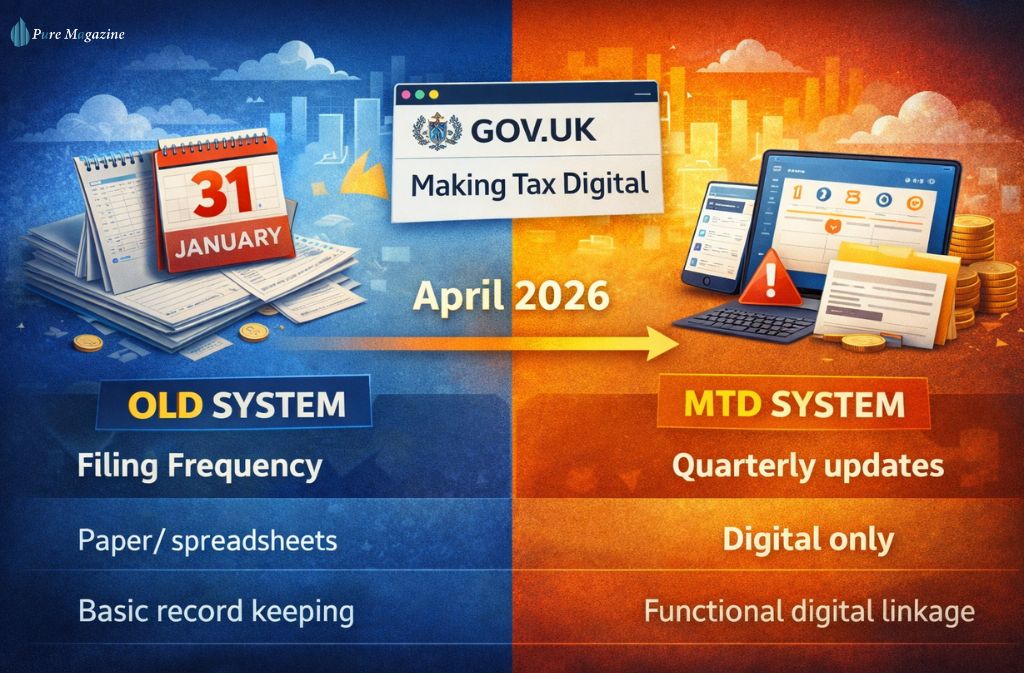
From April 2026, Making Tax Digital for Income Tax Self Assessment becomes mandatory for self-employed individuals and landlords earning over £50,000 annually. Those earning between £30,000 and £50,000 will join from April 2027.
As confirmed by GOV.UK’s official MTD for Income Tax guidance, HMRC will check your 2024/25 Self Assessment return and write to you confirming whether you must start using MTD from 6 April 2026 — but even if you don’t receive a letter, it remains your responsibility to check your eligibility and sign up in time.
This changes how reporting works. Instead of filing once a year, you’ll submit quarterly updates and then complete a final declaration by 31 January.
Old System vs MTD System
| Feature | Pre-2026 | Post-April 2026 (MTD) |
|---|---|---|
| Filing Frequency | Once per year | Quarterly updates |
| Record Keeping | Paper/spreadsheets | Digital only |
| Annual Deadline | 31 January | 31 January Final Declaration |
| Compliance Requirement | Basic record keeping | Functional digital linkage |
Spreadsheets alone will not be sufficient unless properly linked through approved software.
Recommended 2026-Compliant Software
To meet MTD requirements, most taxpayers will use recognised accounting platforms. As outlined in GOV.UK’s guide to choosing MTD-compatible software, there are both full software products and bridging software options — bridging software is particularly useful for those who want to keep using spreadsheets and connect them to HMRC’s system.
Popular options include FreeAgent, Xero, and QuickBooks. These platforms maintain digital records and submit directly to HMRC.
Corporation Tax Filing Deadline (Limited Companies)
If you operate through a limited company, the timeline differs.
- Corporation tax payment → 9 months + 1 day after accounting period ends
- Corporation tax return (CT600) → 12 months after accounting period ends
For example, if your company year ends 31 March 2025: tax payment due → 1 January 2026, tax return due → 31 March 2026.
Notice that payment is required before filing. For a full guide to paying corporation tax — including payment methods and what happens if you miss the deadline — that covers the process end to end.
What Counts as a “Reasonable Excuse”?
HMRC may cancel penalties if you have a valid reason. Accepted examples typically include serious illness or hospitalisation, bereavement close to deadline, fire, flood, or theft affecting records, and major HMRC technical system failure.
Excuses like being busy, forgetting, or lacking funds are usually rejected. Appeals generally must be made within 30 days of receiving the penalty notice.
Quick Visual Timeline
- 6 April → Tax year starts
- 5 April → Tax year ends
- 5 October → Registration deadline
- 31 October → Paper filing deadline
- 31 January → Online filing + tax payment
- 31 July → Second payment on account
Seeing the tax year laid out chronologically often makes the process clearer than reading policy text. For a more detailed breakdown of all key tax year dates, including when HMRC systems open for early filing, that full calendar is worth keeping to hand.
FAQs
Q1. What is the tax filing deadline in the UK for 2026?
The UK online Self Assessment tax filing deadline is 31 January following the end of the tax year. For the 2024–25 tax year (ending 5 April 2025), the deadline is 31 January 2026. Paper returns must be submitted earlier, by 31 October 2025. The tax year runs from 6 April to 5 April each year.
Q2. When do I need to register for Self Assessment?
You must register for Self Assessment by 5 October following the end of the tax year in which you started earning untaxed income. For example, if you became self-employed during the 2025–26 tax year, you must register by 5 October 2026. Missing this registration deadline can lead to penalties even before the January filing date.
Q3. What happens if I miss the tax filing deadline?
If you miss the 31 January deadline, you receive an automatic £100 late filing penalty, even if no tax is owed. After three months, daily penalties of £10 per day apply (up to £900). Additional 5% surcharges may apply at six and twelve months. Late payment penalties and interest are charged separately.
Q4. When is the corporate tax filing deadline in the UK?
A limited company must file its Corporation Tax return (CT600) 12 months after the end of its accounting period. However, Corporation Tax payment is due earlier — 9 months and 1 day after the accounting period ends. Payment and filing deadlines are not the same.
Q5. When does Making Tax Digital (MTD) start for Income Tax?
Making Tax Digital for Income Tax starts from April 2026 for self-employed individuals and landlords earning over £50,000 annually. Those earning between £30,000 and £50,000 must comply from April 2027. Under MTD, taxpayers must keep digital records and submit quarterly updates instead of filing only once per year.
Conclusion
The UK tax filing deadline itself isn’t complicated. What creates stress is misunderstanding registration rules, payment-on-account rules, and the difference between filing and paying.
Remember: 5 October is critical for new taxpayers, 31 January covers both filing and payment, payments on account cause the 150% shock, and April 2026 introduces MTD for those earning over £50,000.
Prepare early, file before January, and estimate your bill in advance. That simple shift removes most of the anxiety people associate with tax season. Those already set up on the HMRC online tax return system should log in now to confirm their MTD status and check whether their income threshold requires action before April 2026.
Stay informed, stay compliant, and stay ahead — Pure Magazine covers the UK tax and finance topics that actually matter to real people in 2026.