UK tax deadlines have a habit of arriving faster than expected. You may have your income records ready but still be unsure which tax year to report, whether a payment on account is due, or what happens if you miss the filing deadline.
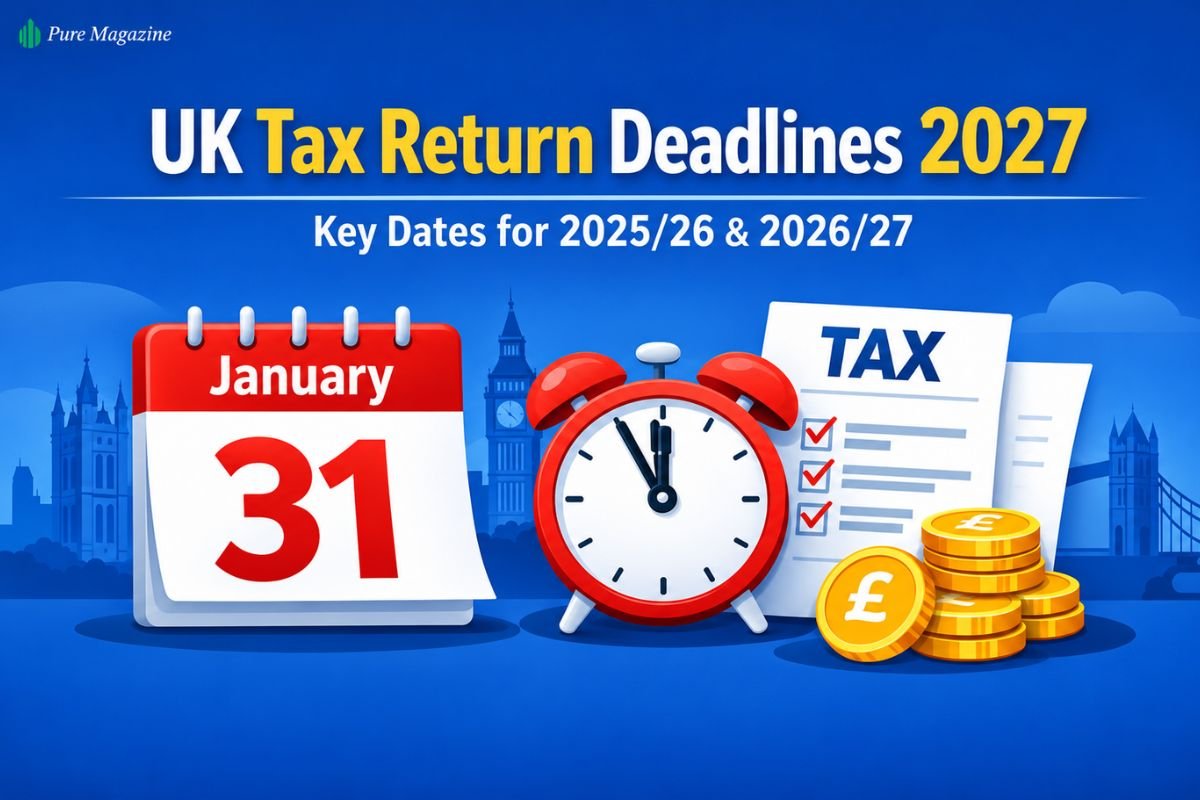
For most people completing a Self Assessment tax return, the next major deadline is 31 January 2027. That is the online filing and payment deadline for the 2025/26 tax year, which ran from 6 April 2025 to 5 April 2026.
This updated guide brings together the important UK tax year dates, explains who may need to file, sets out payments on account and penalties, and highlights the latest Making Tax Digital requirements. It is written for employees with untaxed income, sole traders, landlords and other people navigating Self Assessment.
Last reviewed: 7 November 2026. Tax deadlines and eligibility rules can vary in special cases; use your HMRC online account and official guidance to confirm your personal position.
UK Tax Return Deadlines 2027: Dates at a Glance
If you remember one date, make it 31 January 2027. For most taxpayers, this is the deadline to submit the 2025/26 Self Assessment tax return online and pay any balancing tax due.
| Date | What it means | Tax year |
|---|---|---|
| 5 October 2026 | Usual deadline to notify HMRC if newly required to file (now passed) | 2025/26 |
| 31 October 2026 | Paper Self Assessment return deadline (now passed) | 2025/26 |
| 30 December 2026 | Online filing deadline to request collection through PAYE, if eligible | 2025/26 |
| 31 January 2027 | Online filing and balancing payment deadline; first payment on account if required | 2025/26 and 2026/27 |
| 31 July 2027 | Second payment on account, where required | 2026/27 |
| 31 January 2028 | Usual online filing and balancing payment deadline | 2026/27 |
The dates above are the standard Self Assessment timetable. If HMRC gives you a different filing deadline after late registration, follow the notice you receive; the usual tax payment deadline may still apply. For confirmation, see HMRC’s Self Assessment deadlines.
How UK Tax Years Work
The UK tax year runs from 6 April to 5 April, rather than following the calendar year. This explains why a return submitted in January 2027 normally relates to income earned during 2025/26.
2025/26: The Tax Year You Are Filing Now
- Tax year begins: 6 April 2025.
- Tax year ends: 5 April 2026.
- Online filing opens: 6 April 2026.
- Online filing deadline: 31 January 2027.
This is the relevant return for most taxpayers preparing their Self Assessment in late 2026 and January 2027.
2026/27: The Current Tax Year
- Tax year begins: 6 April 2026.
- Tax year ends: 5 April 2027.
- Usual paper filing deadline: 31 October 2027.
- Usual online filing deadline: 31 January 2028.
Keeping the two years separate helps avoid reporting income in the wrong return or confusing a balancing payment with an advance payment for the following tax year.
All Key UK Self Assessment Dates for 2025/26 and 2026/27
2025/26 Self Assessment: Filing and Payment Schedule
| Date | Event | Action |
|---|---|---|
| 5 April 2026 | 2025/26 tax year ended | Gather and reconcile income and expense records. |
| 6 April 2026 | Online filing available | You can prepare and submit your return early. |
| 5 October 2026 | Usual notification deadline | New filers should normally have told HMRC if required to submit a return. |
| 31 October 2026 | Paper return deadline | HMRC must have received a paper return by this date. |
| 30 December 2026 | PAYE coding option | Submit online by this date if you want HMRC to consider collecting an eligible bill through your tax code. |
| 31 January 2027 | Online filing and payment | File the 2025/26 return and pay the balancing amount and any first payment on account due. |
What Comes Next?
If you are required to make payments on account for 2026/27, the second instalment is usually due on 31 July 2027. The return for the 2026/27 tax year will normally be due online by 31 January 2028.
Do not assume that an extension to your filing date also postpones your tax payment. Check the specific instructions in your HMRC account or correspondence.
Who Must File a Self Assessment Tax Return?
Not everyone with additional income needs to submit a return. Common reasons for filing include:
- You were self-employed as a sole trader and had more than £1,000 of gross trading income.
- You were a partner in a business partnership.
- You received taxable rental income or other untaxed income that needs to be reported.
- You have tax to pay on a disposal subject to Capital Gains Tax.
- You need to report the High Income Child Benefit Charge and cannot meet the obligation through PAYE.
- You receive income or have circumstances requiring Self Assessment under HMRC’s rules.
- HMRC has issued you with a notice to file a return.
For landlords: receiving rental income does not automatically mean you need to submit a Self Assessment tax return. Your gross rental income, the £1,000 Property Allowance, other taxable income and whether HMRC has issued a notice to file can all affect your reporting obligations. If you are unsure, check your circumstances with HMRC.
Understanding your potential tax liability can also help with financial planning. Landlords can use a free rental income tax calculator to estimate how rental profits, allowable expenses, mortgage interest relief and other income may affect their Income Tax bill. The tool compares the 2026/27 tax year with the proposed 2027/28 property income tax rules, rather than calculating a 2025/26 Self Assessment liability.
Having PAYE employment income does not necessarily remove the need to file a tax return, and a particular salary level alone does not automatically create a filing obligation. For more information about employment tax codes, read List of Tax Codes and What They Mean HMRC: Complete Guide.
The 5D Tax Date System: A Simple Way to Stay Organised
A short routine can help make Self Assessment less stressful.
D1 — Dates
Put 31 January, 31 July and 31 October in your calendar, then check which of those dates actually applies to you.
D2 — Duties
Confirm whether you must register, file, pay tax or comply with Making Tax Digital. These are related obligations, but they are not interchangeable.
D3 — Deadlines
Remember that paper filing, online filing, registration and payment can have different deadlines.
D4 — Deductions
Record qualifying expenses throughout the year. Landlords should distinguish legitimate property operating expenses from mortgage capital repayments and finance costs that have special tax treatment.
D5 — Dangers
Check your HMRC statement for balances, payments on account and any penalties before assuming your return is finished.
Payments on Account: How They Work
Payments on account are advance payments towards a future Self Assessment bill, generally made in two instalments. Each is usually calculated as half of the previous year’s relevant tax liability.
You normally need to make them unless either your previous year’s relevant Self Assessment tax liability was less than £1,000 or you paid more than 80% of the tax you owed outside Self Assessment, such as through PAYE. Your HMRC statement will show whether payments on account are due.
When Are Payments on Account Due?
- 31 January: first instalment for the tax year in question.
- 31 July: second instalment.
Example: A £2,000 Tax Bill for 2025/26
Assume a taxpayer has a £2,000 Self Assessment liability for 2025/26, has made no payments on account towards that year, is required to make payments on account for 2026/27, and has no other adjustments.
| Due date | Payment | Amount |
|---|---|---|
| 31 January 2027 | 2025/26 balancing tax | £2,000 |
| 31 January 2027 | First 2026/27 payment on account | £1,000 |
| 31 July 2027 | Second 2026/27 payment on account | £1,000 |
In this example, the total due on 31 January 2027 would be £3,000, not £1,000. The payments on account are credited against the eventual 2026/27 liability. If your taxable income falls, you may be able to request a reduction, but reducing payments too far can result in interest.
Penalties for Missing UK Tax Return Deadlines
Late Filing Penalties
If you are required to file and miss the applicable deadline, HMRC’s standard Self Assessment late-filing penalties can include:
- Immediately after the deadline: an initial £100 penalty, even if no tax is owed.
- After three months: additional £10 daily penalties, up to £900.
- After six months: a further £300 or 5% of tax due, whichever is greater.
- After twelve months: another £300 or 5% of tax due, whichever is greater; serious cases may attract higher penalties.
Late Payment Penalties and Interest
Separate penalties may apply to unpaid tax: generally 5% of the unpaid amount at 30 days, six months and twelve months after the payment deadline. Interest can also accrue. A payment arrangement or reasonable excuse may affect how penalties are handled; check HMRC’s rules for your circumstances.
When Will You Receive a Self Assessment Tax Refund?
There is no guaranteed refund timetable for every Self Assessment claim. Processing times depend on the type of repayment, the accuracy of the information submitted, HMRC checks and the payment method.
| Situation | What to expect |
|---|---|
| Online return with an overpayment | Check your HMRC online account for the repayment status and any action required. |
| Paper return or manual claim | Allow for processing and verification; timings can be longer than online requests. |
| Amended return or additional checks | HMRC may need more information before releasing a repayment. |
Refunds can be delayed by mismatched PAYE information, incomplete bank details or security checks. For more help, see Unclaimed Tax Refund HMRC: How to Check and Claim Money Owed.
10-Minute Self Assessment Checklist
Before starting your 2025/26 return, gather:
- Your Unique Taxpayer Reference (UTR), if you have one.
- Your Government Gateway sign-in details.
- Your National Insurance number.
- P60, P45, P11D and other relevant employment records.
- Self-employment income and business expenses, where applicable.
- Rental income records, allowable property expenses and relevant mortgage finance-cost details.
- Pension contributions and Gift Aid donations.
- Savings interest, dividends and other investment information.
- Information about reportable capital gains, foreign income and other taxable receipts.
- Details of any payments on account already made.
Keep source documents and supporting records in case HMRC asks you to explain a figure.
Common Self Assessment Mistakes and How to Avoid Them
- Filing but forgetting payment: the tax bill and the return can be separate tasks.
- Missing payments on account: check whether an additional advance instalment is due in January or July.
- Using the wrong tax year: report income in the correct 6 April to 5 April period.
- Confusing gross receipts with taxable profit: keep income and allowable expenses separately recorded.
- Misclassifying rental mortgage costs: capital repayments and restricted residential finance costs do not follow the same rules as ordinary expenses.
- Forgetting other income: interest, dividends, pensions and some foreign income can affect the calculation.
- Leaving PAYE coding too late: the relevant deadline is usually earlier than the 31 January online filing deadline.
- Assuming MTD replaces Self Assessment: the reporting process is changing for those in scope, but an annual tax return and the usual payment deadlines still apply.
What’s Changing in 2026/27 and Beyond?
Making Tax Digital for Income Tax Is Already Underway
Making Tax Digital for Income Tax began applying from 6 April 2026 to eligible landlords and sole traders whose qualifying income exceeded £50,000 in 2024/25.
| MTD start date | Qualifying income test | Reference tax year |
|---|---|---|
| 6 April 2026 | More than £50,000 | 2024/25 |
| 6 April 2027 | More than £30,000 | 2025/26 |
| 6 April 2028 | More than £20,000 | 2026/27 |
Qualifying income generally means gross property income plus gross self-employment income before expenses. Other eligibility conditions and exemptions apply. People within scope must use compatible software to maintain digital records and provide required updates to HMRC, while still meeting their annual tax return and payment obligations.
Frequently Asked Questions
Q. What is the Self Assessment deadline for the 2025/26 tax year?
For most taxpayers, the deadline to file online and pay any balancing tax due is 31 January 2027. HMRC needs to receive standard paper returns by 31 October 2026.
Q. When does the UK tax year start and end?
The UK tax year for individuals normally runs from 6 April to 5 April the following year.
Q. What is the Self Assessment deadline for 2026/27?
The normal online filing deadline is 31 January 2028, after the tax year ends on 5 April 2027.
Q. What happens if I miss 31 January 2027?
If you were required to file and miss your deadline, an initial £100 late-filing penalty can apply. Separate late-payment charges and interest may apply to overdue tax. Contact HMRC promptly if you have a reasonable excuse or cannot pay.
Q. When is the second payment on account due?
Where payments on account are required for 2026/27, the second instalment is normally due on 31 July 2027.
Q. Is 31 January the deadline both to file and to pay?
For most standard online Self Assessment returns, yes: the annual balancing tax payment and online filing deadline share the 31 January date. The first payment on account for the next tax year may also be due then.
Q. Can I file my 2025/26 return early?
Yes. Filing became available on 6 April 2026. Filing before January gives you more time to check figures and budget for any tax bill.
Q. Do landlords and self-employed people have the same Self Assessment deadline?
Generally, yes, where they are required to submit the standard Self Assessment return. Whether someone must file depends on their individual circumstances, and eligible taxpayers may have additional MTD reporting duties.
Q. Do I have to file a return simply because I earn rental income?
Not necessarily. The amount of property income, any applicable allowances and HMRC’s requirements determine whether you need to report it through Self Assessment. Use HMRC’s official checker if you are unsure.
Q. How long does a Self Assessment refund take?
There is no single guaranteed timeframe. Monitor your HMRC online account and respond to any requests for supporting information.
Final Thoughts: Prepare for 31 January 2027
The headline deadline is straightforward: 31 January 2027 is the normal online filing and payment deadline for the 2025/26 Self Assessment tax year. Check now whether you also owe an advance payment on account for 2026/27.
Correct tax-year records, a clear view of deductions and a reminder for every relevant deadline will make filing more manageable. If you rent out property, keep rental income records separate from financing costs and verify how the tax rules apply to your situation.
Related: Business Tax Return: UK and US Deadlines, Forms and Filing.