


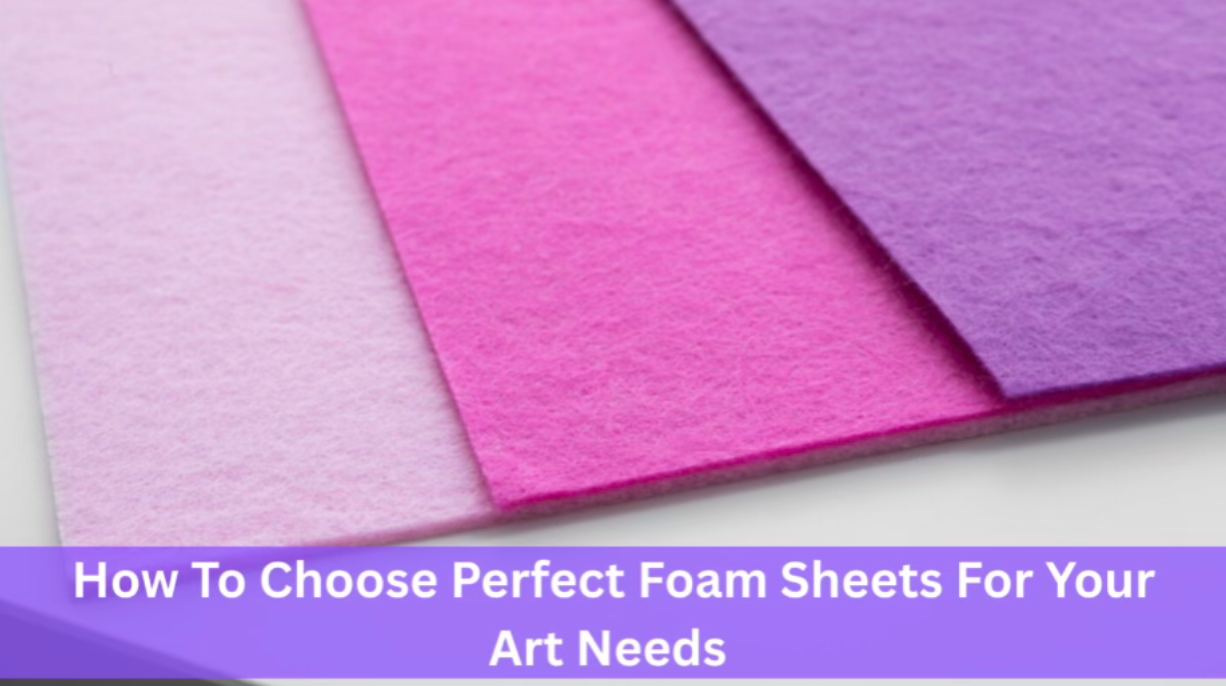
Foam sheets have taken a vital place in the arts and crafts industry as they are flexible, colorful, and easy to work with. They endorse artistic ideas expansively through school projects, classroom exhibits, as well as artistic home decoration and hobby work.
They are easy to cut and shape due to their soft surface and remain manageable because of their lightweight. There are numerous choices, plain sheets, bright colors, ready-made shapes, etc., and it may seem difficult to decide which foam will be the most effective one.
A wise decision saves time, reduces waste, and enhances the overall appearance of your painting. Where foam fits your project, creative work is easier, and accomplishment is personally more satisfying.
When artists and crafters know what to look for before purchase, their work becomes more systematic and results in a work that is complete, balanced, and pleasing to the eye, not only at the beginning but also at the end.
This guide outlines key considerations for synchronizing foam materials with various creative objectives.
1. Exploring Foam Materials for Creative Projects
All foam materials are different in texture, flexibility, and application, and so it helps to be aware of the best one to use in your design. Foam sheets are used in many art projects as they are soft, smooth, and can be cut to clean shapes.
The sheets come in a wide variety of colors and sizes, and artists can easily use them to create layered effects, backgrounds, and details without going the extra mile. Some foam varieties are simple, whereas some have adhesive strips or pre-shaped designs, which save time during hectic crafting.
This diversity favors both abstract and figurative art. Considering either flexibility or firmness as a project plan will help you select the type of project you are planning. Bendable foam is good to use in curved designs, while firm sheets are appropriate for structured pieces.
By trying out what is available in foam, artists can use materials that aid creativity rather than restrict it.
2. Thickness and Structure Shaping Your Final Result
The thickness of the foam influences the look and structure of a project. Thin foam is perfect for flat designs, layered artwork, and fine details, as it bends easily and fits very well on paper or card.
Heavier foam is stronger and more three-dimensional, and it is good with models, signs, or stand-up objects. It is easier to transform an idea into execution when the thickness aligns with the purpose of the project.
As an example, decorative wall items are better with thicker foam that maintains shape, whereas greeting cards are better with thinner sheets that do not add bulk. It is more effective to think about the structure early to prevent future issues, i.e., pieces bending or collapsing.
When thickness is used to reinforce design objectives, the end product becomes more stable and balanced, and creativity can shine without technical concerns.
3. Color Choices Enhancing Artistic Impact
The choice of color also determines the level of interest and clarity of an art project. Foam sheets come in bright, soft, and neutral colors, giving artists the option to match the colors to the theme or mood.
Colored foam can be used to save time and produce a cleaner finish as opposed to paint. Using colors that smoothly transition in a design helps guide the viewer’s eye and makes the artwork appear complete.
In children’s projects, darker colors promote creativity and concentration, whereas lighter colors can be used in decorative or educational exhibitions. By contemplating color harmony prior to commencement, there will be no cluttered designs, and it will help in having a clear message.
Projects that are well organized visually are those in which the foam colors are carefully chosen. Color is not considered an accessory or even a bonus to the design, but it is an inseparable part of the design itself, which enhances the overall effect of the art.
4. Ease of Use Supporting a Smooth Creative Process
The other consideration is the ease of handling the foam during crafting. Soft foam, which can be cut with scissors, is perfect for beginners and in groups. Harder foam might require sharper tools, yet it offers greater durability for long-term projects.
Adhesive foam selections make assembly easier, particularly when one needs to build more than one layer or has time constraints. The process to switch between cutting and assembling becomes faster when the materials are as expected.
Ease of use reduces frustration and allows artists to focus on creativity rather than fixing mistakes. This is especially helpful in classrooms or workshops where smooth progress matters. When foam responds well to cutting, shaping, and sticking, the creative process stays enjoyable and productive from start to finish.
5. Matching Foam Options To Specific Art Purposes
Different art activities require different foam solutions, so aligning materials with purpose is essential. Educational crafts benefit from lightweight, colorful foam that is safe and easy to manage.
Decorative projects often need thicker foam to provide structure and support visual depth. Ready-made foam shapes help save preparation time and encourage creativity, especially during group sessions.
Transitioning from planning to making becomes simpler when foam suits the task. By thinking about who will use the materials and how the final piece will be displayed, artists can make better choices.
Matching foam to purpose improves both appearance and durability, ensuring projects remain enjoyable and effective long after completion.
Conclusion
Selecting the right foam sheets for art needs becomes simpler when attention is given to material type, thickness, color, ease of use, and project purpose. Each factor works together to support creativity and improve results.
Transitioning smoothly through these considerations helps artists avoid common mistakes and enjoy a more confident crafting experience. When foam choices align with creative goals, projects feel stronger, clearer, and more polished.
With thoughtful planning and suitable materials, foam becomes a reliable partner in artistic expression, allowing ideas to turn into meaningful and visually appealing creations with ease.
For more, visit Pure Magazine
