There’s a moment every homeowner knows. You spot a dripping tap, a slow drain, or a toilet that won’t stop running and you think: do I really need to call a plumber for this?
Sometimes, no. You don’t.
But sometimes, reaching for the wrench yourself is the fastest way to turn a £50 call-out into a £500 emergency. The trick is knowing which is which.
Here are seven jobs you can genuinely tackle yourself and five where you should put the phone down and dial a professional.
The 7 DIY Plumbing Jobs Worth Tackling
1. Fixing a Dripping Tap
A dripping tap wastes around 5,500 litres of water per year. That’s not just annoying, it’s money down the drain, quite literally.
Most of the time, the culprit is a worn washer or O-ring. We’re talking about a £2 part from any hardware shop. With a basic spanner and a screwdriver, you can have it sorted in under 30 minutes, quicker than a plumber could even get to you.
- Turn off the water supply under the sink or at the stopcock
- Remove the tap head (there’s usually a small screw hiding under the decorative cap)
- Swap out the washer or O-ring at the base of the cartridge
- Reassemble and test
Got ceramic disc taps? You’ll be replacing the cartridge rather than a rubber washer. Still very manageable, even if you’ve never done it before.
2. Unblocking a Sink or Drain
Standing water in the kitchen sink isn’t a plumbing emergency. It’s grease, food debris, or hair and shifting it is one of the most satisfying DIY jobs going.
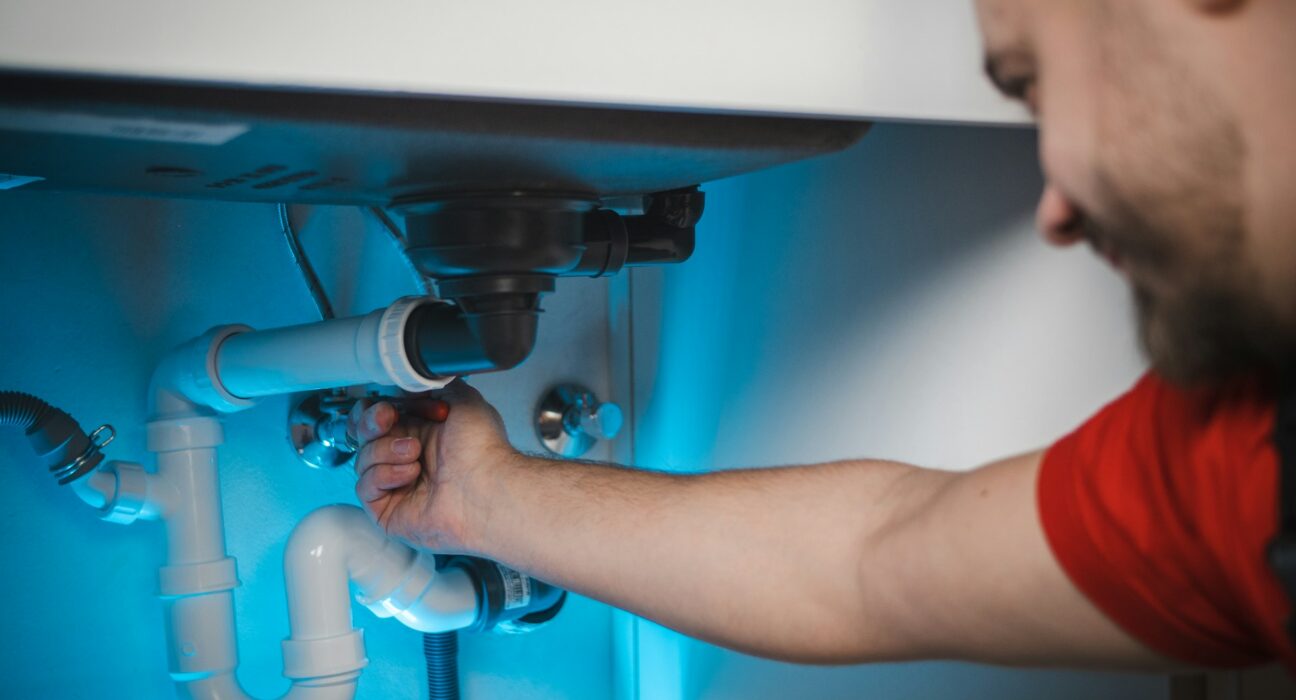
Start with a plunger. If that doesn’t do it, unscrew the U-bend under the sink, clear the gunk out manually, and refit it. Keep an old towel and a bucket close by. It’s not glamorous, but neither is waiting two days for a plumber to do the same thing.
One thing worth knowing: try to resist the temptation of chemical drain cleaners. They can corrode older pipework over time, and they’re not much use against a solid blockage anyway.
3. Replacing a Toilet Seat
This one barely qualifies as plumbing, but you’d be surprised how many people don’t realise how easy it is. Two bolts at the back of the pan. Unscrew, lift off, drop the new one in, tighten up. Ten minutes, maybe less.
Just measure the pan before you head to the shop. UK toilet seats are generally either 65cm or 73cm, get the wrong size and you’ll be making a second trip.
4. Fixing a Running Toilet
That faint hissing sound after you flush? That’s your toilet quietly wasting up to 400 litres of water a day. It’s almost always a faulty flap valve or a float that needs adjusting, neither of which requires any real expertise to fix.
The flap valve (the rubber seal at the bottom of the cistern) perishes over time. A replacement costs about £5–£10. Turn off the water, flush to empty the cistern, swap the valve, done. If it’s the float arm sitting too high, bend it down slightly on older ballcock systems, or adjust the float screw on newer ones.
400 litres a day. It’s worth ten minutes.
5. Replacing a Showerhead
If you’re in a hard water area, and plenty of us in Norfolk know this all too well, your showerhead will start to clog with limescale faster than you’d think. The flow drops off, the pressure feels weak, and a soak in white vinegar only gets you so far.
Swapping the showerhead out is as simple as unscrewing the old one and fitting the new. Wrap a little PTFE tape around the threads of the shower arm first to get a proper seal, and that’s genuinely all there is to it.
6. Insulating Exposed Pipes
Pipe lagging foam costs around £1–£2 per metre. You slit it lengthways, press it over the pipe, and tape it in place. It takes an afternoon. And it could save you an absolute fortune.
According to the Association of British Insurers, burst pipes from freezing cost UK homeowners an average of £8,800 in damage. Loft pipes, garage pipes, anything exposed to the cold, get them lagged before winter arrives and don’t give it another thought.
7. Replacing a Flexible Tap Connector
The braided hoses connecting your taps to the water supply don’t last forever. They corrode, they weaken, and eventually they fail. Replacing them is a proper DIY job, turn off the water, loosen the old connectors with a basin wrench, fit the new ones, tighten, done.
One tip: take the old connectors to the shop with you. Sizes vary more than you’d expect, and guessing doesn’t always go well.
The 5 Plumbing Jobs You Really Shouldn’t DIY
1. Anything Involving Gas
This one has to come first, because people still get it wrong. In the UK, any work on gas appliances or pipework must be done by a Gas Safe registered engineer. That’s not a guideline, it’s the law.
Carbon monoxide has no smell and no colour. You won’t know it’s there until it’s already dangerous. The Health and Safety Executive reports that around 40 people in England and Wales die from accidental carbon monoxide poisoning every year. More are hospitalised. No YouTube tutorial is worth that risk.
Before hiring anyone for boiler or gas pipe work, check they’re on the register at gassaferegister.co.uk.
2. Moving or Installing New Radiators
Bleeding a radiator is a five-minute job anyone can do. Moving one is a completely different story.
Relocating a radiator means draining the system, extending pipework, re-pressurising, and then balancing the whole circuit so heat distributes evenly. Get that balance wrong and you’ll have cold rooms, an overworked boiler, and energy bills that creep up without an obvious reason.
The frustrating thing about mistakes here is that they don’t always announce themselves. You might not notice the problem for months, by which point it’s been quietly costing you money the whole time.
3. Any Work on the Mains Supply
The pipes bringing water into your home are under constant pressure, typically between 1 and 3 bar in most UK properties. That’s not something to underestimate.
If you’re seeing low pressure throughout the whole house, unexplained damp near the boundary, or a water bill that’s suddenly spiked with no obvious reason, something is wrong with your supply. Call a plumber like Royal Flush Plumbing, and call your water provider too, they may actually be responsible for the pipe up to your property boundary, which could mean it costs you nothing.
4. Installing a New Boiler
Some people look at a boiler installation and think: it’s just pipes and connections, how hard can it be? The answer is: hard enough that it requires professional certification, and hard enough that getting it wrong can kill you.
Boiler installation involves gas connections, flue positioning, pressure testing, and full system commissioning. Beyond the safety side, fitting a boiler yourself invalidates the manufacturer’s warranty outright. Most warranties require a registered engineer. So you’d have a £2,000 appliance with no cover and a potential carbon monoxide risk. It’s just not worth it.
5. Repairing or Replacing Soil Stacks
The soil stack is the large pipe, usually 110mm across, that carries waste from your toilets, bath, and sinks out of the building. It’s unglamorous, essential, and genuinely not a DIY job.
Any repair or alteration needs the right gradient, the right venting, and a proper understanding of how the whole drainage system works. Get the fall wrong and waste won’t clear. Seal something incorrectly and sewer gases will start backing up into the property. That’s as unpleasant as it sounds.
On top of that, significant drainage work often falls under Building Regulations, which means notifying your local authority and having it inspected. A qualified plumber will handle all of that as part of the job. Most homeowners attempting it on a weekend won’t even know it’s required.
The Simple Rule That Saves You Every Time
Before you pick up any tool, ask yourself two things.
Could this cause real damage or a health risk if it goes wrong? If the answer’s yes, call someone.
Is this a single fitting or fixture with an obvious shut-off, and cheap parts if I mess up? If yes, you can almost certainly handle it yourself.
The DIY jobs in this list are all contained, low-stakes, and forgiving of small mistakes. The ones to leave alone involve pressurised systems, gas, or drainage regulation, where the failure mode is either invisible, dangerous, or both.
And if you’re ever genuinely unsure? An hour of a plumber’s time to give you an honest assessment is money well spent. You might find out the job’s simpler than you feared. Or you might find out there’s a problem that’s been hiding behind the walls for years. Either way, you’ll know exactly where you stand, and that’s worth a lot more than a botched repair job.
For more, visit Pure Magazine