


I’ve watched the same corner market survive a recession, a big-box opening two exits away, and the rise of grocery delivery—and still stay busy on Tuesday nights. The narrative outsiders tell is that local grocery stores and convenience stores are “dying.” The reality on the ground is more nuanced: the stores that understand their role in a neighborhood don’t just sell products. They provide access, routine, and reliability. In real estate terms, they function like infrastructure—small, distributed nodes that keep daily life moving, which is why when I evaluate potential locations I always use a real estate search that highlights grocery convenience stores available for sale or lease before advising on any neighborhood retail investment.
What Local Stores Do That Big Retail Can’t
Proximity, Speed, and Everyday Convenience
For daily needs, walkability and immediacy beat scale. I’ve seen it in the smallest moments: a parent running in for cold medicine at 9 p.m., a commuter grabbing breakfast on the way to the train, a neighbor picking up a missing ingredient mid-recipe. That’s not “impulse shopping”—it’s last-mile problem solving. Convenience stores and local grocery stores serve the part of demand that doesn’t plan ahead, and modern life creates more of those moments than most people admit.
Compare that to the friction of a big-box trip: parking, navigating aisles, waiting in checkout lines, and driving home. Even if the unit price is lower, the time cost is higher. Big retail is optimized for the weekly haul. Neighborhood retail is optimized for the daily gap. When I evaluate retail corridors, this is the key behavioral insight I look for: high-frequency, low-basket transactions that stay resilient because they’re tied to routine, not promotions.
Trust, Familiarity, and Human Connection
Relationships drive loyalty more than pricing—especially in community retail. I’ve worked with owners who know customers by name, who keep a kid’s favorite snack behind the counter, who notice when an elderly regular hasn’t stopped in for a few days. That kind of relational capital doesn’t show up on a spreadsheet, but it’s real economic value: people choose the familiar store because it feels safe, predictable, and personal.
Big retail competes on breadth and price efficiency. Neighborhood businesses compete on memory and service. When a store becomes part of a customer’s mental map—“that’s where I go when I’m in a hurry” or “they always have what I need”—it earns repeat visits without needing to constantly discount. In practice, that loyalty is a moat. It protects local stores from the race-to-the-bottom dynamics that crush margins elsewhere.
The Economic and Social Role in Communities
Food Access and Neighborhood Stability
Local stores matter because they reduce distance between people and necessities. In areas with limited grocery coverage, they can be the difference between practical food access and a daily transportation burden. One widely cited public-health benchmark is that a community begins to resemble a “low-access” area when residents live more than about a mile from a grocery store in urban settings (and much farther in rural areas). The exact definition varies by agency, but the lived reality is consistent: when food is far away, the cost isn’t just money—it’s time, mobility, and stress.
This is where urban planning and zoning quietly shape outcomes. A city that allows mixed-use corridors and neighborhood-scale retail makes walkable living more viable. A city that pushes all retail into large, car-dependent zones creates access gaps. Local grocery stores are not just retail tenants; they’re part of the neighborhood’s operating system. When they disappear, you often see ripple effects: fewer foot trips, less street activity, and weaker “daily-use” density that supports other small businesses nearby.
Jobs, Safety, and Informal Social Infrastructure
These stores also function as micro-employers and informal community anchors. They hire locally, often providing first jobs or flexible shifts for students, parents, and older workers. And they act as “eyes on the street”—a steady, lit storefront where staff recognize faces and patterns. I’ve heard community members describe certain stores as a kind of safety net: if something feels off on the block, the store owner notices before anyone else does.
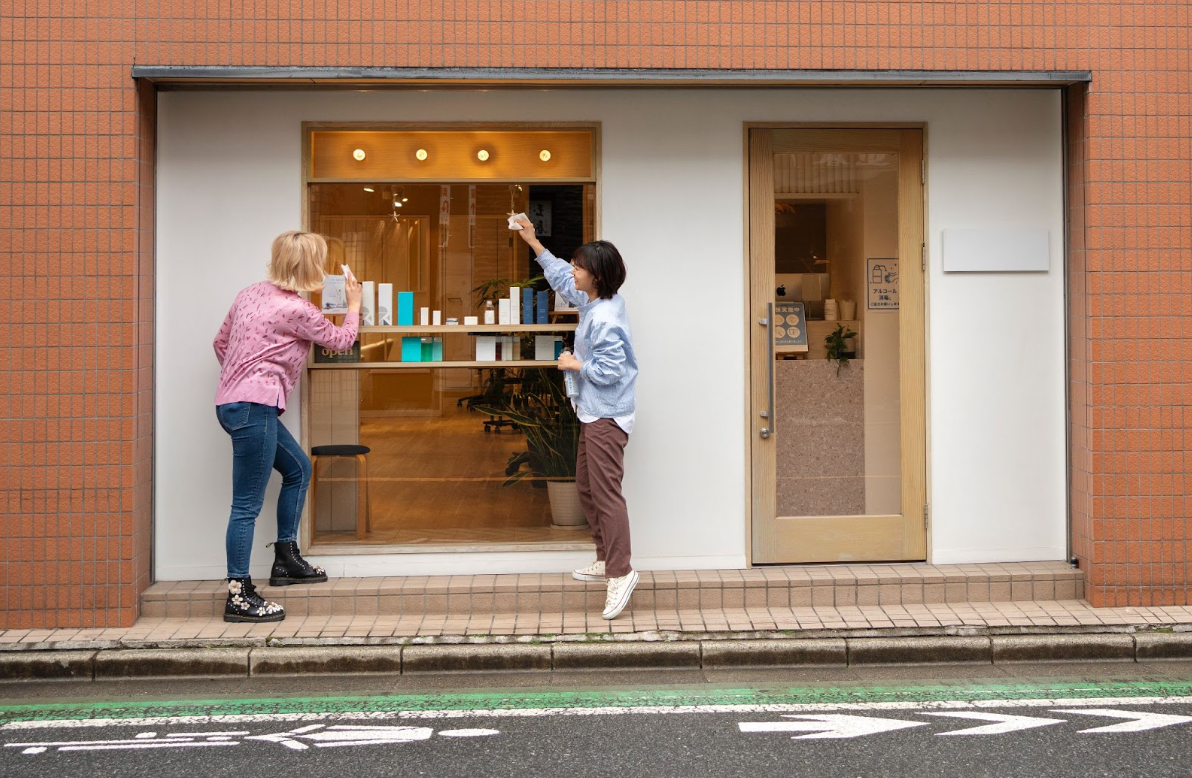
One story that stuck with me: a neighborhood market owner who kept a simple routine—sweep the sidewalk, greet regulars, keep the windows bright, and never let the place look neglected. Residents told me the block felt safer because the store felt “watched” in a good way. That’s not just sentimentality. In real estate, perceived safety affects foot traffic, tenant demand, and ultimately property values. Local stores quietly support the neighborhood conditions that keep communities stable.
Why They’re Under Pressure (and What’s Misunderstood)
Rising Costs and Margin Compression
The challenge is that local stores operate on thin margins, and the cost stack keeps rising. Rent increases faster than many operators can reprice staples. Labor is harder to find and retain. Shrink—loss from theft, damage, or miscounts—hits small retailers harder because there’s less volume to absorb it. Add utilities, insurance, and maintenance, and you get a simple reality: small retail margins compress from both sides.
A basic cost breakdown I use when assessing a neighborhood store looks like this: occupancy (rent + utilities), labor, COGS (inventory), shrink, and “operational drag” (repairs, compliance, systems). When any two of those categories spike at the same time—say, rent and labor—the operator gets forced into bad decisions: cutting hours, reducing assortment, delaying maintenance, or over-indexing on high-margin items that change the store’s identity. The pressure isn’t imaginary; it’s structural.
The Myth That “Amazon Killed Everything”
It’s easy to blame retail disruption on e-commerce alone, but that’s a lazy diagnosis. Online grocery and delivery apps changed expectations, yes—but structural issues often do more damage: undercapitalized operators, poor merchandising discipline, outdated point-of-sale systems, weak supplier terms, or locations with declining foot traffic due to zoning and transportation patterns.
I encourage store owners to treat tech as a tool, not an enemy. The winners aren’t trying to beat Amazon at logistics. They’re using digital tools to make the neighborhood experience smoother: better inventory visibility, simple loyalty programs, and frictionless reordering for regular customers. In modern communities, “digital” doesn’t have to mean impersonal. It can mean more consistent service, fewer stockouts, and smarter decisions backed by data instead of gut feel alone.
How Local Stores Can Stay Relevant and Profitable
Hyper-Local Merchandising
Tailoring inventory beats generic SKUs. The fastest way a local store loses relevance is by looking like a smaller, more expensive version of a chain. The stores that win act like curators. They carry what the neighborhood actually buys—based on culture, commuting patterns, meal habits, and even seasonality. I’ve seen stores increase sales simply by tightening assortment: fewer slow movers, more high-frequency essentials, and a deliberate set of local favorites.
A simple example of product localization: a store near a cluster of multi-family buildings leaned into “tonight solutions”—pre-cut produce, ready-to-heat proteins, and a rotating local bakery shelf—because their customers prioritized speed and small-basket shopping. Another store near a school invested in kid-friendly snacks and lunch add-ons. Same square footage, different community, different mix. That’s merchandising strategy as neighborhood intelligence.
Digital Tools Without Losing the Human Touch
POS data, loyalty programs, and delivery apps should amplify relationships, not replace them. My recommended tech stack is intentionally simple:
- A modern POS with clean sales reporting (by SKU, time of day, margin band)
- A lightweight loyalty program (phone number-based is fine)
- Google Business Profile updates (hours, photos, quick posts)
- Optional: a local delivery partner or curated third-party delivery presence
The goal is not to “go digital” for vanity. It’s to reduce stockouts, identify top sellers, manage shrink patterns, and give regular customers an easy way to repeat purchases. When a store uses data to stay in-stock on what the neighborhood loves, it feels like better service—because it is.
Experience and Community Positioning
Local stores should be community hubs, not just shelves. Experience doesn’t have to mean expensive remodels. I’ve seen low-cost upgrades create real impact:
- Cleaner lighting and clearer sightlines (signals safety and quality)
- A small “local spotlight” endcap (rotating neighborhood brands)
- A simple bulletin board for community posts or events
These touches reinforce that the store belongs to the neighborhood. In experiential retail terms, you’re not selling entertainment—you’re building familiarity and trust.
What I’ve Seen Work in the Real World
Case Pattern #1: The Modern Corner Store
The modern corner store model is surprisingly consistent: fresh food, local brands, clean design, and disciplined operations. I worked with an operator who repositioned a tired convenience store by tightening the product mix, upgrading refrigeration, and treating produce like a headline category instead of an afterthought. The store didn’t try to become a full grocery. It became a reliable “daily essentials + fresh add-ons” shop.
What changed wasn’t just inventory—it was perception. Better lighting, clearer pricing, and a strong grab-and-go set made customers trust the store again. Sales followed. This is why I tell owners that modernization isn’t about copying a chain; it’s about signaling competence. In neighborhood retail, customers read those signals fast.
Case Pattern #2: The Service-Driven Neighborhood Market
The second pattern is service expansion: delivery, catering trays, coffee, bill pay, or simple prepared foods. I saw a neighborhood market in a tough corridor turn around by adding two things: a basic delivery loop for seniors and a pre-order system for party trays. Neither required fancy tech. It required consistency and a clear offer.
The result was margin improvement and demand stabilization. Services create reasons to choose the store beyond price. They also deepen switching costs—once customers rely on you for a weekly service, you become part of their routine. In a service retail model, the store stops competing as a commodity and starts competing as a solution.
The Future of Local Grocery and Convenience Retail
These stores aren’t disappearing—they’re hybridizing. The future of retail at the neighborhood level looks less like “small vs. big” and more like “local + smart.” I expect more micro-fulfillment behaviors—stores acting as pickup points, stocking curated high-frequency items for rapid replenishment, and using back-room space more efficiently. Local sourcing will grow too, partly because it differentiates, and partly because it can stabilize supply for certain categories when national distribution gets tight.
AI demand planning will also become more accessible. Not “AI” as a buzzword, but practical forecasting: what sells on rainy days, how holidays shift basket size, which SKUs spike when school starts. When small operators can forecast even 10% better, they reduce waste and shrink, improve in-stocks, and protect margins.
The larger point is resilience. Modern communities need distributed access points for essentials—especially when transportation, weather, or economic shocks disrupt routines. Local commerce isn’t nostalgic. It’s adaptive infrastructure.
Conclusion: A Local Store Relevance Checklist
Local grocery stores matter because they combine commerce, care, and convenience in ways big retail can’t fully replace. They serve daily life at human scale: quick trips, familiar faces, neighborhood-specific inventory, and steady presence. When they operate well, they don’t just survive disruption—they stabilize the communities around them.
Here’s a simple community retail strategy checklist you can copy:
- Inventory localization: stock to real neighborhood habits, not generic planograms
- Digital enablement: modern POS, basic loyalty, accurate online presence
- Community engagement: local brands, neighborhood partnerships, visible routines
- Experience upgrades: clean, bright, easy-to-shop improvements that signal trust
- Cost discipline: monitor shrink, labor scheduling, and true occupancy costs
If you remember one thing, let it be this: the local store that wins isn’t the one that tries to be everything. It’s the one that becomes reliably essential—so embedded in the neighborhood’s daily rhythm that people stop comparing it and start depending on it.
For more, visit Pure Magazine