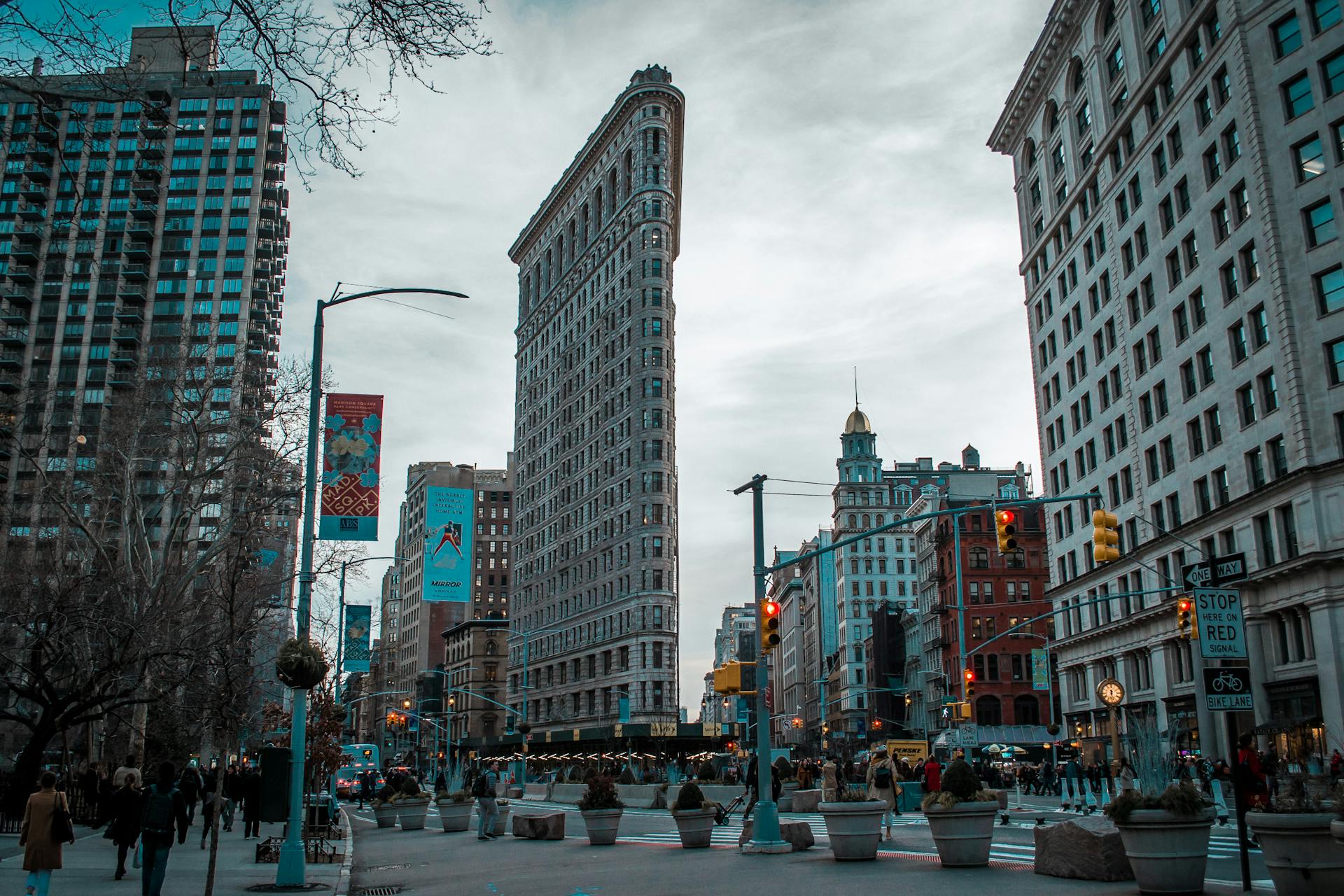
Flatiron is one of those Manhattan submarket that has reinvented itself every fifteen years. Once a wholesale toy and textile district, it became the centre of late-1990s Silicon Alley, then a fashion-and-publishing hub through the 2010s, and is now anchored by a mix of growth-stage tech, financial services, healthcare, and creative agencies that find the neighbourhood’s combination of access, character, and amenity hard to match elsewhere in Manhattan.
For UK and European companies expanding into the United States, Flatiron has become one of the most-watched submarkets for the office decision specifically because the size brackets that growth-stage tenants need are well-supplied here, the rents are below comparable Midtown product, and the architectural character of the pre-war loft buildings produces space that fits modern office layouts cleanly.
What makes Flatiron work for growth-stage tenants
Three structural features explain why so much growth-stage demand concentrates here.
Geography. Flatiron sits at the junction of major transit lines, a short walk from Union Square, Madison Square Park, the East Village, and Chelsea, with quick access to Penn Station and Grand Central.
Architecture. The dominant pre-war loft stock features high ceilings, large windows, and flexible floor plates that work well for both open-plan and partitioned office layouts.
Pricing. Asking rents in Flatiron remain materially below comparable Midtown product, which is one of the quiet reasons interest has held up through softer Manhattan office cycles.
Who actually rents space in Flatiron
Demand profiles for Flatiron office space for lease tend to skew toward growth-stage tenants in the five- to twenty-thousand-square-foot range. The submarket has a deep supply of buildings sized for that bracket.
Tech and SaaS companies still anchor much of the leasing volume. Healthcare-adjacent companies, particularly digital health, have grown as a tenant category since 2020. Creative agencies and design studios remain a steady share of the mix. Venture-backed fintech and asset management spinouts account for the rest.
What to expect in the leasing process
Typical lease lengths in the five- to twenty-thousand-square-foot bracket run five to seven years, with longer terms appearing for build-out-heavy spaces. Concessions including free rent periods and tenant improvement allowances vary with the cycle.
For European companies new to the New York leasing market, the process and conventions differ meaningfully from London or Paris commercial leasing. Working with a broker familiar with both European tenant patterns and the specific submarket dynamics of Flatiron typically produces cleaner outcomes than navigating the process directly.
FAQ
What size tenants does Flatiron typically attract? Five thousand to twenty thousand square feet is the sweet spot, though full-floor and small-suite options both exist.
How does Flatiron compare with Midtown South pricing? Flatiron tends to price lower than Bryant Park or Times Square but higher than Murray Hill or NoMad’s secondary stock.
What lease lengths are typical? Five to seven years for the bulk of the volume.
Are coworking and flexible-office options available? Yes. Several major operators have presence in the submarket.
For more, visit Pure Magazine