


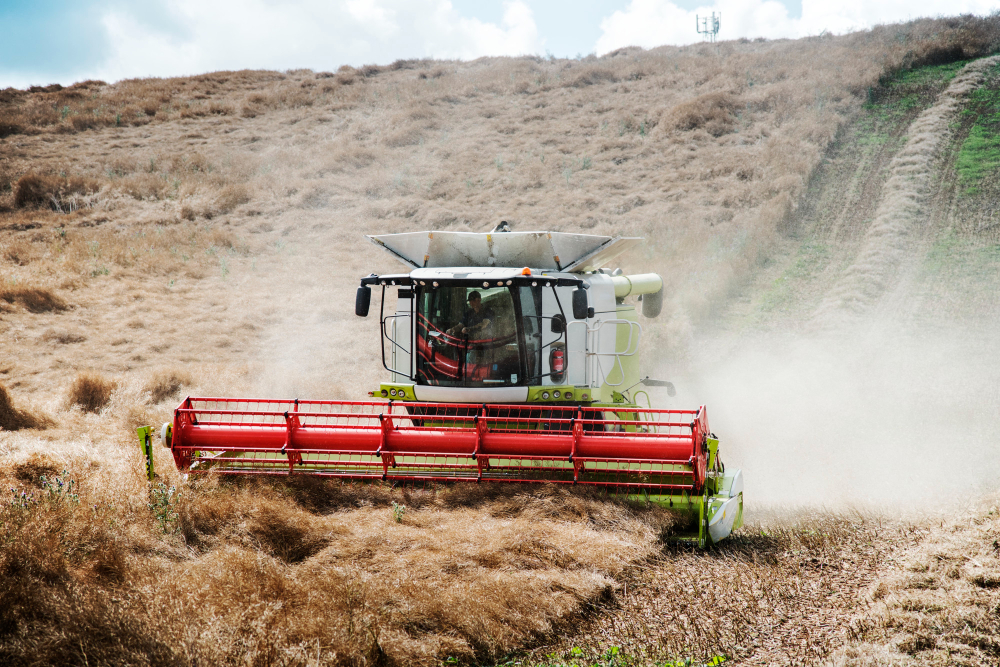
Every farmer knows the time all too well, it’s planting (or harvest) season, it’s a tight window, and you’re out in the field when critical equipment breaks down. It’s not a good feeling, but it’s made exponentially worse by the fact that the limited window of opportunity to get work done is slowly passing by while the weather cooperates, and the neighbors are, one by one, getting their work done.
Equipment selection means so much more than initial costs. The machinery you select to run your operation provides the foundation for what may, or may not, be accomplished during the seasons when time is of the essence.
The Pressure of Limited Time Windows
Farming is not a flexible process. Planting season offers a week or two at best to get seed in the ground before weather patterns shift, temperatures change or rain occurs. The limited time for harvest can be even more compact, especially for crops that need to be processed immediately for maximum value.
This is where equipment reliability becomes more than a preference. An ideal tractor does not just work reliably 75% of the time; when 75% of the time means your tractor isn’t operating during your three-week harvest window, 75% reliability isn’t reliable. This is why finding reputable agricultural equipment for sale specifically geared toward reliable performance during condensed seasonal challenges is the difference between getting mandatory work done in time and losing out on revenue opportunity.
The numbers add up quickly. Over the course of one growing season, missing out on planting windows can reduce yields by 20-50%. Missing out on harvest means missed quality grades and increases in drying costs or damage as a result of weather. This happens every single season with farms that do not account for machinery reliability.
What Reliability Actually Means
Reliability doesn’t mean something starts every day. It means that it can operate under heavy loads for extended hours under demanding conditions. A tractor may work successfully for maintenance-type work on a yearly basis spread out across months. But it’s another thing to ask it to dedicate 14 hours for six or seven days for an entire week.
Professional-grade equipment gets engineered for different purposes for this very reason; people know that when windows are tight and time is of the essence, equipment will be relied upon for prolonged hours and extended operations. Heavier pieces, enhanced cooling systems, remanufactured transmissions, these are all features resulting from someone along the assembly line acknowledging that farming equipment will be used under greater stress than most other equipment options.
Consider cooling systems, for example. Some machines only have marginal cooling systems and are fine under fair weather operation. But when you’re using the machine at maximum capacity for extended hours in a hot season where forced operation is necessary, your machines overheat and idles while time is lost. That’s not a defect; that’s a machine working outside its functional requirements.
The Back-Up Plan No One Wants to Consider
Most farms don’t have an excess of excess. For every tractor, there’s often one single unit; not another available just in case something happens. However, at minimum, purchasers need to consider the likelihood that should there be a breakdown during those critical periods, what can be done for quick fixes.
This means considering parts on hand and service considerations at time of purchase. A machine may boast unlimited capabilities; however, if parts can take two weeks to order during harvesting season, those capabilities mean nothing. Machines that come from reputable manufacturers who have extensive dealer networks and parts accessibility can provide a cushion even when things go wrong.
Some farmers circumvent this by building relationships with their dealers who lend equipment while repairs are made; others keep older machines as replacements despite what they require in terms of space and maintenance. It doesn’t matter what level of comfort exists; what matters is what is considered during purchase for “just in case” situations during these critical stretches.
Capacity Versus Demand
Perfectly suitable equipment can act as a bottleneck under stressful circumstances. A planter may plant enough acres per day on an average turn, but what happens if hours are cut to stretch operations across all available land? A combine may handle average yields with no problems, but how does it fare at ten or twenty bushels above average per acre?
These questions often cannot be answered until it’s too late. By the time someone realizes that their equipment cannot handle maximum season expectations, it’s already too late to do anything about it.
This isn’t to say that every farm needs the largest pieces imaginable; it means that every farmer needs to be honest about what maximum season stresses require and ensure they get machinery that can handle said demands consistently without struggle.
An Investment Thought Over Time
When people think about machinery costs, they think short term, immediate costs and abilities. But over the life of an item purchased, alongside opportunities stretched over seasons, what’s purchased can idealize reliability but fail to acknowledge capacity shortcomings through costs or losses.
Farmers who seem to always get their work done in-season with precision aren’t necessarily lucky; they made decisions along the way asking their machines to be reliable and properly capable given their needs. They acknowledge that farm machinery isn’t just a machine, it’s the critical infrastructure requirements that mandate what’s possible when timing is essential for performance perfection.
When machines operate well during these cranial high-stress moments, everything that follows benefits, the work gets done in time; crops grow get in or out at ideal times, and the possibilities for the season do not falter by mechanical restraint or breakage.
For more, visit Pure Magazine
