You’re filling out a payment form online. Everything is going smoothly — until you hit a box labeled:
“Enter your Taxpayer ID.”
You pause.
Is that your Social Security number? Your National Insurance number? Your business registration number? And what happens if you type the wrong one?
If you searched what a taxpayer ID is, you’re not alone. This is one of the most common tax-related questions globally — especially in 2026, as digital platforms, crypto exchanges, and global payment systems now require verified tax identification.
Let’s clear it up properly.
TL;DR (2026 Quick Answer)
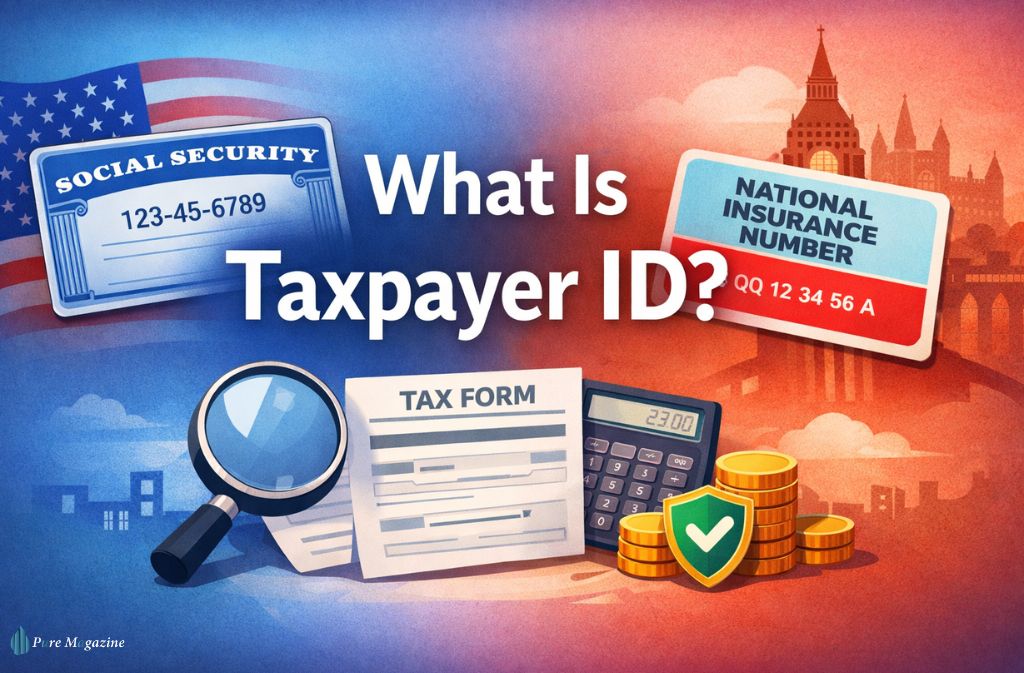
A taxpayer ID (also called a Taxpayer Identification Number or TIN) is a government-issued number used to identify you or your business for tax reporting purposes.
In the United States, this includes SSN, EIN, and ITIN.
In the UK, it typically refers to your National Insurance number or UTR.
Now let’s go deeper — and make sure you understand exactly which one applies to you.
What Is a Taxpayer ID (TIN)?
Short answer:
A taxpayer ID is a unique number assigned by a government to track tax obligations, payments, and reporting.
In the United States, the Internal Revenue Service (IRS) uses TINs to match income forms like W-2s and 1099s to taxpayers.
In the UK, HM Revenue & Customs (HMRC) uses different identification numbers — such as National Insurance numbers and UTRs — for the same purpose.
It’s not a secret government code.
It’s simply your tax identity number.
But the type you use depends on:
- Where you live
- Whether you’re employed or self-employed
- Whether you run a business
- Whether you operate internationally
Types of Taxpayer Identification Numbers (US vs UK Comparison)
Here’s where most confusion happens.
United States Tax IDs
| Type | Who Uses It | Example Format | Issued By | Used for Business? |
|---|---|---|---|---|
| SSN (Social Security Number) | Employees & individuals | 123-45-6789 | Social Security Administration | No |
| EIN (Employer Identification Number) | Businesses, LLCs, Corporations | 12-3456789 | Internal Revenue Service | Yes |
| ITIN (Individual Taxpayer ID) | Non-residents | 9XX-XX-XXXX | Internal Revenue Service | No |
All of these are legally considered TINs.
United Kingdom Tax IDs
| UK ID Type | Who Uses It | Format | Issued By | Used for Business? |
|---|---|---|---|---|
| National Insurance (NI) Number | Employees & individuals | QQ 12 34 56 C | HM Revenue & Customs | No |
| UTR (Unique Taxpayer Reference) | Self-employed & companies | 10 digits | HM Revenue & Customs | Yes |
| Company Registration Number | Limited companies | 8 digits | Companies House | Yes |
The UK does not officially label these as “TIN” on domestic documents — but internationally, they function as tax identification numbers.
TIN vs SSN: What’s the Difference?
Short answer:
An SSN is one type of TIN — but not all TINs are SSNs.
Think of TIN as an umbrella term.
Under that umbrella:
- SSN = personal identification (US employees)
- EIN = business tax ID
- ITIN = non-resident personal tax ID
If you’re asked for a TIN in the US and you’re an individual employee, your SSN is usually what they want.
Where Can I Find My Taxpayer ID?
Most people already have one — they just don’t know where to look.
In the US:
Check:
- Your tax return (Form 1040)
- W-2 or 1099 forms
- EIN confirmation letter
- Social Security card
If lost, you can contact the IRS or Social Security Administration directly.
In the UK:
Check:
- Your Self Assessment letter
- Your Personal Tax Account online
- Payslips (for NI number)
- Company registration documents
Your UTR is issued when you register for Self Assessment.
TIN for Sole Traders vs Limited Companies
United Kingdom
- Sole trader → National Insurance number + UTR
- Limited company → UTR + Company Registration Number
United States
- Sole proprietor → SSN (or EIN optional)
- LLC or Corporation → EIN required
Many people assume their company number is their tax ID. In reality, HMRC primarily uses your UTR for tax filings.
Taxpayer ID for Crypto, PayPal & Online Platforms (2026 Update)
In 2026, this is where most people encounter TIN requests.
Digital platforms now require verified taxpayer IDs due to:
- Expanded 1099 reporting rules in the US
- OECD global reporting standards (CRS)
- FATCA compliance requirements
- Anti-fraud and identity verification systems
Crypto exchanges, payment processors, and marketplaces must match your account to your tax ID.
Many freelancers only realize something is wrong when:
- Withdrawals get frozen
- Forms are rejected
- Backup withholding is applied
It’s just a number.
But it’s a powerful one.
What Happens If You Enter the Wrong Taxpayer ID?
This matters more than people think.
In the United States, incorrect TINs can trigger backup withholding — currently 24% — under IRS rules.
Other consequences include:
- Rejected 1099 forms
- Delayed tax refunds
- Payment platform verification failures
- HMRC compliance checks
- Penalty notices
According to the Internal Revenue Service, mismatched TINs are one of the most common reporting errors.
And in 2026, automated systems flag mismatches instantly.
Also Read: Can You Go to Jail for Not Paying Taxes in the UK? (2026)
Foreign Tax Identification Numbers Explained
If you live outside your home country or earn international income, you may need to provide a foreign tax identification number.
This applies when:
- Opening overseas bank accounts
- Registering on global platforms
- Filing cross-border tax documents
- Completing FATCA or CRS disclosures
Your tax ID depends on your tax residency — not your nationality.
The 2026 Shift: Why Your TIN Is Now Your Digital Passport
Ten years ago, you mostly used your tax ID once a year.
Today?
It’s part of your financial identity.
Governments are using:
- AI fraud detection systems
- Automated income matching
- Cross-border reporting agreements
- Digital identity verification portals
Your taxpayer ID now connects:
Employment → Business income → Digital platforms → International reporting
Accuracy matters more than ever.
Quick Checklist: Do You Already Have a Taxpayer ID?
Ask yourself:
- ✔ Do you earn taxable income?
- ✔ Have you ever filed a tax return?
- ✔ Are you employed?
- ✔ Are you self-employed?
- ✔ Have you registered a company?
If yes to any, you almost certainly already have one.
Security Warning
⚠️ Your taxpayer ID is sensitive personal data.
Never:
- Email it in plain text
- Post it publicly
- Share it on unsecured forms
Identity theft involving tax IDs can lead to fraudulent filings.
Treat it like your financial fingerprint.
FAQs
Q. What is a taxpayer ID number example?
A taxpayer ID number example in the US is a Social Security number (123-45-6789) or an Employer Identification Number (12-3456789). In the UK, it may be a National Insurance number or a 10-digit UTR.
Q. Is a tax identification number the same as a National Insurance number?
In the UK, your National Insurance number acts as your tax ID if you’re an employee. In the US, a TIN can be an SSN, EIN, or ITIN depending on whether you’re an individual or a business.
Q. Can I use my SSN as a TIN?
Yes. In the United States, your Social Security number is a valid Taxpayer Identification Number for personal tax reporting and employment forms.
Q. What happens if my TIN is invalid?
An invalid TIN can trigger backup withholding (24% in the US), rejected tax forms, delayed refunds, or account verification issues on payment platforms.
Q.Do crypto exchanges require a TIN?
Yes. Most major crypto exchanges require a verified TIN to comply with tax reporting rules and issue official income forms.
Q. What is a foreign tax identification number?
A foreign tax identification number is the tax ID issued by your country of tax residence, used for international tax reporting and compliance.
Q. How long does it take to get a taxpayer ID?
Processing times vary:
- EIN (US online) → Immediate
- ITIN → Several weeks
- UTR (UK) → Around 10–15 days
Q. What if I lost my taxpayer ID?
You can retrieve your taxpayer ID by contacting your tax authority or by logging in to your government tax account.
Conclusion
Understanding what a taxpayer ID is doesn’t have to be complicated.
Here’s what matters:
- A taxpayer ID is your official tax identification number.
- In the US, it includes SSN, EIN, and ITIN.
- In the UK, it typically refers to your NI number or UTR.
- Digital platforms now require accurate TIN verification.
- Entering the wrong one can trigger penalties or withholding.
If you’re unsure which applies to you, check your latest tax return or log into your official tax authority account.
Clarity now prevents costly mistakes later.
Related: When Does the Tax Year End? UK Dates & Deadlines 2026