Let’s be honest, most program brochures make everything sound perfect. Students frolicking with puppies, stethoscopes around their necks, wide smiles. But if your kid is serious about veterinary medicine, you deserve the full, unfiltered picture of what actually goes on inside these programs. A Gallup survey of 2,498 dog and cat owners across the United States reveals just how deeply veterinary care runs through the fabric of daily family life, which means students entering this world need way more than passion. They need real, structured exposure. This guide walks you through every major activity format: clinical skill labs, diagnostic stations, shelter rotations, and yes, even suturing.
For younger students, veterinary camps are designed around age-appropriate foundations, introductions to animal handling, basic exam terminology, and enrichment design challenges that help build confidence early on.
How Activities Break Down Across Different Program Types
Here’s something worth knowing upfront: no two programs are identical. The format of the campus, university, clinic, or shelter shapes nearly every detail of a student’s daily experience.
Veterinary Summer Camps (Day and Residential)
Most camps run on a rotation model. Mornings are skill-heavy, animal handling, basic exams, and bandaging stations. Afternoons shift toward guest speakers or facility tours, especially in specialized experiences like veterinary camps for middle schoolers, where students get early exposure to animal care and clinical routines. In residential formats, evenings often involve career workshops and reflection journaling. Day camps compress this rhythm considerably, leaning harder into the hands-on labs and trimming the evening programming.
University-Led High School Programs
University-hosted veterinary summer programs for high school students go deeper. Expect case-based learning, observation rounds inside teaching hospitals, and short research mini-projects. Students often leave with a lab notebook, a poster presentation, and a completed admissions prep session, tangible things that actually show up on college applications.
Clinic and Shelter Internship Placements
A veterinary internship for students operates differently from a summer camp. It’s real work, within clearly defined safety limits. Students support intake documentation, sanitation procedures, husbandry assistance, and client-education material prep while shadowing licensed professionals throughout their day.
Now that the formats make sense, let’s get into the specific skills.
The Hands-On Skills That Run Through Nearly Every Program
This is the backbone. Most veterinary summer programs are built around supervised, practical skill-building, not just sitting and watching.
Animal Handling, Restraint, and Low-Stress Approaches
Students practice safe approach techniques with dogs and cats, including towel wraps and fear-free basics. Programs that include exotic animals introduce proper support points for rabbits, guinea pigs, and birds. Where large animals are available, students learn biosecurity protocols and haltering basics.
Physical Exam Practice: Actually Doing It
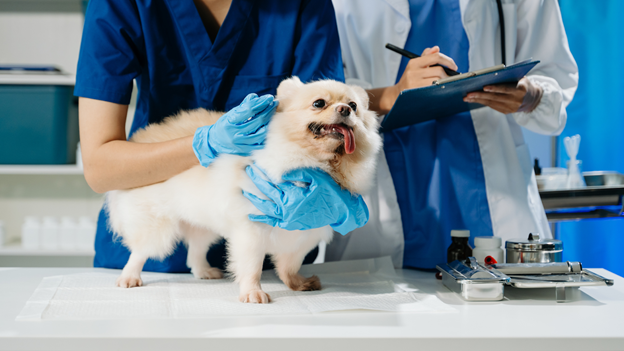
TPR measurement (temperature, pulse, respiration) is typically introduced first. Students use stethoscopes at listening stations, comparing normal sounds against recordings of abnormal heart and lung activity. Wellness exam role-plays rotate students through vet tech, vet, and client roles, weaving communication skills into every clinical moment.
Clinical Math and Medication Safety
Weight-based dosage drills using mock medication labels teach careful number work before any student comes near a real product. Medication safety modules are explicit about which tasks belong to observation-only territory for minors and why that boundary exists.
That foundation makes the next step diagnostics feel earned rather than overwhelming.
Diagnostic Labs You’ll Actually Find Inside These Programs
This is where observations start turning into answers. Most programs include several of these stations, even at the camp level.
Radiology and Parasitology
Students review simulated radiographs, identifying patterns like fractures and foreign bodies against “normal” comparisons. Parasitology stations walk through fecal flotation demos, parasite identification cards, and zoonotic safety basics. Prepared slides to support safe, classroom-appropriate skin and ear cytology demonstrations.
Lab Testing Fundamentals
A fan-favorite activity called “Build-a-Blood-Panel” challenges students to match CBC and chemistry values to real case scenarios. It teaches clinical reasoning without a single invasive step. Specimen handling and chain-of-custody protocols round out this section, especially relevant for any student targeting a clinical internship placement.
Once students understand what diagnostic results actually mean, the surgical suite becomes the next frontier.
Surgery and Emergency Exposure Done Right
This section raises the most parental eyebrows. Understandably. But good programs navigate it with real intentionality and clear guardrails.
Surgical Suite Walkthroughs and Suturing Simulation
Students practice gowning, gloving, and contamination-awareness challenges inside actual surgical spaces. Instrument identification labs match tools to their functions. Suturing simulation uses foam pads, not tissue, with scoring rubrics that balance speed against precision. Simple interrupted and continuous patterns are the typical starting point.
Emergency and Triage Scenarios
Triage role-plays hand students symptom cards and ask them to prioritize patients. A genuinely challenging, low-stakes way to build clinical reasoning. CPR overviews using mannequins are included where facilities allow, paired with honest, grounded conversations about realistic outcomes and the ethics of intervention. That last piece matters more than it might seem.
Prevention and community impact round out the picture beautifully.
Shelter Medicine, Animal Welfare, and the Bigger Picture
Here’s a sobering number worth knowing: according to AAHA, 30% of veterinary professionals plan to leave their current job within the coming year. Early, realistic exposure to the full veterinary workflow, including shelter settings, helps students figure out whether this path genuinely fits them, before they’re three years into a pre-vet curriculum.
Shelter Intake, Enrichment Design, and Population Health
Mock intake workflows cover history-taking, quick physical assessments, and parasite prevention checklists. Enrichment design challenges ask students to build species-specific plans and evaluate how well they worked. Population math activities, like tracing the offspring potential of a single unspayed cat, make preventive care concepts concrete and genuinely memorable. Students don’t forget that exercise.
Career Outputs That Actually Help Students Stand Out
Understanding veterinary medicine is valuable. But pre-vet summer programs that convert that experience into concrete deliverables? Those are what separate competitive applicants from everyone else.
Portfolio Deliverables and Admissions Preparation
Students typically leave with a case reflection write-up, a skills checklist, and a mini-poster presentation. High school programs often layer in MMI-style interview practice and a high school course planning map. These outputs plug directly into college applications and personal statement development in ways that feel authentic because they are.
Questions Students and Families Ask Most
Q. Are veterinary summer programs mostly hands-on or mostly observation?
Both, genuinely. Skill labs, animal handling, suturing simulation, and physical exams are standard. Some activities remain observation-only depending on age, safety protocols, and supervising staff judgment.
Q. Can stude$nts watch live surgeries?
Surgical suite walkthroughs are common. Live surgery observation depends heavily on the specific program and facility. Many programs use simulation and demonstration models rather than live surgical cases for student groups.
Q. Do pre-vet programs include suturing or injection practice?
Suturing on simulation pads is offered widely. Injections are typically demonstration-only for minors, with medication safety boundaries explained as a formal part of the activity.
Q. What should a student bring to an internship placement?
Closed-toe shoes, scrubs or long pants, proof of required vaccinations, and signed safety waivers are standard. Some placements also require documentation of tetanus status and rabies pre-exposure discussions.
Q. What should a student do the summer before vet school?
Prioritize additional shadowing or work inside a clinical environment. Even with other commitments, protect dedicated time for hands-on clinical experience as part of your preparation strategy.
Q. What extracurricular activities matter for vet school applications?
Veterinary schools genuinely value applicants involved in animal-related work outside the classroom. Volunteering at shelters, working at a clinic, or joining an animal welfare organization signals real commitmentand builds practical experience at the same time.
What You Should Actually Expect From a Veterinary Summer Program
The strongest programs do something much bigger than giving students a chance to pet animals. They teach clinical reasoning, real team-based workflows, and honest career realitiesall inside a structured, supervised setting that families can trust.
From suturing simulation to shelter intake mock-ups to One Health case labs, the activity range is almost always broader than families initially expect. Whether your student’s goal is sharper college applications or genuine career exploration, the right program delivers something no classroom can fully replicate: an unfiltered, clear-eyed picture of what veterinary medicine actually asks of the people who dedicate their lives to it. That kind of clarity? It’s priceless.
For more, visit Pure Magazine